Product Description
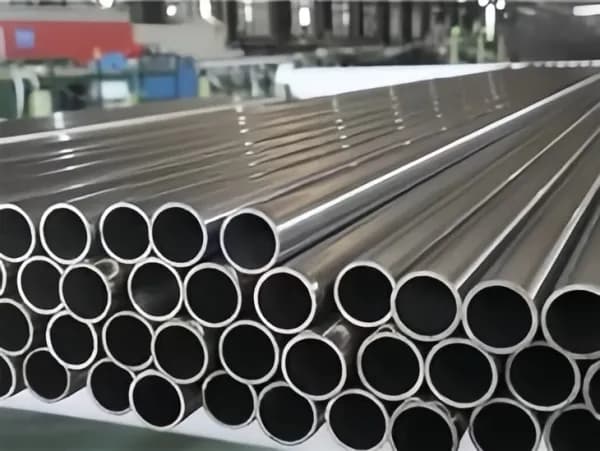
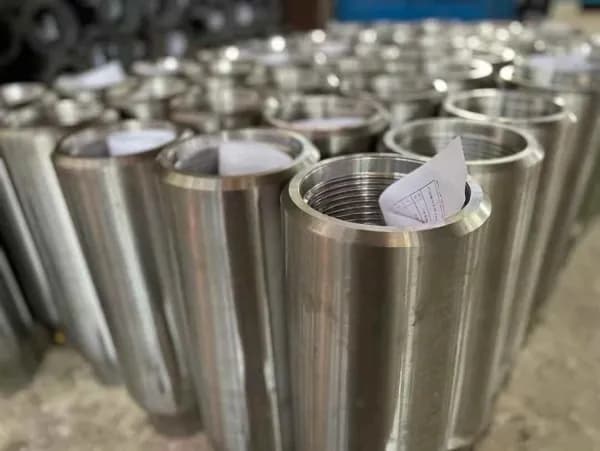
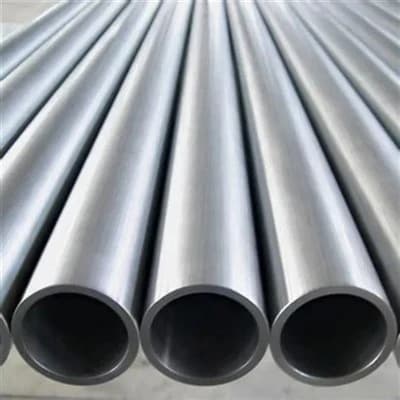
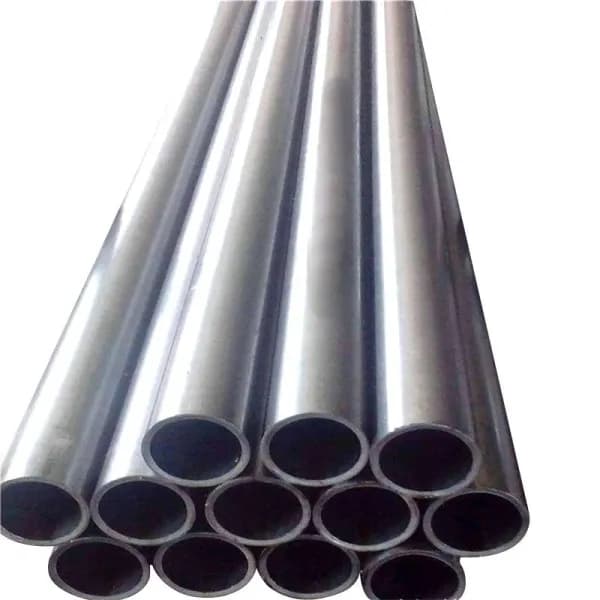
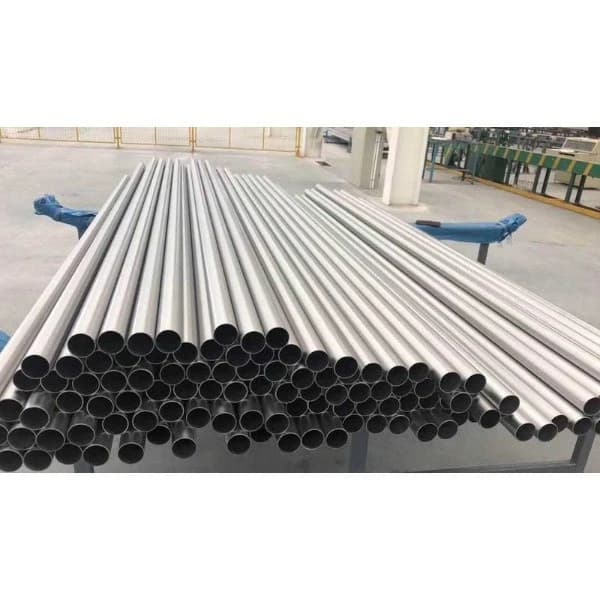
This page covers corrosion-resistant pipe and tube supplied in three material families: stainless steels, nickel-based and nickel-copper alloys, and the corrosion-resistant alloy grades that sit alongside them. Pipe is supplied either seamless or welded, in round section, and is specified by grade, production route, outside diameter, wall thickness, length and delivery condition. It is the family-level page for this group: each grade family also has its own page, linked at the end of this one.
What makes the family split matter is that two pipes can look identical on the rack and behave completely differently in service. Stainless steel is defined by composition rather than by a marketing name: a steel qualifies as stainless when it carries at least 10.5 % chromium and no more than 1.2 % carbon, which is the definition used in EN 10020. That chromium is what forms the passive oxide film that re-forms after it is scratched. Nickel alloys are a different proposition - the matrix is nickel rather than iron, which is why Monel 400 survives hydrofluoric acid and seawater and why Hastelloy C-276 survives mixed oxidising and reducing acids that destroy 316L.
Three decisions set the price and the service life of a piping order: which family and grade, which production route, and which standard edition and delivery condition. The sections below take them in that order, and end with the information a quotation needs.
Material Families and the Standards That Govern Them
A pipe standard follows the material family and the product form, not the trade name. Austenitic stainless pipe is ordered to ASTM A312; duplex to ASTM A790; the nickel alloys to the ASTM B-series. The table maps each family to representative grades, to the seamless and welded standards that apply, and to the duty each family is normally chosen for. Domestic equivalents such as EN, JIS or GB designations can be quoted where the project calls for them - state which system the order is written in.
| Material family | Representative grades (UNS) | Seamless pipe standard | Welded pipe standard | Normally selected for |
|---|---|---|---|---|
| Austenitic stainless steel | 304 / 304L (S30400 / S30403), 316 / 316L (S31600 / S31603), 321 (S32100), 347 (S34700), 310S (S31008) | ASTM A312 / ASME SA312 | ASTM A312; ASTM A358 for electric-fusion-welded pipe | General corrosive and wet service from cryogenic temperatures upwards; 316L where chlorides are present |
| Duplex and super duplex stainless steel | 2205 (S31803 / S32205), 2507 (S32750) | ASTM A790 / ASME SA790 | ASTM A790; ASTM A928 for electric-fusion-welded pipe | Chloride stress-corrosion cracking where the higher yield strength also allows a thinner wall |
| Nickel-copper | Monel 400 (N04400) | ASTM B165 | ASTM B725 | Seawater, firewater and hydrofluoric acid service |
| Nickel-chromium-iron | Inconel 600 (N06600), Inconel 601 (N06601) | ASTM B167 | ASTM B517 | Elevated-temperature service with moderate corrosion |
| Nickel-iron-chromium | Incoloy 800 / 800H / 800HT (N08800 / N08810 / N08811) | ASTM B407 | ASTM B514 | Furnace, reformer and high-temperature process service |
| Nickel-iron-chromium-molybdenum-copper | Incoloy 825 (N08825), Alloy 20 (N08020) | ASTM B423, ASTM B729 | ASTM B704, ASTM B464 | Sulphuric and phosphoric acid, and sour gas production tubing |
| Nickel-chromium-molybdenum | Inconel 625 (N06625), Hastelloy C-276 (N10276), Hastelloy C-22 (N06022) | ASTM B444, ASTM B622 | ASTM B705, ASTM B619 | Mixed oxidising and reducing acids, seawater, sour gas and high-temperature service |
| Commercially pure nickel | Nickel 200 / 201 (N02200 / N02201) | ASTM B161 | ASTM B725 | Caustic and other alkali service |
| Precipitation-hardening stainless steel | 17-4 PH (S17400) | Product specification confirmed per order | Product specification confirmed per order | High strength with moderate corrosion resistance |
Two families that are often confused with this range are outside it. Chrome-molybdenum alloy steel pipe for high-temperature service is ordered to ASTM A335 and is covered on the ASME A335 P11 page. Copper-nickel pipe for seawater systems is a separate copper alloy family, covered on the C70600 copper-nickel page.
Dimensions and Supply Range
The ranges below are published as reference ranges drawn from standard nickel alloy pipe size practice, not as a stock list and not as a production claim. The available thickness depends on the diameter, and seamless availability narrows at the top of the size range. Confirm the sizes you actually need on the enquiry.
| Item | Reference range | To be confirmed per order |
|---|---|---|
| Product form | Round pipe or tube; seamless or welded | Seamless, ERW, electric-fusion-welded or submerged-arc welded |
| Outside diameter | Seamless NPS 1/8 to NPS 24 (outside diameter 10.3 mm to 609.6 mm); larger diameters only by a welded route, confirmed per order | Required outside diameter or NPS list |
| Wall thickness | 0.5 mm to 50 mm (0.020 in to 1.97 in). Wall rises with diameter, and a small pipe is not offered at the top of this range | Wall thickness or schedule, and the dimensional standard |
| Length | Random lengths 5 m to 7 m; cut lengths up to 12 m (40 ft) | Fixed or random lengths, cut lengths and length tolerance |
| End finish | Plain end or bevelled end machined to ASME B16.25 | Threaded end only where the governing standard permits it |
| Delivery condition | Annealed or solution annealed; pickled, or bright annealed on request | Condition, and whether a stabilising anneal is specified |
| Testing and documents | Hydrostatic test or non-destructive electric test as required by the governing standard | Test reports required, positive material identification, and certificate type (EN 10204 3.1 or 3.2) |
Seamless or Welded: Choosing the Production Route
The route is decided by pressure, by the corrosive duty and by the size, and it changes the standard number rather than sitting as a note on the order. Seamless pipe is pierced and rolled from a solid billet, so the wall is continuous with no seam and no heat-affected zone. Welded pipe is formed from strip or plate and joined along a longitudinal seam, which makes large diameters and long lengths economic.
| Aspect | Seamless | Welded (ERW, electric-fusion-welded, SAW) |
|---|---|---|
| How it is made | Pierced and rolled from a solid billet or hollow | Formed from strip or plate and joined along a longitudinal seam |
| Filler metal | Not applicable - one continuous wall | Not permitted in welded pipe to A312 or A790; permitted under A358 and A928, where the weld is graded by class |
| Pressure duty | Preferred where pressure is high or cyclic, and for sour service | Suits low to medium pressure, larger diameters and longer lengths |
| Corrosion path | No weld seam and no heat-affected zone along the length | The seam and heat-affected zone depend on the specified heat treatment and inspection |
| Typical standards | A312, A790, B161, B165, B167, B407, B423, B444, B622, B729 | A312, A358, A790, A928, B464, B514, B517, B619, B704, B705, B725 |
| Relative cost | Higher than welded for the same size and grade | Lower than seamless for the same size and grade |
| Availability | Size and grade dependent; non-standard sizes take longer | Larger diameters and long lengths are more readily available |
How to Read a Pipe Specification
Four points on a pipe enquiry cause more re-quotes than any others. The first is the delivery condition. Under ASTM B444 an Inconel 625 enquiry that says only "Grade 625 to B444" allows either Grade 1 or Grade 2, and the two differ in minimum room-temperature strength: Grade 1 requires a minimum tensile strength of 827 MPa (120 ksi) and 0.2 % yield strength of 414 MPa (60 ksi), while Grade 2 requires 690 MPa (100 ksi) and 276 MPa (40 ksi). Grade 2 is not a weaker material - it is solution annealed for creep and rupture service above 593 °C, while Grade 1 covers general corrosive service. Write the grade and the condition on the order.
The second is the standard edition. State the year, because editions differ and the contract edition governs what the mill has to test.
The third is the size system. Stainless and nickel alloy pipe is normally dimensioned on the NPS system to ASME B36.19M, whose schedule series carries an S suffix (5S, 10S, 40S, 80S), while the carbon steel schedule series sits in ASME B36.10M without the suffix. The same NPS number therefore has two different walls: NPS 12 schedule 40S is 0.375 in, while schedule 40 is 0.406 in. Give NPS with the schedule and the dimensional standard, or give outside diameter times wall thickness directly, and say which system the order uses.
The fourth is composition by product form. A composition table belongs to a standard and a form, not to a grade name. ASTM A312 TP304 pipe permits silicon up to 1.00 % with chromium 18.0 to 20.0 %, whereas ASTM A240 type 304 plate caps silicon at 0.75 % with chromium 17.5 to 19.5 %. Lifting a plate, sheet or bar table onto a pipe enquiry produces a specification the mill cannot certify.
Sour service adds a further requirement. Where hydrogen sulphide is present, NACE MR0175 / ISO 15156 hardness and material limits apply on top of the pipe standard, and the grade, condition and any hardness testing have to be confirmed against that document.
Applications
The families above cover most of the duties where carbon steel and standard 304 will not last. Typical duties are listed below; the grade, route, condition and test scope are matched to the actual medium when the order is confirmed.
- Oil and gas, including sour service - production tubing, flowlines and subsea lines where H2S, CO2 and chlorides occur together, typically Incoloy 825, Inconel 625 and Hastelloy C-276 under NACE MR0175 / ISO 15156.
- Chemical and petrochemical processing - reactor feed and acid transport lines, heat-exchanger shells and piping handling sulphuric and phosphoric acid (825, Alloy 20), nitric acid (304L, 321) and mixed oxidising and reducing media (C-276, C-22, 625).
- Marine, offshore and desalination - seawater intake, brine and firewater lines, where Monel 400, 316L and duplex 2205 or 2507 are selected instead of 304.
- Power generation and high-temperature process - superheater and reheater tubing, boiler internals and flue-gas desulphurisation piping, using 310S, 347, 800H and 625 where scaling and creep govern.
- Water treatment and distribution - stainless mains, dosing and chemical injection lines, where the chlorine and chemical dosing used in purification attacks coated carbon steel.
- Food, dairy and pharmaceutical - product-contact and clean-in-place lines in 304L or 316L, ordered as sanitary or instrumentation tubing where the surface finish and bore condition matter.
- Pulp and paper, and pollution control - bleach plant and scrubber piping, where C-276 and C-22 resist the chloride and acid mix.
Ordering Information
Send the following items and the quotation can be built against them rather than against a general stock list.
- Grade and UNS number, and the W.Nr. or national designation if the order is written to a European or Japanese system.
- Production route - seamless, ERW or electric-fusion-welded - and the governing standard with its edition year.
- Size: NPS and schedule with the dimensional standard, or outside diameter times wall thickness.
- Quantity and total length, with cut lengths and the permitted length tolerance.
- Delivery condition: annealed, solution annealed, pickled or bright annealed, and any stabilising anneal.
- End finish: plain, bevelled to ASME B16.25, or threaded where the standard permits it.
- Service conditions: medium and concentration, temperature, pressure, and chloride or hydrogen sulphide content, so the grade and condition can be checked.
- Testing and documents: hydrostatic or non-destructive electric test, positive material identification, and whether an EN 10204 3.1 or 3.2 certificate is required.
- Destination, packing, and any third-party inspection the project calls for.
Common Questions about Stainless Steel, Nickel and Alloy Piping
Which family should I order for a given service?
Start from the medium and the temperature, then from the chloride and hydrogen sulphide content. Austenitic stainless steel covers general corrosive and wet service and stays economic where chlorides are low; 316L adds molybdenum for chloride-bearing water. Duplex and super duplex are chosen where chlorides cause stress-corrosion cracking and the higher yield strength also lets the wall come down. Nickel alloys are specified where stainless cannot hold the duty: 825 and Alloy 20 for sulphuric and phosphoric acid, C-276 and C-22 for mixed oxidising and reducing acids, Monel 400 for seawater and hydrofluoric acid, and Nickel 200 or 201 for caustic service. Send the medium, concentration, temperature, pressure and chloride or H2S content and the family can be checked against the duty rather than guessed.
Does the production route change which standard applies?
Yes, for the nickel alloys it does. Each family has a seamless standard and a separate welded standard: Inconel 625 is seamless to ASTM B444 and welded to ASTM B705; Hastelloy C-276 and C-22 are seamless to ASTM B622 and welded to ASTM B619; Incoloy 825 is seamless to ASTM B423 and welded to ASTM B704; Monel 400 is seamless to ASTM B165 and welded to ASTM B725. Austenitic stainless pipe is covered by ASTM A312 for both seamless and welded product, with A358 for electric-fusion-welded pipe, and duplex by A790 with A928 for electric-fusion-welded pipe. Welded pipe to A312 and A790 is produced without the addition of filler metal; where a filler-metal weld is required, A358 or A928 is the standard that permits it and grades the weld by class. So "seamless or welded" belongs in the standard number on the order, not in a note beside it.
Why does the same grade name sit under two different standards?
Because the standard follows the material family and the product form. A312 covers austenitic stainless pipe, A790 covers duplex pipe, and the B-series covers the nickel alloys, so 304 appears in A312 for pipe while 304 also appears in A240 for plate and A276 for bar. The limits are not identical between those documents, which is why a plate or bar composition table should never be copied onto a pipe enquiry. As one example, A312 TP304 permits silicon up to 1.00 % and chromium 18.0 to 20.0 %, while A240 type 304 caps silicon at 0.75 % and sets chromium at 17.5 to 19.5 %.
Should I specify pipe by NPS and schedule, or by outside diameter and wall thickness?
Either can be used, but they are not interchangeable and the order should say which one it uses. Stainless and nickel alloy pipe is normally dimensioned on the NPS system to ASME B36.19M, whose schedule series carries the S suffix; the carbon steel schedule series is in ASME B36.10M and does not. The same NPS number can therefore have two different walls - NPS 12 schedule 40S is 0.375 in against 0.406 in for schedule 40 - so a schedule number written without the S can be read either way. Quoting outside diameter times wall thickness avoids the ambiguity but must be paired with the dimensional standard and tolerance that applies.
What information does a quotation need?
Grade and UNS number; production route; governing standard with the edition year; size as NPS with schedule or as outside diameter times wall thickness; quantity, total length and cut lengths; delivery condition and end finish; the service conditions, including medium, concentration, temperature and chloride or hydrogen sulphide content; and the testing and certificate scope required. With those items the grade, condition and test plan can be checked against the duty and quoted against it.
Related Products
- Hastelloy C-276 Seamless Pipe - the nickel-molybdenum-chromium grade for mixed oxidising and reducing acids.
- 304 Stainless Steel Seamless Pipe - the standard austenitic seamless pipe for general corrosive service.
- UNS N06022 (DIN 2.4602) Nickel-Based Corrosion-Resistant Alloy Seamless Tube - the C-22 grade, for oxidising and reducing media.
- Titanium Alloy Pipe - the alternative where chlorides and oxidising media rule out nickel alloys.
- ASME A335 P11 - chrome-molybdenum alloy steel pipe for high-temperature service, a separate family from this range.
- Alloy Steel Pipe - the full range of pipe in this section of the catalogue.