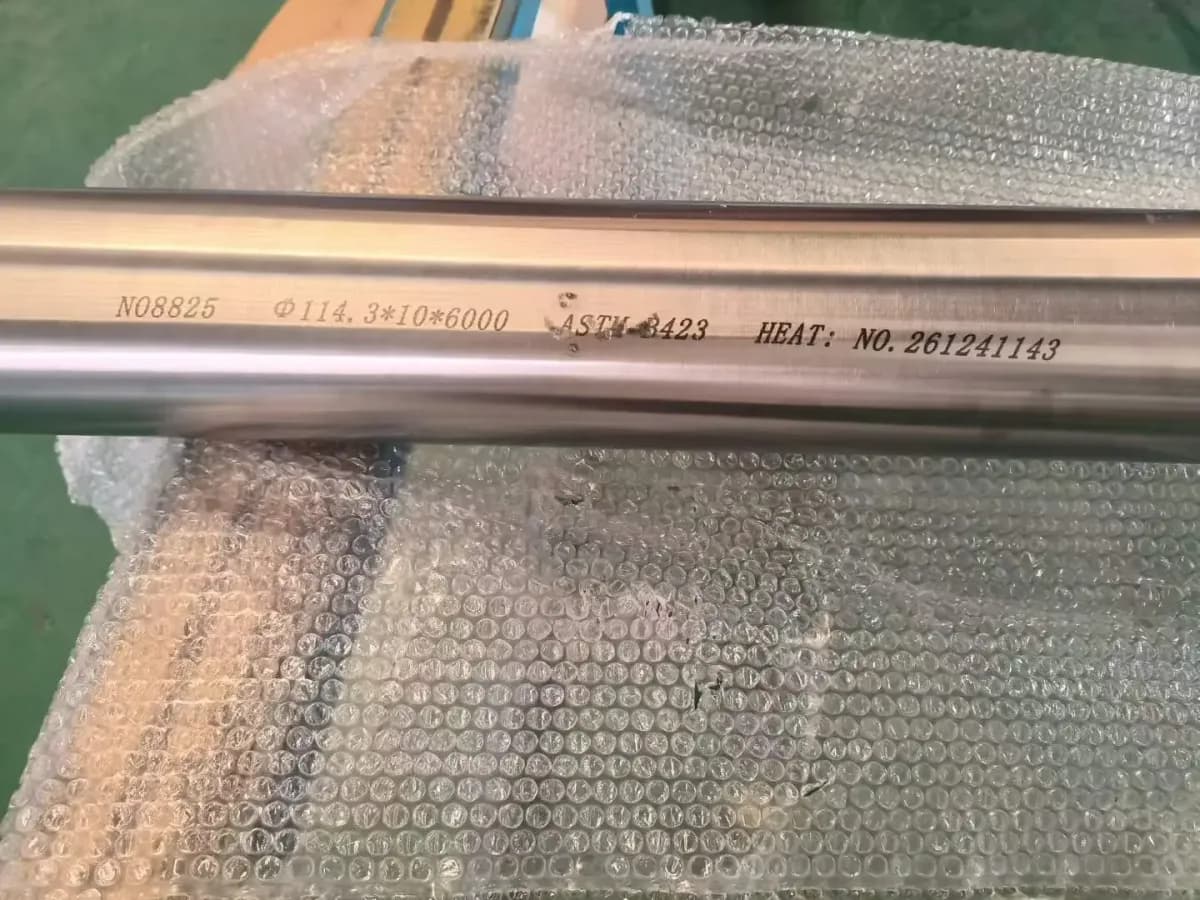
Product Description
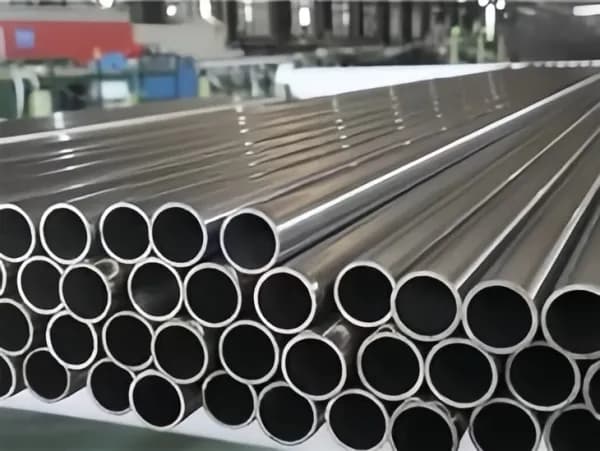
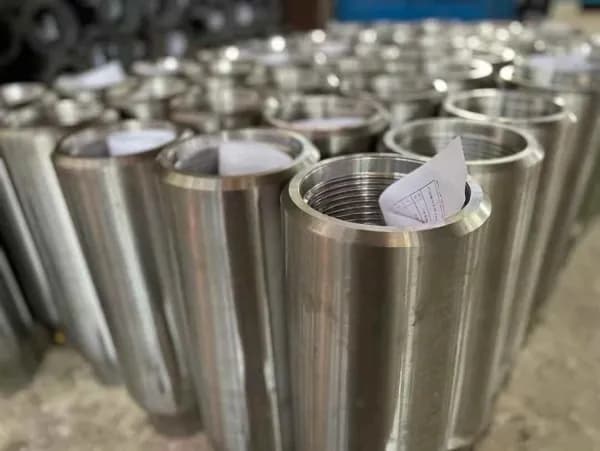
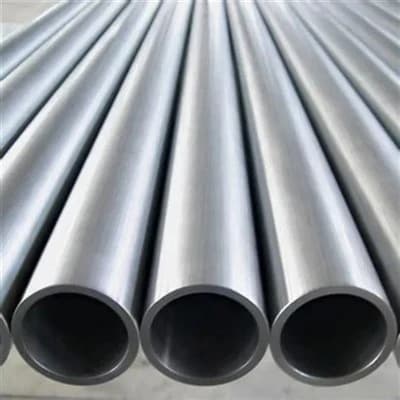
The Incoloy 825 seamless pipe (UNS N08825) supplied against this page is a nickel-iron-chromium-molybdenum-copper alloy seamless pipe manufactured to ASTM B423 / ASME SB423. The alloy is specifically developed for corrosive service in reducing and oxidizing acid media, chloride-bearing environments and sour (H2S-containing) oil and gas service. Incoloy 825 seamless pipe is the form of choice where the application demands zero weld seams in the pressure envelope: high-pressure process piping, downhole and control lines, acid cooler and reheater bundles, sour gas flowlines, and FGD absorber slurry piping.
This page covers seamless pipe only. Boiler, condenser and heat-exchanger tube (OD-based tolerances) follows ASTM B163 / ASME SB163; large-bore welded pipe (NPS 6 and above) follows ASTM B705 / ASME SB705. Confirm the product form required by your project specification before requesting a quotation.
Specification Data and Size Range
Note on the table below. The values shown are the reference limits of ASTM B423 for UNS N08825 in the standard annealed condition; the final acceptance basis is the mill test certificate (MTC) for the supplied heat. Equivalent grades and dimensional ranges are reference points - the actual size, condition and inspection scope are confirmed per enquiry.
| Parameter | Reference value (ASTM B423, UNS N08825) | Notes |
|---|---|---|
| Product form | Seamless pipe (cold-worked or hot-finished, annealed) | Other product forms (tube / welded pipe / plate / fittings) follow separate ASTM specifications |
| Material grade | Incoloy 825 (nickel-iron-chromium-molybdenum-copper alloy) | Titanium-stabilized against sensitization during welding |
| UNS designation | N08825 | UNS N08221 is a higher-Mo modification (ASTM B423 Table 2) - confirm if specified |
| Primary standard | ASTM B423 / ASME SB423 (seamless pipe and tube) | ASTM B163 for condenser / heat-exchanger tube; B704 / B705 for welded product |
| Equivalent grades | W.Nr. 2.4858 / EN NiFe30Cr21Mo3CuTi / AFNOR NC 20 D Nb / BS NA 16 / JIS NCF 825 | Cross-system reference; the delivered item is supplied against the standard specified in the PO |
| Size range (reference) | 1/2 in. to 6 5/8 in. outside diameter (12.7 mm to 168 mm) per ASTM B423 Appendix X2; the NPS chart below is a size cross-check, not the supply start | Outside diameter is fixed by the NPS - see the size chart below; wall and length confirmed per order |
| Delivery condition | Annealed (cold-worked or hot-finished per ASTM B423); pickled / bright-annealed / polished surface | Specify condition on PO; both annealed conditions meet ASTM B423 chemistry but differ on mechanical minimums |
| Service ceiling (reference) | 540 °C reference ceiling for sustained structural service | Long-term exposure above 540 °C may reduce ductility; design stress from ASME BPVC II-D, not the room-temperature minimums |
| Order details to confirm | Standard (B423 / SB423), OD, wall or schedule, length, quantity, condition, MTC scope (EN 10204 3.1 / 3.2), NACE MR0175 if sour service | Required to issue a binding quotation |
Pipe size chart (outside diameter). Incoloy 825 pipe is ordered by nominal pipe size (NPS) plus schedule, or by outside diameter plus wall thickness. In the ASME B36.10M / B36.19M dimension system the outside diameter is fixed by the NPS and does not change with wall thickness - only the inside diameter changes. The table below gives the outside diameter for the NPS range published for this product; it is the number to check a quotation against when a supplier states an "outside diameter" in millimetres.
| NPS (in.) | DN | Outside diameter (mm) | Outside diameter (in.) |
|---|---|---|---|
| 1/8 | 6 | 10.3 | 0.405 |
| 1/4 | 8 | 13.7 | 0.540 |
| 3/8 | 10 | 17.1 | 0.675 |
| 1/2 | 15 | 21.3 | 0.840 |
| 3/4 | 20 | 26.7 | 1.050 |
| 1 | 25 | 33.4 | 1.315 |
| 1 1/4 | 32 | 42.2 | 1.660 |
| 1 1/2 | 40 | 48.3 | 1.900 |
| 2 | 50 | 60.3 | 2.375 |
| 2 1/2 | 65 | 73.0 | 2.875 |
| 3 | 80 | 88.9 | 3.500 |
| 3 1/2 | 90 | 101.6 | 4.000 |
| 4 | 100 | 114.3 | 4.500 |
| 5 | 125 | 141.3 | 5.563 |
| 6 | 150 | 168.3 | 6.625 |
How to read the two number systems. "DN" is a nominal size reference in millimetres, not a dimension that can be measured on the pipe - DN 6 does not mean a 6 mm outside diameter, and DN 150 does not mean 150 mm. Outside diameters do not follow the inch number in the NPS or DN designation, which is why NPS 1/8 pipe measures 10.3 mm across and NPS 6 pipe measures 168.3 mm across. ASTM B423 Appendix X2 lists cold-worked annealed pipe and tube as normally supplied from 1/2 in. (12.7 mm) outside diameter to 6 5/8 in. (168 mm). The NPS chart is a cross-check of outside diameter, not the supply start. Sizes outside that range, and sizes that cannot be produced seamless, are quoted on request - welded construction to ASTM B705 / ASME SB705 is the usual alternative. Wall thickness is not published here as a millimetre range: select the schedule (for example a 5S / 10S / 40S / 80S schedule of the ASME B36.19M series) or state the wall thickness required, and it will be confirmed per order.
Chemical Composition and Mechanical Properties
The composition and mechanical minimums below are the acceptance limits of ASTM B423 for UNS N08825. They are standard requirements for the grade, not guarantees for a specific heat - the mill test certificate remains the acceptance document for the delivered pipe.
Chemical composition (ASTM B423, UNS N08825, heat analysis):
| Element | Content (% by mass) |
|---|---|
| Nickel, Ni | 38 - 46 |
| Chromium, Cr | 19.5 - 23.5 |
| Iron, Fe | 22 min |
| Molybdenum, Mo | 2.5 - 3.5 |
| Copper, Cu | 1.5 - 3.0 |
| Titanium, Ti | 0.6 - 1.2 |
| Carbon, C | 0.05 max |
| Manganese, Mn | 1.00 max |
| Silicon, Si | 0.50 max |
| Sulfur, S | 0.03 max |
| Aluminum, Al | 0.20 max |
Mechanical properties (ASTM B423, UNS N08825, minimum values in the annealed condition):
| Condition | Tensile strength, min | Yield strength (0.2% offset), min | Elongation, min |
|---|---|---|---|
| Hot-finished annealed | 517 MPa (75 ksi) | 172 MPa (25 ksi) | 30 % |
| Cold-worked annealed | 586 MPa (85 ksi) | 241 MPa (35 ksi) | 30 % |
Hardness is not an acceptance item in ASTM B423 for this alloy; if your project specification carries a hardness limit, state it on the PO so it can be tested and reported on the MTC.
Material Characteristics
Incoloy 825 seamless pipe gets its corrosion resistance from a balanced alloy design. The 38 - 46 % nickel content stabilizes the austenitic matrix against chloride stress-corrosion cracking and is what differentiates 825 from standard austenitic stainless steels. The 19.5 - 23.5 % chromium delivers resistance to oxidizing media such as nitric acid and to nitrates / oxidizing salts. The 2.5 - 3.5 % molybdenum improves resistance to pitting and crevice corrosion in chloride-bearing waters, while the 1.5 - 3.0 % copper extends resistance into the reducing acid domain (sulfuric and phosphoric) where stainless steels are typically borderline. The 0.6 - 1.2 % titanium stabilizes the alloy against chromium-carbide precipitation during welding or thermal exposure, which is why Incoloy 825 is normally specified in the as-welded condition without post-weld heat treatment.
Two annealed conditions are defined by ASTM B423: hot-finished annealed (tensile 517 MPa / 75 ksi min, yield 172 MPa / 25 ksi min) and cold-worked annealed (tensile 586 MPa / 85 ksi min, yield 241 MPa / 35 ksi min). Both meet 30 % minimum elongation. Hot-finished annealed is the typical specification for larger-bore process piping; cold-worked annealed is selected for thinner walls, heat-exchanger tubes and service requiring higher strength. The material cannot be hardened by heat treatment; strength is achieved through the cold work level prior to the final anneal.
Applications
Incoloy 825 seamless pipe is commonly specified in the following service environments. The list is provided as procurement guidance - actual selection must be confirmed against the media, temperature and concentration in the project specification.
- Chemical processing - sulfuric, phosphoric and nitric acid piping; reactor transfer lines; acid cooler and reheater tubes.
- Oil and gas / sour service - downhole tubing, production flowlines and control lines; listed in NACE MR0175 for H2S-bearing environments. Confirm the specific NACE environment class and the MTC scope on the PO.
- Marine and offshore - seawater cooling pipe, chlorinated seawater circuits, marine exhaust systems.
- Flue-gas desulfurization (FGD) - absorber slurry piping, spray headers, reheater tube, dampers.
- Nuclear fuel reprocessing - dissolver and extraction equipment piping handling mixed nitric / sulfuric acid and radioactive slurries.
- Acid production - wet-process phosphoric acid piping; sulfuric acid plant piping at various concentrations and temperatures.
- Pickling and acid regeneration - heating coils, baskets and transfer lines in steel pickling operations.
- Pollution control and waste treatment - incinerator scrubbers, acid-waste handling lines.
For boiler, condenser or heat-exchanger service (OD-based tolerances, tighter dimensional control), refer to ASTM B163 / ASME SB163 tube. For large-bore welded pipe, refer to ASTM B705 / ASME SB705. For applications dominated by strong reducing acids, compare Hastelloy C-276 seamless pipe; for oxidizing-media service, compare Hastelloy C22 (UNS N06022) seamless tube.
Ordering Information
To receive a binding quotation for Incoloy 825 seamless pipe, please supply the following information:
- Standard and grade: ASTM B423 / ASME SB423; UNS N08825 (or N08221 if specified).
- Dimensional: NPS plus schedule, or outside diameter plus wall thickness in millimetres; length (single random / double random / cut-to-length).
- Delivery condition: hot-finished annealed or cold-worked annealed; surface finish (pickled, bright annealed, polished).
- Quantity and unit (metres, feet, pieces).
- Service conditions: media, concentration, temperature, pressure - so we can confirm the alloy is suitable for the application.
- Inspection and document scope: EN 10204 3.1 or 3.2 MTC, PMI, NDT requirements, NACE MR0175 qualification if sour service.
- Any project-specific clauses (ITP, third-party inspection, marking / packing requirements).
Incoloy 825 sits inside a wider nickel-alloy piping family. For grade selection across stainless, nickel and alloy piping - or to compare alloys by corrosion resistance and mechanical strength - see the Stainless Steel, Nickel and Alloy Piping selection page.
Common Questions about Incoloy 825 Seamless Pipe
Some suppliers quote Incoloy 825 pipe as "OD 6.35 - 152.4 mm". Is that the outside diameter?
No. Those two figures are nominal inch sizes converted straight to millimetres: 6.35 mm is 1/4 in. and 152.4 mm is 6 in. They are not outside diameters in the ASME B36.10M / B36.19M system, and no pipe has a 6.35 mm outside diameter. The actual outside diameter is 10.3 mm for NPS 1/8 and 168.3 mm for NPS 6, as listed in the size chart above. Order by NPS plus schedule, or state the outside diameter and wall thickness explicitly in millimetres, and check any millimetre "OD" a supplier quotes against that chart before releasing the order.
Is the outside diameter of Incoloy 825 pipe the same for every wall thickness?
Yes. In the ASME B36.10M / B36.19M system the outside diameter is fixed by the nominal pipe size and does not change with schedule; only the inside diameter changes as the wall gets thicker. An NPS 4 pipe is 114.3 mm outside diameter whether it is Schedule 10S or Schedule 80S. Specify NPS plus schedule (or outside diameter plus wall thickness) so the quotation is unambiguous.
Should ASTM B423 or ASME SB423 be specified for Incoloy 825 seamless pipe?
ASTM B423 and ASME SB423 cover the same UNS N08825 chemistry and mechanical requirements; SB423 is the ASME Boiler and Pressure Vessel Code version of B423. ASME SB423 is required when the pipe is used in ASME BPVC jurisdictional piping. For non-ASME-code process piping, ASTM B423 alone is typically acceptable. State the standard required by your project specification on the PO.
What is the difference between hot-finished annealed and cold-worked annealed Incoloy 825 pipe?
Both conditions meet ASTM B423 chemistry; they differ on mechanical minimums. Hot-finished annealed has tensile 517 MPa (75 ksi) min and yield 172 MPa (25 ksi) min - the typical choice for larger-bore process piping. Cold-worked annealed has tensile 586 MPa (85 ksi) min and yield 241 MPa (35 ksi) min - selected for thinner walls, heat-exchanger tubes and higher-strength service. Both meet 30 % elongation minimum. State the required condition on the PO.
What is the role of molybdenum in Incoloy 825?
The 2.5 - 3.5 % molybdenum addition improves resistance to pitting and crevice corrosion in chloride-bearing media, and it supports resistance to reducing acids such as sulfuric and phosphoric. Molybdenum is the principal alloy element that distinguishes Incoloy 825 from the Incoloy 800 family, which contains no Mo. Verify Mo on the MTC when the service is chloride-rich or reducing-acid in nature.
Is Incoloy 825 listed for sour service (NACE MR0175)?
Yes. UNS N08825 is listed in NACE MR0175 for use in H2S-bearing oil and gas environments. However, NACE MR0175 places limits on hardness, environment severity and product form. Confirm the specific NACE environment class and any supplementary requirements (e.g. SSC, HIC testing) on the PO; do not blanket-claim sour-service suitability without project-specific qualification.
What is the difference between Incoloy 825 seamless pipe (B423) and the heat-exchanger tube (B163)?
Both share the same UNS N08825 chemistry, but they are specified by different ASTM standards. B423 / SB423 covers seamless pipe and tube in general process piping service; B163 / SB163 is the standard for seamless nickel alloy condenser and heat-exchanger tube up to 3 in. (76.2 mm) OD, with tighter dimensional tolerances. State which form (pipe or tube) and which standard applies before requesting a quotation.
What is the maximum service temperature for Incoloy 825 seamless pipe?
For sustained structural service, Incoloy 825 has a reference ceiling of 540 °C for sustained structural service; long-term exposure above this temperature may reduce ductility due to microstructural changes. Design stress comes from ASME BPVC Section II-D allowable-stress tables, not from the room-temperature mechanical minimums.