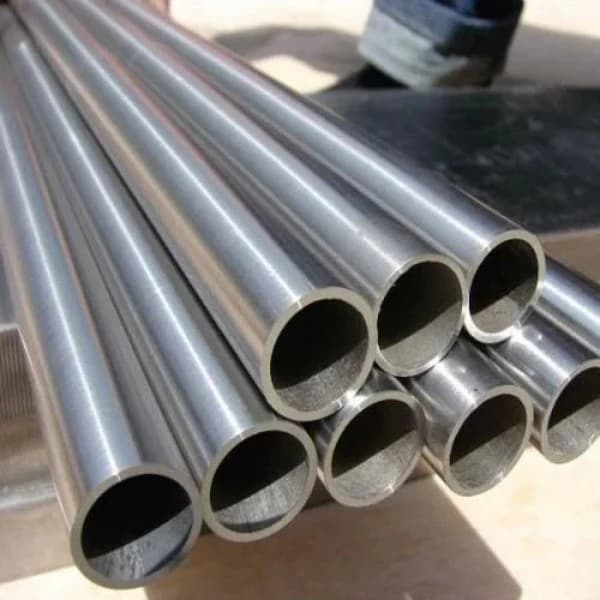
Product Description
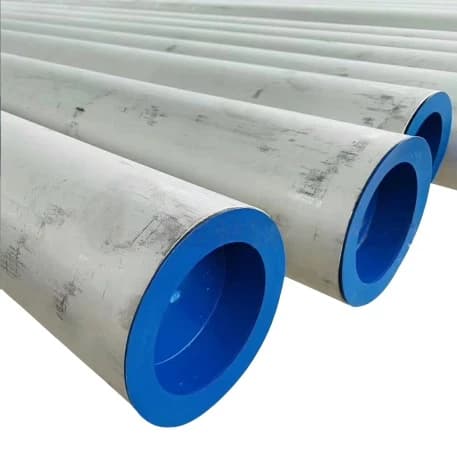
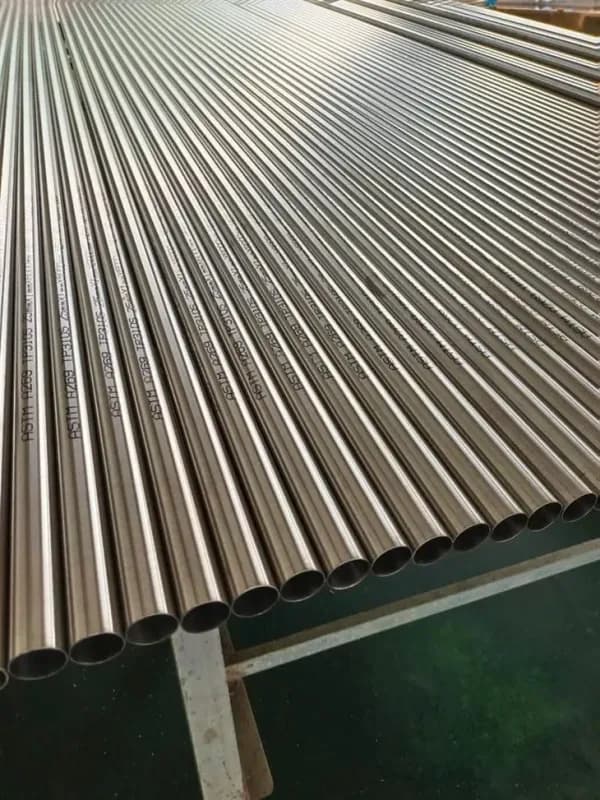
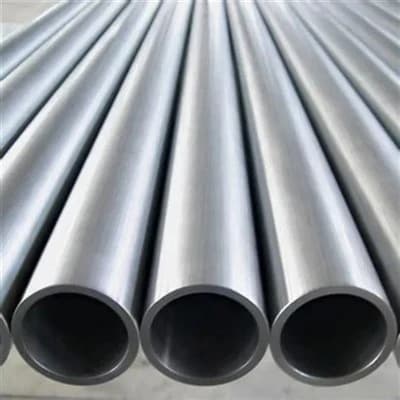
304 stainless steel seamless pipe is a round austenitic pipe drawn from a solid billet, so the wall carries no longitudinal weld seam. Supplied to ASTM A312 / ASME SA312 as grade TP304 (UNS S30400, EN 1.4301 / X5CrNi18-10, JIS SUS 304), it is the default 304 pipe route for process piping, fluid handling and general corrosive service, with dimensions and walls selected from the ASME B36.19M schedule system.
The chromium-rich passive film gives 304 its corrosion resistance in a wide range of atmospheres and many oxidizing media, while the 8% nickel content keeps the structure tough from cryogenic temperature up to elevated service temperature. Resistance is conditional, not absolute: 304 contains no molybdenum, so chloride pitting and crevice attack remain the limiting mechanisms, and selection for those duties should be reviewed case by case. Seamless construction is specified where weld-seam integrity, uniform wall behaviour under pressure or interior surface quality matter more than price.
Specifications
The table below lists the ordering basis for this seamless pipe. Supply-dependent values (size, wall, length, finish and documentation) are confirmed per order rather than published as blanket ranges.
| Item | Basis |
|---|---|
| Product form | Seamless round pipe (no longitudinal weld seam). Welded, ERW, EFW and LSAW routes are separate supply routes. |
| Grade | TP304 (UNS S30400), austenitic 18/8 stainless steel; EN 1.4301 / X5CrNi18-10; JIS SUS 304 |
| Standard | ASTM A312 / ASME SA312 TP304 when the order names it. Heat-exchanger, boiler and instrumentation tube to ASTM A213 / A269 is a separate product form with its own pages. |
| Dimension standard | ASME B36.19M; schedules SCH 5S, 10S, 20, 30, 40S, 60, 80S, 120, 160, XXS (the dimension standard covers NPS 1/8 to NPS 30 / DN 6 to DN 750). Common enquiry range, not a supply commitment: seamless NPS 1/8 to NPS 24; welded pipe is not offered on this seamless page |
| Size (NPS / OD) | To be confirmed per order; OD follows the ASME B36.19M schedule selected |
| Wall thickness | Per the selected schedule; seamless wall tolerance depends on NPS and the thickness-to-diameter ratio in ASTM A999; +22.5% is the over-tolerance for some sizes only, not for every seamless pipe, while the under-tolerance is 12.5%. The ordered edition governs the band |
| Length | Single random, double random or cut length, to be confirmed per order |
| Ends | Plain, bevelled or threaded |
| Delivery condition | Solution annealed with rapid cooling, unless otherwise specified |
| Surface finish | Annealed and pickled (AP) as the typical mill finish; bright annealed, mechanical polish or electropolished on request |
| Mechanical minima (A312 TP304, solution annealed) | Tensile 515 MPa (75 ksi); yield 205 MPa (30 ksi); elongation in 50 mm 35%. Hardness 90 HRB max is an enquiry reference, not an A312 acceptance value |
| Testing | Hydrostatic or nondestructive electric test per ASTM A312; additional eddy current, ultrasonic, dimensional and surface inspection as ordered |
| Documentation | Material test certificate level (for example EN 10204 3.1) specified on the order |
Chemical Composition
The limits below are the ASTM A312 requirements for grade TP304, shown as percent by mass on heat analysis. Values for the final heat are given on the mill certificate.
| Element | Limit, % by mass |
|---|---|
| Carbon (C) | 0.08 max |
| Manganese (Mn) | 2.00 max |
| Phosphorus (P) | 0.045 max |
| Sulfur (S) | 0.030 max |
| Silicon (Si) | 1.00 max |
| Chromium (Cr) | 18.0 - 20.0 |
| Nickel (Ni) | 8.0 - 11.0 |
| Nitrogen (N) | 0.10 max |
Note on cross-referenced tables: some published 304 tables quote Si 0.75 max and Ni 8.0 - 10.5. Those are the plate, sheet and strip limits of ASTM A240, not the pipe limits of ASTM A312 - the two product forms do not share one chemistry row, so the ordered specification governs.
Mechanical Properties
These are the minimum values ASTM A312 applies to TP304 in the solution-annealed condition at room temperature; individual heats normally test above the minima.
| Property | Minimum (solution annealed) |
|---|---|
| Tensile strength | 515 MPa (75 ksi) |
| Yield strength, 0.2% offset | 205 MPa (30 ksi) |
| Elongation in 50 mm (2 in.) | 35% |
| Hardness | 90 HRB max, an enquiry reference, not an A312 acceptance value |
Brinell equivalents quoted on compilation sites disagree (187 to 201 HB appear side by side, and some tables carry the 201 HB / 92 HRB plate value), so no Brinell figure is published here; read the hardness requirement from the ordered standard edition and the mill certificate.
Dimensions and Reference Weights
The table lists common ASME B36.19M dimensions so that schedule walls can be compared at enquiry stage. It is a reference table for the dimension system, not a statement of stock: available sizes and schedules for a specific order are confirmed before quotation.
| NPS | OD, mm | SCH 10S wall, mm | SCH 40S wall, mm | SCH 80S wall, mm | Approx. mass, kg/m (SCH 40S) |
|---|---|---|---|---|---|
| 1/2 | 21.34 | 2.11 | 2.77 | 3.73 | 1.29 |
| 3/4 | 26.67 | 2.11 | 2.87 | 3.91 | 1.71 |
| 1 | 33.40 | 2.77 | 3.38 | 4.55 | 2.54 |
| 1-1/4 | 42.16 | 2.77 | 3.56 | 4.85 | 3.44 |
| 1-1/2 | 48.26 | 2.77 | 3.68 | 5.08 | 4.11 |
| 2 | 60.33 | 2.77 | 3.91 | 5.54 | 5.52 |
| 2-1/2 | 73.03 | 3.05 | 5.16 | 7.01 | 8.77 |
| 3 | 88.90 | 3.05 | 5.49 | 7.62 | 11.47 |
| 4 | 114.30 | 3.05 | 6.02 | 8.56 | 16.32 |
| 6 | 168.28 | 3.40 | 7.11 | 10.97 | 28.69 |
| 8 | 219.08 | 3.76 | 8.18 | 12.70 | 43.20 |
Approximate mass is computed from the nominal OD and wall at a density of 8.0 g/cm3 and is rounded; it is for guidance only and is not a tolerance. Outside-diameter and wall tolerances follow ASTM A312, so state the standard edition on the order rather than working from compiled tolerance tables.
Typical Physical Properties
The following are typical room-temperature values for austenitic 304, quoted for engineering orientation; they are not specification limits and are not certified with the pipe.
| Property | Typical value |
|---|---|
| Density | 8.00 g/cm3 |
| Elastic modulus | 193 GPa |
| Mean coefficient of thermal expansion, 0 - 100 C | 17.2 um/m-C |
| Thermal conductivity at 100 C | 16.2 W/m-K |
| Specific heat, 0 - 100 C | 500 J/kg-K |
Material Characteristics
Grade 304 is the 18% chromium / 8% nickel austenitic workhorse: it cannot be hardened by heat treatment, gains strength only through cold work, forms and welds readily, and stays tough at low temperature. Carbon content is the practical variant axis. TP304L (0.035% C max) resists weld-area carbide precipitation and suits pipework welded on site without a post-weld solution anneal; TP304H (0.04 - 0.10% C) holds creep strength for sustained high-temperature pressure duty. 304L pipe has lower strength minima (485 MPa / 170 MPa), so the grade is chosen for the welding route, not as a stronger option.
On corrosion, 304 performs well in atmospheres, fresh water, many organic media and oxidizing acids, but its pitting resistance is moderate: chloride-bearing media, seawater immersion and brine are outside its reliable envelope, and 316/316L with 2 - 3% molybdenum is the usual alternative there. Our 316L stainless steel pipe for process and water service covers that route. Sustained service in the carbide-precipitation temperature range is the second boundary to check; sensitised pipe can lose intergranular corrosion resistance, which is the classic reason to move to 304L or to stabilised grades. Scaling behaviour and allowable stress at temperature come from the applicable code tables (for example ASME BPVC Section II-D), not from marketing summaries, and we do not publish a pressure-temperature rating table for this page.
Seamless versus welded is a route decision, not a quality ranking. Seamless pipe is pierced and rolled from a solid billet, so pressure behaviour is governed by the wall itself rather than a seam, which is why high-pressure, boiler-adjacent and critical process lines default to it; welded and ERW pipe are the economical choice for general low-pressure distribution and large diameters. Where the duty is heat transfer rather than conveyance, our Seamless Stainless Steel Heat Exchanger Tubes ASTM A213 TP304 / TP316L cover the tubing standard for that service.
Applications
Typical uses for seamless 304 pipe include chemical and petrochemical process lines, general plant piping and utilities, water treatment and fluid distribution, food, beverage and dairy processing equipment, pharmaceutical and high-purity lines in electropolished finish, and pressure piping designed to the applicable code where seamless construction is specified. Boilers, superheaters and heat exchangers usually buy the tube standards instead of pipe, so those enquiries are served by the A213 tube route. For plate, coil and other 304 product forms, see our 304 stainless steel plate, 304 stainless steel coil and 304L stainless steel plate pages.
Ordering Information
To quote a seamless 304 pipe line, state the NPS or outside diameter, the schedule or wall thickness, the length and quantity, the standard and edition (for example ASTM A312 TP304 or ASME SA312), the surface finish and end preparation, the delivery condition if other than solution annealed, the material test certificate level and any third-party inspection requirement, and the medium, temperature and pressure the pipe will carry. Enquiries that arrive with those details can be reviewed directly; enquiries missing the wall or the service conditions are confirmed before a quotation is issued.
Allowable working pressure is not a property of the grade alone: it follows from the design code (for example ASME B31.3), the actual wall after tolerance, the temperature, the corrosion allowance and the joint efficiency. For that reason this page does not reproduce a pressure rating chart; send the design conditions and the required schedule and we will review them with the mill data.
What details should I include when enquiring about 304 stainless steel seamless pipe?
Give the NPS or outside diameter, the schedule or wall thickness, length and quantity, the standard and edition, the surface finish and ends, the certificate level, and the medium with operating temperature and pressure. These are exactly the items that decide which schedule and which test options apply, so a complete list removes the clarification round before quotation.
Is there a pressure rating chart for ASTM A312 TP304 seamless pipe?
Published charts only fit a specific code case, wall and temperature, so this page does not reproduce one. The allowable pressure for your line should be calculated from the design code, the ordered wall and the operating temperature; send those conditions and the required schedule for a technical review before the order is confirmed.
When is seamless 304 pipe specified instead of welded pipe?
Seamless construction is the default where the weld seam would be the weak point: higher design pressure, critical process service, hygienic lines and applications that need uniform wall behaviour or a smooth uninterrupted bore. Welded and ERW pipe remain the economical route for general low-pressure distribution and larger diameters, and both are covered by ASTM A312 as separate supply routes.
What is the difference between TP304, TP304L and TP304H pipe?
They differ in carbon: TP304 carries 0.08% C max, TP304L 0.035% C max and TP304H 0.04 - 0.10% C. 304L is chosen for as-welded pipework because it resists weld-area carbide precipitation, at the cost of lower strength minima (485 MPa tensile / 170 MPa yield); 304H keeps the higher carbon for creep strength in sustained high-temperature pressure service. Strength minima for TP304 are 515 MPa / 205 MPa.
Can 304 stainless steel pipe be used for seawater or chloride service?
Not as the default selection. 304 contains no molybdenum, so chloride pitting and crevice corrosion are its limiting mechanisms, and seawater immersion or brine lines should move to 316/316L or a higher-alloy grade. For occasional chloride exposure at ambient temperature, review the medium, temperature and stagnation conditions case by case before confirming the grade.