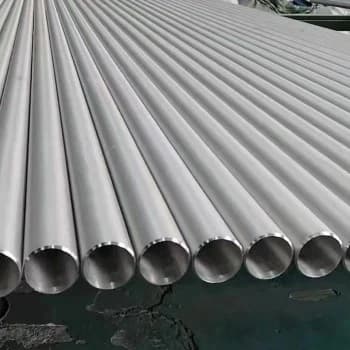
Product Description
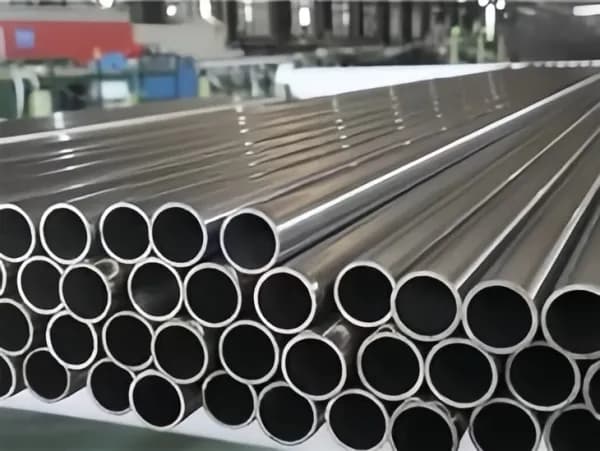
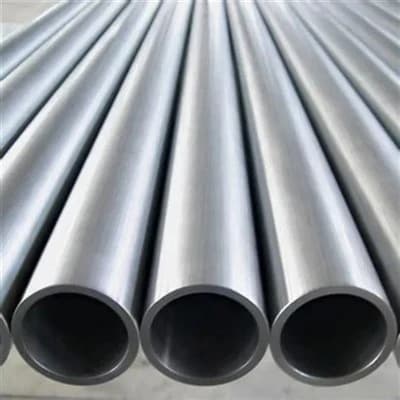
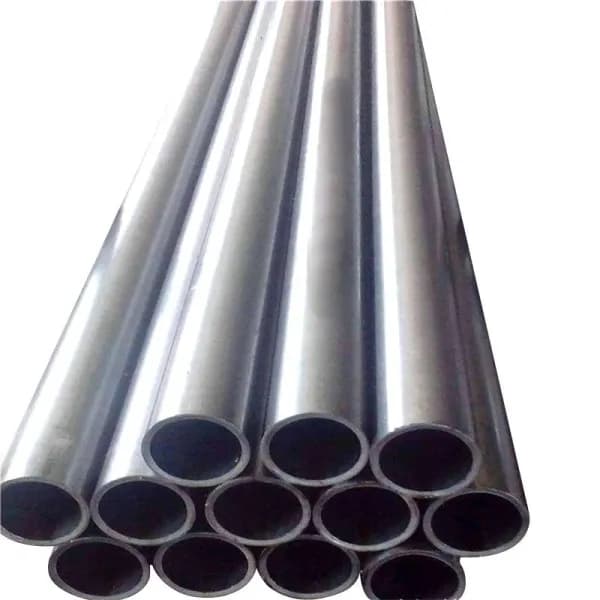
Hastelloy C276 seamless pipe — also written Hastelloy C-276, Alloy C276, UNS N10276 or DIN 2.4819 (EN NiMo16Cr15W) — is a wrought nickel-molybdenum-chromium-tungsten corrosion-resistant alloy supplied in the solution-annealed condition to ASTM B622 / ASME SB622. Seamless is the production route as well as the purchase intent: the pipe is formed without a longitudinal weld, so there is no weld seam to qualify and no weld-zone corrosion allowance to carry through the pipeline. The welded form of the same alloy is a different product, governed by ASTM B619 / ASME SB619.
The grade sits at the high-molybdenum end of the nickel alloy family. Molybdenum (15.0–17.0 %) together with tungsten (3.0–4.5 %) carries resistance to reducing acids, chromium (14.5–16.5 %) carries resistance to oxidising media, and the nickel base gives the alloy practical immunity to chloride stress-corrosion cracking. That combination, rather than one headline property, is why C276 is specified for chlorine-side, hypochlorite, chlorine dioxide and mixed-acid duties where 316L and the 6 % Mo super-austenitics are limited by reducing-acid or chloride attack. Actual performance always depends on concentration, temperature, aeration and impurity level, so state the medium when you request a quotation.
Chemical Composition
The limits below are the UNS N10276 composition applied by ASTM B622 to seamless nickel-alloy pipe, in weight percent. Nickel is specified as the remainder rather than as a numeric band, and tungsten and vanadium are an integral part of this grade, so compilations that omit them are incomplete tables for C276.
| Element | Content (wt %) |
|---|---|
| Nickel (Ni) | Balance |
| Chromium (Cr) | 14.5–16.5 |
| Molybdenum (Mo) | 15.0–17.0 |
| Tungsten (W) | 3.0–4.5 |
| Iron (Fe) | 4.0–7.0 |
| Cobalt (Co) | ≤2.5 |
| Carbon (C) | ≤0.010 |
| Manganese (Mn) | ≤1.0 |
| Silicon (Si) | ≤0.08 |
| Vanadium (V) | ≤0.35 |
| Phosphorus (P) | ≤0.04 |
| Sulfur (S) | ≤0.03 |
The low carbon (≤0.010 %) and low silicon (≤0.08 %) limits are deliberate: they are what keep the alloy from sensitising in the weld heat-affected zone. A compilation that shows nickel as a band such as 50–60 % is quoting typical analysis, not the specification limit.
Mechanical Properties
These are the minimum room-temperature requirements that ASTM B622 places on annealed UNS N10276 seamless pipe and tube. They are the values a mill certificate has to meet. Anything described elsewhere as a typical value is higher and is not guaranteed.
| Property | Minimum (annealed) |
|---|---|
| Tensile strength | 690 MPa (100 ksi) |
| Yield strength, 0.2 % offset | 283 MPa (41 ksi) |
| Elongation | 40 % |
Order against the B622 minimums, and require the actual values to be reported on the mill certificate.
Reference physical properties: density 8.89 g/cm³ (0.321 lb/in³), melting range 1323–1371 °C (2415–2500 °F) per Haynes, not an ASTM B622 limit. Hardness is not an acceptance requirement for UNS N10276 seamless product under B622. For sour service, NACE MR0175 / ISO 15156 does impose a 35 HRC maximum, which the mill certificate must confirm.
Standards and Product Forms
Nickel alloy products are split across a family of ASTM specifications by product form, and the same nominal alloy is regularly quoted against the wrong one. The table below is the orientation map for C276: pipe and tube, plate, bar, forgings and fittings each sit under their own designation, with the ASME SB- equivalents used for coded work under Section VIII and B31.3.
| Product form | ASTM standard | Note |
|---|---|---|
| Seamless pipe and tube | ASTM B622 / ASME SB622 | This product |
| Welded pipe | ASTM B619 / ASME SB619 | Different production route, not a substitute for a seamless requirement |
| Welded tube | ASTM B626 / ASME SB626 | Heat-exchanger and similar welded tube |
| Plate, sheet and strip | ASTM B575 / ASME SB575 | See the Hastelloy C276 plate and sheet page |
| Rod and bar | ASTM B574 / ASME SB574 | Bar stock for machined parts |
| Forgings and flanges | ASTM B564 / ASME SB564 | Wrought stock for flanges and fittings |
| Factory-made fittings | ASTM B366 / ASME SB366 | Elbows, tees and reducers, see the Hastelloy C276 elbow page |
Within the seamless route, nominal dimensions follow ASME B36.19M for the S-suffix schedules and ASME B36.10M for schedules written without an S. The same nominal size with the same schedule number can mean two different wall thicknesses: at NPS 12, schedule 40S is 0.375 in. while schedule 40 is 0.406 in. Quote the wall thickness, or the schedule exactly as your line specification writes it and say which standard it belongs to, and the pipe will be ordered at the intended wall. Two standards that appear on this grade elsewhere do not belong to this page: ASTM B775 covers the welded pipe form rather than seamless product, and the Hastelloy B-2 grade sometimes listed beside C276 is a different alloy (UNS N10665, nickel-molybdenum with no chromium), not a C276 variant.
Corrosion Resistance and Service Limits
C276 is a general-purpose corrosion alloy rather than a narrow specialist, and that is the reason it is chosen when the process chemistry is unknown, mixed, or swings between oxidising and reducing conditions during upsets. It is routinely specified for wet chlorine gas, hypochlorite and chlorine dioxide solutions, ferric and cupric chlorides, hot sulphuric and hydrochloric acid, acetic and formic acids, seawater and brine, and contaminated mixed-acid and scrubber liquors. It handles these media without depending on a passive film that a single process upset can strip.
Three limits matter more than any marketing number. First, temperature: the alloy is not recommended for continuous service above 677 °C (1250 °F), and extended exposure in the 540–760 °C band precipitates mu- and sigma-type intermetallic phases that reduce toughness, ductility and corrosion resistance while the pipe still looks sound. For sustained high-temperature service, Hastelloy X or another high-temperature nickel alloy is the right family.
Second, corrosion rate: published rates for C276 span more than two orders of magnitude because each is tied to a specific medium, concentration, temperature, aeration and test duration. A rate taken from another duty cannot be transferred, and there is no industry-standard corrosion rate to measure one against; immersion or electrochemical testing against your actual medium is the only meaningful check. Third, sour service: the alloy is listed for H2S service, but qualification is project-specific, governed by the 35 HRC hardness cap, the H2S partial pressure, the pH and chloride level, and by NACE TM0177 Method A or B testing when the specification calls for it.
At the other end of the scale the alloy is austenitic with a face-centred cubic structure, so it shows no ductile-to-brittle transition and is used for cryogenic transfer piping; ASME Section VIII Division 1 accepts it for cryogenic pressure service without impact-testing requirements. Working pressure is a design calculation, not a material property: it is derived from the allowable stress for UNS N10276 in ASME BPVC Section II Part D using the wall thickness, corrosion allowance and weld joint factor of the actual line, so any single pressure rating quoted without those inputs should be treated as indicative only.
C276 Compared with C22 and Neighbouring Grades
C276 and C22 are the two grades buyers most often confuse, and the difference is an alloy-design trade-off rather than a quality ranking. C22 carries roughly 20.0–22.5 % chromium with 12.5–14.5 % molybdenum and 2.5–3.5 % tungsten, while C276 trades chromium for molybdenum. The result is a different centre of gravity within the same family, set out below so that the two pages are not used interchangeably.
| Aspect | Hastelloy C276 (UNS N10276) | Hastelloy C22 (UNS N06022) |
|---|---|---|
| Chromium | 14.5–16.5 % | 20.0–22.5 % |
| Molybdenum | 15.0–17.0 % | 12.5–14.5 % |
| Strongest in | Reducing acids, such as hydrochloric and sulphuric | Oxidising media, such as wet chlorine and hypochlorite |
| Matching weld filler | ERNiCrMo-4 (AWS A5.14) | ERNiCrMo-10 (AWS A5.14) |
| Seamless standard | ASTM B622 / ASME SB622 | ASTM B622 / ASME SB622 |
If the process swings between oxidising and reducing conditions, C22 is usually the more forgiving choice and is covered on the Hastelloy C22 seamless tube page. If the duty is dominated by hot reducing acid, C276 is the stronger grade. Two further confusions are worth clearing up. C276 is not an Inconel grade: supplier pages that write Inconel C276 or Inconel 276 are using a trade name that does not exist, and the correct identifiers are the trade name, UNS N10276 and W.Nr. 2.4819. And ASTM A967, the chemical passivation standard sometimes quoted for this pipe, is written for stainless steel parts and its scope does not extend to nickel-based alloys. The same applies to the surface-texture reference occasionally printed as ASTM B46.1, which should read ASME B46.1 and defines how roughness is measured rather than a required finish for pipe.
Other forms of the same grade are covered on their own pages, and the Hastelloy alloy coil page owns the cross-grade C-276, C-22, B-3 and X comparison. For the piping family as a whole see stainless steel, nickel and alloy piping, and for the carbon and low-alloy side of this category see alloy steel pipe.
Fabrication, Welding and Machining
C276 is routinely placed in service in the as-welded condition, and the reason is compositional: carbon at ≤0.010 % and silicon at ≤0.08 % suppress carbide and silicide precipitation in the heat-affected zone, so post-weld solution annealing is normally not required. That is a materials statement, not a licence to ignore heat input. Excessive heat still precipitates the mu- and P-phase particles the chemistry is designed to avoid, which is why C276 is welded with controlled heat input, low interpass temperature and correctly matched consumables rather than with stainless-steel practice. The matching filler is AWS A5.14 ERNiCrMo-4 for GTAW and GMAW, with ENiCrMo-4 covered electrodes for SMAW. A non-matching filler creates a galvanic couple at the weld interface and can reduce weld-zone corrosion resistance substantially, and submerged-arc welding is generally avoided because of dilution.
Where a component has been heavily cold worked, solution annealing at the Haynes annealing temperature of 1121 °C (2050 °F) followed by rapid cooling restores the annealed structure; slow cooling through the intermediate temperature range does the opposite and leaves inventory with reduced corrosion resistance and ductility. Machining is of moderate difficulty because the alloy work-hardens rapidly: use sharp positive-rake tooling, generous coolant flow, and cutting speeds roughly 30 % below those used for 316L. Cold forming is practical with allowance for springback and with intermediate anneals on heavy deformation. Fittings for the same line are supplied against matching grades on the Hastelloy pipe fittings page so that the whole system can be sourced to consistent grades.
Applications
Seamless C276 pipe is specified for chemical process pipework carrying aggressive acids and acid mixtures, especially hydrochloric and sulphuric acid circuits, and for the chlorine side of the chemical industry: wet chlorine gas, hypochlorite and chlorine dioxide lines, and ferric or cupric chloride solutions. Flue-gas desulfurisation scrubbers, dampers and outlet ductwork are a large recurring application because the condensate is a hot, chloride-bearing acid. Other uses include pulp and paper bleach-plant circuits, black-liquor and tall-oil acidulation lines, pharmaceutical and fine-chemical transfer piping where corrosion products are unacceptable, sour oil and gas equipment qualified to NACE MR0175 / ISO 15156, seawater and brine cooling systems, and waste-treatment or hazardous-waste incineration scrubbers.
Because the same grade is produced in several forms for different intents, plate and sheet for vessels and liners, coil for formed parts, bar for machined components, it pays to keep those requirements on separate inquiries. Each form is then quoted against its own standard rather than against a generic Hastelloy line that may not match the form you actually need.
Common Questions about C276 Seamless Pipe
Is a seamless C276 pipe ever supplied to ASTM B619?
No. ASTM B622 / ASME SB622 is the specification for seamless nickel and nickel-cobalt alloy pipe and tube, while ASTM B619 / ASME SB619 covers the welded pipe form of the same UNS N10276 chemistry. A datasheet offering a seamless B619 pipe is internally inconsistent, because the difference between the two standards is the production route, not the alloy. State whether your line specification calls for a seamless or a welded route before the enquiry is priced.
What mechanical properties are guaranteed for annealed C276 seamless pipe?
ASTM B622 requires a minimum tensile strength of 690 MPa (100 ksi), a 0.2 % offset yield strength of 283 MPa (41 ksi) and 40 % minimum elongation for annealed UNS N10276 seamless pipe. You can require the actual values to be reported on the mill certificate, but the contractual floor is the B622 minimum.
What is the maximum service temperature for C276 pipe?
Continuous service is not recommended above 677 °C (1250 °F), which is the temperature to which ASME Section II Part D lists the alloy. Extended exposure between 540 °C and 760 °C precipitates intermetallic phases that reduce toughness, ductility and corrosion resistance even though the pipe still looks sound. If the duty is sustained high-temperature oxidising service rather than wet corrosion service, a high-temperature nickel alloy such as Hastelloy X is the better family.
Can a published corrosion rate be used to select the pipe?
A single rate is not usable on its own. Corrosion rates quoted for C276 vary by more than two orders of magnitude because they depend on the medium, its concentration, temperature and aeration, and on the test duration and method. Give us the medium, concentration and temperature and the assessment can be framed against your actual duty.
Which filler metal and what documentation should I specify?
Matching filler for C276 is AWS A5.14 ERNiCrMo-4 for GTAW and GMAW, and ENiCrMo-4 electrodes for SMAW; a non-matching filler can reduce weld-zone corrosion resistance. For the pipe itself, specify the standard (ASTM B622 / ASME SB622), size and schedule, the solution-annealed condition, end preparation, the testing route and whether it is full-length or lot-based, and the certification you need. For sour service, add the NACE MR0175 / ISO 15156 requirement explicitly, including the 35 HRC maximum, so that the mill certificate carries the hardness result your reviewer will ask for.
Ordering Information
Send the following and the pipe can be quoted against the correct standard: quantity; nominal size and schedule to ASME B36.19M or B36.10M, or outside diameter by wall thickness; length, and whether single random, double random or cut to length; the governing standard, normally ASTM B622 / ASME SB622; condition (solution annealed) and surface finish (pickled or bright annealed); end preparation, plain, beveled or threaded, with the thread standard if threaded, since NPT threads are governed by ASME B1.20.1 rather than by ASTM F468, which is a bolting specification; the testing route, hydrostatic or non-destructive electric test, and whether full-length or lot-based; required documentation such as an EN 10204 3.1 mill certificate; and, where corrosion performance or sour service has to be judged, the medium, concentration, temperature and the applicable NACE requirement. Sizes, schedules and lengths are confirmed against the order before production.