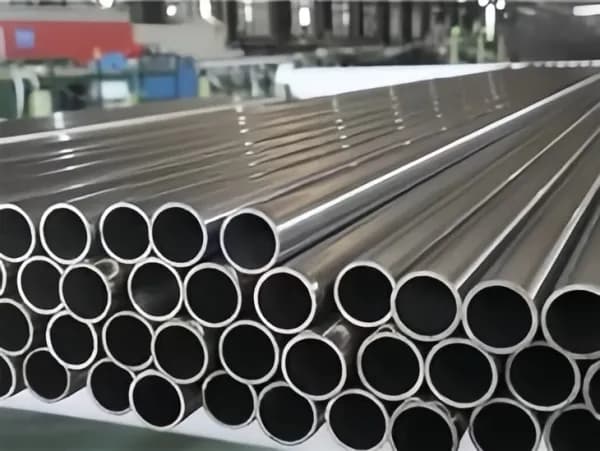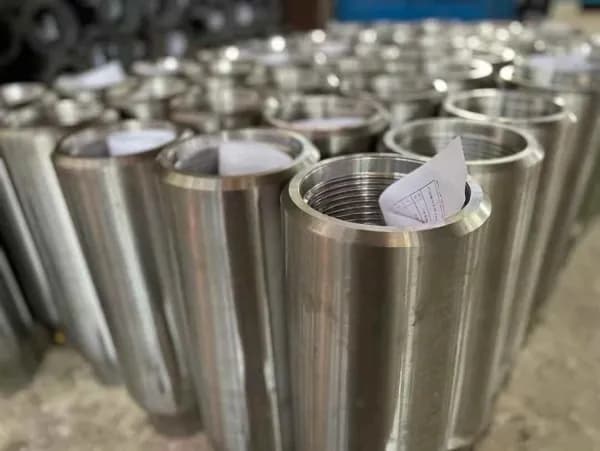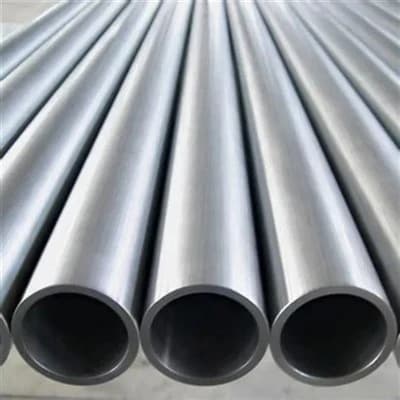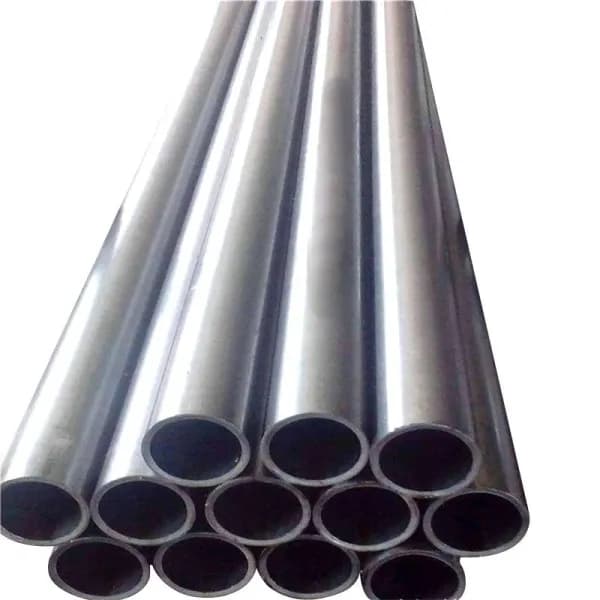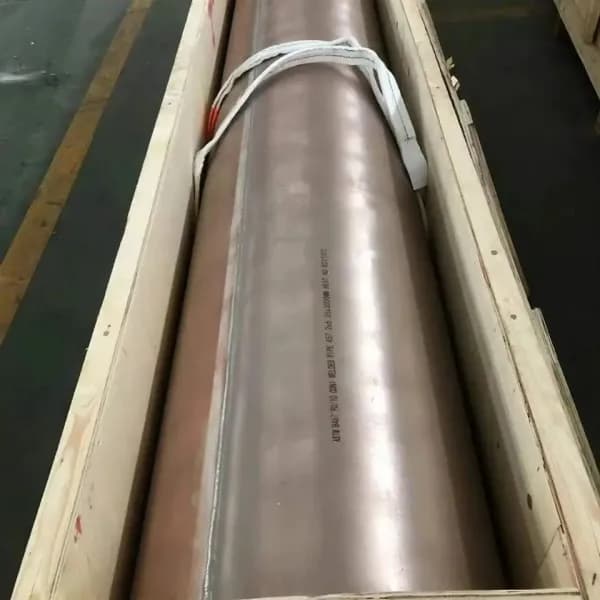
Product Description
C70600 copper-nickel tube is the 90/10 cupronickel seamless tube (UNS C70600, CuNi10Fe1Mn) specified for seawater-cooled heat exchangers, surface condensers and desalination plant tubing. C70600 is the 90/10 grade: copper is the remainder, nickel is 9.0–11.0%, and the limits are in the table below. That combination, rather than the copper on its own, is what holds up against flowing seawater: plain copper and the brasses lose their resistance at the velocities and temperatures a real seawater circuit runs at.
The usual order standard for this product form is ASTM B111 / ASME SB111, "seamless condenser tubes and ferrule stock". Tube is supplied in two tempers at the purchaser's option: O61 annealed for tube that will be rolled, expanded or bent, and H55 light-drawn where a straight, harder tube is required. Service life depends on the seawater chemistry, velocity and temperature, on the corrosion allowance and on how the circuit is cleaned, so the service conditions should travel with the enquiry instead of being assumed at quotation.
This page covers the seamless tube form. Other tube and pipe forms of the same alloy, and the parallel routes used where a non-copper material is preferred, are set out in the stainless steel, nickel and alloy piping family page.
Chemical Composition of C70600 Tube
The table below is the C70600 row of ASTM B111 / ASME SB111. Two footnotes decide how a certificate is read in practice: the nickel figure includes cobalt and the copper figure includes silver, and when every element is analysed the copper plus the named elements must total 99.5% minimum.
| Element | Min, % | Max, % |
|---|---|---|
| Copper (Cu), includes Ag | — | Remainder |
| Nickel (Ni), includes Co | 9.0 | 11.0 |
| Iron (Fe) | 1.0 | 1.8 |
| Manganese (Mn) | — | 1.0 |
| Zinc (Zn) | — | 1.0 |
| Lead (Pb) | — | 0.05 |
| Cu + named elements | 99.5 | — |
The manganese limit is sometimes mistyped as "Mg 1 max" in circulating data sheets. Magnesium is not an alloying element in C70600; the element with a 1.0% maximum is manganese, and a certificate carrying magnesium instead of manganese should be sent back to the mill.
Mechanical Properties by Temper
The values below are specification minima for tube, not typical values, and they apply per temper. Note the basis of the yield figure: wrought copper alloys are reported at 0.5% extension under load, not at the 0.2% offset used for steel, so these yield numbers are not directly comparable with a steel data sheet.
| Temper | Condition | Tensile strength, min | Yield strength, min (0.5% extension) | Elongation, min |
|---|---|---|---|---|
| O61 | Annealed | 275 MPa (40 ksi) | 105 MPa (15 ksi) | 30% |
| H55 | Light-drawn / light cold worked | 310 MPa (45 ksi) | 240 MPa (35 ksi) | No elongation minimum is stated on this page |
Typical hardness is 15 HRB annealed and 72 HRB light-drawn, and it is not an acceptance requirement. The alloy is not strengthened by heat treatment, so the temper is the only strength option on the drawing.
Physical Properties Used in Heat Transfer Design
These are room-temperature reference values for the alloy, taken from the Copper Development Association alloy data for C70600. Use them for preliminary sizing only and take the final thermal and mechanical design from the applicable design code or from the mill data sheet.
| Property | Value |
|---|---|
| Density | 8.94 g/cm³ (0.323 lb/in³) |
| Melting range (solidus to liquidus) | 1099–1149 °C (2010–2100 °F) |
| Thermal conductivity | 45 W/(m·K) at 20 °C (26 Btu/(h·ft²·°F/ft) at 68 °F) |
| Electrical conductivity | 9% IACS at 68 °F |
| Coefficient of thermal expansion | 9.5 × 10⁻⁶ per °F (68–572 °F), 17.1 × 10⁻⁶ per °C |
| Specific heat | 0.09 Btu/(lb·°F) at 68 °F |
| Modulus of elasticity in tension | 18,000 ksi, 124 GPa |
| Modulus of rigidity | 6,800 ksi, 47 GPa |
Tube and Pipe Are Not Interchangeable
Copper-nickel is sold in two round forms that share an alloy but not a standard or an ordering convention. Tube is ordered by outside diameter and wall thickness; pipe is ordered by nominal pipe size and schedule. A quotation that mixes the two will not match the drawing, and the welded and seamless routes sit under different specifications again. The table maps the forms to the standards that govern them.
| Form | Standard | Ordering basis |
|---|---|---|
| Seamless condenser and heat exchanger tube | ASTM B111/B111M, ASME SB111 | OD × wall thickness — this page |
| U-bend tube | ASTM B395/B395M, ASME SB395 | OD × wall, bend radius |
| Welded heat exchanger tube | ASTM B543/B543M, ASME SB543 | OD × wall |
| Tube for water desalting plants (seamless and welded) | ASTM B552 | OD × wall |
| Seamless copper-nickel pipe and tube | ASTM B466/B466M, ASME SB466 | NPS × schedule, or OD × wall |
| Welded copper-nickel pipe | ASTM B467, ASME SB467, B608 | NPS × schedule |
| Integral-fin tube | ASTM B359/B359M, ASME SB359 | Fins extruded from the base tube |
Where the same seawater duty is met with a non-copper material, the usual alternatives are 254 SMO stainless steel tube, titanium alloy pipe or a nickel alloy such as Hastelloy C-276. Titanium and the super-austenitics win on erosion resistance and on chloride pitting resistance, C70600 wins on thermal conductivity, on biofouling behaviour and on cost; the trade-off is the reason both families stay in service.
Seawater Service and Fabrication Notes
Three things decide whether a C70600 tube lasts in service, and all three are fixed by the order rather than by the alloy name. The first is the iron level. An iron content of 1.0–1.8% is what forms and stabilises the protective corrosion-product film on the bore; stock melted below that window will pit even when the nickel figure reads correctly, so the iron value on the mill certificate matters as much as the nickel value. The second is velocity: 3.0 m/s is the cited upper limit for C70600 in clean seawater, and it should be checked against the actual circuit rather than assumed, because entrained sand and air change the erosion picture. The third is the corrosion allowance and the cleaning regime built into the thermal design.
C70600 is not strengthened by heat treatment; cold work is the only way to raise it above the annealed condition. Annealing is carried out at 593–816 °C (1100–1500 °F) and hot working at 843–954 °C (1550–1750 °F). The alloy solders and brazes well, and takes gas-shielded arc and butt welds; welded joints should use a matching copper-nickel filler metal rather than a plain copper filler, and the procedure should be qualified for the wall thickness on order. Machinability is rated at about 20% of free-cutting brass C36000, which is normal for a cupronickel and worth knowing before a machining operation is planned.
Applications
C70600 tube is specified where the cooling medium is seawater or brackish water and the wall has to transfer heat at the same time:
- Seawater-cooled shell-and-tube heat exchangers and surface condensers in power generation and in shipboard machinery
- Desalination plant tubing — brine heaters, evaporators and distiller tubing
- Offshore and coastal cooling circuits, firewater systems and ballast water lines
- Refinery and petrochemical coolers using seawater or brackish cooling water
- Ferrule stock for condenser tube ends
The page covers the tube form of the alloy. Plate, sheet, bar, tube sheet and fittings in the same grade are separate products and are quoted separately; the alloy steel pipe category page indexes the other pipe and tube grades held alongside this one.
Ordering Information
To quote a C70600 tube order, state the grade and UNS number; the standard the order is placed to (ASTM B111 / ASME SB111 for plain straight tube, B395 for U-bend tube, B552 where the tubing is written into a desalting plant specification); the temper, O61 or H55; outside diameter and wall thickness, and whether thickness is given in millimetres or BWG; whether the drawing calls out tolerances tighter than the specification; length, and whether tube is straight or U-bend with the bend radius; end finish; and quantity. Testing beyond the standard should be listed explicitly: hydrostatic or eddy-current test, expansion and flattening tests, grain size, residual stress, and third-party inspection where the classification society or the end user requires it. Documentation should name the mill test certificate, the heat and product analysis and the edition of the standard. Size and temper combinations outside the tables of the ordered standard are confirmed per order rather than assumed.
Common Questions about C70600 Copper-Nickel Tube
Can I order C70600 tube by pipe schedule?
No. Seamless condenser tube to ASTM B111 is ordered by outside diameter and wall thickness, usually in millimetres or BWG. Pipe schedules such as SCH 40 or SCH 80 belong to pipe ordered to ASTM B466 / B467, which is a different form with a different dimensional basis. If a drawing gives both an NPS and a schedule, the order is for pipe, not for tube, and should say so.
What iron content should the mill certificate show?
Iron between 1.0% and 1.8%, with nickel between 9.0% and 11.0%, and a total of copper plus the named elements of at least 99.5%. Iron is the element most often out of balance in welded or remelted stock, and iron below the window degrades seawater performance even when the nickel value is correct. Read the product analysis as well as the heat analysis, and treat an iron figure outside the window as a query rather than accepting the certificate on the nickel value alone.
Which temper should I order, O61 or H55?
Order O61 annealed where the tube has to be rolled into a tube sheet, expanded, or bent into a U-bend, because the annealed tube carries the elongation needed for those operations. Order H55 light-drawn where the tube is a straight run and the higher minimum tensile and yield strengths (310 MPa and 240 MPa against 275 MPa and 105 MPa) are wanted, or where resistance to denting during handling matters. Do not assume H55 for U-bend work: confirm the bend radius with the tube mill before ordering a light-drawn condition for a bent tube.
What is the difference between C70600 and C71500?
C70600 is the 90/10 grade, with 9–11% nickel; C71500 is the 70/30 grade. C71500 is the stronger of the two and tolerates higher seawater velocities, while C70600 has the higher thermal conductivity and the lower cost for a given tube bundle. C71500 is a separate product and is not supplied in place of C70600: the grade has to be stated on the enquiry.