
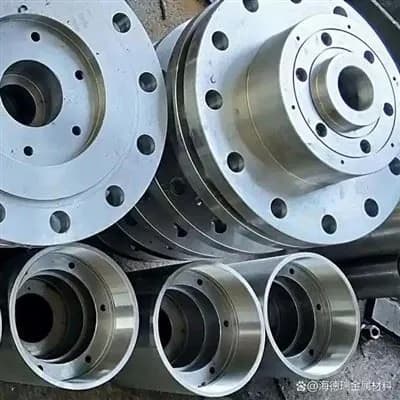
A threaded flange screws onto externally threaded pipe, so the joint is assembled without welding. Specify it only where the pressure class, temperature and service permit a mechanical joint: the thread carries the load, and thermal cycling or vibration can loosen it.
How the Joint Is Made
The bore carries an internal tapered pipe thread. The pipe end is threaded to match, sealant or PTFE tape is applied, and the flange is screwed on to the required engagement. Because assembly is mechanical, the job needs no hot work permit, no welder qualification and no weld examination. The trade-off is that the thread becomes the pressure boundary, so joint integrity depends on thread form, engagement and sealant rather than on a qualified weld.
Thread Standards
North American orders normally use NPT threads to ASME B1.20.1, which have a 1:16 taper: the diameter changes by one unit for every 16 units of thread length. European and many Asian orders use BSP threads to ISO 7. NPT and BSP are not interchangeable even where the nominal size matches, so state the thread standard together with the flange standard and pressure class.
Pressure Class and Temperature Limits
Threaded flanges to ASME B16.5 are produced for sizes from NPS 1/2 through NPS 24, that is pipe outside diameters of about 21.3 mm to 610 mm, although supply in practice concentrates on the smaller sizes and lower classes. Most enquiries are Class 150 or Class 300; confirm availability before specifying a higher class on a threaded joint. Temperature is the second limit. The applicable construction code restricts where threaded joints may be used, and thermal cycling is a recognised cause of weeping at the thread. Check the current edition of ASME B31.3 for the service limits that apply to your line.
Materials
Threaded flanges need a material that machines to a clean thread. Forged carbon steel to ASTM A105 is the common choice for general service; see ASTM A105 carbon steel flange and carbon steel threaded flange. Stainless grades to ASTM A182 F304 and F316 are used where the media requires it, and galling during assembly is a real risk with austenitic threads; see ASME B16.5 stainless steel flanges. Check that the thread sealant is compatible with the flange material.
Where Threaded Flanges Are Used
Hazardous areas where hot work is not permitted, such as gas plants and live process units
Small-bore utility, instrument and chemical injection lines
Firewater systems where fast assembly matters more than maximum rating
Temporary or emergency connections that will be dismantled again
Lines opened regularly for cleaning or maintenance
Threaded Compared with Welded Flange Types
| Factor | Threaded | Slip-on | Weld neck |
|---|---|---|---|
| Assembly | Screwed onto threaded pipe, no welding | Two fillet welds | One full-penetration butt weld |
| Hot work and permits | None | Required | Required |
| Classes usually enquired | Class 150 and Class 300 | Class 150 to Class 600 | Across the class range to 2500 |
| Behaviour under cycling | Can loosen; needs re-checking | Better, but a crevice remains at the bore | Best; the tapered hub spreads stress |
| Examination | Visual and leak test | Surface examination of fillet welds | Volumetric examination of the butt weld |
Installation Checks
Confirm the pipe thread standard and gauge match the flange before assembly.
Apply sealant or PTFE tape to the pipe thread, not inside the flange bore.
Tighten to the engagement you specified; over-tightening splits thin hubs and galls stainless threads.
Do not chase a weeping joint with more torque: dismantle, clean and re-seal.
Leak test the joint at the agreed pressure before the line goes into service.
Add the joint to the periodic inspection list if the line cycles thermally.
What to Confirm with Your Inquiry
Standard and pressure class
Size and thread standard: NPT to ASME B1.20.1 or BSP to ISO 7
Material specification
Facing type and sealant compatibility
Quantity and any certificate requirement
Send the size, class and thread standard with your inquiry and we will confirm what can be supplied.



