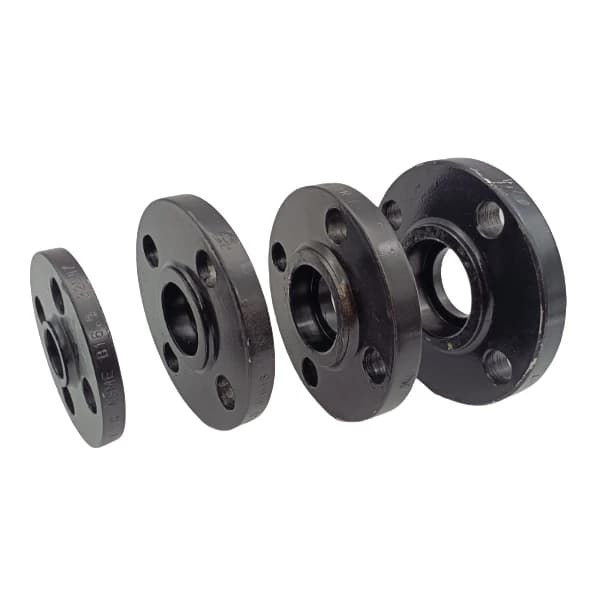
Product Description
An ASTM A105 carbon steel flange is a forged carbon steel piping component for ambient and higher-temperature service in pressure systems. ASTM A105/A105M is the forging specification. The flange outline, facing, and pressure class are a separate order item, most often ASME B16.5 for NPS 1/2 through NPS 24. This page covers the forging grade. It is not a stock list of one size or one class.
A105 is the usual carbon steel forging when the service is not corrosive and is not a low-temperature design. It is not ASTM A350 LF2, which is ordered when impact testing is required. It is not ASTM A694, which is a high-yield forging grade for transmission piping. It is also not a plate flange: A105 does not cover raw plate, bar, or tube, and a flange cut from plate is a different product.
What This Page Covers
Use this page to choose the forging grade. Use a type page when the joint itself is the question.
| Question | Where it belongs |
|---|---|
| Forged carbon steel flange for general pressure service | This page, ASTM A105 |
| Impact-tested forging for low-temperature service | ASTM A350 LF2 |
| High-yield forging for transmission piping | ASTM A694 Grade F60 |
| Flange cut from plate, not a forging | Carbon steel plate flange |
| Loose ring over a stub end | Lap joint flange |
| Tapered pipe thread, no weld | Threaded flange |
A slip-on flange slides over the pipe and is fillet welded at the hub and at the bore. That joint is a type choice, not an A105 property. The slip-on page is not published yet, so it is not linked here. Weld neck, socket weld, and blind flanges can also be ordered in A105 when the drawing says so. One order is one type.
Specification Boundary
The rows below are the purchasing boundary for this page. They are not a stock range and not a pressure rating. The active ASTM store edition is A105/A105M-26. Its abstract states that the specification has chemical and tensile requirements, but the store page does not print those tables. Chemistry and tensile numbers are therefore not published here. Earlier editions on the same page are not the active edition, so their tables are not copied either.
| Item | How to read it |
|---|---|
| Forging specification | ASTM A105/A105M. Active store edition is A105/A105M-26. Name the edition on the order if a specific revision is required. |
| What A105 covers | Forged carbon steel piping components for ambient and higher-temperature service in pressure systems, including flanges, fittings, and valves. Maximum forging weight in the specification is 10,000 lb [4540 kg]. Larger forgings are ordered to ASTM A266/A266M, not by stretching A105. |
| What A105 does not cover | Raw plate, raw bar, and raw seamless tube. Tubesheets and hollow cylindrical forgings for pressure-vessel shells are outside this specification. A flange machined from rolled bar or seamless tube is allowed only where the specification itself permits it, and the raw product form is still not A105. |
| Dimension standard | ASME B16.5 for NPS 1/2 through NPS 24. Class 2500 in B16.5 stops at NPS 12. NPS 26 and larger is ASME B16.47, Series A or Series B, stated on the order. NPS 1/2 is DN 15, not DN 10. NPS 24 is DN 600, not a larger number written beside it. |
| Facing | Raised face, flat face, or ring-type joint, as written on the order. These are three joints, not three names for one flange. Raised-face height in B16.5 is 1.6 mm (1/16 in) for Class 150 and 300, and 6.4 mm (1/4 in) from Class 400 upward. |
| Class | An ASME B16.5 pressure class: 150, 300, 400, 600, 900, 1500, or 2500. Class is not a psi number and not a PN number. Allowable pressure is read from the material group at the design temperature in the edition named on the order. |
Material Characteristics
A105 is a carbon steel forging. The strengthening element is carbon, not chromium, molybdenum, or nickel. That is why it is used where the fluid is not corrosive and a stainless or alloy forging is not required. It does not resist corrosion by itself. Coating, painting, or galvanizing is a separate line on the order. It is not included because the forging is A105, and it is not a salt-spray rating.
The flange is a forging, so the grain follows the forged shape. A plate-cut flange does not have that flow. Do not substitute one for the other to meet an A105 callout. Heat treatment, when the order or the named edition requires it, is confirmed on the material test report for that forging. It is not a single furnace recipe published on this page.
Low-temperature toughness is not an A105 property. If the design temperature is at or below the point where the piping code requires impact testing, specify ASTM A350 LF2 and name the class. Class 1 and Class 2 in A350 are impact-test conditions, not two yield strengths. Do not describe A105 as suitable down to −46 °C, and do not describe LF2 as “more corrosion resistant than A105.”
High temperature is also not a single limit printed on the flange. Strength falls as temperature rises, and long-term creep is a design question. If the service is a sustained high-temperature chrome-moly duty, that is an alloy flange, not a reason to stretch A105. Carbon steel remains the general-service forging only when the design temperature is inside the code case for that material group.
Applications
A105 flanges are ordered for non-corrosive pressure piping where a carbon steel forging is the specified material. Typical services include steam and water, refinery and petrochemical lines that are not a corrosion case, power-plant utility piping, and general industrial process lines. Oil and gas transmission that calls for a high-yield grade is an A694 question, not an A105 question.
The pressure class follows the line. A Class 150 water flange and a Class 600 steam flange can both be A105. The class does not change the forging specification, and the forging specification does not set the allowable pressure. Send the design pressure and design temperature with the inquiry so the class can be checked against the B16.5 table instead of guessed from a room-temperature number.
Ordering Information
A quotation needs the items below. A grade name alone is not an order.
- Forging specification and edition, if a specific revision is required. Otherwise the order is read as ASTM A105/A105M.
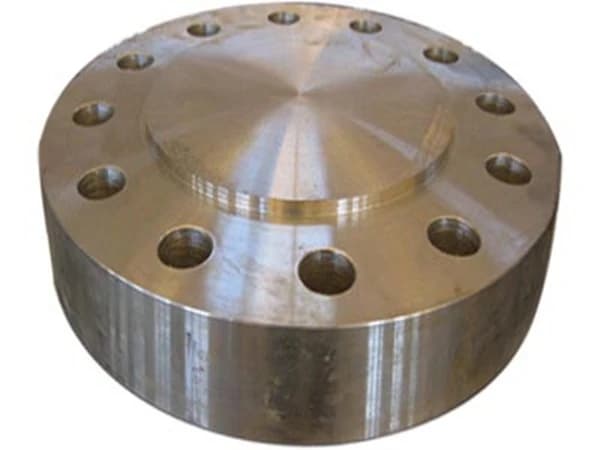
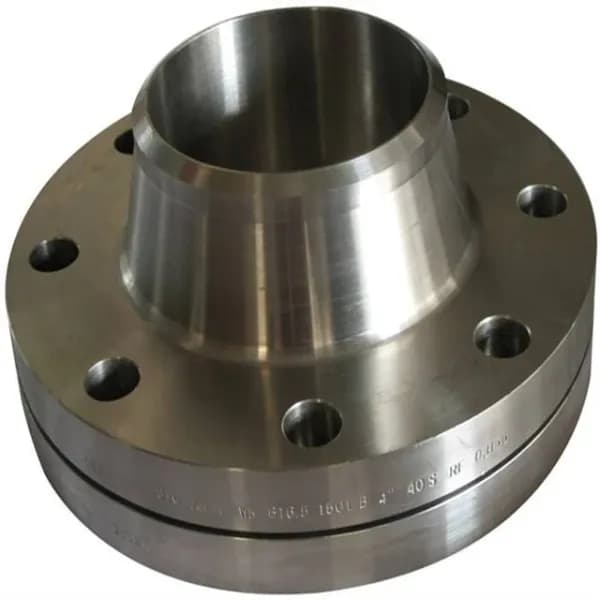
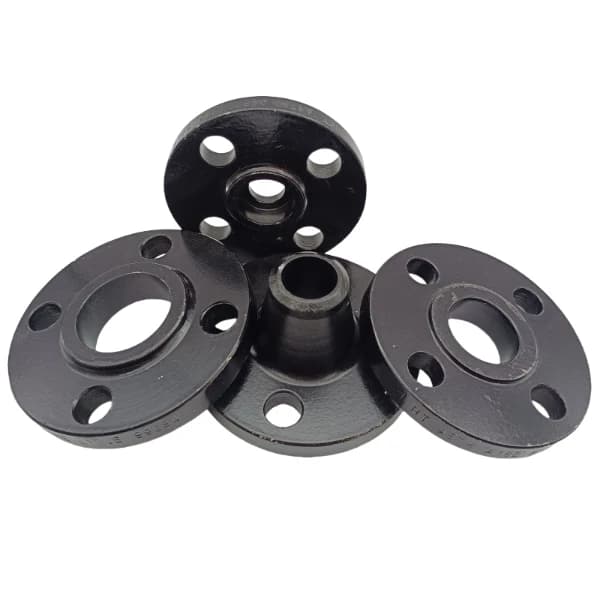
- Flange type: weld neck, slip-on, socket weld, threaded, lap joint, or blind.
- NPS, or DN written as the B16.5 equivalent, and the bore or pipe schedule when the type has a weld end.
- ASME class, or the EN 1092-1 type and PN if the drawing is European. Do not write both as if they were the same rating.
- Facing: raised face, flat face, or ring-type joint. For RTJ, give the ring number.
- Quantity, and any coating or facing finish the specification requires.
- Design pressure, design temperature, and whether impact testing is required. If it is, the grade is probably not A105.
- Documents: material test report to the named edition, and any supplementary test the purchaser writes into the order. Supplementary tests apply only when the order names them.
Purchasing Questions
Is an A105 flange the same as a carbon steel plate flange?
No. ASTM A105/A105M covers forged carbon steel piping components, with a maximum forging weight of 10,000 lb [4540 kg]. It does not cover raw plate. A plate flange is cut from plate and machined. It can follow ASME B16.5 dimensions, but it is not an A105 forging. If the drawing says A105, do not substitute a plate-cut flange.
Can you publish the A105 chemical composition and tensile strength?
Not from the page you can check without the standard. The active store edition, A105/A105M-26, says the specification contains chemical and tensile requirements. The store page does not print the tables, and the earlier editions listed beside it are not the active edition. Acceptance is the material test report read against the edition named on the order. An older page that quoted 485–655 MPa, a 250 MPa yield, or a carbon range of 0.25–0.35% was not an acceptance statement and has been withdrawn.
Does Class 150 mean 150 psi, and can one flange be Class 150 through 2500?
No. Class is the ASME B16.5 rating series. Allowable pressure depends on the material group and the design temperature in the edition on the order. One flange has one class. B16.5 covers NPS 1/2 through NPS 24, and Class 2500 stops at NPS 12. A range such as “1/2 to 60 inch” or “PN20 to PN100” is not a supply range for this product.
When should the order say A350 LF2 instead of A105?
When the design requires Charpy impact testing. A105 is the general-service forging. A350 LF2 is the low-temperature forging, and its Class 1 and Class 2 are different impact-test conditions, not different yield strengths. Do not use A105 below the temperature where the piping code requires impact values unless the order adds that testing. Do not describe either grade as corrosion resistant.
What should the inquiry include?
Specification and edition, flange type, NPS, class or PN, facing, quantity, bore or schedule, design pressure and temperature, coating if required, and the documents you need. Price, stock, and lead time are quoted from that list. They are not a property of the A105 grade.