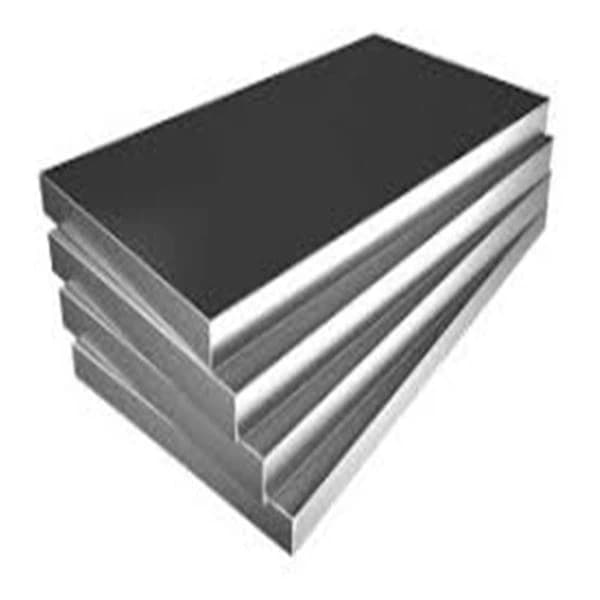
Product Description
304L stainless steel plate is the low-carbon form of Type 304, supplied as UNS S30403 and commonly cross-referenced as EN 1.4307 or 1.4306. It is an austenitic chromium-nickel plate used where the part will be welded and post-weld annealing is not practical. The lower carbon limit is the reason to choose 304L plate instead of standard 304 plate when the weld heat-affected zone must resist sensitization.
In the annealed condition the plate is non-magnetic and can be formed, cut and welded by normal stainless fabrication methods. Corrosion resistance in mild atmospheric, fresh-water and many food-process environments is typical of the 18/8 family, but it is not a seawater or high-chloride grade. Service performance depends on temperature, chloride level, surface finish and whether the weld was left as-welded.
Specifications
Grade identification
Item | 304L plate | 304 plate (separate product) |
UNS | S30403 | S30400 |
EN number | 1.4307 or 1.4306 | 1.4301 |
Carbon, max | 0.030% | 0.07% or 0.08%, by the purchasing standard |
When to specify | Welded plate, especially heavier sections left as-welded | General fabrication where the higher carbon grade is acceptable |
Chemical composition, weight % (reference ranges; the order standard governs)
Element | ASTM A240 Type 304L | TW Metals listing |
Carbon (C) | 0.030 max | 0.03 max |
Manganese (Mn) | 2.00 max | 2 max |
Silicon (Si) | 0.75 max | 0.75 max |
Phosphorus (P) | 0.045 max | 0.045 max |
Sulfur (S) | 0.030 max | 0.03 max |
Chromium (Cr) | 18.0 - 20.0 | 17.5 - 19.5 |
Nickel (Ni) | 8.0 - 12.0 | 8.0 - 12 |
Nitrogen (N) | 0.10 max | 0.1 max |
Iron (Fe) | Balance | Balance |
Chromium and nickel windows differ slightly between ASTM A240 and some supplier tables written to another specification. Do not mix the two limits on one purchase order. Dual-certified 304/304L plate is a separate supply condition and must be requested explicitly.
Mechanical properties for annealed plate (specified minimums, not a guarantee for every thickness)
Property | ASTM A240 Type 304L | TW Metals listing |
Tensile strength, min | 485 MPa (70 ksi) | 70 ksi |
Yield strength, 0.2% offset, min | 170 MPa (25 ksi) | 25 ksi |
Elongation in 50 mm, min | 40% | 40% |
Hardness, max | 201 HBW or 92 HRB | 95 HRB |
These minimums apply to the annealed flat product covered by the named standard. Cold working raises strength and can reduce elongation. Certified values for a delivered plate are those on the mill test certificate.
Dimensions and delivery
Product form | 304L stainless steel plate. Sheet is a separate product form. |
Thickness | To be confirmed for the enquiry. Plate is thicker than sheet; do not assume a sheet thickness or a heavy-block thickness without confirmation. |
Width | Up to 2500 mm, subject to confirmation for the ordered thickness |
Length | Up to 12 m, subject to confirmation for the ordered thickness and width |
Condition | Annealed, unless a cold-worked temper is specified |
Surface | Hot-rolled annealed and pickled, or another finish named on the order |
Standards to confirm | ASTM A240 / ASME SA-240, or EN 10088 |
Material Characteristics
304L plate is selected for welded construction because carbon is held to 0.030% maximum. That limit reduces chromium-carbide precipitation in the heat-affected zone of heavier plate, where a post-weld anneal is often impractical. It does not make the plate immune to corrosion, and it does not remove the need to match filler metal and heat input to the fabrication code.
The grade forms and machines in line with other austenitic 304 products. Strength comes from cold work, not from heat treatment. Annealed plate remains essentially non-magnetic; cold forming can introduce slight magnetism. Toughness is retained at low temperature, which is why the grade is also used for cryogenic vessels when the design code allows it. 304H, the higher-carbon grade used for elevated-temperature service, is not this product and must be ordered separately.
Typical annealed physical values, shared across 304 and 304L in published datasheets, are a density of about 8.00 g/cm3, an elastic modulus of about 193 GPa, thermal conductivity of about 16.2 W/m·K at 100 °C, and a mean thermal expansion of about 17.2 µm/m/°C from 0 to 100 °C. Treat these as reference values, not inspection limits.
For chloride-rich or marine service, 316L or a duplex grade is usually the more suitable plate. 304L remains appropriate for food and pharmaceutical equipment, architectural panels, tanks, and general process vessels in milder media, provided the finish and cleaning regime suit the duty.
Applications
304L stainless steel plate is used where a weldable austenitic plate is enough and a molybdenum-bearing grade is not required. Typical uses include:
Welded tanks, vessels and process equipment
Food and pharmaceutical production equipment
Heat exchangers and chemical process vessels in compatible media
Architectural panels and sanitary fittings
Conveyors and general industrial fabrications
Cutlery, fasteners and springs are common uses of the 304 family in other product forms. They are not reasons to order plate. Compare this item with the Stainless Steel Plate range, and specify standard 304 plate separately when low carbon is not required.
Ordering Information
To quote 304L plate, state UNS S30403 or the EN number required, whether dual-certified 304/304L is acceptable, the purchasing standard, thickness, width, length, quantity, annealed or other condition, surface finish, edge, and any inspection documents. Thickness, width and length are confirmed against the ordered size. Do not reuse the previous open-ended thickness window; confirm the ordered thickness.