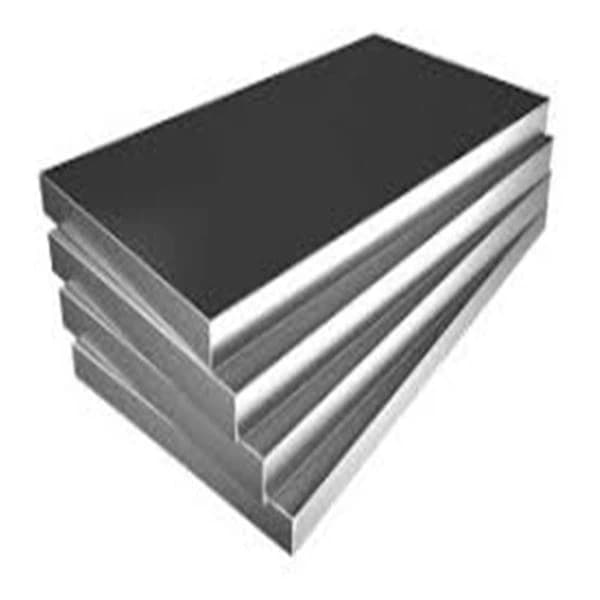
Product Description
304 stainless steel plate is the most widely used austenitic stainless steel plate, a classic 18-8 material containing roughly 18% chromium and 8% nickel (UNS S30400, ASTM A240). The chromium-rich passive film gives the plate good corrosion resistance to many chemicals, industrial atmospheres, and food products. Plate is the heavy-gauge product form used for industrial fabrication, food and beverage processing equipment, and structural components. Dual-certified 304/304L plate is commonly available; 304L (UNS S30403) is the low-carbon version with a maximum of 0.03% carbon for improved resistance to sensitization during welding.
304 plate is readily welded, cut, formed, and machined with proper equipment. It is not hardenable by heat treatment, and it may become slightly magnetic after cold working. Its high ductility supports bending, forming, and fabrication into tanks, counters, and equipment panels. Where aqueous corrosion resistance is important, continuous service in the 425-860 °C (800-1580 °F) range is generally avoided because of sensitization.
Specifications
Chemical composition per ASTM A240 (% by weight):
| Element | 304 | 304L |
|---|---|---|
| Carbon (C) | 0.08 max | 0.03 max |
| Manganese (Mn) | 2.00 max | 2.00 max |
| Silicon (Si) | 0.75 max | 0.75 max |
| Phosphorus (P) | 0.045 max | 0.045 max |
| Sulfur (S) | 0.030 max | 0.030 max |
| Chromium (Cr) | 18.0-20.0 | 18.0-20.0 |
| Nickel (Ni) | 8.0-10.5 | 8.0-12.0 |
| Nitrogen (N) | 0.10 max | 0.10 max |
Mechanical properties (ASTM A240 minimums unless noted; final values subject to the certified mill test report):
| Property | 304 | 304L |
|---|---|---|
| Tensile strength, min | 75 ksi (515 MPa) | 70 ksi (485 MPa) |
| Yield strength, 0.2% offset, min | 30 ksi (205 MPa) | 25 ksi (170 MPa) |
| Elongation in 2 in., min | 40% | 40% |
| Hardness, Brinell | 201 HB max (typically about 170 HB) | 201 HB max |
Reference physical values (subject to confirmation):
| Property | Reference value |
|---|---|
| Density | 0.285 lb/in³ (about 7.9 g/cm³) |
| Thermal conductivity | 9.4 BTU/(h·ft·°F) at 212 °F (about 16.2 W/(m·K)) |
| Elastic modulus | 28 × 10⁶ psi (about 193 GPa) |
| Melting range | 2500-2590 °F (1371-1421 °C) |
Product form and ordering details:
| Item | Details |
|---|---|
| Grade / UNS | 304 (UNS S30400); 304L (UNS S30403); dual 304/304L certification on request |
| Standards | ASTM A240; ASTM A666; AMS 5513 (304) / AMS 5511 (304L) |
| Product form | 304 / 304L stainless steel plate. Sheet is a separate product form. |
| Thickness | 0.45–100 mm |
| Width | Standard widths 1000 mm and 1219 mm; other widths on request, up to 1500 mm |
| Length | Standard lengths 3 m and 6 m; other lengths on request, up to 12 m |
| Finish | Mill finish; #4 brushed polish; other finishes on request |
| Processing | Saw, shear, plasma, laser, and waterjet cutting; leveling, forming, welding, and machining - availability subject to confirmation |
Material Characteristics
The austenitic structure of 304 plate provides high ductility and good formability, so it can be brake-formed and welded into fabrications using common workshop methods. Cold working raises strength but may introduce slight magnetism, which does not indicate a change of grade. Because the alloy is not hardenable by heat treatment, the choice between 304 and 304L is mainly a matter of carbon content and welding or corrosion requirements rather than strength.
Applications
304 stainless steel plate is used across food and beverage processing, including sanitary dairy equipment, brewing, wine-making, and milk processing, as well as commercial kitchen surfaces such as prep tables and sinks. Industrial uses include chemical storage and processing equipment, heat exchangers, hospital equipment, architectural trim, screens for mining and water filtration, petroleum refining equipment, and fasteners. For constant exposure to salt water, brines, or chlorides, 316 is often specified instead of 304 because of its molybdenum content.
Ordering Information
To request a quotation, provide: grade (304, 304L, or dual-certified), thickness, width, and length; finish; tolerance; quantity; certification documents; and any cutting, forming, or machining requirements. Describe the service environment, including temperature, media, and chloride exposure, so the right grade can be confirmed before ordering. Plate and sheet are different product forms with different tolerances, so confirm the product form when you order. For matching forged components, see the 304 stainless steel flange.