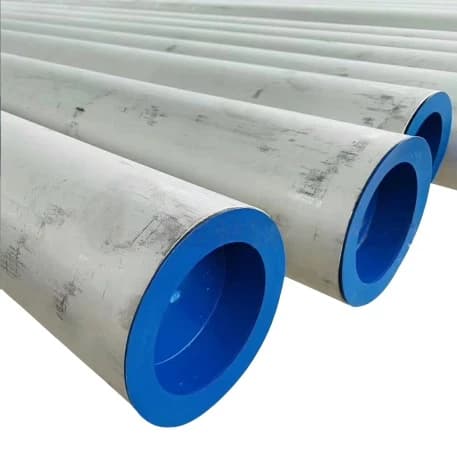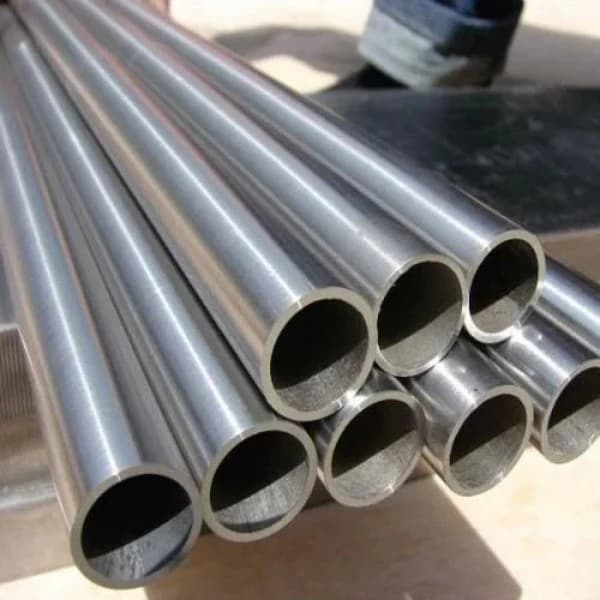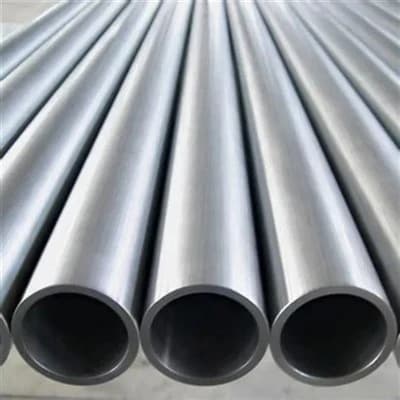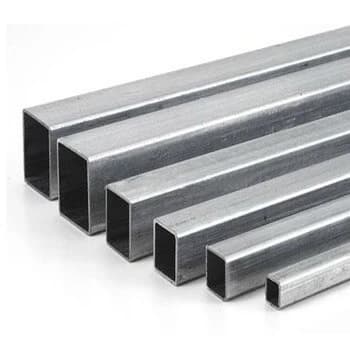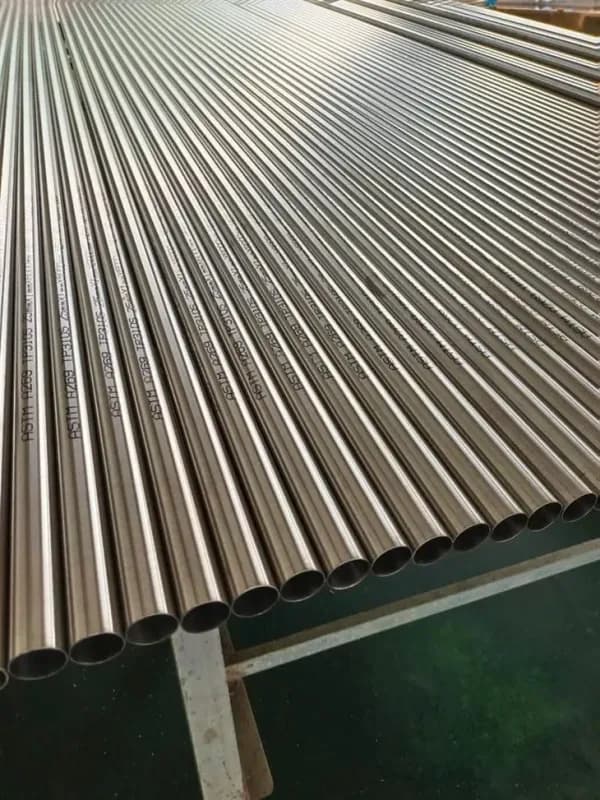
Product Description
310S stainless steel tube is a low-carbon 25Cr-20Ni austenitic heat-resistant grade supplied to ASTM A312 and ASME SA312 for high-temperature and general corrosive service. As UNS S31008 it carries a maximum carbon content of 0.080%, which limits carbide precipitation during welding and long-term thermal exposure, and it is the standard low-carbon variant within the 310 family. The product record lists SCH 5S to SCH XXS schedules and customised lengths up to 12 m. ASTM A312 and ASME SA312 cover both seamless and straight-seam welded pipe; state the required route, size, schedule, length, quantity and documents with your enquiry, and the route is confirmed at quotation rather than assumed.
Ordering Specification
The composition limits below are the standard requirements for UNS S31008 in ASTM A240/A240M, the composition basis ASTM A312 uses for grade TP310S. All values are maximum percentages except the chromium and nickel ranges, and iron is the balance.
| Element | Requirement (% by weight) |
|---|---|
| Carbon, C | 0.080 max |
| Manganese, Mn | 2.00 max |
| Phosphorus, P | 0.045 max |
| Sulfur, S | 0.030 max |
| Silicon, Si | 1.50 max |
| Chromium, Cr | 24.00–26.00 |
| Nickel, Ni | 19.00–22.00 |
| Iron, Fe | Balance |
Mechanical minimums apply to TP310S in the solution-annealed condition required by the standard.
| Property | Minimum requirement |
|---|---|
| Tensile strength | 515 MPa (75 ksi) |
| Yield strength, 0.2% offset | 205 MPa (30 ksi) |
| Elongation in 2 in. or 50 mm | 35% longitudinal per A312; lower transverse values apply per the standard |
| Heat treatment | Solution annealed at 1900°F (1040°C) minimum, water quenched or rapidly cooled |
High-Temperature Service Considerations
Manufacturer datasheet guidance for 310S generally places continuous oxidation resistance at about 2100°F (1150°C) in favourable conditions, with about 1900°F (1035°C) commonly recommended for intermittent or cyclic service; the practical limit depends on atmosphere, mechanical load and thermal cycling, so confirm the operating window for your service before ordering. Relative to the 18Cr-8Ni grades, the higher chromium and nickel contents give better elevated-temperature and creep strength, improved resistance to cyclic oxidation, and useful resistance to sulfidation and moderately carburizing atmospheres. The grade contains no molybdenum, so it is not a seawater or immersed-chloride alloy, and like other austenitic grades it can be susceptible to chloride stress corrosion cracking. Service involving liquid quenching is not usually recommended for this grade.
310, 310S and 310H: Choosing the Right Variant
The 310 family differs mainly in carbon content. Grade 310 (UNS S31000) allows up to 0.25% carbon; 310S (UNS S31008) is limited to 0.080% for improved weldability and reduced sensitisation risk; 310H (UNS S31009) is the 0.04–0.10% carbon modification with a grain-size requirement that supports its higher creep rating. Use the variant named by the purchasing specification and do not substitute one for another without engineering approval, because the higher-carbon variants are a deliberate creep-rating choice rather than a free upgrade.
Ordering Information
Each quotation is built from the inputs below; values not stated are confirmed rather than assumed.
| Item | Requirement or confirmation |
|---|---|
| Grade and standard | 310S (UNS S31008) to ASTM A312 or ASME SA312, edition where specified |
| Manufacturing route | Seamless or straight-seam welded, as the specification requires |
| Size | NPS with schedule, or outside diameter with wall thickness for tube sizes |
| Schedules | SCH 5S to SCH XXS are listed in the product record; heavier walls confirmed at quotation |
| Length | Single random, double random or customised lengths up to 12 m in the product record |
| Quantity | Metres or pieces per size line |
| Documents | Mill test report, plus any additional testing and certificate type required by the project |
For related reading, compare 316L stainless steel pipe for chloride-bearing service, review 304 stainless steel seamless pipe for general-purpose piping, or see the seamless and welded pipe comparison for route selection. The stainless steel pipe category lists the other grades in this family.
Questions Before You Order
What is the difference between 310 and 310S stainless steel tube?
Carbon content. Grade 310 (UNS S31000) permits up to 0.25% carbon, while 310S (UNS S31008) is limited to 0.080%, which reduces carbide precipitation during welding and lowers the sensitisation risk for welded construction. 310H (UNS S31009) carries 0.04–0.10% carbon where creep strength governs. State the variant required by the purchasing specification; the three are not interchangeable without engineering approval.
What temperature can 310S tube withstand?
Manufacturer datasheet guidance generally cites about 2100°F (1150°C) for continuous oxidation resistance in favourable conditions and about 1900°F (1035°C) for intermittent or cyclic service. These are material guidance values, not a performance warranty: the usable temperature depends on atmosphere, load and cycling, and is confirmed against your operating conditions at quotation.
Is 310S tube suitable for welded fabrication?
Yes. The 0.080% carbon limit reduces the risk of carbide precipitation in the heat-affected zone, and the grade is commonly welded with matching 310-type filler metal (for example ER310) under a qualified welding procedure. Post-weld cleaning, pickling or passivation follows the project specification; confirm welding and inspection requirements with your enquiry.
How is ASTM A312 TP310S tube tested and documented?
ASTM A312 requires tension testing of each lot, and each length of pipe is hydrostatically tested or examined by an approved nondestructive method as the standard allows. Chemistry and mechanical results are reported on the mill test report. State any additional requirements, for example an intergranular corrosion practice or positive material identification, together with the certificate type the project needs, so they are confirmed at quotation.