Product Description
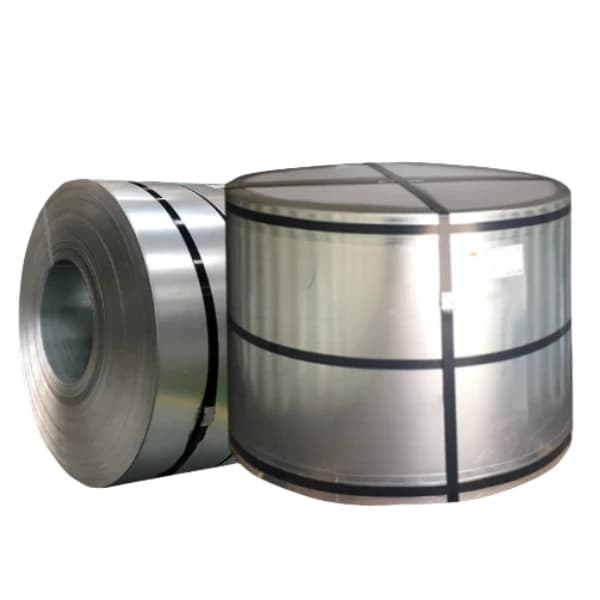
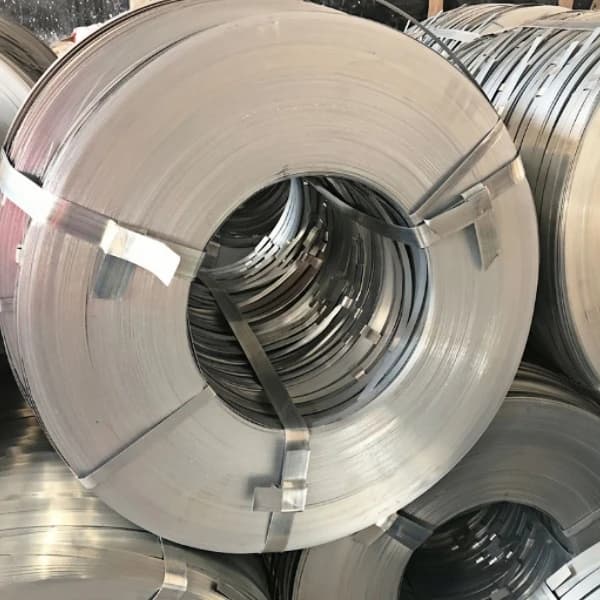
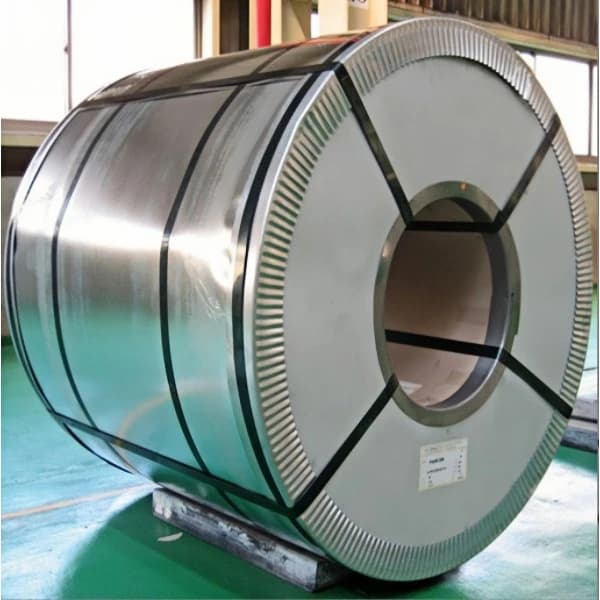
304 stainless steel coil is cold- or hot-rolled austenitic coil in UNS S30400 (AISI 304, EN 1.4301, SUS 304), commonly described as 18/8 stainless steel. It is ordered to ASTM A240 / ASME SA-240 when the applicable product form is plate, sheet or strip. The grade combines general corrosion resistance, good formability and straightforward welding, which is why it remains the default austenitic coil for fabrication, food-equipment parts and architectural work.
Resistance comes from the chromium-nickel balance, 18.0–20.0% chromium and 8.0–10.5% nickel under ASTM A240. That chemistry forms a passive surface film in many atmospheric, freshwater and mild chemical services. It is not a universal corrosion grade: chlorides, elevated temperature and stagnant crevices can still cause pitting or stress corrosion cracking, so the service medium should be confirmed before the grade is fixed.
304L (UNS S30403) is a different grade with a lower carbon maximum, used when heavy sections will be welded and post-weld annealing is impractical. 304H is the higher-carbon variant for elevated-temperature service. This page covers standard 304 coil only; 304L or 304H should be specified separately.
Specifications
Grade, supply and ordering details:
| Item | Reference |
|---|---|
| Grade | 304 stainless steel, UNS S30400, AISI 304, EN 1.4301, SUS 304 |
| Product form | Coil. Slit coil and cut-to-length sheet are separate processing options, confirmed per order. |
| Applicable standards | ASTM A240 / ASME SA-240 for plate, sheet and strip. EN 10088-2 and JIS G4305 may be requested when the order calls for those specifications. |
| Thickness | To be confirmed per order. The previous published range conflicted with the product form and is not offered as a stock range. |
| Width | Minimum width after slitting is 50 mm; other widths are confirmed per order. Mill edge or slit edge. |
| Coil weight / inner diameter | To be confirmed per order. |
| Condition | Annealed is the usual supply condition. Hard, half-hard, quarter-hard or spring temper is available only when specified and confirmed. |
| Surface finish | 2B, BA, No.1, No.4, hairline, brushed or mirror, subject to the ordered thickness and finish. |
| Edge | Mill edge or slit edge |
| Certification | Mill test certificate or EN 10204 type as requested with the order. Certificates are not supplied by default. |
Chemical composition — ASTM A240 reference limits for UNS S30400, percent by weight. Confirm the applicable edition at order stage. These limits are not the same as ASTM A276 bar limits.
| Element | UNS S30400 |
|---|---|
| Carbon (C) | 0.08 max |
| Manganese (Mn) | 2.00 max |
| Silicon (Si) | 0.75 max |
| Phosphorus (P) | 0.045 max |
| Sulfur (S) | 0.030 max |
| Chromium (Cr) | 18.0–20.0 |
| Nickel (Ni) | 8.0–10.5 |
| Nitrogen (N) | 0.10 max |
Mechanical properties — ASTM A240 annealed minimums for UNS S30400 plate, sheet and strip. Values apply to the ordered condition and edition, not to cold-worked or tempered coil.
| Property | Reference minimum |
|---|---|
| Tensile strength | 515 MPa (75 ksi) |
| Yield strength, 0.2% offset | 205 MPa (30 ksi) |
| Elongation in 50 mm | 40% |
| Hardness, maximum | 92 HRB or 201 HBW |
Material Characteristics
Type 304 is an austenitic stainless steel. In the annealed condition it is essentially non-magnetic and can be deep drawn, brake formed or roll formed without intermediate annealing on many light-gauge parts. Cold work raises strength and can make the material slightly magnetic; that response is normal and does not by itself indicate a wrong grade.
Thin sections weld readily with matching austenitic filler, and post-weld annealing is often unnecessary below about 6 mm. Heavier welded sections are more sensitive to sensitization if they are later exposed to corrosive service; for those parts, 304L or a qualified post-weld heat treatment should be considered. Annealed coil is the usual starting point for stamping and roll forming. Tempered strip is a different product condition used for springs and clips, and it must be specified by temper rather than assumed from this page.
Published density is about 8.00 g/cm³, with a melting range near 1400–1450 °C and a modulus of elasticity near 193 GPa. These are typical physical references, not acceptance criteria for a coil shipment.
Applications
304 stainless steel coil is selected when a fabricator needs a formable austenitic coil for general corrosion service, including:
- Food and beverage equipment, tanks, sinks and hollowware
- Kitchen, catering and architectural panels
- Chemical and process equipment in mild media
- Heat-exchanger and condenser components, after the temperature and medium are confirmed
- Automotive trim, tubing and stamped parts
- Springs, clamps and bellows only when a specified temper is ordered
Do not use this coil as a substitute for 316/316L in chloride-rich or marine service, or for duplex grades where higher strength and stress-corrosion resistance are required.
Ordering Information
For a usable quotation, send the grade (304, or 304L / 304H if that is actually required), thickness, width, coil weight or inner diameter, quantity, standard and edition, condition or temper, surface finish, edge type, and any certificate or test requirement. If the coil will be slit or cut to length, include the finished width and length tolerance. A short note on the service medium and temperature is enough to check whether 304 is the right grade.
Compare this item with the Stainless Steel Coil range before fixing size and quantity. Flat plate in the same grade is listed separately as 304 Stainless Steel Plate; the low-carbon plate grade is 304L Stainless Steel Plate.