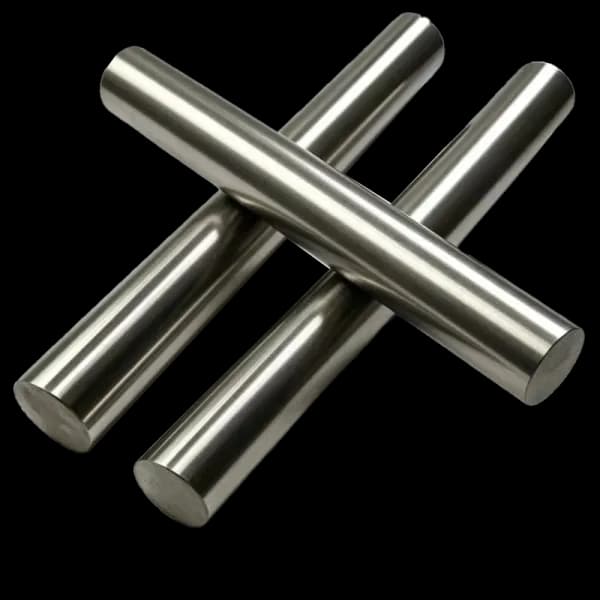
Product Description
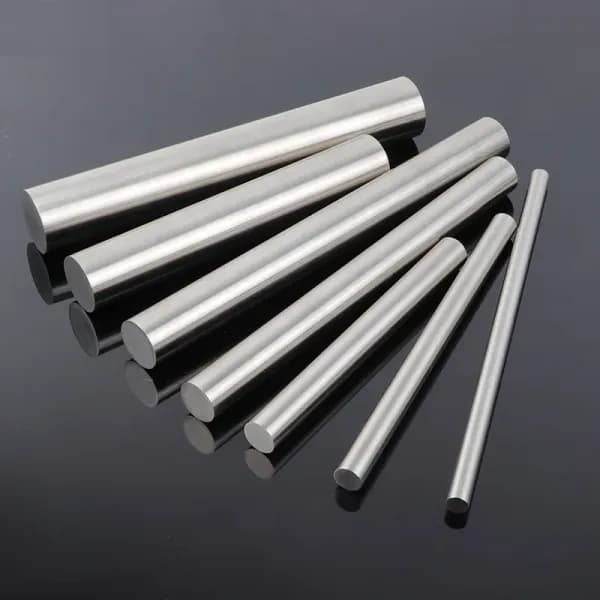
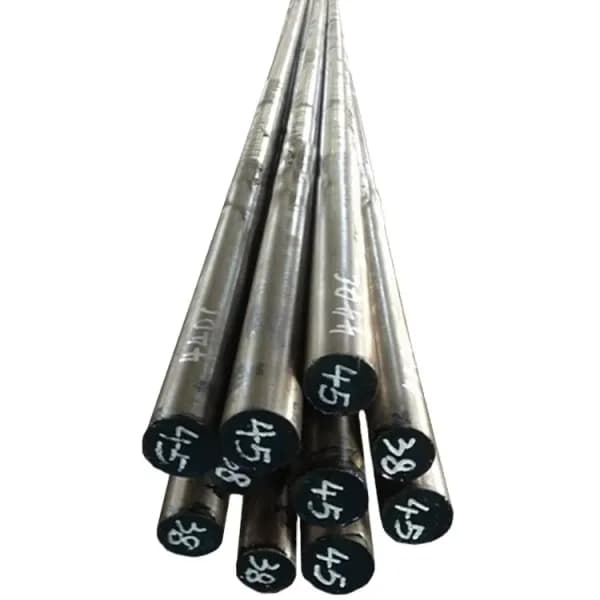
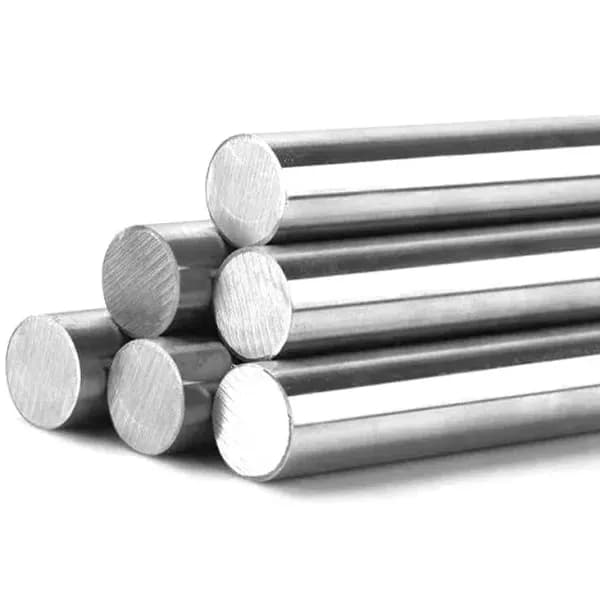
This 3 in. (76.2 mm) 304 stainless steel round bar is an austenitic stainless steel bar supplied in 144 in. (12 ft) lengths to ASTM A276/A276M. Grade 304 - UNS S30400, EN 1.4301, and known in the fastener trade as A2 - is the most widely used stainless steel: it pairs a workable level of strength and ductility with general corrosion resistance at a cost well below the molybdenum-bearing grades, which is why turned, threaded and machined parts are so often specified in 304 bar rather than in a higher alloy.
At 3 in. this is a heavy bar section, about 36.2 kg/m (24.3 lb/ft). It is bought where the finished component needs a large solid section rather than a small turned part: heavy pump and mixer shafts, industrial rollers, large bushings and spacers, structural pins, bodies and valve parts machined from solid, and billet for forgings produced by the customer. Bar is normally supplied annealed (ASTM A276 Condition A), because grade 304 cannot be hardened by heat treatment - strength is raised only by cold working - and the annealed condition is the one that machines, welds and forms predictably.
Two points decide whether 304 bar suits a job. First, 304 resists atmospheric corrosion, many food acids, fresh water and a range of mildly oxidising chemicals, but it is not a chloride-resistant grade: continuous exposure to chlorides, salt spray or warm chloride-bearing process streams calls for a molybdenum-bearing grade such as 316 or 316L, which is quoted separately. Second, the ordered standard matters. ASTM A276/A276M covers hot-finished and cold-finished bar stock but expressly excludes bars for reforging, so bar bought as forging stock is normally ordered to ASTM A314; pressure-retaining service is normally ordered to ASTM A479/A479M. The drawing or purchase specification governs.
Chemical Composition
Heat analysis limits for UNS S30400 to ASTM A276/A276M, the standard this bar is ordered to:
| Element | Composition, % |
|---|---|
| Carbon (C) | 0.08 max |
| Manganese (Mn) | 2.00 max |
| Phosphorus (P) | 0.045 max |
| Sulfur (S) | 0.030 max |
| Silicon (Si) | 1.00 max |
| Chromium (Cr) | 18.00-20.00 |
| Nickel (Ni) | 8.00-11.00 |
| Nitrogen (N) | 0.10 max |
The chromium, nickel and silicon limits are not identical across product forms of the same grade, so a quotation should be compared against the standard it is ordered to rather than against a general 304 datasheet.
Mechanical Properties
Minimum room-temperature values for annealed 3 in. (76.2 mm) bar to ASTM A276/A276M. The certified mill test report for the supplied heat governs:
| Property | Hot-finished bar | Cold-finished bar |
|---|---|---|
| Tensile strength, min | 75 ksi (515 MPa) | 75 ksi (515 MPa) |
| Yield strength, 0.2 % offset, min | 30 ksi (205 MPa) | 30 ksi (205 MPa) |
| Elongation in 2 in. (50 mm), min | 40 % | 30 % |
| Reduction of area, min | 50 % | 40 % |
Tensile and yield minima are the same for hot-finished and cold-finished bar, but the ductility minima are not: cold-finished bar over 1/2 in. (12.7 mm) is accepted at 30 % elongation and 40 % reduction of area instead of 40 % and 50 %. That difference is the reason the finish is stated on the order rather than assumed.
A276/A276M sets no hardness maximum for Type 304 in Condition A. If a hardness limit or a hardness test is part of the requirement, state it at enquiry stage so that condition and testing can be confirmed with the offer.
A tensile figure of 73,200 psi (505 MPa) is quoted for 304 bar in some supplier datasheets, and it appeared on an earlier version of this page. It is below the 75 ksi (515 MPa) minimum that ASTM A276 requires, and it is a generic reference value rather than a conformance value, so it is not used here. Where 304 is specified, the minimum applies and the actual result is reported per heat on the mill test certificate.
For bar ordered cold-finished in a strain-hardened condition instead of annealed, A276/A276M applies size-dependent minima rather than the annealed values. In the band that covers this diameter - over 2-1/2 to 3 in. (63.5 to 76.2 mm) - the published minima are 80 ksi (550 MPa) tensile, 55 ksi (380 MPa) yield, 30 % elongation and 40 % reduction of area. Strain-hardened bar is not interchangeable with annealed bar for machining or welding, so state the condition required and confirm that the mill certificate is issued against it.
Size, Finish and Delivery Condition
Nominal size as catalogued; tolerance, finish and delivery condition are confirmed against the individual order:
| Item | Reference |
|---|---|
| Product form | Solid round bar. Round, square, hexagonal and flat bar are different product forms and are quoted separately. |
| Grade and designations | Type 304 / UNS S30400; EN 1.4301; JIS SUS304; GB/T 1220 06Cr19Ni10; fastener designation A2. Equivalent designations are near-equivalents, not interchangeable identities; the ordered standard governs. |
| Standard | ASTM A276/A276M (stainless steel bars and shapes). ASTM A479/A479M where the bar is for boiler or pressure-vessel service, AMS 5639 where an aerospace material specification is called for, and ASTM A314 where the bar is bought as forging stock. |
| Diameter | 3 in. (76.2 mm), nominal |
| Length | 144 in. (12 ft / 3,658 mm); cut-to-length agreed at order |
| Diameter tolerance | To the tolerance class of the ordered standard and finish; dimensional tolerances for stainless bar are covered by ASTM A484/A484M. State the class, or send the drawing tolerance, at enquiry stage. |
| Delivery condition | Annealed (Condition A), unless a strain-hardened condition is specified |
| Surface finish | Hot-finished or cold-finished (turned, peeled, ground or polished), to be confirmed for the order; finish and diameter tolerance are linked |
| Straightness and end condition | Mill standard unless stated otherwise; precision straightening and square-cut, chamfered or threaded ends on request |
| Approximate mass | About 36.2 kg/m (24.3 lb/ft), calculated from the nominal diameter at a density of 7.93 g/cm3; actual mass varies with the size tolerance |
| Documentation | Mill test certificate to EN 10204 3.1; EN 10204 3.2, ultrasonic examination or third-party inspection where the purchase order specifies it |
Material Characteristics
Grade 304 is a plain austenitic stainless steel. Chromium forms the passive surface film that gives the grade its corrosion resistance, nickel stabilises the austenitic structure, and carbon is held low. That structure sets the working behaviour of the bar.
- Heat treatment. 304 cannot be hardened by heat treatment. Annealing after cold work restores ductility, relieves residual stress and returns the material to its non-magnetic condition.
- Magnetism. Annealed 304 bar is essentially non-magnetic. Cold work - drawing, straightening, turning or heavy machining - can induce slight magnetism in the affected zone. This is normal for the grade and does not by itself change corrosion performance, but where non-magnetic behaviour is a functional requirement, specify annealed material and state the test method.
- Welding. Readily welded by TIG, MIG and manual metal arc, and can be brazed. Where a joint will see corrosive service, 304L (0.03 % C max) reduces the risk of sensitisation, and continuous service in the 425 to 815 °C (800 to 1500 °F) range is not recommended where corrosion resistance matters.
- Machining. 304 is not a free-machining grade - that is 303, which relies on sulfur inclusions to break the chip. Published datasheets rate its machinability at about 40 % of the free-cutting reference; that comparison is not an acceptance value. 304 needs sharp tooling, correct speeds and feeds, a rigid set-up, and depths of cut deep enough to keep the tool under the work-hardened skin left by the previous pass. Shallow rubbing cuts are what harden the surface. On 3 in. stock the first operation is normally sawing or band-sawing, so allow for cut length and facing rather than assuming the bar finishes at nominal diameter.
- Section and testing. Mechanical properties are measured on a test specimen taken from the bar. On a 3 in. section it is worth confirming which part of the section the specimen came from and whether the certificate reports the surface or the sub-surface result, because elongation and reduction of area are the values most affected by specimen position. Where the bar will be bored, or where ultrasonic examination forms part of the quality plan, specify the examination on the order.
- Forming. Ductility is high, so bending, upsetting and thread rolling are straightforward. Cold work raises strength and reduces ductility, so the number of forming passes and any intermediate anneal should be planned rather than assumed.
Applications
3 in. 304 round bar is specified where a large machinable section with general corrosion resistance is needed, rather than the highest strength or full immunity to corrosion. Typical uses include:
- Heavy shafts and axles - pump, mixer, agitator and conveyor shafts, turned, keyed and threaded from solid bar.
- Industrial rollers - roller bodies and roll cores that are subsequently machined, ground or coated.
- Large bushings, spacers, pins and studs - turned parts where the finished diameter needs a heavy parent section.
- Valve, pump and fitting bodies and stems - solid-machined components in fresh water and mildly aggressive process service.
- Food, beverage and pharmaceutical equipment - product shafts, agitator shafts and large fittings where the surface has to clean down readily.
- Water treatment and general process plant - structural pins, supports and fastening stock in fresh-water service.
- Forging billet for customer forgings - where the bar is bought specifically as forging stock, order it to ASTM A314, because A276 expressly excludes bars for reforging; and where the finished part is pressure-retaining, A479/A479M is the normal bar specification.
Service life in each case depends on grade, surface condition and the actual environment. 304 is not selected for marine immersion, chloride-rich process streams or high-temperature corrosive duty; those applications are quoted in 316/316L or a more highly alloyed grade.
Ordering Information
To quote 3 in. 304 stainless steel round bar, an enquiry should carry:
- Grade and standard, exactly as written on the drawing or purchase specification, including the edition where the project is registered to one.
- Diameter (3 in. / 76.2 mm) and the length or cut lengths required, allowing for saw cut and facing.
- Delivery condition - annealed, or a named strain-hardened condition if higher strength is needed.
- Surface finish and diameter tolerance class, or the drawing tolerance where the bar is machined to a fit.
- Quantity, delivery schedule, packing and destination; at 36.2 kg/m the handling and transport arrangement is worth confirming early.
- Documentation and inspection - mill test certificate, EN 10204 3.2, ultrasonic examination, third-party or witnessed inspection, or specific test requirements.
- Service conditions - fresh water, food contact, chloride exposure, welding, or any sustained temperature above ambient.
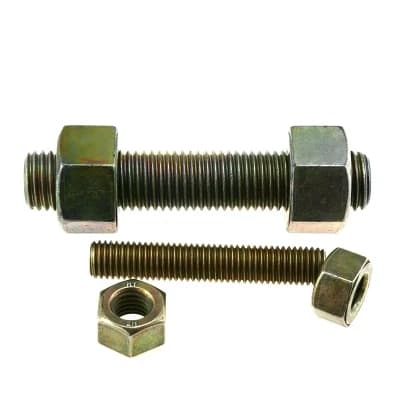
Related 304 and 304L stainless steel items: 304 stainless steel round bar, 1-1/2 in., 304 stainless steel round bar, 1-1/4 in., 304 stainless steel plate, 304 stainless steel coil, 304L stainless steel plate, 304 stainless steel seamless pipe and stainless steel 304 hex bolt. Other diameters, including sizes above and below 3 in., and other stainless grades are quoted on request.
Frequently Asked Questions
What tensile strength should I expect from 3 in. 304 stainless steel round bar?
For annealed bar over 1/2 in. (12.7 mm), ASTM A276 requires a minimum tensile strength of 75 ksi (515 MPa) and a minimum yield strength of 30 ksi (205 MPa), with elongation of at least 40 % for hot-finished and 30 % for cold-finished bar. Actual results vary by heat and are recorded on the mill test certificate. The 73,200 psi (505 MPa) figure that is often quoted for 304 bar - and that appeared on an earlier version of this page - is a generic datasheet value below the ASTM minimum and is not treated as a conformance figure here.
Does the finish change what 3 in. 304 bar is certified to?
Yes. Hot-finished and cold-finished annealed bar share the same 75 ksi tensile and 30 ksi yield minima, but ASTM A276 allows cold-finished bar over 1/2 in. to be accepted at 30 % elongation and 40 % reduction of area, against 40 % and 50 % for hot-finished bar. Cold-finished bar also carries a tighter dimensional and surface result, and at 3 in. it may be produced by turning or peeling and polishing rather than by drawing, so it is worth asking which route the mill used. State the finish and, if it matters, the finish standard, on the enquiry.
What is the difference between 304 and 304L round bar?
The difference is carbon. Type 304 is limited to 0.08 % carbon; 304L (UNS S30403) is limited to 0.03 %, which reduces the risk of chromium carbide precipitation at the grain boundaries after welding and gives a slightly lower minimum yield strength. The two are often supplied dual certified, but they remain separate grades: where the drawing calls for 304L, 304 should not be accepted as an equivalent without written approval.
Can 3 in. 304 round bar be used in marine or chloride service?
Not as a rule. Grade 304 resists atmospheric corrosion, fresh water and many food acids, but it is not a chloride-resistant grade, and pitting or crevice corrosion is likely in salt spray, seawater immersion or warm chloride-bearing process streams. Those duties are normally quoted in 316/316L, or in a duplex or higher-alloyed grade where the chloride level or temperature is high. If the application involves chlorides, describe the medium, chloride concentration and temperature on the enquiry so that the grade can be confirmed.
What information is needed to quote 3 in. 304 round bar?
Grade and standard, diameter (3 in. / 76.2 mm) and length or cut lengths, quantity, delivery condition, surface finish, diameter tolerance and the documentation required, together with the destination. If the bar will be welded, forged, ultrasonically examined or used in a corrosive or elevated-temperature service, describe the duty as well, so that grade, condition and testing can be confirmed with the offer rather than after the order.