Product Description
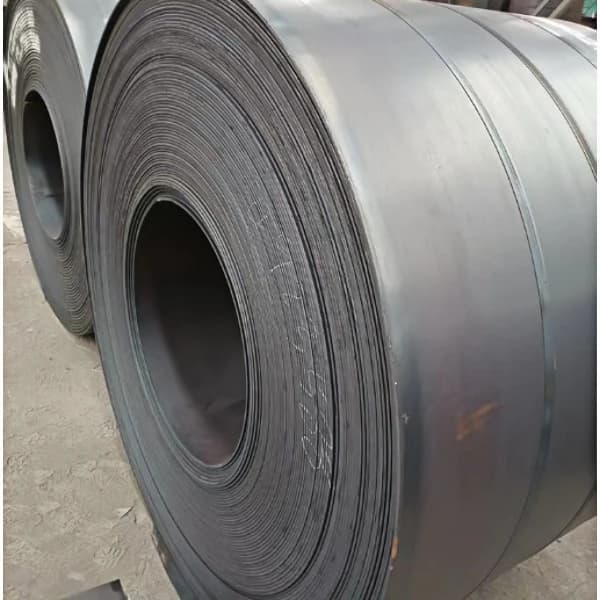
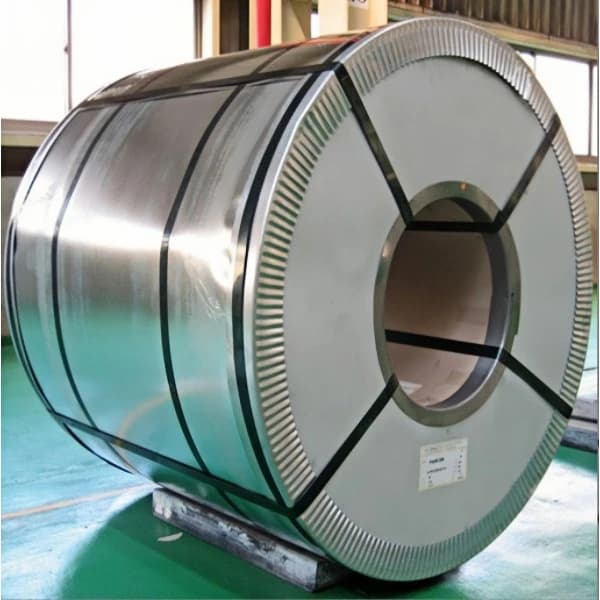
Cold rolled carbon steel coil (CRC) is low-carbon steel that has been hot rolled, pickled to strip the mill scale, then reduced again at ambient temperature. Cold reduction work-hardens the steel, so the coil leaves the mill with a tighter thickness tolerance, better flatness and a smoother, cleaner surface than hot rolled coil - but with high internal stress and low ductility. Annealing, and in most cases a light final skin pass, restores the formability the market expects from a cold rolled coil, which is why the delivered condition belongs on the enquiry next to the grade.
This is the cold rolled route page, so the coil here is defined by the process and the grades that belong to it are the cold forming grades. EN 10130 (DC01, DC03 to DC07), JIS G3141 (SPCC, SPCD, SPCE) and ASTM A1008/A1008M (CS, DS, DDS, EDDS) each arrange the same ladder of forming duties in their own designations, and they are near-equivalents rather than interchangeable. The hot rolled route - S235JR, S275JR, S355JR, A36, A572 Grade 50, SS400, Q235 and Q355 - is supplied on the hot rolled carbon steel coil page and on the mild steel coil family page, not as cold rolled coil.
Two decisions then govern most enquiries. The first is forming severity: how far the part has to draw, which picks the grade. The second is the delivered condition and the surface: full hard or annealed and skin-passed, surface quality A or B, matt or bright finish, oiled or dry. Cold rolled carbon steel is not corrosion resistant, so the oil film, paint system or zinc coating is part of the specification rather than an assumption. Coil is the form used when the line needs a continuous length; slit strip and cut-to-length sheet are produced from the same coil.
Specifications
Supply specification - grade, condition and dimensions are confirmed against each order:
| Item | Reference |
|---|---|
| Product form | Cold rolled carbon steel coil (CRC), supplied in coil. Slit strip, cut-to-length sheet and discrete plate are different product forms and are quoted separately. |
| Grades | EN 10130 forming grades DC01, DC03, DC04, DC05, DC06 and DC07; JIS G3141 SPCC, SPCD and SPCE; ASTM A1008/A1008M CS, DS, DDS and EDDS types. Chinese cold-reduced material to GB/T 5213 and GB/T 11253 is available when the order names it. The former DIN designations St12 to St15 and the legacy grade DC02 belong to superseded editions and are confirmed as current supply before they are quoted. |
| Standards | EN 10130 for the DC forming grades, with dimensional tolerances to EN 10131; JIS G3141 for SPCC to SPCE; ASTM A1008/A1008M with tolerances to ASTM A568/A568M; GB/T 5213 and GB/T 11253. Confirm the edition at order stage; grades from different standards are near-equivalents, not interchangeable. |
| Route and condition | Hot rolled, pickled coil is reduced again at ambient temperature, then annealed and usually skin-passed. Supplied full hard (unannealed), annealed, or annealed and skin-passed (temper rolled). |
| Supply quality class | Ordered by forming duty: commercial quality (CQ), drawing quality (DQ), deep drawing quality (DDQ) and extra deep drawing quality (EDDQ). In the EN ladder these are DC01, DC03, DC04 and DC05 and above; in the JIS ladder SPCC, SPCD and SPCE; in the ASTM ladder CS, DS, DDS and EDDS. |
| Thickness | 0.3 mm to 3.0 mm, reference range. EN 10130 itself covers 0.35 mm to 3.0 mm, and material above about 3.0 mm falls outside the standard. The exact gauge and the tolerance class are confirmed for the ordered grade and width. |
| Width | 600 mm to 1,500 mm as rolled; narrower widths by slitting once the coil width, thickness and edge condition are confirmed. Wider widths to be confirmed against the ordered thickness and grade. |
| Length and coil build | Supplied in coil. Coil inner diameter commonly 508 mm or 610 mm; coil weight, outer diameter and maximum coil weight are confirmed at quotation. Cut-to-length sheet and slit strip are produced from the same coil on request. |
| Surface quality and finish | Surface quality A for parts where the face is not seen and B where the visible face must be free of defects that would show through paint or coating. Surface finish matt, bright or rough, agreed at order because it controls how lubricant behaves in the die. |
| Oiling | Oiled for storage and transport, or dry for painting and coating lines. Oil type, film weight and any passivation or anti-fingerprint treatment are agreed on the order; a food-contact or coating-compatible oil has to be specified as such. |
| Edge | Mill edge or slit edge, to be agreed at order |
| Tolerance | Thickness, width, flatness and camber tolerances follow EN 10131 for EN 10130 material, or the class named in the ASTM A568/A568M or JIS standard quoted. The tolerance class is confirmed at order and reported on the mill test certificate. |
| Certification | Mill test certificate to EN 10204 3.1; EN 10204 3.2 or third-party inspection where the purchase order specifies it |
| Third-party inspection | Available on request - inspector, test scope and witness points agreed on the order |
| Service limits | A cold forming and coating-substrate material, not a corrosion-resistant grade. Cold rolled carbon steel has no useful atmospheric corrosion resistance on its own, so the oil film, paint system or zinc coating is part of the specification. Full hard coil is not intended for severe forming without annealing. |
| Chemical composition | Plain, low-carbon, unalloyed steel for the DC01 to DC05 grades; DC06 and DC07 are stabilised (interstitial-free) grades with titanium and/or niobium additions. Carbon and manganese fall and the phosphorus and sulphur limits tighten as the forming grade rises. The binding maximum for each element is the one in the standard of the ordered grade, and the product analysis is reported on the mill test certificate. |
Cold Rolled Carbon Steel Coil Grades
Cold rolled coil is ordered by forming quality rather than by a single strength class. Each standard arranges the same ladder of duties - general forming, then drawing, deep drawing and extra deep drawing - in its own designations. Read across the table below to find the nearest designation when a drawing quotes a different standard, and treat the result as a near-equivalent rather than a substitute:
| Forming duty | EN 10130 | JIS G3141 | ASTM A1008/A1008M | Chinese designation |
|---|---|---|---|---|
| General forming, bending, light stamping | DC01 | SPCC | CS (Type A, B or C) | DC01 to GB/T 5213; Q195 to GB/T 11253 |
| Drawing | DC03 | SPCD | DS (Type A or B) | DC03 to GB/T 5213; Q215 to GB/T 11253 |
| Deep drawing | DC04 | SPCE | DDS | DC04 to GB/T 5213; Q235 to GB/T 11253 |
| Extra deep drawing, severe pressings | DC05, DC06 and DC07 | Deep drawing grades to JIS G3141 | EDDS | DC05 to DC07 to GB/T 5213; Q275 to GB/T 11253 |
One legacy point costs buyers time when quotes are compared. DC02 does not appear in the current EN 10130 editions. It was dropped and its duties absorbed by DC01 and DC03, yet DC02 still circulates in supplier grade tables - often with the standard's property rows shifted by one grade, so a row labelled DC03 can actually carry the DC04 values. Quote against DC01, DC03, DC04 and DC05, and read the mechanical columns from the edition named on the order. The drawing quality grades that trade under a house name rather than a standard number are covered on the KA70 carbon steel coil page.
EN 10130 Forming Grades: Yield, Tensile and Formability Values
The figures below are the EN 10130:2006 reference limits for the DC forming grades, given for the 0.7 mm to 3.0 mm thickness band. Yield strength is quoted as a band with an upper limit rather than a floor, because a press tool set for soft material will fail on hard material and not the other way round. Thin material below 0.7 mm has its own elongation values in the standard, so the certified mill test report for the ordered gauge governs:
| Grade | Forming duty | Yield strength Re | Tensile strength Rm | Elongation A80 min | r90 min | n90 min |
|---|---|---|---|---|---|---|
| DC01 | Bending, flanging, light stamping | 140-280 MPa | 270-410 MPa | 28% | - | - |
| DC03 | Shallow to medium drawing | 140-240 MPa | 270-370 MPa | 34% | 1.4 | - |
| DC04 | Deep drawing, complex geometry | 140-210 MPa | 270-350 MPa | 38% | 1.8 | 0.18 |
| DC05 | Very deep drawing, high deformation | 140-180 MPa | 270-330 MPa | 40% | 1.9 | 0.20 |
| DC06 | Special deep drawing, stabilised | 120-170 MPa | 270-330 MPa | 41% | 2.1 | 0.21 |
| DC07 | Highest deformation, stabilised | 100-150 MPa | 250-310 MPa | 44% | - | - |
Above DC03 the specification stops being about strength. The plastic strain ratio r90 measures resistance to thinning and the work-hardening exponent n90 measures how evenly the sheet distributes strain; those two numbers, not the tensile range, are what a die designer works from on a part with a draw ratio above roughly 1.8. Moving from DC01 to DC04 raises the guaranteed elongation from 28% to 38% while the tensile range stays under 350 MPa, so press load does not climb with formability.
Chemical Composition of the EN 10130 Grades
Carbon, manganese and the residual elements step down as the forming grade goes up. It is that falling carbon and manganese content, together with the tighter phosphorus and sulphur limits, that buys the extra elongation and the more consistent press behaviour. Values below are reference maximums in percent for the EN 10130 grades; the plate or coil analysis on the mill test certificate is the binding figure for an order:
| Grade | C max | Mn max | P max | S max | Al min |
|---|---|---|---|---|---|
| DC01 | 0.12 | 0.60 | 0.045 | 0.045 | 0.020 |
| DC03 | 0.10 | 0.45 | 0.035 | 0.035 | 0.020 |
| DC04 | 0.08 | 0.40 | 0.030 | 0.030 | 0.020 |
| DC05 | 0.06 | 0.35 | 0.025 | 0.025 | 0.015 |
DC06 and DC07 sit above that table as stabilised, interstitial-free grades: carbon falls to about 0.02% and below, titanium and/or niobium are added to tie up the interstitial elements, and the aluminium requirement is set by agreement, so their exact limits should be read from the standard edition on the order. The chemistry limits are standard-specific in the same way. JIS G3141 sets its own limits for SPCC to SPCE, and ASTM A1008/A1008M sets limits that change with the CS type (A, B or C) and with the DDS and EDDS designations. Recent A1008 editions publish typical rather than mandatory property tables, which is why published A1008 mechanical summaries disagree with each other - take the values from the edition named on the purchase order.
Delivered Condition: Full Hard, Annealed and Skin-Passed
Cold reduction raises strength and hardness and takes ductility away. How much of that is given back is the second decision on the order, and it is the one most often left unstated on an enquiry. Full hard coil is cold reduced and not annealed. It is the strongest and least ductile of the three conditions, and it is used where strength or flatness is the point, or where the coil is an input to a further process rather than the finished part. Annealed coil has been heat treated to remove the work hardening and restore ductility, which is the condition most forming work needs. Annealing may be batch or continuous, and the two do not deliver identical property scatter, so the process is worth confirming on a draw-critical part.
Annealed and skin-passed (temper rolled) coil is given a light final reduction after annealing. The skin pass flattens the coil, sets the surface finish and holds a controlled yield band, which is exactly what a press or roll-forming line needs, and it is the usual condition for cold rolled forming stock. One consequence is worth planning around: skin-passed material ages in storage. Carbon and nitrogen left in solution migrate over weeks, and a coil that formed cleanly when it was new can develop visible stretcher strains once it is drawn. For a draw-critical part the coil is best ordered against a production date and formed from reasonably fresh material rather than held in stock indefinitely.
Surface Quality, Finish and Oiling
Surface is specified separately from grade and condition. Surface quality A accepts minor pores, marks and slight discolouration that do not affect forming or coating adhesion - the sensible order for a part whose face will never be seen. Surface quality B requires the better face to be effectively free of defects, which is what a visible panel, a painted face or a coated product needs. Say which face is the visible one, because only one face can be the reference face.
Surface finish is a third choice and it is often confused with surface quality. Matt, bright and rough finishes describe the texture of the roll imprint rather than the defect level, and the texture controls how lubricant is retained in the die: a rough or matt surface carries oil into a deep draw, while a bright finish suits visible flat parts and decorative work. A roughness value may be pinned on the order where a coating line needs a defined surface, and the number is then confirmed against the standard rather than assumed from a mill default.
Oiling is the last surface decision. Oiled coil carries a film that protects the surface in storage and transport; dry coil goes to a paint or coating line that cannot tolerate oil. Where the oil has to be compatible with a particular paint, coating or food-contact end use, that requirement has to be named on the order, because a general rust-preventive oil and a coating-compatible or food-contact oil are different products. Passivation or anti-fingerprint treatments are quoted as agreed additions.
Cold Rolled Compared with Hot Rolled Coil
Both products start from the same low-carbon steel and both are supplied in coil, so the difference is the process and not the material. The table below reads the comparison from the cold rolled side - what the extra processing buys, and what it costs:
| Point | Cold rolled coil (CRC) | Hot rolled coil (HRC) |
|---|---|---|
| How it is made | Hot rolled pickled coil is reduced again at ambient temperature, then annealed and usually skin-passed | Reduced above the recrystallisation temperature and coiled hot, without a second reduction |
| Typical gauge band | 0.3 mm to 3.0 mm reference range | 1.5 mm to 12 mm reference range |
| Surface | Smooth, clean and uniform, with no mill scale; the usual choice where the face is painted or visible | As-rolled with mill scale unless pickled and oiled; scaly and rougher |
| Condition supplied | Full hard, annealed, or annealed and skin-passed | As-rolled black, or pickled and oiled (HRPO) |
| Dimensional accuracy | Tighter thickness tolerance, better flatness and shape | Looser tolerances, with more coil set and edge irregularity |
| Strength and ductility | Work hardening raises strength; annealing trades it back for formability, and the balance is set by the condition ordered | Lower strength, higher ductility and low internal stress |
| Forming behaviour | Suits stamping, drawing, bending and roll forming to close tolerance; ageing matters on draw-critical parts | Suits welding, cutting and general fabrication rather than severe drawing |
| Typical use | Appliances, enclosures, panelling, furniture, hardware parts, and the base material for coated coil | Structural and general fabrication, roll-formed sections, tube stock, drums and welded assemblies |
Where the two routes overlap, roughly between 1.5 mm and 3.0 mm, the decision is settled by surface, tolerance and cost rather than by gauge. State the route as well as the thickness on the enquiry: "carbon steel coil, 2 mm" is not a complete specification. The structural grades that live on the hot rolled side, such as S355JR carbon steel coil, are quoted there rather than here.
Material Characteristics
Cold rolled carbon steel coil is a plain, low-carbon, unalloyed material, and its working properties follow from that. It forms well: the annealed and skin-passed condition bends, rolls, stamps and draws predictably, and the higher forming grades extend that range to deep drawn shells. It welds with standard shop processes, with the usual caveat that thin cold rolled sheet needs lower heat input to avoid distortion. It takes paint, powder coat and laminate readily, which is why a matt or bright finish and a defined oil film are specified rather than left to the mill.
Three limits belong on the page. Cold rolled carbon steel is not corrosion resistant; unprotected, it will rust, so the oil film, paint system or zinc coating is part of the specification and not an accessory. The cold rolled route produces a narrower gauge band and a narrower width range than hot rolled, so a requirement for heavy gauge or very wide coil points to hot rolled material instead. And full hard coil is not intended for severe forming without annealing: it will form, but at the risk of cracking that no grade selection can remove.
The same coil is the input to a large part of the coated steel supply chain. Cold rolled coil is the base metal for hot-dip galvanised, galvalume and pre-painted (colour coated) coil, so a requirement that starts as "steel coil for painting" is often a cold rolled coil order underneath.
Applications
Cold rolled carbon steel coil is chosen where the part needs a thin gauge, a tight tolerance and a clean face that will be formed, painted or coated:
- Automotive body panels, inner panels and structural parts that are stamped or formed to close tolerance
- Domestic appliance shells, panels and liners, where the visible face has to take a paint or powder coat finish
- Electrical enclosures, cabinets and control panels
- Furniture frames, shelving, office furniture and formed metal parts
- Drums, containers, radiators, fans and general hardware
- Roll-formed sections, tube and pipe stock made from slit coil
- Base metal for galvanised, galvalume and pre-painted coil
Applications beyond these need the drawing, the forming severity and the service environment checked against the grade and condition before the coil is specified. A part that has to resist rust in service moves to a coated product or to a different material family; a harder cold rolled grade is not the answer.
Ordering Information
To price a cold rolled carbon steel coil, send the following and we will confirm grade, condition and dimensions against the order:
- Grade and standard, with the edition where the project is registered to one - DC01, DC03, DC04 or above to EN 10130; SPCC to SPCE to JIS G3141; CS, DS, DDS or EDDS to ASTM A1008/A1008M
- Forming duty, or the part and draw depth if the grade still has to be settled
- Delivered condition - full hard, annealed, or annealed and skin-passed
- Thickness and width, with the tolerance class to EN 10131, ASTM A568/A568M or the JIS class quoted
- Surface quality (A or B), surface finish (matt, bright or rough) and which face is the visible one
- Oiled or dry, with any coating-compatible, food-contact, passivation or anti-fingerprint requirement
- Coil or slit strip or cut-to-length, edge condition (mill or slit edge), coil weight and inner diameter
- Quantity, delivery terms and port, and the certification or third-party inspection required
Quantities are quoted against the confirmed specification rather than against a nominal grade name, so the more of the list above is fixed at enquiry stage, the fewer questions come back before the coil is released.
Frequently Asked Questions
Which cold rolled grade should I choose - DC01, DC03, DC04 or DC05?
Choose by how far the part has to draw, not by strength. DC01 covers bending, flanging and light stamping. DC03 adds drawing quality for shallow to medium draws. DC04 is the deep drawing grade. DC05 and above handle very deep drawing and complex shells. A higher grade buys elongation and a tighter yield band rather than a higher tensile strength. Note that DC02 is not in the current EN 10130 editions - it was dropped and its duties absorbed by DC01 and DC03 - so quotes listing DC02 should be read carefully. Send the part, the draw depth and the tooling and we will confirm the grade.
What is the difference between full hard, annealed and skin-passed cold rolled coil?
Full hard coil is cold reduced and not annealed: strong, work-hardened and low in ductility, used where strength or flatness matters or where the coil feeds a further process. Annealed coil has been heat treated to restore ductility, which is what most forming work needs. Annealed and skin-passed (temper rolled) coil is given a light final reduction after annealing, which flattens the coil, sets the finish and holds a controlled yield band - the usual condition for press and roll-forming stock. The same grade behaves differently in each condition, so state it on the enquiry.
Cold rolled or hot rolled coil - which one fits my part?
Cold rolled suits thin gauge, tight thickness tolerance, a face that will be painted or left visible, and parts that have to draw or stretch. Hot rolled suits thicker gauge, structural and welded work, where a wider gauge band and a lower cost position matter more than surface. The routes overlap roughly between 1.5 mm and 3.0 mm, and there the choice is settled by surface, tolerance and cost rather than by gauge alone. Both start from the same low-carbon steel, so the route must be stated and cannot be inferred from the material name.
What do surface quality A and B and a matt or bright finish mean?
Surface quality A tolerates minor marks that are acceptable when the finished part will be hidden. Surface quality B requires the better face to be effectively free of defects, which is what a painted, coated or visible face needs. Surface finish - matt, bright or rough - is a separate choice and controls how lubricant is retained in the die: a rough or matt surface holds oil better for deep drawing, while a bright finish suits visible flat parts. Specify both, and name the visible face.
What information do you need to quote a cold rolled carbon steel coil?
Send the grade and standard edition, the forming duty, the delivered condition, thickness and width with the tolerance class, surface quality and finish, oiled or dry, edge condition, whether coil, slit strip or cut-to-length is required, coil weight and inner diameter, quantity, and the certification or inspection required. If the part has to resist rust in service, say so at the same time - cold rolled carbon steel is not corrosion resistant, and the answer is a coating or another material family rather than a higher cold rolled grade.
Before the grade, condition and quantity are fixed, place this coil in the wider range: the cold rolled route sits alongside the hot rolled route and the mild steel family above, and the carbon steel coil range overview lists the full group.