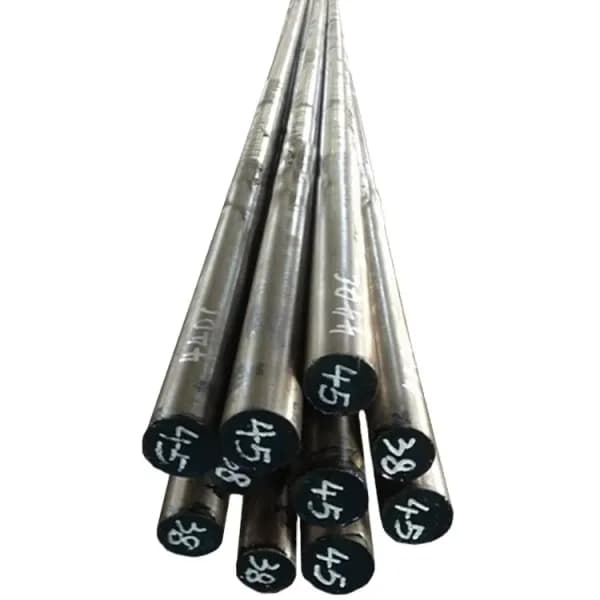
Product Description
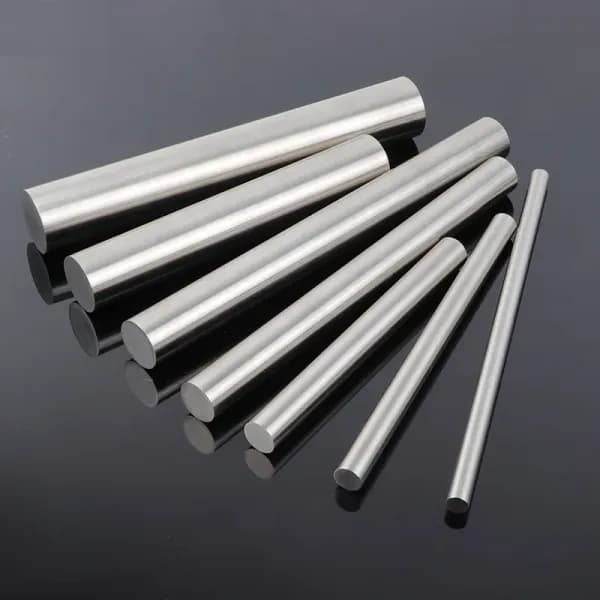
SCM415 is a low-carbon chromium-molybdenum alloy steel for machine structural use, specified in the current Japanese standard JIS G4053 (the old chromium-molybdenum listing JIS G4105 of 1979 was withdrawn and superseded by G4053, and the grade was formerly designated SCM21). Its deliberately low base carbon of 0.13-0.18%, combined with 0.90-1.20% chromium and 0.15-0.25% molybdenum, makes it a case-hardening steel: after carburizing, quenching and low-temperature tempering, the surface carries a hard, wear-resistant case while the core stays tough and impact resistant. This SCM415 round steel bar is machined and then carburized into gears, shafts, cams and pins, and the hardenability-guaranteed SCM415H variant is available where batch-to-batch heat-treatment consistency matters.
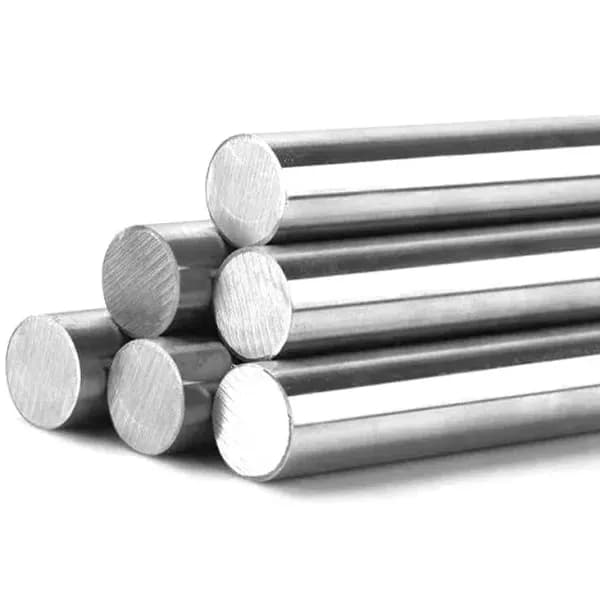
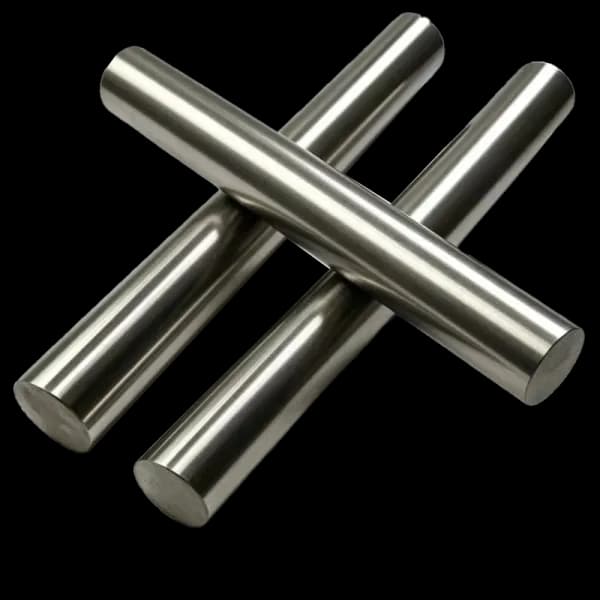
Supply is by hot-rolled, annealed or ground round bar with cut-to-length service. Diameter ranges differ between producing mills, so final size, tolerance class and delivery condition are confirmed at quotation. See the wider Alloy Round Steel and Round Steel ranges for other grades in bar form.
Chemical Composition of SCM415 (JIS G4053)
The table below lists the ladle analysis ranges of JIS G4053 for SCM415, cross-checked between the published Japanese standard table and independent supplier compilations. Nickel and copper are residual elements only, not intentional additions.
| Element | Range (% by mass) |
|---|---|
| Carbon (C) | 0.13 - 0.18 |
| Silicon (Si) | 0.15 - 0.35 |
| Manganese (Mn) | 0.60 - 0.90 |
| Phosphorus (P) | 0.030 max |
| Sulfur (S) | 0.030 max |
| Chromium (Cr) | 0.90 - 1.20 |
| Molybdenum (Mo) | 0.15 - 0.25 |
| Nickel (Ni) | 0.25 max |
| Copper (Cu) | 0.30 max |
Foreign Grades Commonly Cited for SCM415
Published cross-reference tables do not agree on a single foreign equivalent, and no AISI/SAE, EN or GB/T grade reproduces the chromium-molybdenum balance of SCM415 exactly. The table below lists the nearest candidates with their actual composition ranges so that the differences are visible before a substitution is written into a drawing.
| Standard | Grade | C (%) | Cr (%) | Mo (%) | Difference from SCM415 |
|---|---|---|---|---|---|
| JIS G4053 | SCM415 (this grade) | 0.13 - 0.18 | 0.90 - 1.20 | 0.15 - 0.25 | Reference grade |
| EN 10084 | 20MoCr4 (1.7321) | 0.17 - 0.23 | 0.30 - 0.60 | 0.40 - 0.50 | Higher carbon and molybdenum, lower chromium |
| GB/T 3077 | 15CrMo | 0.12 - 0.18 | 0.80 - 1.10 | 0.40 - 0.55 | About twice the molybdenum; used chiefly as heat-resistant tube steel |
Supplier tables also cite SAE 4115 and 4118 in the US system, the chromium grade 5115 and the chromium-manganese grade 16MnCr5 (1.7131); 5115 and 16MnCr5 carry no intentional molybdenum, and the US carburizing grades sit at a lower chromium level than SCM415. One widely quoted supplier page even titles 5115 and 16MnCr5 as equivalents while its own table lists 4118 and 20MoCr4, a useful reminder that these tables are compiled rather than standardized. Treat every cross-reference as a near equivalent until the chemistry column of the drawing has been checked.
SCM415 Is Not AISI 4145
Listings that label one bar "SCM415 / 4145" merge two different steels, and the name of this page has been corrected accordingly. SCM415 is a low-carbon carburizing grade, while AISI/SAE 4145 (UNS G41450) is a medium-carbon grade for quenching and tempering whose closest JIS counterpart is SCM445. Ordering the wrong one cannot be corrected in heat treatment, because the carbon difference is fixed at the melt.
| Property | SCM415 (JIS G4053) | AISI/SAE 4145 (ASTM A29/A322) | SCM445 (JIS G4053) |
|---|---|---|---|
| Carbon (%) | 0.13 - 0.18 | 0.43 - 0.48 | 0.43 - 0.48 |
| Manganese (%) | 0.60 - 0.90 | 0.75 - 1.00 | 0.60 - 0.90 |
| Chromium (%) | 0.90 - 1.20 | 0.80 - 1.10 | 0.90 - 1.20 |
| Molybdenum (%) | 0.15 - 0.25 | 0.15 - 0.25 | 0.15 - 0.30 |
| Heat-treatment route | Carburize, quench, low-temperature temper | Quench and temper (through hardening; 4145H adds a hardenability band) | Quench and temper |
| Typical parts | Gears, camshafts, pins after carburizing | Drill collars, heavy shafts, high-strength bolting | Quenched-and-tempered shafts and components |
If your drawing calls for 4145, 4145H or 4145 MOD drill-collar material, order that grade explicitly; this page supplies SCM415.
Heat Treatment and Case Hardening
JIS G4053 specifies chemical composition and hardenability bands, not properties after carburizing; case depth, surface hardness and core hardness are agreed with the heat treater and confirmed on the finished part. The parameters below are workshop practice for this grade.
| Step | Workshop practice |
|---|---|
| Gas carburizing | 900 - 930 C; an effective case depth of 0.75 - 1.25 mm in 4 hours near 925 C |
| Quenching | Direct oil quench, or reheat to 820 - 860 C before quenching |
| Tempering | 150 - 180 C |
| Surface hardness after treatment | 58 - 62 HRC |
| Core hardness | 28 - 38 HRC |
Surface hardness figures above this band, such as the 62-64 HRC sometimes quoted in older listings, describe a particular shop's process result rather than a property of the grade and should be verified on sample parts. Where case depths beyond 1.5 mm are required, SCM420 with its higher carbon content is normally selected instead.
Machining, Forging and Welding Practice
In the normalized or annealed condition the bar machines readily; delivered hardness is 170 - 210 HB. Complete all forming and the main machining before carburizing, leaving only grinding stock, commonly 0.1 - 0.3 mm on bores and outside diameters depending on geometry and accuracy grade, for finishing after heat treatment. Threads, keyways and mating surfaces that must stay machinable are masked with copper plating or anti-carburizing compound before the carburizing cycle. Hot forging of bar stock is worked in the 1050 - 1200 C range and followed by normalizing. The low carbon content makes SCM415 comparatively weldable, but welding is normally completed before carburizing and followed by annealing; welded assemblies are rare in practice because the grade is used for carburized components.
Typical Applications
Carburized SCM415 pairs a wear-resistant surface with a tough core, which is why it is a standard choice for light-to-medium duty transmission components: machine-tool headstock gearing, automotive and motorcycle transmission gears, idler and reverse gears, gear shafts and camshafts, piston pins, sprockets, chain pins and bushings, coupling jaws, cams and pin shafts, ratchet heads, wrench drive squares and socket adapters, and transmission parts in agricultural and construction machinery. SCM415 is not a corrosion-resistant alloy and, because of its low carbon, is not intended for high-strength quench-and-temper structural use; for that duty SCM440 or SCM445 are the appropriate grades, while nickel-bearing grades such as SNCM220 are preferred where impact loads or low-temperature toughness govern the design.
This Round Bar Is Not an Alloy-Pipe Product
Older copy on this page quoted ASTM A335 and "DIN 15CrMo", which belong to a different product family. ASTM A335 is a specification for seamless ferritic alloy-steel pipe for high-temperature service, and the Chinese 15CrMo grade of GB/T 3077, whose molybdenum range of 0.40 - 0.55% is about twice that of SCM415, is used chiefly as boiler and heat-exchanger tube steel. Round bar for machine structural use is ordered to JIS G4053 directly, or in the US system to ASTM A29/A29M general requirements with an A322 grade designation, adding ASTM A304 when hardenability (H-band) limits are required. If your project actually needs chromium-molybdenum pressure pipe or plate, see our ASME A335 P11 seamless Cr-Mo alloy steel pipe and ASTM A387 Grade 11 chrome moly steel plate pages instead.
Ordering Information
Include the following with your inquiry so the quotation matches the drawing: grade and variant (SCM415 or hardenability-guaranteed SCM415H), diameter and tolerance class, lengths and any cut-to-length requirement, delivery condition (hot-rolled, normalized, annealed or ground), the governing standard and any H-band requirement, case-depth and core-hardness targets after carburizing, and the documentation you need, such as a mill test certificate with heat number and a Jominy end-quench report for H-grade orders. Because available diameter ranges differ between producing mills, final sizes are confirmed at quotation.
Common Questions about SCM415 Round Bar
Is SCM415 the same as AISI 4145?
No. SCM415 is a low-carbon (0.13-0.18% C) carburizing grade under JIS G4053, while AISI/SAE 4145 is a medium-carbon (0.43-0.48% C) through-hardening grade whose closest JIS counterpart is SCM445. The carbon difference is fixed at the melt, so quote them as separate products and check the carbon column of your drawing before ordering.
Which standard covers SCM415 today?
JIS G4053, low-alloyed steels for machine structural use. The older chromium-molybdenum standard JIS G4105 (1979 edition) was withdrawn and superseded by G4053, and the grade was formerly designated SCM21. Hardenability-guaranteed bars are ordered as SCM415H.
Is there an exact equivalent to SCM415 outside Japan?
No exact match. Supplier tables variously cite SAE 4115 or 4118, EN 20MoCr4, DIN 15CrMo5, 16MnCr5 and GB/T 3077 15CrMo, but each differs from SCM415 in its chromium/molybdenum balance or carbon range. Treat every cross-reference as a near equivalent and verify it against the chemistry column of your specification.
Can SCM415 round bar be used without carburizing?
The grade is designed for carburizing. Its low carbon content limits the strength reachable by quench-and-temper, so for through-hardening parts SCM440 or SCM445 are normally selected instead. In the annealed condition (170 - 210 HB) it machines readily before the carburizing cycle.
What information does a quotation need?
Grade variant (SCM415 or SCM415H), diameter and tolerance class, lengths and any cut-to-length requirement, delivery condition, the governing standard and any H-band requirement, case-depth and core-hardness targets after carburizing, and required documentation such as a mill test certificate with heat number and, for H-grade orders, a Jominy hardenability report.