
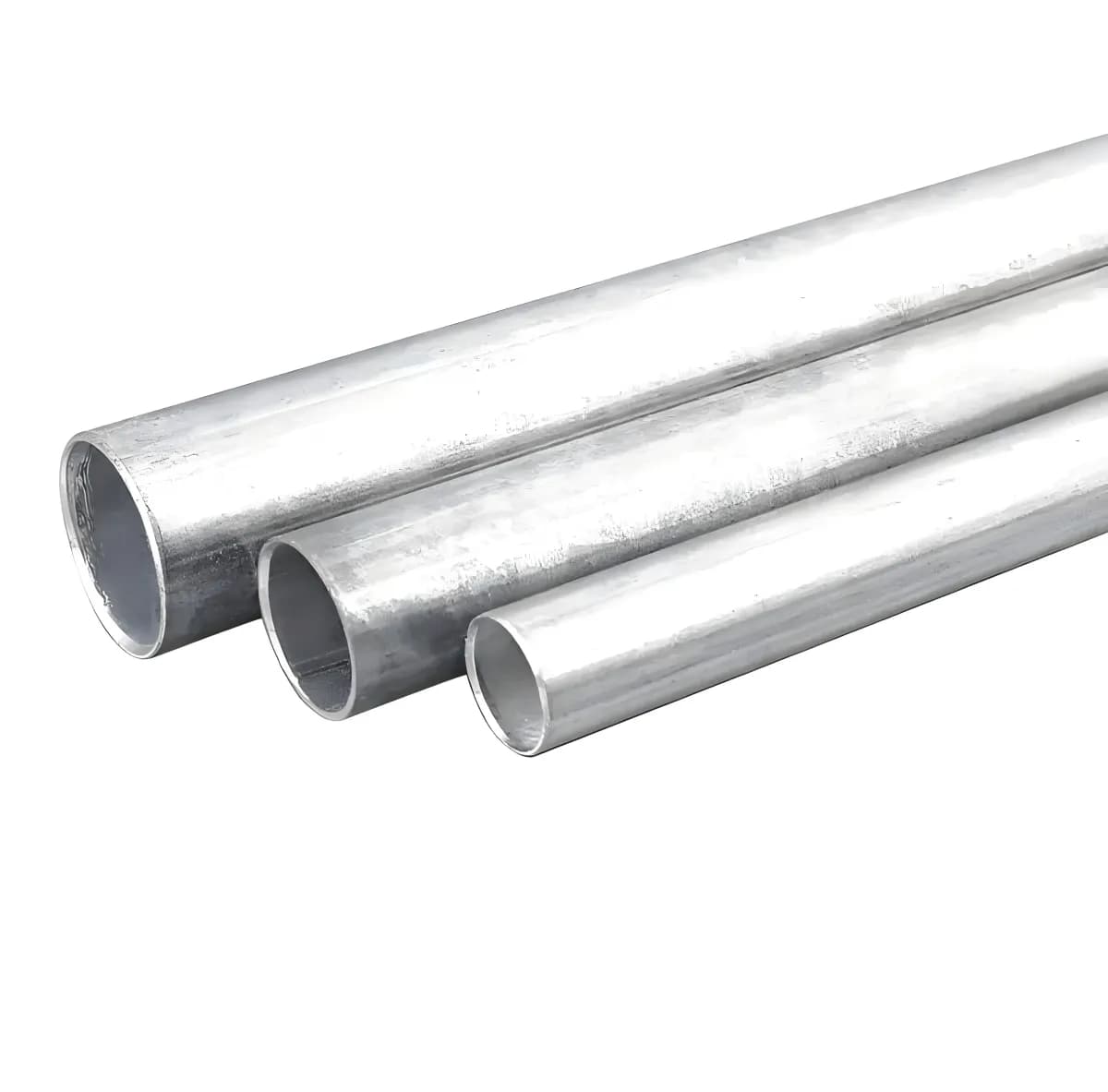
NPS, DN, inch and millimetre values are labels, not measured dimensions. The outside diameter (OD) of a given nominal size is fixed by the governing dimensional standard and does not change with schedule; the bore does. A nominal 4 in pipe (NPS 4 / DN 100) has an OD of 114.3 mm, not 100 mm and not 4 in. Because of this, a size conversion chart has to be read as a lookup against ASME B36.10M or ASME B36.19M, not as a calculation.
What NPS, DN and NB Identify
Nominal Pipe Size (NPS) is the North American inch-based designation; DN (diamètre nominal) is the metric designation used in ISO and EN documents and is defined in ISO 6708. NB (nominal bore) is an older inch-based term still seen on drawings and in some markets. All three are names for a size class. None of them is a measured diameter, and none of them tells you the inside diameter.
The historical reason is the one worth remembering: early pipe was named after an approximate internal diameter, and the name survived after wall thickness schedules were standardised. That is why NPS 4 keeps its name while its OD sits at 114.3 mm and its bore moves with every schedule.
Pipe Size Chart: NPS 1/2 to NPS 4
The OD and wall thickness values below are the ASME B36.10M carbon and alloy steel series values; stainless steel follows ASME B36.19M, which shares the same OD column for these sizes. Confirm against the current edition before releasing a purchase order.
| NPS (in) | DN | OD (mm) | OD (in) | SCH 40 wall (mm) | SCH 80 wall (mm) |
|---|---|---|---|---|---|
| 1/2 | 15 | 21.3 | 0.840 | 2.77 | 3.73 |
| 3/4 | 20 | 26.7 | 1.050 | 2.87 | 3.91 |
| 1 | 25 | 33.4 | 1.315 | 3.38 | 4.55 |
| 1-1/2 | 40 | 48.3 | 1.900 | 3.68 | 5.08 |
| 2 | 50 | 60.3 | 2.375 | 3.91 | 5.54 |
| 3 | 80 | 88.9 | 3.500 | 5.49 | 7.62 |
| 4 | 100 | 114.3 | 4.500 | 6.02 | 8.56 |
Pipe Size Chart: NPS 5 to NPS 12
| NPS (in) | DN | OD (mm) | OD (in) | SCH 40 wall (mm) | SCH 80 wall (mm) |
|---|---|---|---|---|---|
| 5 | 125 | 141.3 | 5.563 | 6.55 | 9.53 |
| 6 | 150 | 168.3 | 6.625 | 7.11 | 10.97 |
| 8 | 200 | 219.1 | 8.625 | 8.18 | 12.70 |
| 10 | 250 | 273.1 | 10.750 | 9.27 | 12.70 |
| 12 | 300 | 323.9 | 12.750 | 9.53 | 12.70 |
Pipe Size Chart: NPS 14 and Above
From NPS 14 upward the OD is equal to the nominal size in inches, so NPS 14 has an OD of 14.000 in (355.6 mm) and NPS 48 has an OD of 48.000 in (1219.2 mm). These sizes also stop using the SCH 40 / SCH 80 naming and use wall designations such as STD, XS and XXS instead, which is why the second column below is labelled XS rather than SCH 80.
| NPS (in) | DN | OD (mm) | OD (in) | STD wall (mm) | XS wall (mm) |
|---|---|---|---|---|---|
| 14 | 350 | 355.6 | 14.000 | 9.53 | 12.70 |
| 16 | 400 | 406.4 | 16.000 | 9.53 | 12.70 |
| 18 | 450 | 457.2 | 18.000 | 9.53 | 12.70 |
| 20 | 500 | 508.0 | 20.000 | 9.53 | 12.70 |
| 24 | 600 | 609.6 | 24.000 | 9.53 | 12.70 |
| 36 | 900 | 914.4 | 36.000 | 9.53 | 12.70 |
| 48 | 1200 | 1219.2 | 48.000 | 9.53 | 12.70 |
Why One Nominal Size Has Several Bores
OD is fixed per nominal size, so the wall thickness set by the schedule is what changes the bore. Two NPS 4 pipes at SCH 40 (6.02 mm) and SCH 80 (8.56 mm) share an OD of 114.3 mm but have different inside diameters, different weights per metre and different pressure capability. This fixed-OD arrangement is also what lets one set of flanges, fittings and valves fit any schedule of the same nominal size. The full wall thickness series from SCH 5S to SCH XXS is covered separately in our pipe wall thickness chart.
Converting Between NPS and DN
The rule of thumb DN = 25 x NPS works for some sizes and fails for others, so it is only useful as a memory aid. Use it to sanity-check a document, then confirm against a standard table:
- It matches at NPS 2 = DN 50, NPS 4 = DN 100, NPS 6 = DN 150, NPS 8 = DN 200.
- It fails at NPS 3, which is DN 80 and not DN 75.
- It fails at NPS 3-1/2 = DN 90, NPS 5 = DN 125 and NPS 14 = DN 350.
- Above NPS 24 the DN steps are less regular and should always be read from the table.
When a drawing mixes systems, convert once, write both designations on the RFQ, and keep the governing standard named. That single habit prevents most size-related ordering errors.
Where the OD Values Come From
Wrought carbon and alloy steel pipe dimensions are published in ASME B36.10M, and stainless steel pipe dimensions in ASME B36.19M. Other dimensional series exist - EN 10220 covers European pipe dimensions and JIS and GB series exist for Japanese and Chinese practice - and some sizes do not share an OD across those systems. If a project mixes standards, verify the OD against the named standard rather than assuming the ASME value carries over.
Estimating Weight per Metre
Mill documents give the actual unit weight, but an estimate is useful for freight and load planning. For carbon steel, W = (OD - WT) x WT x 0.02466 with OD and WT in mm and W in kg/m; the constant reflects a density of 7850 kg/m3. For NPS 4 SCH 40: (114.3 - 6.02) x 6.02 x 0.02466 = 16.08 kg/m. Stainless grades use a slightly higher constant for their higher density. Treat the result as an estimate and take the certified value from the mill certificate.
What to Confirm with Your Inquiry
A size designation alone is not an order. Send these fields so the quote covers the pipe you actually need:
- Nominal size as NPS and DN, plus the governing dimensional standard and edition.
- Schedule or measured wall thickness, with the minimum wall tolerance you accept.
- Material grade and standard, for example ASTM A106 Grade B seamless carbon steel pipe or ASTM A312 TP304 stainless steel pipe.
- Manufacturing method (seamless or welded) and any heat treatment condition.
- Length - random or fixed cut - and end finish (plain, bevelled, threaded).
- Required inspection, testing and certificate, including impact testing temperature if applicable.
- Quantity in metres or tonnes, and the delivery term.
Corrosion-resistant grades change the dimensional standard as well as the price, so if the service is chloride-bearing it is worth pricing ASTM A312 TP316L pipe against the carbon option before the size is frozen.



