
A pipe schedule does not mean one wall thickness for every size, and a stainless S schedule is not automatically the same as a carbon-steel schedule. ASME B36.10M standardizes dimensions of welded and seamless wrought steel pipe. ASME B36.19M does the same for welded and seamless wrought stainless-steel pipe. ASME states that the B36.19M wall for NPS 14 through 22 Schedule 10S, NPS 12 Schedule 40S, and NPS 10 and 12 Schedule 80S is not the same as ASME B36.10M. The S suffix distinguishes the B36.19M series. Read the current table for one NPS and schedule. For NPS 12 and smaller, pipe outside diameter is also larger than the size number, so a pipe is not a tube of the same name.
Pipe dimensions are not tube dimensions
Both ASME standards use pipe for tubular products of the dimensions commonly used in pipeline and piping systems. For NPS 12 and smaller, pipe outside diameter is numerically larger than the NPS number. Tube outside diameter is numerically the same as the size number. A 2-inch pipe and a 2-inch tube are not the same starting point for a wall measurement.
The standards cover standardization of dimensions. They do not assign a pressure rating, a weight that can be used without the actual wall, or a statement that every schedule is stocked. Pressure design remains a code calculation; see how steel pipe pressure rating is calculated.
Which standard applies
| Standard | What the public scope covers | What to watch |
|---|---|---|
| ASME B36.10M-2018 | Welded and seamless wrought steel pipe dimensions | Schedule numbers without the S suffix |
| ASME B36.19M-2018 | Welded and seamless wrought stainless-steel pipe dimensions | The S suffix, and the sizes ASME says do not match B36.10M |
ASME also says B36.10M includes other pipe thicknesses that are commercially available in stainless steel. A stainless pipe can therefore be ordered to a B36.10M thickness when the specification says so. The product standard, such as ASTM A312 for austenitic stainless pipe, still has to be named. B36.19M does not replace it.
The catalog years above are the editions shown on the ASME product pages used for this article. Confirm the edition the project specifies before using a transcribed chart.
Why this page has no wall-thickness table
A usable wall table has one NPS, one outside diameter, one schedule, and one thickness from the named edition. The earlier article compressed those rows into plain text and mixed carbon-steel and stainless-steel values. Reprinting that table would repeat numbers this revision has not verified against the paid standard.
Use the current ASME table, or a project datasheet that cites it, for the thickness. Check these identity points before comparing two charts:
- Pipe, not tube, and the correct NPS.
- B36.10M or B36.19M, including the S suffix where it changes the thickness.
- The listed exceptions: NPS 14-22 Schedule 10S, NPS 12 Schedule 40S, and NPS 10 and 12 Schedule 80S.
- Outside diameter and wall from the same row. Do not take the diameter from one schedule and the wall from another.
Nominal weight is calculated from the dimensions and material density. Until the wall is taken from the current table, this page does not state a weight per meter or a difference between schedules.
Schedule names do not rate the pipe
Schedule 5S, 10S, 40, 40S, 80, 80S, 160, and XXS are dimension series, not service approvals. A thin schedule can be right for a low-pressure, low-corrosion design and wrong where the code calculation or corrosion allowance needs more wall. A heavy schedule adds wall and weight. It does not, by itself, prove a pressure class.
The outside diameter for a given NPS stays with the pipe-dimension standard; schedule changes the wall and therefore the inside diameter. Fittings and flanges have to match the end and wall the joint actually uses. A 5-inch Schedule 40 galvanized pipe is one NPS and one schedule, not a chart for every Schedule 40 size.
Material standard and tolerance are separate
Wall tolerance belongs to the product specification, not to the schedule number. ASTM A530 covers general requirements for specialized carbon and alloy steel pipe. ASTM A999 covers general requirements for alloy and stainless-steel pipe. Both are general-requirement documents. The permitted over and under thickness has to be read in the current product specification, because that specification can modify the general requirement.
Do not apply a carbon-steel tolerance to stainless pipe, or the reverse, without reading the specification named on the order. The minimum wall used in a pressure calculation is a design step. It is not the nominal schedule wall.
These published pipes show the material distinction a chart must keep: seamless carbon steel pipe, 304 stainless steel seamless pipe, 316L stainless steel pipe, and stainless steel seamless and welded pipe. ASTM A106 covers seamless carbon-steel pipe for high-temperature service. ASTM A312 covers austenitic stainless-steel pipe. The dimension standard and the material specification are both required on the order.
How to check a delivered pipe
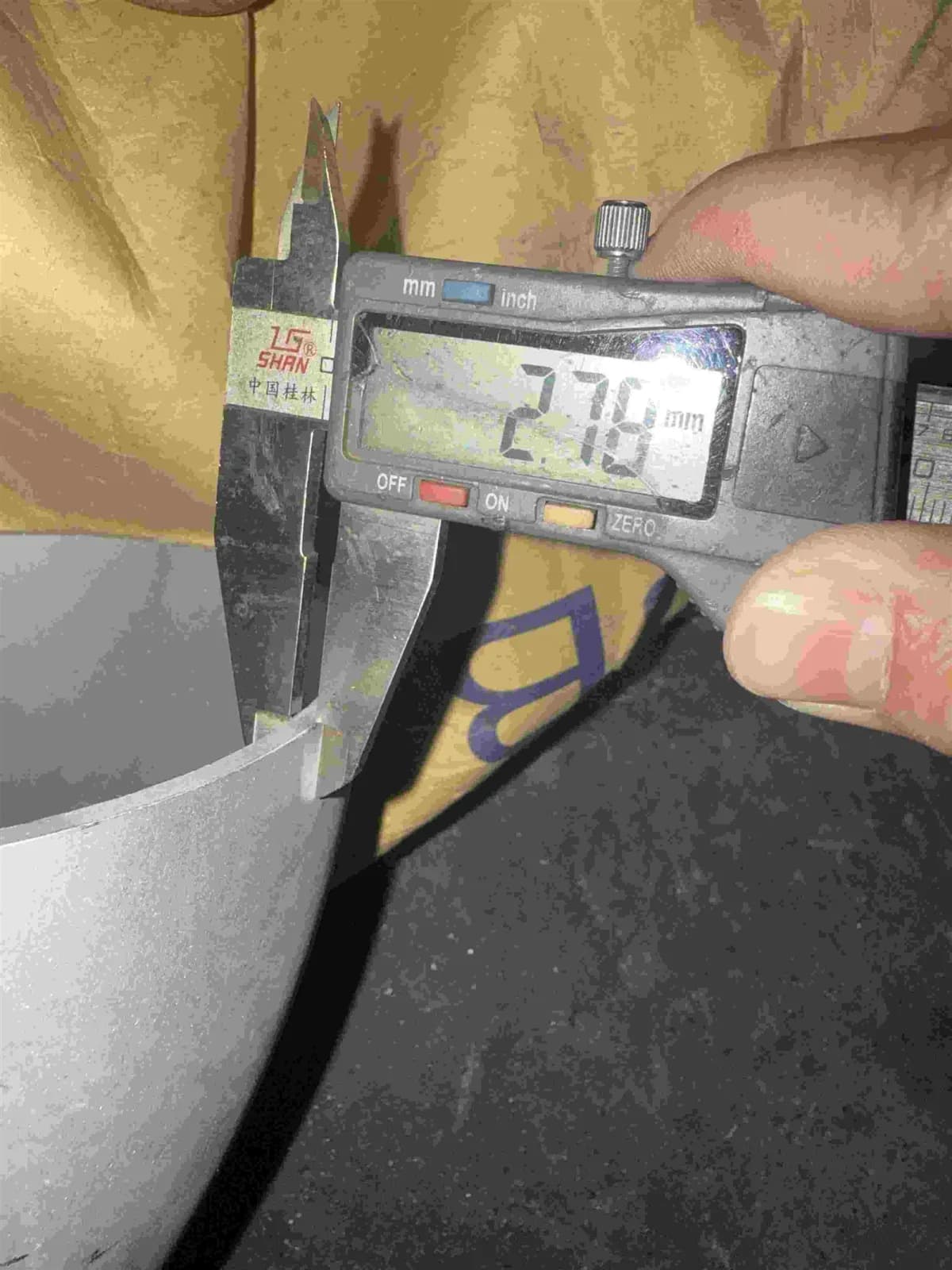
Measure outside diameter and wall at the end, or use a qualified ultrasonic reading on the body when the end is not accessible. Compare the reading with the certificate and with the ASME row for that NPS and schedule. One reading does not map the thinnest point around the circumference.
Scale, coating, or coupling fluid can change an ultrasonic reading. Clean the contact surface and identify the instrument and calibration. A caliper at a cut end shows that end only. Neither tool identifies the steel grade. Grade comes from the material specification and the mill certificate, not from the wall measurement.
What to put on the request
State the dimension and material documents separately:
- NPS, outside diameter if the project uses it, and schedule or the required nominal wall.
- ASME B36.10M or B36.19M, with the edition, and the material specification and grade.
- Seamless or welded, pipe end, and length.
- Any minimum-wall requirement, stated as a requirement rather than assumed from the schedule.
- The fitting or flange standard that must match the end.
For the standards that govern the steel rather than the schedule, see ASTM, EN, JIS, and GB pipe standards. This page does not claim that every schedule from 5S through XXS is available.



