
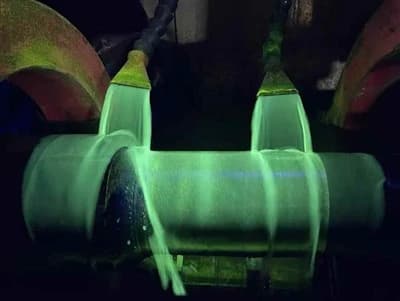
Steel pipe heat treatment is a specified manufacturing condition used to obtain or restore a required microstructure and set of properties. It is not a menu that can be changed after ordering without technical review. The product standard, grade, pipe or tube form, dimensions and required test results determine whether normalizing, quenching and tempering, annealing or another route is permitted.
What Each Process Is Intended to Do
| Process | General purpose | What must be specified or verified |
|---|---|---|
| Normalizing | Refine and equalize structure after forming or hot working | Austenitizing range, hold, air-cooling route, product dimensions and resulting mechanical properties |
| Quenching | Use rapid cooling to create a hard transformation structure before tempering | Quench medium, agitation, transfer time, geometry, distortion and cracking controls |
| Tempering | Reduce as-quenched brittleness and establish the required strength, hardness and toughness balance | Tempering temperature and hold, permitted cooling route, hardness and mechanical tests |
| Solution annealing | Dissolve detrimental precipitates in applicable stainless grades and restore the specified condition | Alloy, minimum temperature, cooling requirement, surface condition and corrosion-related acceptance checks |
| Stress relieving or PWHT | Reduce residual stress or temper a weld heat-affected region under a qualified fabrication procedure | Construction code, weld procedure, thickness basis, heating band, thermocouple plan and acceptance criteria |
Do Not Transfer a Cycle Between Grades
Heat-treatment temperatures and cooling routes are specific to the standard, grade, form and thickness. The verified ASTM A335 P11 seamless pipe page lists normalized and tempered as the usual delivery condition and cites a minimum tempering temperature of 650 °C for that product route. The value should be checked against the current order edition and any project additions before it becomes a purchase requirement.
Austenitic stainless exchanger tube follows a different metallurgical objective. The verified ASTM A213 TP304 and TP316L tube page cites solution annealing at 1040 °C minimum. That condition cannot be copied to carbon or chromium-molybdenum pipe, and a carbon-steel normalizing cycle cannot be used as a substitute for stainless solution treatment.
Delivery Condition Belongs on the Order
Some specifications permit more than one delivery condition. The API 5L Grade B seamless pipe record, for example, distinguishes delivery-condition suffixes and lists several possible routes according to product specification level and agreement. A buyer should therefore write the required condition or permitted options on the purchase order and verify the same designation on the mill certificate.
Do not infer the condition from grade alone. The permitted route may change with product specification level, wall, strength grade or supplementary requirement. If a drawing and purchase order disagree, resolve the conflict before production rather than relying on a later test to justify an unapproved cycle.
What a Heat-Treatment Record Should Show
- Purchase-order line, heat or lot identification, grade, form and dimensions covered by the record.
- Furnace or equipment identification and calibration status required by the quality plan.
- Set point and recorded temperature range, hold period and thermocouple locations.
- Heating and cooling method, including quench medium where applicable.
- Start and finish times, operator or system approval and any interruption or deviation.
- Tests linked to the treated lot, such as tensile, impact, hardness, flattening, corrosion or metallographic checks when ordered.
Verification and Common Failure Modes
A chart proves the recorded thermal cycle, not the final properties by itself. Verification comes from the tests required by the product standard and order. Hardness variation can flag nonuniform treatment; tensile or impact results check specified mechanical behavior; metallography can investigate an abnormal structure; and surface or volumetric examination may be required where cracking is a concern.
Overheating, inadequate hold, slow or uneven quenching, excessive distortion, decarburization and unapproved re-treatment are different failure modes. Their acceptance cannot be decided from appearance alone. Record the deviation, preserve traceability and apply the disposition process required by the quality plan.
What to Confirm with Your Inquiry
State the material standard and edition, grade, product form, dimensions, required delivery condition, permitted alternatives, mechanical and corrosion tests, hardness or impact limits, heat-treatment record format, witness points, certificate type and any fabrication PWHT requirement. If a treatment change is proposed after ordering, obtain engineering and purchaser approval before work proceeds, then submit the revised requirement through the inquiry page.
Frequently Asked Questions
Why heat treat pipe?
Heat treatment sets microstructure, strength, hardness and toughness required by the product standard.
Can the treatment be changed after ordering?
Only with engineering approval, because it can change mechanical properties and code compliance.



