
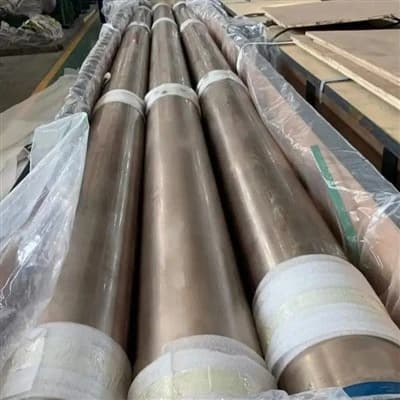
Marine and offshore pipe selection begins with the service, not with a broad claim that one alloy is “marine grade.” Seawater cooling, ballast, fuel, steam, hydraulic and firewater systems expose pipe to different fluids, temperatures, pressures, velocities and inspection rules. Define those conditions and the applicable class or project rules before choosing a material or certificate package.
Build a Service-Specific Material Shortlist
| Service question | Why it matters | What to place on the enquiry |
|---|---|---|
| What fluid and concentration are present? | Seawater, treated fresh water, fuel, steam and hydraulic fluid create different corrosion and compatibility risks | Fluid composition, contaminants, treatment chemicals and upset cases |
| Will flow stagnate or carry solids or air? | Stagnation, deposits, entrained air and abrasive solids can change local corrosion and erosion behavior | Normal and maximum velocity, idle periods, solids and aeration conditions |
| Is the item pipe or tube? | Pipe and tube use different dimensional conventions, standards and acceptance tests | NPS and schedule for pipe, or OD and wall for tube, plus manufacturing route |
| Which rules approve the system? | Flag, class society, owner and construction rules can add material, testing and survey requirements | Rule set, edition, survey plan, certificate type and approval responsibility |
Pipe and Tube Are Not Interchangeable
A seawater condenser drawing may call for tube ordered by outside diameter and wall, while a shipboard distribution drawing may call for pipe by NPS and schedule. The verified C70600 copper-nickel tube page covers the 90/10 tube form to ASTM B111 or ASME SB111 and explicitly separates it from copper-nickel pipe standards. Replacing tube with schedule pipe, even in the same alloy family, changes dimensions and the purchasing specification.
The same distinction applies to stainless products. A 316L stainless steel pipe inquiry must still state NPS or OD, schedule or wall, seamless or welded route, standard and service conditions. The grade name alone does not prove that the pipe is suitable for a particular seawater circuit.
Use Numeric Limits Only with Their Conditions
The C70600 product record cites 3.0 m/s as a clean-seawater reference for that alloy, while also warning that entrained sand and air change the erosion picture. It is therefore a screening value, not a universal design limit. The designer should verify the actual circuit, water quality, fouling control and governing rules before turning any published velocity into an acceptance criterion.
Likewise, composition, strength or temperature values taken from one product standard should not be copied into a general marine material table. State the product form, temper or heat treatment, test method and standard edition with each value. If those conditions are unknown, ask for the current mill data and project rule instead of presenting an unsupported range.
Classification and Certificate Scope
A commercial mill certificate and a class-related certificate do not mean the same thing. The order should identify whether the class society requires mill approval, product certification, survey attendance, witnessed testing, stamped documents or traceability to individual pieces or lots. Confirm the approval scope for the exact mill, product form, grade and size; do not rely on a logo or an unrelated approval certificate.
- Name the class or owner rule and edition used by the project.
- Define the material certificate and any class endorsement required.
- List hydrostatic, nondestructive, mechanical, corrosion or impact tests required by the order.
- State marking, heat or lot traceability, preservation and packing requirements.
- Identify review, witness and release hold points before production starts.
Corrosion Control Is a System Decision
Material selection is only one control. The design also needs compatible joining materials, control of dissimilar-metal contact, drainage, access for cleaning and inspection, suitable supports, and a water-treatment or coating plan where applicable. A resistant alloy cannot compensate for an unreviewed crevice, stagnant dead leg or incorrect weld-cleaning procedure.
For carbon-steel auxiliary services, start from a product specification such as seamless carbon steel pipe, then add the project coating, lining, corrosion allowance and inspection requirements. Do not infer seawater suitability or a service life from the base grade alone.
What to Confirm with Your Inquiry
Send the system name, fluid analysis, design and operating conditions, velocity and stagnation cases, product form, dimensions, material standard and edition, grade, seamless or welded route, joining process, corrosion-control plan, class or owner rules, tests, survey hold points, certificates, marking and preservation requirements. Use the inquiry page to attach the line list and class notes.
Frequently Asked Questions
Why is copper-nickel used in marine systems?
Grades such as C70600 provide seawater corrosion and biofouling resistance in suitable cooling systems.
Do shipyards accept commercial certificates alone?
Often no. Class society rules and the project specification can require additional approval and testing.



