
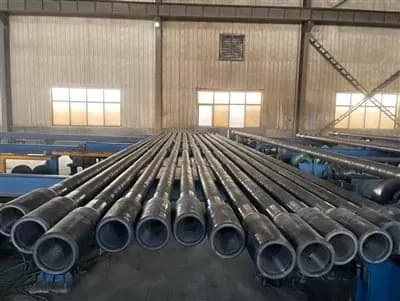
FBE, 3LPE, and 3LPP are external corrosion-control systems for steel pipe, not substitutes for pipe grade, wall design, welding quality, or cathodic protection. FBE is a bonded epoxy film. Three-layer polyethylene and polypropylene systems add an adhesive and a polyolefin outer layer over an epoxy primer. Select the system from the service environment, operating and installation temperatures, mechanical damage risk, field-joint design, inspection plan, and the project standard.
What Each Coating System Is
| System | Basic construction | Primary procurement question |
|---|---|---|
| Single-layer FBE | Fusion-bonded epoxy applied to prepared and heated steel | Which coating specification, powder qualification, surface preparation, application window, cure, thickness, and inspection apply? |
| 3LPE | Epoxy primer, adhesive copolymer, and polyethylene outer layer | Which three-layer system and field-joint coating are qualified for the installation and operating envelope? |
| 3LPP | Epoxy primer, adhesive copolymer, and polypropylene outer layer | Does the project require the temperature and mechanical behavior of a polypropylene system? |
| Cement mortar lining | Internal mineral lining for a specified water-service design | Which internal lining standard, water chemistry, thickness, curing, joint treatment, and acceptance criteria apply? |
ISO 21809 separates Part 1 for three-layer PE and PP coatings from Part 2 for single-layer FBE, with field-joint coating requirements treated separately. The AMPP standards program likewise treats coating application, inspection, surface preparation, and corrosion control as controlled practices. Name the required standard and edition on the order rather than copying a temperature or thickness range from a supplier table.
Temperature Is a System Limit, Not a Marketing Number
Temperature limits depend on the complete qualified system: primer, adhesive, outer layer, substrate preparation, test method, exposure duration, and installation condition. A resin data sheet is not a pipeline-system qualification. Record minimum application temperature, installation temperature, continuous operating temperature, maximum excursion, and storage exposure as separate fields.
Three-layer polypropylene is often considered when higher operating or installation temperatures are involved, while polyethylene is widely used for buried line pipe. That distinction is only a selection starting point. The project coating specification and qualification results decide the final system.
Coating Does Not Replace the Base Pipe Design
A coated carbon steel line pipe still needs the correct product standard, grade, manufacturing route, outside diameter, wall, weld examination, leak test, and material certificate. Coating thickness is not corrosion allowance, and a holiday-free inspection does not prove pipe strength. A large-diameter straight-seam welded pipe and a spiral welded steel pipe can use similar coating families while remaining different base products.
Surface Preparation Controls Adhesion
The coating procedure should define pre-cleaning, abrasive blasting, surface cleanliness, surface profile, soluble-contaminant limits where applicable, dust control, preheat, application timing, and contamination prevention. An accepted coating name does not compensate for oil, salt, moisture, dust, or flash rust on the steel.
Pipe ends and weld cutbacks need their own dimensions and protection method. The factory coating has to stop where field welding and joint coating will occur. A cutback that is too short interferes with welding; one that is too long leaves more field-applied coating to control. The drawing and field-joint system should agree before factory production starts.
Inspection Must Follow the Failure Modes
| Inspection item | What it checks | What it cannot prove alone |
|---|---|---|
| Surface preparation record | Cleanliness, profile, environment, and timing before application | Final film continuity |
| Dry-film or total coating thickness | Whether the applied build matches the specified range | Adhesion, cure, or impact resistance |
| Holiday detection | Discontinuities through the insulating film at the specified test setting | Pipe-wall integrity or long-term cathodic-disbondment behavior |
| Adhesion and cure tests | Bond and cure condition under the named procedure | Resistance to every field temperature or backfill condition |
| Visual and dimensional checks | Damage, cutback, end protection, handling marks, and identification | Hidden underfilm contamination |
Coordinate Coating with Cathodic Protection
External coating reduces the steel area exposed to the electrolyte. Cathodic protection addresses defects and exposed areas. The systems are designed together; one does not excuse failure of the other. Coating electrical properties, cathodic-disbondment behavior, field joints, insulating joints, test stations, and commissioning criteria belong in the corrosion-control design.
Handling and Repair Are Part of the System
Specify approved slings, padding, stacking, separators, end protection, transport inspection, allowable damage, repair materials, repair qualification, and documentation. Damage can occur after the factory holiday test, so receipt and lowering-in inspections matter. A compatible repair is not simply any epoxy available at the jobsite.
Questions Buyers Ask
What is 3LPE? Three-layer polyethylene coating combines an epoxy primer, adhesive copolymer and polyethylene topcoat for buried pipe protection.
Does coating replace material selection? No. The base pipe grade and thickness must still satisfy the mechanical and pressure design.
What to Confirm with Your Inquiry
- Base pipe standard, grade, route, OD, wall, length, end preparation, and marking.
- Coating standard and edition, qualified system, factory procedure, and approved raw materials.
- Application, installation, operating, storage, and excursion temperature envelope.
- Surface preparation, coating thickness, cure, holiday, adhesion, cutback, and repair acceptance.
- Field-joint system, cathodic-protection interface, handling method, records, and inspection hold points.



