
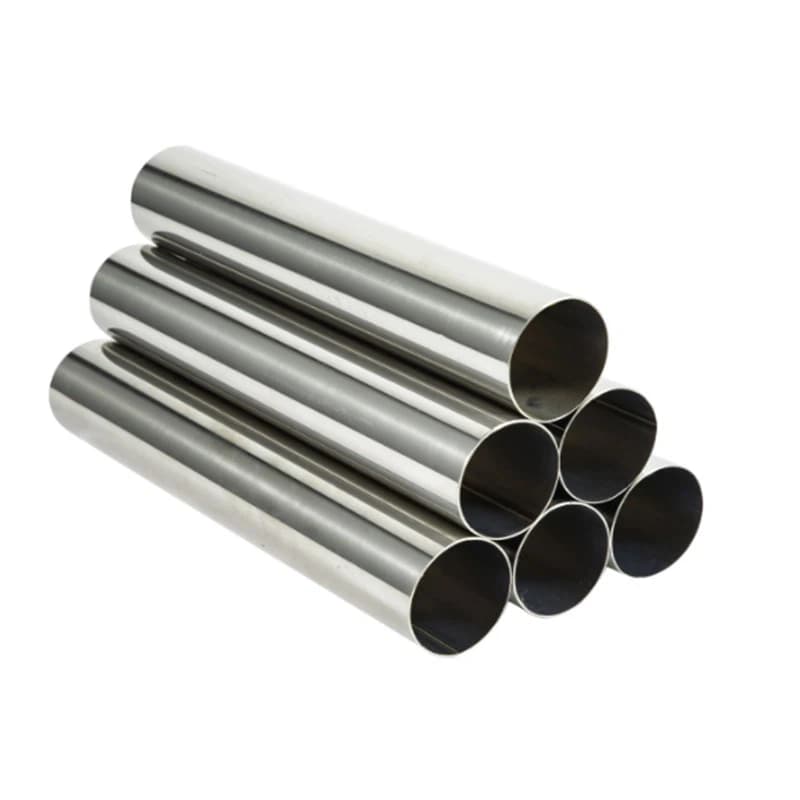
Precision cold-drawn pipe and standard pipe are different products, not two tolerance grades of the same pipe. ASTM A519 covers seamless carbon and alloy steel mechanical tubing, hot-finished or cold-finished. ASTM A106 covers seamless carbon-steel pipe for high-temperature service. ASTM A53 covers black and galvanized welded or seamless steel pipe. Cold drawing can tighten dimensions and raise strength only in the as-drawn condition. Annealed or otherwise heat-treated tube does not keep that as-drawn strength claim, and an A519 tolerance does not apply to A106 or A53 pipe.
Use the product name that the standard uses
ASME B36.10M distinguishes pipe from tube: pipe sizes used in piping systems do not use the same outside-diameter rule as tube. A precision-pipe request that is actually mechanical tubing should name ASTM A519 or the other tube standard, the outside diameter, and the wall or inside diameter. Calling it pipe does not make an A106 or A53 tolerance apply.
The ASTM A519 precision tube is the mechanical-tube product published for this comparison. Seamless carbon steel pipe and API 5L Grade B seamless pipe are piping products. They are not substitutes for a cylinder tube merely because both are round and seamless.
What cold drawing changes, and when heat treatment removes it
ASTM A519 says seamless mechanical tubing is made without a welded seam, usually by hot working and, when required, by subsequent cold finishing to produce the ordered shape, dimensions, and properties. Cold finishing is a process route. It is not a promise of one outside-diameter tolerance or one surface roughness.
Cold work raises strength and reduces ductility only while that cold-worked condition remains. Bright annealing, normalizing, or another specified heat treatment is a different delivery condition. After it is specified, the mechanical properties have to come from the standard and the mill certificate for that condition. Do not quote an as-drawn yield strength for an annealed tube.
Standard pipe can also be seamless or welded. ASTM A53 explicitly includes both. A welded pipe is not turned into seamless mechanical tubing by a closer ordering tolerance.
Compare the conditions, not a borrowed tolerance table
| Question | ASTM A519 mechanical tube | A106 or A53 pipe |
|---|---|---|
| What the standard covers | Seamless carbon and alloy mechanical tubing, hot-finished or cold-finished | Seamless high-temperature pipe, or black and galvanized pipe in the A53 scope |
| Usual reason to order it | A controlled diameter, wall, and surface for a mechanical fit | Piping service under the named pipe specification |
| Strength claim | Only for the stated grade and delivery condition | Only for the stated pipe grade and specification |
| What this page does not state | A universal OD, wall, straightness, or roughness value | A universal pipe tolerance or roughness value |
The earlier numeric comparison used tolerances and roughness values that were not tied to an edition and a delivery condition. Those numbers are withdrawn. The ordered ASTM A519 tolerance table, or the pipe specification's tolerance section, is the source. A hydraulic-cylinder drawing may require a honed or skived inside surface that is tighter than the as-drawn tube. That is a separate finishing operation, not the default cold-drawn surface.
Where each product belongs
Mechanical tube is the candidate when a seal, bearing, piston, or roller has to fit a controlled diameter. The drawing must state outside diameter, inside diameter or wall, surface finish, straightness, grade, and delivery condition. A pipe specification does not answer those drawing fields.
Standard pipe is the candidate when the requirement is a piping material and a pipe-dimension standard. It can be a reasonable choice when no sliding fit or honed bore is required. Machining a pipe bore to imitate a cylinder tube is a fabrication decision with its own cost and tolerance. It is not evidence that the pipe was supplied as A519 tube.
Stainless pipe, including 304 stainless steel seamless pipe, follows a stainless pipe specification such as ASTM A312. It is not cold-drawn carbon mechanical tube and does not inherit an A519 tolerance.
Standards that are not equivalents
DIN 2391, EN 10305-1, and GB/T 3639 are other precision-tube documents. This article does not establish a grade-by-grade equivalent to ASTM A519. If a drawing names one of them, keep that designation and confirm the current edition and delivery condition.
ASTM A106, ASTM A53, and API 5L remain pipe specifications. Their dimensions belong with the pipe-dimension standard, not with a mechanical-tube tolerance class. The comparison of pipe specification families is in ASTM, EN, JIS, and GB pipe standards.
What to confirm on the order
A price difference between tube and pipe is real only after both are specified. This page does not state a premium or a size range.
- Standard and edition: ASTM A519 for mechanical tube, or the pipe specification if the item is pipe.
- Grade and delivery condition, including cold-finished, annealed, normalized, or as agreed.
- Outside diameter, inside diameter or wall, length, and the tolerance source.
- Surface condition, and any hone or skive requirement beyond the standard tube finish.
- Documents required: mill certificate and the measured dimensions named on the drawing.
A photograph of a bright surface does not identify A519 tube or prove the inside-diameter tolerance. The certificate and the measured dimensions do that.



