
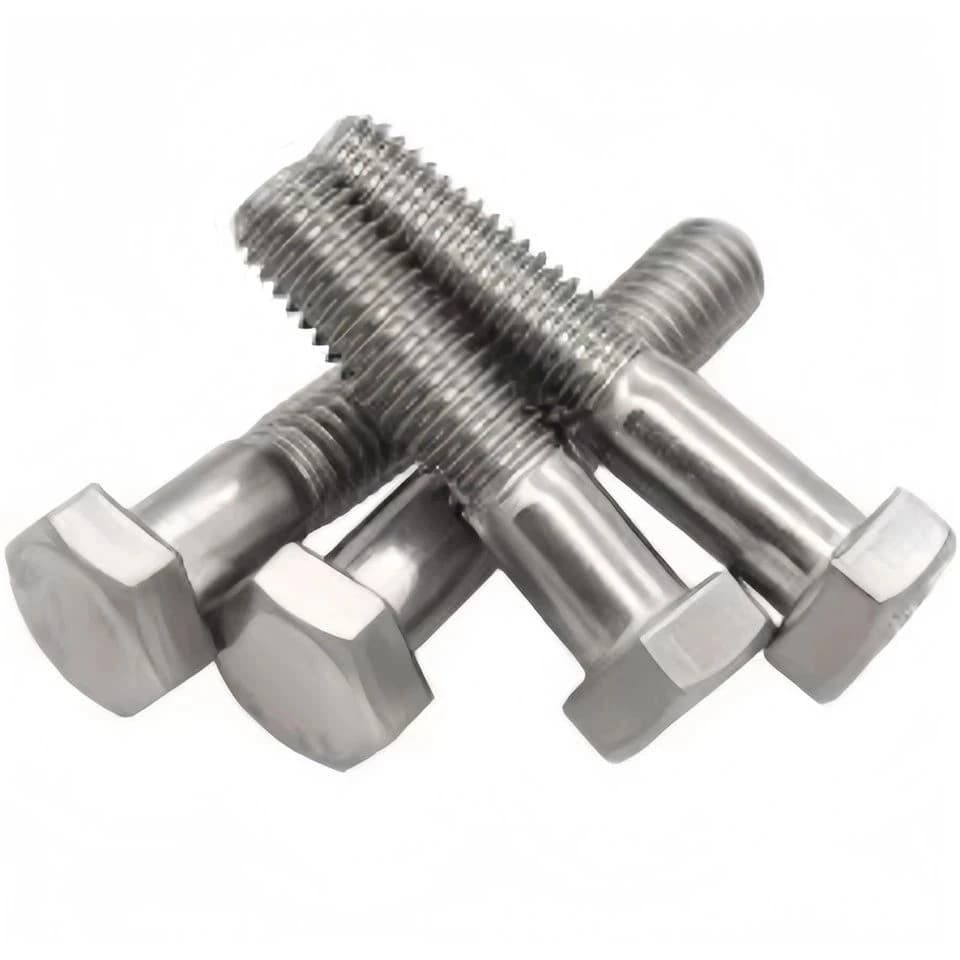
Bolt grades are not interchangeable labels. SAE J429 Grades 2, 5 and 8 cover inch-series carbon and alloy steel fasteners; ASTM A193 B7, B8, B8M and B16 cover alloy and stainless bolting for high-temperature or high-pressure service; ASTM A320 L7, L7M and L43 cover low-temperature service with mandatory impact testing. The strength values below are the minimum requirements of each standard for the diameter ranges it defines, so a larger diameter can carry a lower minimum than the same grade in a smaller size. Read the current edition before you specify.
What a Bolt Grade Actually Specifies
A grade bundles four things: material chemistry, heat treatment condition, the mechanical properties the fastener must reach after that treatment, and the marking that lets you verify it on site. Grades from different standard systems can share a strength number and still differ in chemistry, testing temperature and hardness limits, which is why a straight cross-reference is only a starting point.
SAE J429 Grades 2, 5 and 8
SAE J429 covers externally threaded inch-series fasteners. Grade 2 is low or medium carbon steel with no required heat treatment. Grade 5 is medium carbon steel, quenched and tempered. Grade 8 is medium carbon alloy steel, quenched and tempered. Minimum tensile strength falls as diameter rises: Grade 2 is 60 ksi (414 MPa) through 3/4 in and lower above that size, Grade 5 is 120 ksi (827 MPa) through 1 in, and Grade 8 is 150 ksi (1034 MPa) through 1-1/2 in.
ASTM A193 Grades B7, B8, B8M and B16
ASTM A193/A193M covers alloy and stainless bolting for high-temperature or high-pressure service. B7 is chromium-molybdenum alloy steel at 125 ksi (860 MPa) minimum tensile and 105 ksi (720 MPa) minimum yield. B8 is Type 304 and B8M is Type 316 stainless; in Class 1 (carbide solution treated) both carry 75 ksi (515 MPa) minimum tensile and 30 ksi (205 MPa) minimum yield, with higher values available in the strain-hardened classes. B16 is a chromium-molybdenum-vanadium grade at the same 125 ksi and 105 ksi minimums as B7, used where higher-temperature strength is the controlling requirement.
ASTM A320 Grades L7, L7M and L43
ASTM A320/A320M covers alloy and stainless bolting for low-temperature service and adds Charpy V-notch impact testing that A193 does not require. L7 reaches the same 125 ksi and 105 ksi minimums as B7 and is impact tested at -150 °F (-101 °C) with a 20 ft-lb (27 J) minimum average. L7M is a lower-strength variant with a hardness ceiling, specified where sulfide stress cracking resistance matters. L43 is a nickel-chromium-molybdenum grade intended for design metal temperatures below the L7 range; its required test temperature and minimum energy are set out in the standard and must be taken from the current edition for the size you order.
Minimum Properties by Grade
| Grade | Standard | Material | Min tensile | Min yield | Head marking |
|---|---|---|---|---|---|
| Grade 2 | SAE J429 | Low or medium carbon steel | 60 ksi (414 MPa) to 3/4 in | 36 ksi (248 MPa) | None |
| Grade 5 | SAE J429 | Medium carbon steel, quenched and tempered | 120 ksi (827 MPa) to 1 in | 92 ksi (634 MPa) | 3 radial lines |
| Grade 8 | SAE J429 | Medium carbon alloy steel, quenched and tempered | 150 ksi (1034 MPa) to 1-1/2 in | 130 ksi (896 MPa) | 6 radial lines |
| B7 | ASTM A193/A193M | Chromium-molybdenum alloy steel | 125 ksi (860 MPa) | 105 ksi (720 MPa) | B7 |
| B8 Class 1 | ASTM A193/A193M | Type 304 stainless steel | 75 ksi (515 MPa) | 30 ksi (205 MPa) | B8 |
| B8M Class 1 | ASTM A193/A193M | Type 316 stainless steel | 75 ksi (515 MPa) | 30 ksi (205 MPa) | B8M |
| B16 | ASTM A193/A193M | Cr-Mo-V alloy steel | 125 ksi (860 MPa) | 105 ksi (720 MPa) | B16 |
| L7 | ASTM A320/A320M | Chromium-molybdenum alloy steel | 125 ksi (860 MPa) | 105 ksi (720 MPa) | L7 |
| L43 | ASTM A320/A320M | Ni-Cr-Mo alloy steel | Confirm per current edition | Confirm per current edition | L43 |
Reading Head Markings
SAE grades are identified by radial lines: Grade 5 carries three, Grade 8 carries six, Grade 2 carries none. ASTM grades are stamped with the grade designation itself, so B7, B8M, B16, L7 and L43 appear on the head. Metric property classes use two numbers, where the first number times 10 gives the nominal tensile strength in hundreds of MPa and the second gives the yield-to-tensile ratio: 8.8 means roughly 800 MPa tensile and 640 MPa yield. A marking confirms what the manufacturer claims; it does not replace the material test certificate.
How to Choose Between Systems
- Start from the design code, not the catalogue. Pressure boundary work normally names ASTM grades; general machinery and automotive work normally names SAE grades.
- Set the temperature first. If impact toughness at a design metal temperature is required, A320 grades carry a mandatory Charpy test and A193 grades do not.
- Match the nut to the bolt. A193 bolting is normally paired with ASTM A194/A194M nuts of a compatible grade, such as 2H with B7. A weaker nut will strip before the bolt reaches its capacity.
- Check the environment before the strength. Chlorides, H2S and galvanizing all change the choice, sometimes downward in strength.
Common Misreadings
- Higher is not automatically better. Grade 8 hardness raises hydrogen embrittlement risk when the fastener is electroplated or hot-dip galvanized.
- Grade 8 does not replace B7. They are tested to different rules and are specified by different codes.
- Stainless is not a strength upgrade. B8 Class 1 is well below B7 in strength and is chosen for corrosion resistance and cleanliness.
- The temperature limit is not a property of the grade alone. It depends on the design code, the actual properties at temperature and the joint assembly.
Relevant Products
- ASTM A193 B7M double-ended stud for sour-service and refinery bolting.
- ASTM A307 carbon steel bolts for general, non-critical anchoring and assembly.
- Matching ASTM A563 Grade A nuts where the nut grade is specified on the drawing.
- 304 stainless steel hex bolt, A2-70 for corrosive or hygienic service.
Sources
- SAE J429 - Mechanical and Material Requirements for Externally Threaded Fasteners
- ASTM A193/A193M - Alloy-Steel and Stainless Steel Bolting for High Temperature or High Pressure Service
- ASTM A320/A320M - Alloy-Steel and Stainless Steel Bolting for Low-Temperature Service
What to Confirm on Your Enquiry
Grade and standard edition, diameter and length, thread series, quantity, coating or plating, required mechanical testing, and the certificate package. Send those fields with your enquiry to Gangyou Steel and confirm the current supply scope for each grade before you issue the purchase order.
Bolt Grades FAQ
Are SAE bolt grades interchangeable with ASTM grades?
No. SAE J429 grades and ASTM A193 grades use different material, heat-treatment and testing rules.
Which grade is typical for high-temperature flange bolting?
ASTM A193 Grade B7 is a common alloy-steel choice for elevated-temperature flange service.



