
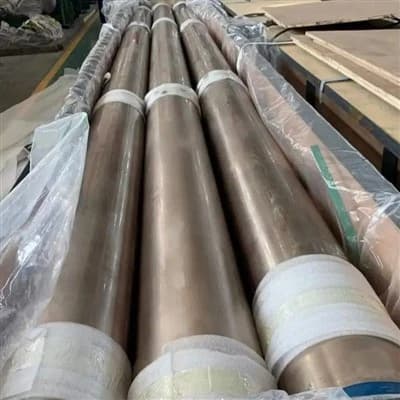
ASTM A106, ASTM A53 and API 5L all describe carbon steel pipe, and all three have a Grade B, but they were written for different duty: A106 for high-temperature pressure service, A53 for general mechanical and pressure service, and API 5L for oil and gas transmission pipelines. The design code of the piping system - not price or availability - decides which specification applies, and the three are not substitutes on a design calculation.
Overview of the Three Standards
| Parameter | ASTM A106 | ASTM A53 | API 5L |
|---|---|---|---|
| Scope | Seamless carbon steel pipe for high-temperature service | Welded and seamless pipe, black and hot-dip galvanized, for ordinary service | Line pipe for oil and gas transportation |
| Manufacturing | Seamless only | Type S seamless, Type E ERW, Type F furnace butt weld | Seamless, ERW, LSAW, spiral (SAWH) |
| Grades | A, B, C | A, B | B (L245) to X80, PSL1 / PSL2 |
| Primary service | Refinery, petrochemical and power piping | Water, gas, air, steam lines | Oil and gas pipelines |
Manufacturing Process Differences
A106 is produced exclusively seamless from a pierced billet, which removes the longitudinal weld and makes the grade the default for high-temperature and high-pressure work. A53 covers both seamless (Type S) and welded product: Type E is electric-resistance welded, and Type F is furnace butt welded, limited to Grade A and smaller sizes. API 5L allows seamless, ERW, LSAW and spiral SAW routes, which is why line pipe reaches the largest diameters. For a worked selection of the seamless routes, see the seamless carbon steel pipe page covering all three standards in Grade B.
Chemical and Mechanical Properties
The table lists the Grade B reference requirements; elongation is calculated from formulas in each standard, so no single figure applies to every wall.
| Property (Grade B) | A106 | A53 | API 5L (PSL1) |
|---|---|---|---|
| Carbon, max % | 0.30 | 0.30 | 0.28 |
| Manganese, % | 0.29 - 1.06 | 1.20 max | 1.20 max |
| Phosphorus, max % | 0.035 | 0.05 | 0.030 |
| Sulfur, max % | 0.035 | 0.045 | 0.030 |
| Silicon, min % | 0.10 | not specified | not specified |
| Tensile strength, min | 415 MPa (60 ksi) | 415 MPa (60 ksi) | 415 MPa (60 ksi) |
| Yield strength, min | 240 MPa (35 ksi) | 240 MPa (35 ksi) | 245 MPa (35.5 ksi) |
API 5L PSL2 keeps these minimums and adds upper strength limits, a maximum yield-to-tensile ratio of 0.93, mandatory Charpy V-notch testing at the 0 °C reference temperature, carbon-equivalent control and per-pipe non-destructive examination and hydrostatic testing. The exact PSL2 chemistry depends on the delivery condition (BR, BN, BQ, BM) and the edition in force at order.
Which Standard for Which Service
For sustained service above roughly 400 °C, the piping code normally points to A106, whose silicon minimum supports high-temperature work and whose allowable stresses are tabulated in ASME Section II. For general fluid transport at moderate temperature, A53 Type E or Type S is the workhorse. For oil and gas transmission, API 5L is the specification, and US pipeline safety regulations reference it for natural gas piping - see the eCFR text of 49 CFR Part 192.
- High-temperature service: A106 Grade B, or A335 alloy grades beyond carbon steel limits.
- General fluids: A53, choosing Type E for welded economy or Type S for seamless.
- Pipelines: API 5L with the PSL level, delivery condition suffix and toughness testing stated.
Substitution Rules
A106 Grade B can typically substitute for A53 Grade B because it meets or exceeds the A53 chemistry and strength minimums, but the reverse is not always acceptable: A53 has no silicon minimum and no high-temperature allowable-stress basis. API 5L Grade B is chemically similar to A106 but is ordered against pipeline requirements such as PSL level and toughness testing, so substitutions across the ASTM/API boundary need the specifying engineer's approval. The ASTM A234 WPB elbows for A53 lines show how fittings follow the same logic as the pipe.
Certification and Testing
Mill test certificates for A106 and A53 follow the general requirements of ASTM A530, covering heat analysis, mechanical properties and test results; API 5L certificates add the data of the API 5L edition, including Charpy results for PSL2. All three can be certified to EN 10204 3.1 or 3.2 with third-party inspection, and sour service (wet H2S) is handled as a PSL2 order with S-suffix delivery conditions and HIC/SSC testing aligned to NACE MR0175 / ISO 15156.
What to Confirm Before Ordering
An inquiry should state: the standard and grade, the PSL level and delivery condition for API 5L, nominal size or outside diameter, wall or schedule, length, end finish, coating, and the inspection and document package. The API 5L Grade B seamless pipe page lists the full inquiry checklist for the line-pipe route.



