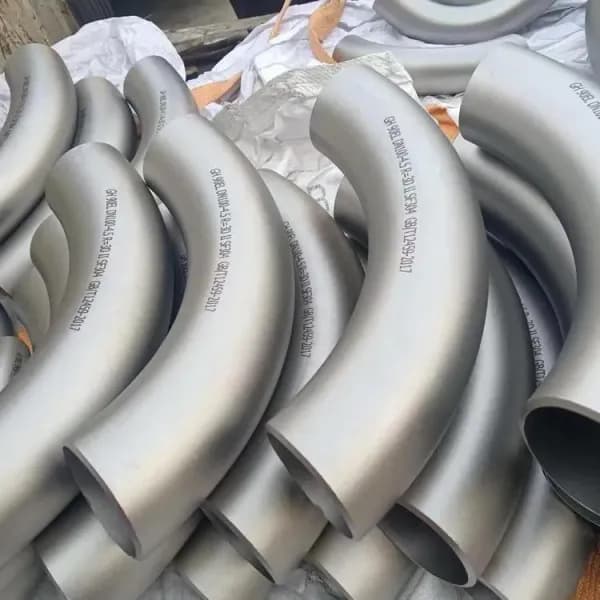
Product Description
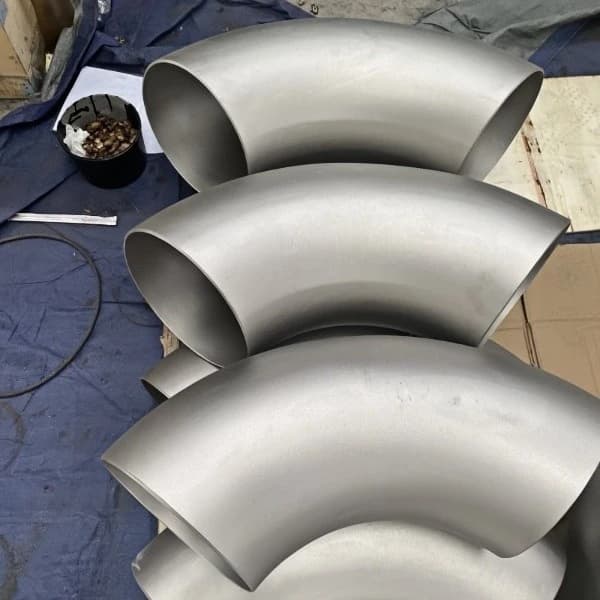
316L stainless steel elbow is a wrought butt-welding fitting that changes the direction of a stainless process line. The fitting grade is UNS S31603, the same alloy written EN 1.4404 in European orders. ASTM A403 / ASME SA403 is the material specification for this family of austenitic piping fittings, and ASME B16.9 is the dimension standard when the order is a standard-weight or heavy-wall butt-weld elbow. This page covers both seamless and welded construction. The two routes are not the same part: state which one the line requires before the fitting is made.
The molybdenum in 316L is what separates it from 304 and 304L in chloride-bearing water and many chemical streams. The low carbon is what matters at the weld. A matching pipe ordered as ASTM A312 TP316L is capped at 0.035% carbon so the heat-affected zone does not need a separate solution anneal to stay resistant to intergranular corrosion. That pipe limit is not the fitting table. A403 / SA403 has its own analysis and tensile requirements, and the ASTM store copy of A403/A403M-22 is marked Historical, so this page does not print chemistry or strength numbers from that edition. The mill certificate for the heat is the document that carries the actual analysis.
Dimensions and Construction
The lines below are ordering rules, not a stock list and not a guaranteed size matrix. ASME B16.9-2024 covers factory-made wrought butt-welding fittings from NPS 1/2 through NPS 48 (DN 15 through DN 1200), at any wall thickness the fitting can be produced in. It does not cover the light-wall, corrosion-resistant pattern; that pattern is MSS SP-43. An earlier version of this page listed 1/2 through 60 inch and Schedule 5S through XXS as if both were one standard range. The 60 inch figure sits outside B16.9, and Schedule 5S is the light-wall series that B16.9 expressly sends to MSS SP-43. Neither figure is repeated here as a supply range.
| Item | How to specify it |
|---|---|
| Dimension standard | ASME B16.9 for standard butt-weld elbows. MSS SP-43 only when the order is a light-wall corrosion-resistant fitting. |
| Size system | NPS 1/2 through NPS 48 (DN 15 through DN 1200) is the B16.9 size system. The size on your order is confirmed before production; 60 inch is not a B16.9 size. |
| Angle | 90 degree and 45 degree are the usual catalog angles. Any other angle is a special and needs the angle stated on the drawing. |
| Radius | Long radius center-to-end is 1.5 × NPS. Short radius is 1.0 × NPS. The inch and millimetre take-out comes from the B16.9 edition named on the order. Long radius is the normal choice and short radius is the compact pattern. Short-radius elbows that used to sit in ASME B16.28-1994 are now inside B16.9. Center-to-end is taken from the edition named on the order. |
| Wall | State the schedule or the wall thickness in millimeters. Do not assume Schedule 5S, 10S, 40S, 80S and XXS are one interchangeable series. |
| Ends | Bevel for butt welding, matched to the pipe wall on the same order. |
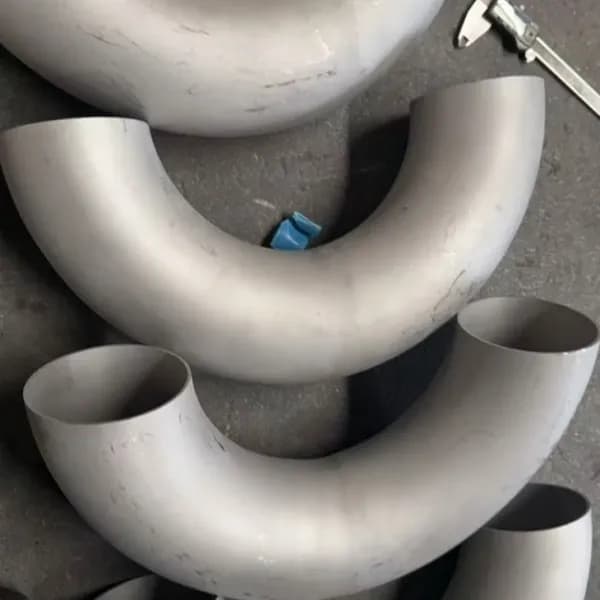
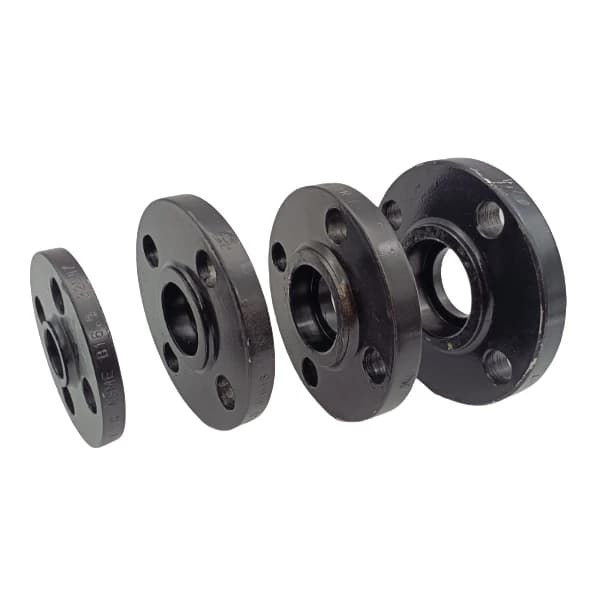
A butt-weld elbow is not a pipe bend. A bend is a piece of pipe formed to a radius, often three or five times the diameter, and it is ordered as pipe plus a bending radius. An elbow is a fitting with a standardized center-to-end. Mixing the two words on a purchase order is how a spool arrives with the wrong take-out. Threaded and socket-weld fittings are a different standard family again and are not covered here.
Material and Weld Class
Say which construction class you need. In purchasing practice, ASTM A403 uses WP for the pressure-fitting classes and CR for the light-wall corrosion-resistant class that is dimensioned to MSS SP-43. Inside the WP family, the usual construction marks are WP-S for a seamless fitting, WP-W for a welded fitting, and WP-WX for a welded fitting that has been radiographed. Those letters change the inspection scope and the way the fitting is marked. They are not cosmetic. Because the current A403 text was not available in full while A403/A403M-22 is marked Historical, the class letters above are the marks to write on the inquiry, and the certificate is what confirms which class was made.
316 and 316L are not substitutes you can swap by name. 316 is UNS S31600 (EN 1.4401). 316L is UNS S31603 (EN 1.4404). The L grade is the one to name when the elbow will be welded into the line and left in the as-welded condition. 317L is a higher-molybdenum grade for more aggressive chloride or acid service; it is a different fitting and is listed separately. 304L has no molybdenum and is the wrong grade wherever the reason for choosing 316L was pitting resistance.
Do not copy pipe or plate numbers onto this fitting. ASTM A312 is the pipe standard. Its TP316L tensile minimum, yield minimum and elongation are pipe values. ASTM A240 is the plate and sheet standard, and its silicon limit is tighter than the pipe limit. A fitting made from pipe, plate or bar still has to meet the fitting specification named on the order. If you need the numbers for the matching pipe, use the 316L stainless steel pipe page, and keep those numbers off the fitting certificate check.
Where It Is Used
Buyers specify this elbow on chloride-bearing water lines, desalination and wastewater piping, chemical and petrochemical process lines, pulp bleach plant piping, and food or pharmaceutical lines where the weld must stay low in carbon. The fitting only does that job when the grade, the wall and the weld procedure match the service. It is not a high-temperature specialty alloy, and it is not a duplex grade. Temperature, chloride level, crevices and whether the line is drained or left wet all change the result. No pressure rating is printed here: allowable pressure comes from the piping code, the wall and the joint efficiency, not from the elbow angle.
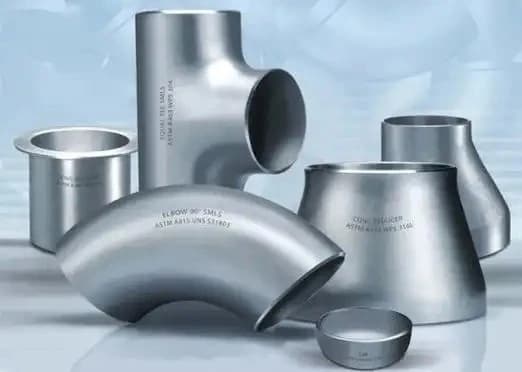
For a higher-molybdenum elbow, see the 317L stainless steel elbow. For a butt-weld cap in the same grade, see the 316L butt-weld cap. The wider stainless butt-weld range is the stainless steel butt-weld fittings page, under stainless steel pipe fittings.
Ordering Information
A usable inquiry names the fitting, not a range. Send the dimension standard and edition if you have one (ASME B16.9, or MSS SP-43 for light wall), the material specification (ASTM A403 / ASME SA403), the grade (316L / UNS S31603), the construction (seamless WP-S, welded WP-W, or radiographed WP-WX), NPS or DN, schedule or wall thickness, angle, long or short radius, quantity, and the pipe standard the elbow must match. Add the end bevel, any NDT beyond the class you named, and whether you need an EN 10204 Type 3.1 certificate. ISO, DIN or JIS fittings are quoted only when the order names that standard. They are not assumed from a catalog line that once said “ASME, MSS, ISO, DIN, JIS.”
Questions Buyers Ask
Is a 316L elbow the same item as a 316L pipe bend?
No. Order an elbow when you need a butt-weld fitting with a B16.9 center-to-end, Long radius center-to-end is 1.5 × NPS and short radius is 1.0 × NPS. The inch and millimetre take-out comes from the B16.9 edition named on the order. Order a bend when you need pipe formed to a larger radius. The old wording on this page treated the two as the same product. They take different dimensions and they land in different places on an isometric.
Which standard should be on the purchase order?
Write ASTM A403 or ASME SA403 for the material and ASME B16.9 for the dimensions, unless you specifically want a light-wall fitting. Light-wall corrosion-resistant fittings are outside B16.9 and are covered by MSS SP-43. B16.9-2024 runs from NPS 1/2 to NPS 48. A size written as 60 inch, or a wall written only as “Sch 5S to XXS,” is not enough to price or to make the fitting.
What is the difference between seamless and welded 316L elbows?
Seamless and welded describe how the fitting was made, not two grades of steel. Purchasing practice marks them WP-S and WP-W under A403, with WP-WX when the welded fitting is radiographed. Say which mark you need. The grade, 316L, stays the same. Do not accept a welded fitting against a seamless mark, or the reverse, without a written change.
Can you confirm the tensile strength from this page?
No. The previous page had column headings for tensile strength, yield strength and hardness and no values under them. Those headings have been removed. A403/A403M-22 is marked Historical on the ASTM store, and the current table was not available to quote. Ask for the certificate values against the edition you name on the order. Pipe minima from ASTM A312 are for the pipe, not a substitute for the fitting test.
What should I send for a quotation?
NPS or DN, wall or schedule, angle, long or short radius, seamless or welded class, quantity, the pipe specification the elbow welds to, and the certificate type. Service conditions help us flag a grade mismatch, for example when 317L or a duplex grade is the closer fit, but they are not turned into a pressure or temperature rating on this page.