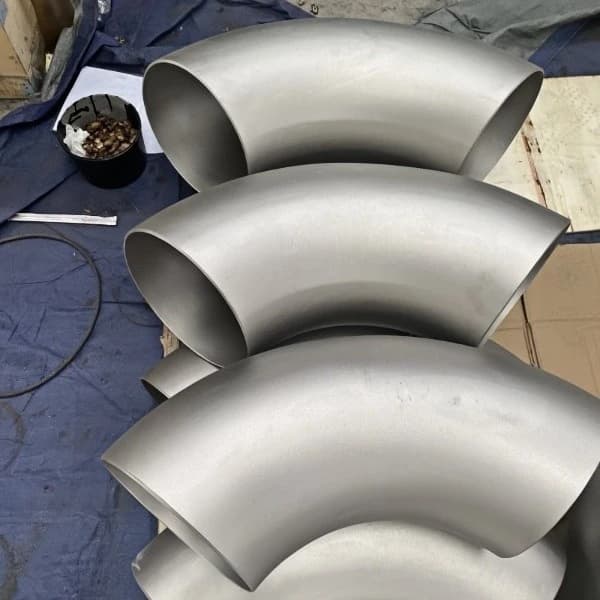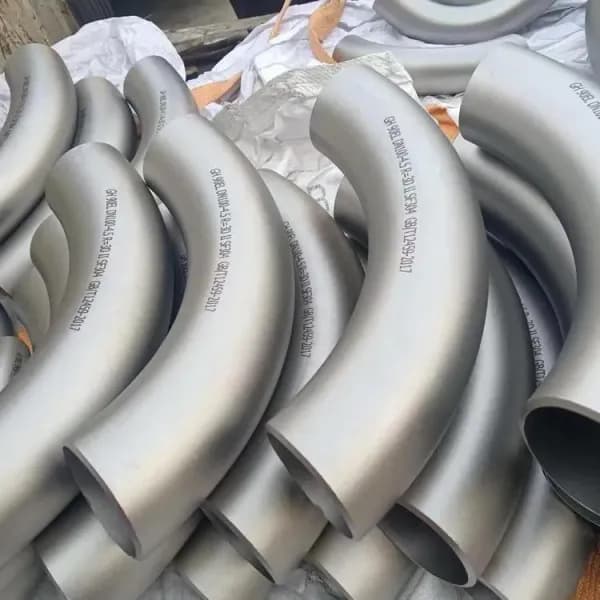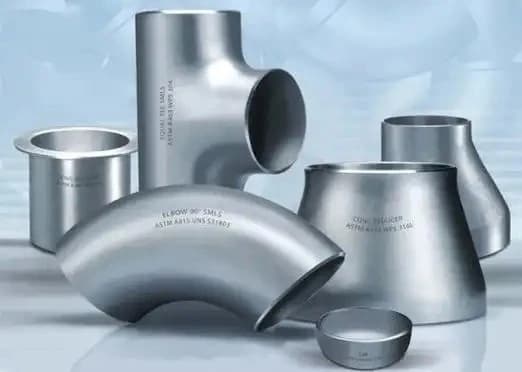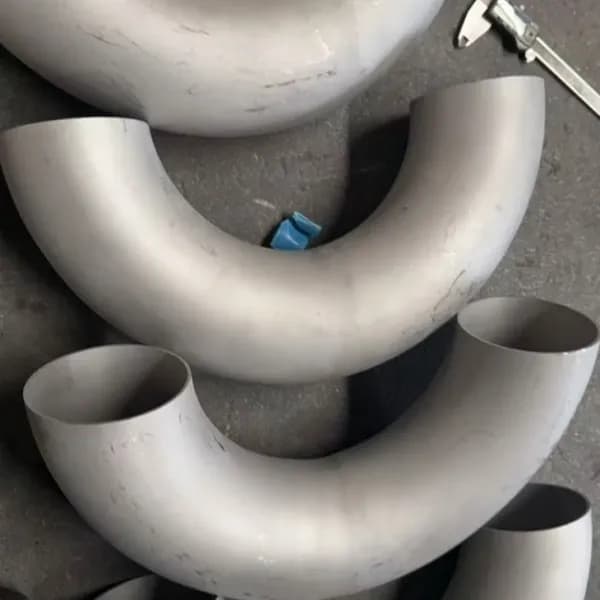
A 317L stainless steel elbow is a wrought butt-weld fitting that changes the direction of a stainless piping run. The grade behind this page is UNS S31703, the low-carbon 317 type, supplied as ASTM A403 / ASME SA403 grade WP317L. Dimensions follow ASME B16.9 when the order is written to that standard. The extra molybdenum, 3.0–4.0%, is what separates 317L from 316L in chloride and acid service. It does not make the elbow immune to corrosion, and it does not set a pressure rating.
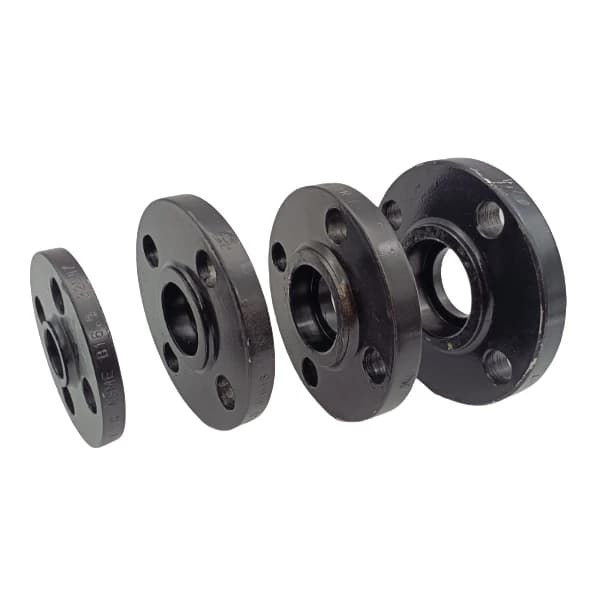
This page is the elbow only. Tees, reducers, caps and stub ends are other fitting shapes, even when they use the same grade and the same dimensional standard. Forged threaded and socket-weld fittings are a different product family, usually ordered to ASME B16.11 rather than B16.9. The 316L elbow page covers the lower-molybdenum grade. Straight 317L pipe, ordered to ASTM A312, is pipe rather than a fitting.
Grade and Standards
Two identifiers have to be named together. ASTM A403 covers the fitting material: grade, class, chemistry and the tension test. ASME B16.9 covers the shape: outside diameter, center-to-end, wall and tolerances. EN 10253-4:2008 is the European butt-welding fitting standard that lists 1.4438, and it is not a substitute for an ASTM A403 order.
317 and 317L are not the same grade. 317 is UNS S31700, with carbon allowed up to 0.08 percent. 317L is UNS S31703, with carbon held to 0.030 percent so the fitting can be welded with less risk of sensitization. A fitting stamped WP317 is not a WP317L fitting. On the European side, 317L corresponds to 1.4438 (X2CrNiMo18-15-4); 1.4449 is the number used for 317, not for 317L. Do not accept a data sheet that swaps those two numbers.
A403 uses class letters as well as the grade. WP-S is seamless, WP-W is welded, and WP-WX is welded and radiographically examined. MSS SP-43 is a separate standard for light-wall corrosion-resistant fittings, often schedule 5S and 10S, and it is not the same document as B16.9. Name the class and the dimensional standard on the purchase order instead of writing only "317L elbow."
Chemical Composition
The ranges below are the UNS S31703 composition reported by two independent grade compilations (MakeItFrom and steel-grades.com). They are reference values for identifying the grade, not a certified heat analysis and not a substitute for the ASTM A403 table in the edition named on the order. ASTM A403/A403M-22 is marked Historical in the ASTM store, so its table is not reprinted here as a current guaranteed analysis.
| Element | UNS S31703, reference | EN 1.4438, X2CrNiMo18-15-4 |
|---|---|---|
| Carbon | 0.030 max | 0.030 max |
| Manganese | 2.00 max | 2.00 max |
| Silicon | 0.75 max | 1.00 max |
| Phosphorus | 0.045 max | 0.045 max |
| Sulfur | 0.030 max | 0.015 max |
| Chromium | 18.0 – 20.0 | 17.5 – 19.5 |
| Nickel | 11.0 – 15.0 | 13.0 – 16.0 |
| Molybdenum | 3.0 – 4.0 | 3.0 – 4.0 |
| Nitrogen | 0.10 max | 0.11 max |
The two columns are not interchangeable. Nickel, silicon and sulfur limits differ, so a heat that passes one designation can fail the other. State which designation the order requires. Supplier pages that print 317L with 1.4449, or with silicon at 1.00 max and carbon at 0.035 max, are mixing the 317 and 317L rows and should not be used for acceptance.
Mechanical Properties
Published tensile figures for this grade do not agree, because they describe different product standards and different conditions. None of them is printed here as a guaranteed value for every elbow.
| Source and condition | Tensile strength | Yield strength | Elongation |
|---|---|---|---|
| Annealed 317L, grade compilations (typical, not a minimum) | 515–550 MPa | 205–250 MPa | 35–40% |
| EN 1.4438, solution annealed (+AT), plate and bar standards | 490–690 MPa | not one value for every thickness | stated by product standard |
| ASTM A403 fitting, tension test on the fitting | as required by the ordered edition | as required by the ordered edition | as required by the ordered edition |
A403 requires the tension test on the fitting material after forming and heat treatment, and the numbers belong to the edition cited on the order. Hardness is not a pass/fail requirement of that fitting standard unless the order adds it.
Dimensions and Pressure
B16.9 elbows are ordered by NPS, schedule or wall, angle and radius, not by a pressure class. The standard's current ASME edition is B16.9-2024. It defines factory-made wrought butt-welding fittings designed to match the inside and outside diameters of the pipe they join. Center-to-end dimensions, wall thickness at the weld end, and tolerances come from that standard. They are not repeated here from a supplier chart.
Long radius is 1.5 times the nominal diameter. Short radius is 1.0 times. Short-radius elbows and short-radius 180 degree returns were previously covered by ASME B16.28-1994, which has been withdrawn, and are now included in ASME B16.9. Angles of 45, 90 and 180 degrees are the catalog shapes. A 30 or 60 degree elbow is a special and has to be dimensioned on a drawing. Three-diameter and five-diameter bends are pipe bends, not B16.9 elbows, and they need their own center-to-end.
There is no pressure rating to quote for the elbow by itself. Wall thickness follows the connecting pipe, and allowable pressure is calculated for that pipe under the design code, temperature and corrosion allowance. Schedule 5S through XXS describes a range that can be manufactured, not a range held in stock and not a pressure series.
Corrosion and Welding
317L is chosen where 316L has been found short on pitting resistance: higher-chloride cooling water, pulp and paper liquors, acetic and phosphoric acid streams, and flue-gas condensate that carries sulfur oxides. The higher molybdenum is the reason. Resistance still depends on temperature, chloride level, pH and whether the surface stays clean. No temperature limit and no media list on this page is a guarantee.
The low carbon is there for welding. Fittings are normally supplied in the solution-annealed condition. For a welded fitting, A403 requires the heat treatment after welding. Filler for 317L is selected to match the molybdenum, commonly an ER317L or an overalloyed grade when the procedure calls for it. The welding procedure, ferrite target and any post-weld heat treatment are defined by the piping code and the WPS, not by this page.
Applications
Buyers specify 317L elbows on chemical process lines, pulp mill liquor and bleach lines, flue-gas handling, food and dye plants, and seawater or cooling-water lines where 316L has pitted. The fitting only matches the pipe it is welded to, so the pipe grade and schedule have to be the same decision. It is not a flange, not a forged branch fitting, and not a tube bend for a heat exchanger.
Ordering Information
A quotation needs the items below. Size and schedule left blank will be returned as a question, not assumed from a catalog range.
- Grade and UNS: 317L, UNS S31703. Say if the order is instead 317 (S31700) or EN 1.4438.
- Fitting standard and class: ASTM A403 WP317L, class WP-S, WP-W or WP-WX.
- Dimensional standard: ASME B16.9, or MSS SP-43 for light wall, or EN 10253-4.
- Angle and radius: 45, 90 or 180 degrees; long radius or short radius.
- NPS and schedule, or outside diameter and minimum wall.
- Quantity, end bevel, marking, and the documents required, such as an EN 10204 3.1 certificate.
- Design temperature, media and corrosion allowance, if a wall check is part of the request.
Questions Buyers Ask
Is a 317L elbow the same as a 317 elbow?
No. 317L is UNS S31703 with carbon at 0.030 percent maximum. 317 is UNS S31700 with carbon allowed to 0.08 percent. The weldability is different, and a WP317 stamp does not satisfy a WP317L order. European 1.4438 corresponds to 317L; 1.4449 corresponds to 317.
Which standard controls the dimensions?
ASME B16.9 controls the butt-weld shape, center-to-end and tolerances. ASTM A403 controls the material and the class. Short-radius elbows and 180 degree returns were previously covered by ASME B16.28-1994, now withdrawn, and are included in ASME B16.9. Light-wall fittings are often ordered to MSS SP-43. EN 10253-4 is a different standard and uses 1.4438, whose nickel and silicon limits are not identical to UNS S31703.
What pressure can the elbow take?
The elbow has no pressure class of its own. Its wall matches the pipe schedule, and the allowable pressure is calculated for that pipe.
Do you publish a stock list?
No stock list is published, and no size is claimed as available from inventory. NPS, schedule, angle and radius are confirmed against the order. Schedule 5S to XXS describes what can be quoted, not what is on the shelf.
What has to be on the inquiry?
Grade, A403 class, dimensional standard, angle, long or short radius, NPS and schedule, quantity, and any certificate requirement. Without the schedule and the radius, the center-to-end and the weld-end wall are not defined.