Product Description
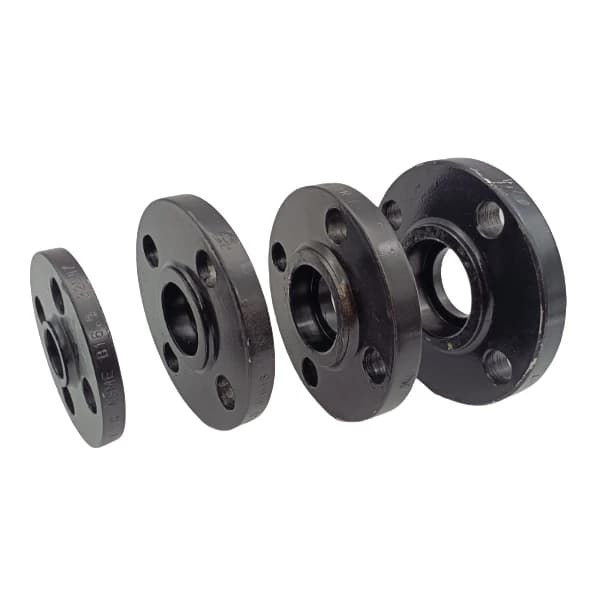
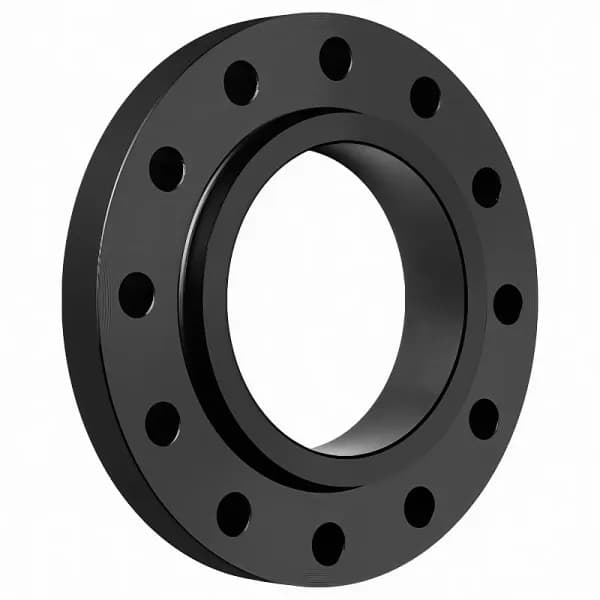
A carbon steel slip-on flange is a bored ring with a short hub that slides over the outside of a plain pipe end. It is then fillet-welded at the hub and at the bore. ASME B16.5-2025 covers this flange type from NPS 1/2 through NPS 24 (DN 15 through DN 600) in Classes 150, 300, 400, 600, 900 and 1500, and in Class 2500 only through NPS 12. ASME B16.47-2025 starts at NPS 26, but its scope does not include a slip-on flange. A larger slip-on is not offered from that standard on this page.
This page is the slip-on type only. It is not a weld-neck, a threaded flange, a lap-joint ring, a blind, or a plate flange cut from flat plate. ASTM A105 is the usual forged carbon-steel grade for ambient and higher-temperature pressure service. ASTM A350 LF2 is a different, notch-toughness grade and is not written on an A105 certificate. Plate grades such as ASTM A36 are not A105 forgings.
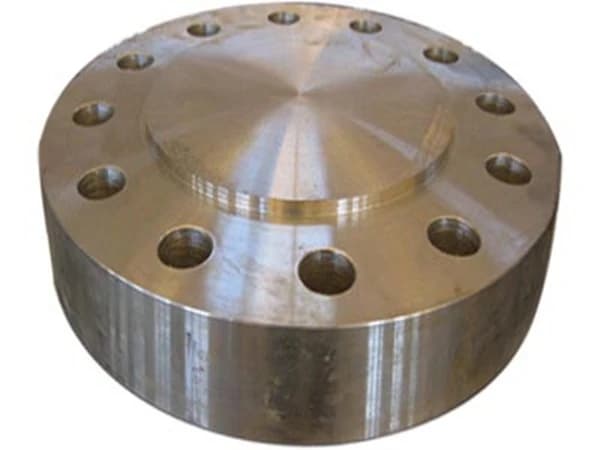
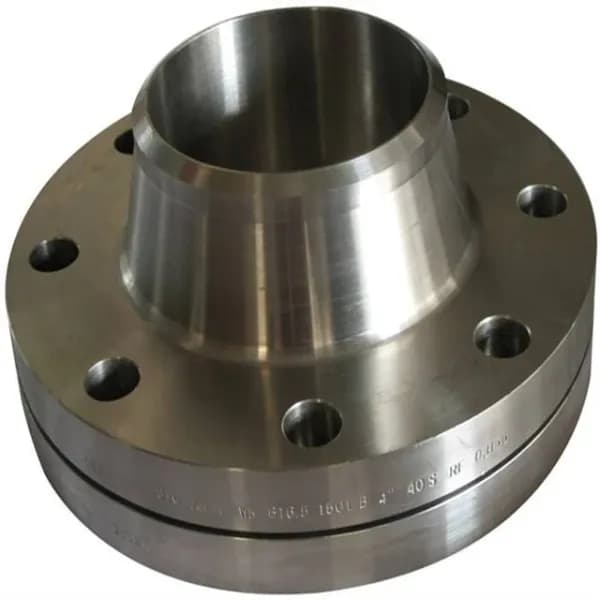
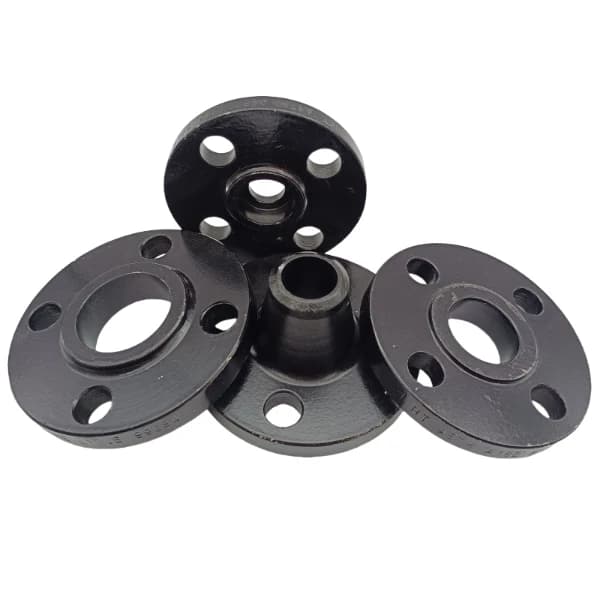
Slip-On, Weld-Neck, and Plate Flanges
The three carbon-steel flanges buyers most often mix up are separated by how they are made and how they join the pipe. Sending the wrong type gets the wrong weld preparation and the wrong hub.
| Item | Slip-on (this page) | Weld-neck | Plate flange |
|---|---|---|---|
| How it joins the pipe | Slides over a plain pipe end; fillet weld at the hub and a second fillet at the bore | Butt weld to a beveled pipe end | Usually a flat ring, bored to slip over the pipe; no forged hub |
| Hub | Short, low hub | Long tapered hub | None |
| Pipe-end preparation | Square-cut plain end. No bevel is required for the flange weld | Beveled end matched to the hub | Plain end when the ring is fillet-welded |
| Where it is normally used | Utility and general piping where the code and the purchaser accept a double fillet | Higher pressure, higher temperature, and cyclic service | Lower-pressure or non-code lines, confirmed per order |
| Material route | Forging, commonly ASTM A105 | Forging, commonly ASTM A105 | Cut from plate. A105 does not cover plate |
A piping code such as ASME B31.3 treats the slip-on fillet joint differently from a weld-neck butt weld, and an omitted bore weld changes that calculation again. The factor belongs to the code edition the engineer is using. This page does not print it, does not turn it into a pressure rating, and does not promise that a slip-on installs in less time.
Standards and Pressure Class
Two standards have to be named on the order, because they answer different questions. The material standard says what the forging is. The dimensional standard says what size, facing, and class the forging is machined to. Class is not a pressure in psi. A Class 300 flange is not a 300 psi flange. The working pressure is read from the B16.5 pressure-temperature table for the material group at the design temperature.
| Question on the order | Standard that answers it | What this page will not assume |
|---|---|---|
| Material of a forged flange | ASTM A105/A105M, or ASME SA-105 when the job is ASME code | A36, Q235, 20#, or P280GH written as if they were A105 |
| Low-temperature forging | ASTM A350/A350M LF2, only when the order says so | LF2 shipped against an A105 line |
| Size, facing, drilling, class | ASME B16.5-2025, NPS 1/2 through NPS 24. Not ASME B16.47 | One range of 1/2 in through 48 in, or DN 10 through DN 2000 |
| Bore and welding end | Matched to the pipe outside diameter and wall the buyer states | A schedule written as if it were the flange pressure class |
| European plate or forging grade | EN 1092-1 with the stated material, such as P280GH for plate flanges | P280GH described as the same certificate as A105 or LF2 |
B16.5-2025 is limited to cast or forged flanges, and to blind flanges and certain reducing flanges that may also be made from plate. A slip-on made from A105 is a forging. ASTM A105/A105M-26 is the current Active edition of that forging specification. Editions -21, -23, and -24 are marked Historical on the ASTM store, so this page does not publish chemical limits or tensile numbers from those editions. The test certificate follows the edition named on the order.
Facing, Bore, and the Two Welds
Raised face is the usual stock facing. On a Class 150 or Class 300 flange the raised face stands 1.6 mm (1/16 in) above the bolt-hole face. On Class 400 and higher it stands 6.4 mm (1/4 in). Flat face is a different joint: the gasket covers the full face, and it is the facing used against a flat cast-iron companion so the cast flange is not bent by a raised face. Ring-type joint is a groove plus a metal ring, and it is machined only when the order asks for it.
The bore is drilled larger than the pipe outside diameter so the flange can pass over the pipe and sit back from the end by enough metal for the bore fillet. State the pipe NPS and the wall thickness (or the outside diameter and schedule) and we bore to that pipe. A stock bore that is only "close" will not weld correctly. The serrated gasket finish commonly stocked for B16.5 is 125 to 250 µin Ra. A smoother or coarser finish is a drawing requirement, not a default.
Both welds are part of the joint. The hub fillet joins the back of the flange to the pipe, and the bore fillet joins the inside of the flange to the end of the pipe. Leaving the bore weld off changes the code calculation and leaves a crevice. We do not supply a slip-on as a single-weld fitting unless the order says so.
Ordering Information
A quotation needs the items below. Dimensions, class, and material are confirmed against the order before manufacture. We do not publish a stock list, a lead time, or a pressure rating on this page.
| Item | What to send |
|---|---|
| Type | Slip-on. Say if a plate flange or a weld-neck was the original call-out |
| Standard and size | ASME B16.5-2025, NPS 1/2 through NPS 24, and quantity. Send the drawing if the call-out is outside that range |
| Class | 150, 300, 400, 600, 900, 1500, or 2500. Class 2500 stops at NPS 12 in B16.5 |
| Facing | Raised face, flat face, or ring-type joint, and any finish other than 125–250 µin Ra |
| Pipe | NPS plus wall or schedule, so the bore matches the pipe outside diameter |
| Material | ASTM A105/A105M, ASME SA-105, or A350 LF2, and the edition if the project locks one |
| Extras | Coating, impact testing, NACE, or a hydrostatic test only if the order requires them |
Questions Buyers Ask
Is a carbon steel slip-on flange the same part as a weld-neck?
No. A slip-on slides over a square-cut pipe and is fillet-welded at the hub and at the bore. A weld-neck is butt-welded to a beveled pipe. The two are not substitutes on a drawing that names one of them. If the line was specified as a weld-neck for pressure, temperature, or cyclic service, ask for the weld-neck page rather than this one.
Can you rate this flange at 300 psi because it is Class 300?
No. Class 300 is a B16.5 designation, not a pressure in psi. Working pressure comes from the pressure-temperature table for the material group at the design temperature. This page does not print a single bar, psi, or temperature limit for every size.
Why does the old page mention 485 MPa, 0.25–0.35% carbon, and 500 °F?
Those figures are not used here. ASTM A105/A105M-26 is the current Active forging specification, and its chemical and tensile tables are not copied from a Historical store edition. Carbon is a maximum in that specification, not a 0.25–0.35% aim range. A temperature of 500 °F is not a B16.5 rating for every class. The certificate follows the edition on the order.
Is P280GH, A36, or Q235 the same as A105?
No. P280GH is a European pressure-vessel plate grade and is not an A105 or an A350 LF2 forging. ASTM A36 and Q235 are structural steels, not the forging specification for a B16.5 slip-on. If the drawing calls for one of those grades, send the drawing. We do not relabel them as A105.
What do you need before you can quote?
NPS within B16.5 (1/2 through 24), class, facing, the pipe wall or schedule, the material (A105/A105M or LF2), quantity, and the drawing if the size is outside that range. Without the pipe wall we cannot bore the flange. Without the class and facing we cannot drill it.