Product Description
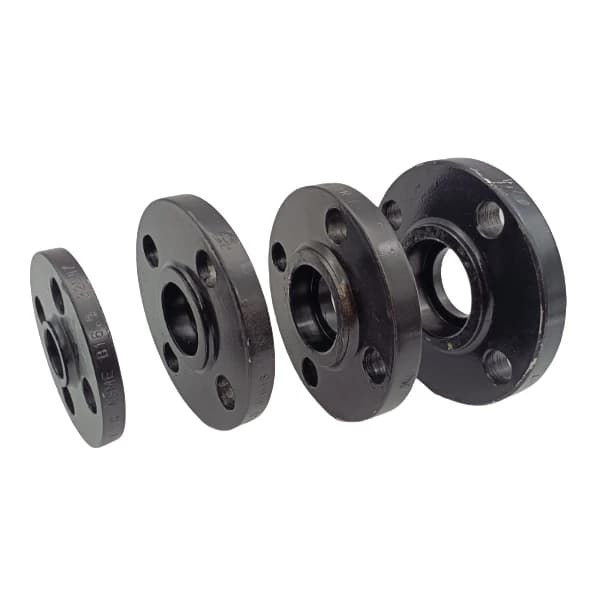
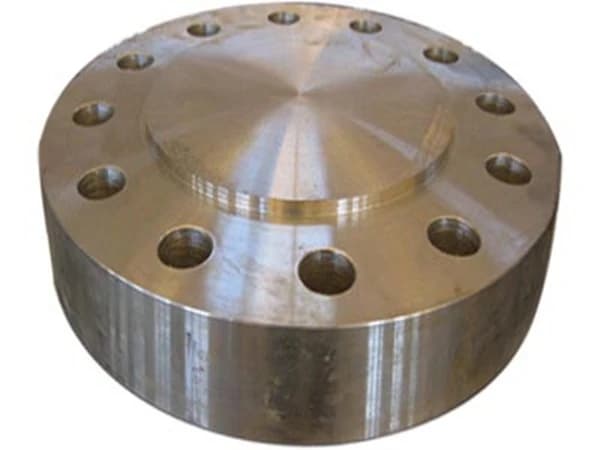
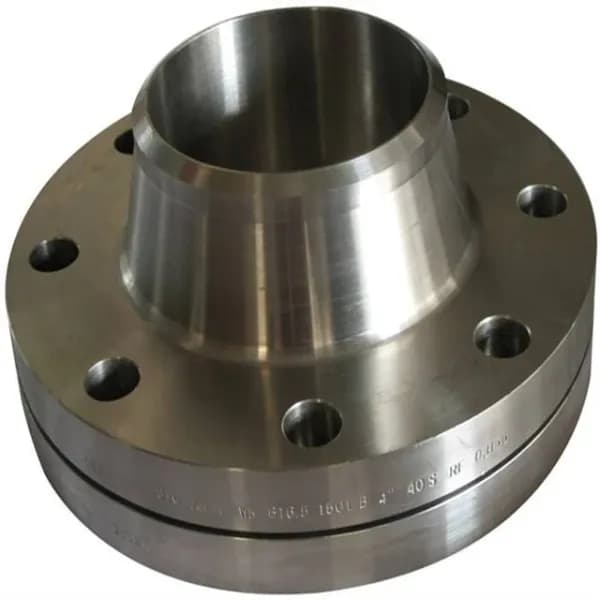
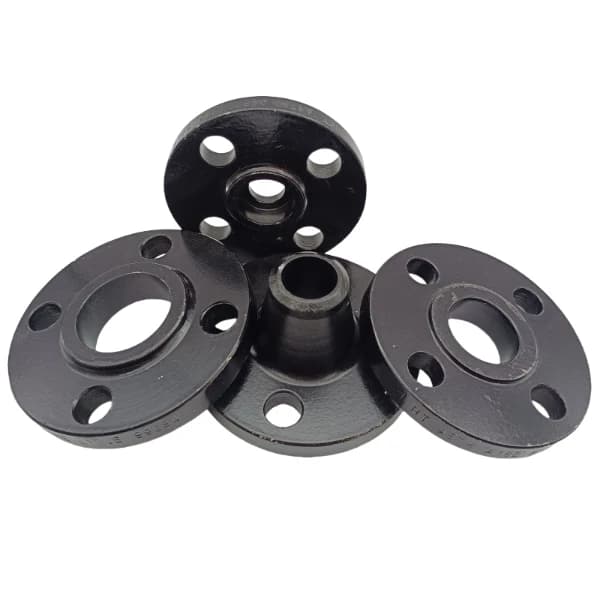
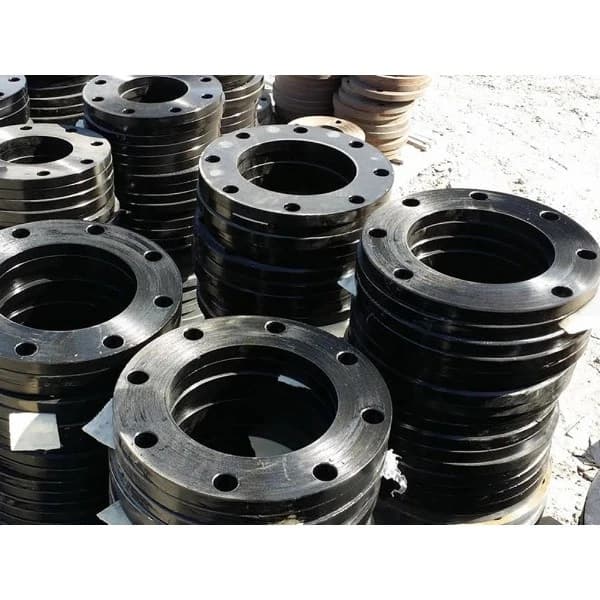
A carbon steel plate flange is a flat ring cut from steel plate and then machined: bore, outside diameter, bolt holes, and facing. It is not a forged flange. Buyers use it on water, HVAC, and other lower-demand carbon steel lines when a forged hub is not required. Name the plate grade, NPS or DN, class or PN, and facing on the order. Do not order it as “A105 plate.”
ASME B16.5 covers pipe flanges from NPS 1/2 through NPS 24 (DN 15 through DN 600), including pressure-temperature ratings, materials, dimensions, tolerances, marking, and testing. Class 2500 stops at NPS 12. Larger flanges belong to ASME B16.47. Class is a rating designation, not a pressure in psi. The allowable pressure still depends on the material group and the design temperature in the edition named on the order.
This page is the plate-flange type. Forged A105 flanges, including slip-on, weld-neck, and threaded types, are separate items. See the A105 carbon steel flange range, the carbon steel lap joint flange, and the carbon steel threaded flange.
Plate-Cut, Not Forged
Plate stock is burned or sawn to a blank and then machined. A forging is worked hot from a billet, so the grain follows the shape. A plate flange does not have that grain flow. It can be the right part for a low-demand joint. It is the wrong substitute when the piping specification calls for a forged flange.
ASTM A105/A105M-26 is the active specification for carbon steel forgings for piping: flanges, fittings, valves, and similar parts, limited to 10,000 lb (4540 kg). It does not cover raw plate. Chemistry and tensile values taken from A105 apply only when the order is actually an A105 forging. They are not the acceptance numbers for a flange cut from plate.
European plate flanges are a different system. EN 1092-1 Type 01 is a plate flange. A common plate grade on that type is P250GH (1.0460), with a PN and a facing such as Type A. That is not an ASME class, and it is not A105. Send the drawing or the flange standard with the inquiry so the two systems are not mixed on one line item.
Chemical Composition
There is no single composition for “carbon steel plate flange.” The numbers below are grade identification only. They are not a heat analysis for this product, and they are not guaranteed on a plate-cut flange. Acceptance is the material test report for the plate grade named on the order.
| Grade | What it actually is | How to use it |
|---|---|---|
| ASTM A105 / ASME SA-105 | Forged carbon steel piping components. Store edition A105/A105M-26 is Active (10 March 2026). A105/A105M-23 is Historical. | Use only when the order is a forging. Do not print A105 chemistry on a plate-cut flange certificate. |
| Plate grade on the order | Examples buyers name: ASTM A516 pressure-vessel plate, or an EN plate grade such as P250GH (1.0460). | Confirm the exact grade and delivery condition. Do not substitute one plate grade for another. |
| Structural grades | ASTM A36 and GB/T Q235 are structural steels, not a piping-flange forging grade. | Offer only when the drawing names them. Do not describe them as A105. |
An older version of this page listed carbon as 0.3–0.35% and tensile strength as 480–650 MPa. Neither figure is an A105 acceptance value, and neither belongs on a plate flange. Both are withdrawn.
Dimensions and Facing
Dimensions follow the flange standard on the order, not a house range. The limits below are the published scope of ASME B16.5 (2025 edition product page). They are not a stock list and not a promise that every NPS and class is on the shelf.
| Item | Scope | Do not write |
|---|---|---|
| Size | NPS 1/2 through NPS 24 (DN 15 through DN 600) | NPS 1/2 is not DN 10. NPS 24 is not DN 2000. A 1/2–80 in range is not B16.5. |
| Class 150, 300, 400, 600, 900, 1500 | Through NPS 24 | Class 300 is not 300 psi. |
| Class 2500 | NPS 1/2 through NPS 12 only | Do not extend Class 2500 to NPS 24. |
| Above NPS 24 | ASME B16.47, Series A or Series B, stated on the order | Do not call a B16.47 flange a B16.5 flange. |
| EN 1092-1 | Type 01 plate flange, DN and PN stated separately | PN 10–40 on one part is a catalog span, not one rating. |
Raised face and flat face are different joints. On a raised face the gasket sits on a raised ring. Flat face is flush with the bolt-hole face and is the usual match for a full-face gasket on cast iron or another brittle mating flange. Do not bolt a raised-face steel flange hard against a flat cast-iron flange. A ring-joint groove is a third facing and is not supplied unless the order asks for it.
Applications
Plate flanges are chosen where the specification allows a plate-cut ring and the joint is not a high-pressure forged-flange service. Typical inquiries are water and wastewater lines, HVAC chilled or hot water, utility air, and general industrial piping in non-corrosive service. Carbon steel is not corrosion resistant. Paint, galvanizing, or another coating is part of the order, not a default finish, and it does not turn the flange into stainless steel.
Do not use this page for steam or process lines that name a forged flange, a specific A105 heat-treatment condition, or an impact-tested grade. Low-temperature forged service is a different product. Higher pressure ratings belong on a forged flange whose material group is listed in the B16.5 table for that class.
Ordering Information
Send these items for a quotation. Missing lines are confirmed before a price is given. They are not assumed.
- Flange standard and type: ASME B16.5 plate flange, ASME B16.47, or EN 1092-1 Type 01.
- Size: NPS and DN, or the drawing dimensions. Do not mix an inch size with an unrelated DN.
- Rating: one ASME class, or one EN PN. Not a range.
- Plate grade and delivery condition, and whether a forged A105 flange was actually specified.
- Facing: raised face or flat face, and the gasket the joint will use.
- Bore, bolt-hole pattern if it is not the standard pattern, quantity, and coating if any.
- Documents: EN 10204 type, and any third-party inspection named by the purchaser.
Earlier sales copy on this page claimed a 35% saving against stainless steel, a 180° bend test, a fixed blast profile, a 1.5× pressure test, warehouse tonnage, a discount, and a replacement warranty. None of that is a product specification. It has been removed. Tests and certificates are whatever the order and the named standard require.
Frequently Asked Questions
Is a carbon steel plate flange the same as an ASTM A105 flange?
No. A105 is a forging specification. A plate flange is cut from plate and machined. If the piping class calls for an A105 forging, order the forged flange. Putting A105 chemistry on a plate-cut part does not make it A105.
What size and class can a plate flange follow?
Under ASME B16.5 the flange sizes run from NPS 1/2 to NPS 24. Class 2500 stops at NPS 12. Above NPS 24 the standard is ASME B16.47. The old “DN15–DN2000 (1/2–80 in)” line on this page was not a B16.5 range and is withdrawn. Allowable pressure comes from the pressure-temperature table, not from the class number.
Raised face or flat face?
State it on the order. Raised face is the common steel-to-steel joint. Flat face is used when the mating flange is flat, often cast iron, and needs a full-face gasket. The two facings are not interchangeable.
Which grade should I name if I do not want a forging?
Name the plate standard and grade the drawing allows, such as a pressure-vessel plate grade or EN P250GH for an EN 1092-1 Type 01 flange. A36 and Q235 are structural steels. They are not a substitute for A105 unless your specification says so.
What should the inquiry include?
Standard, NPS or DN, one class or one PN, plate grade, facing, quantity, and the certificate type. Coating and non-standard drilling only if you need them. Stock, lead time, and price are quoted from that inquiry. They are not published on this page.