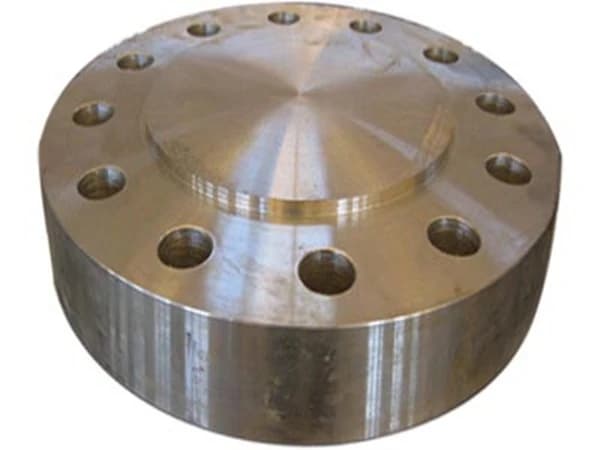
Product Overview
The ASME B16.5 ASTM A694 Grade F60 flange is a forged high-yield carbon steel pipe flange: the material is supplied to ASTM A694 / ASME SA694 and the flange is dimensioned to ASME B16.5, with large diameters to ASME B16.47 Series A or B. The "F60" designation stands for a minimum yield strength of 415 MPa (60 ksi), which is why the grade is routinely selected where the flange should match the strength level of the line pipe it is bolted to - most commonly API 5L X60 transmission runs.
ASTM A694 is stricter about manufacture than most buyers assume. Flanges shall not be machined directly from plate nor from solid bar stock; hot forging is required so that a wrought structure is developed through the part. Every A694 grade must also be heat treated - for carbon steel grades such as F60 this means normalizing, normalizing plus tempering, or quenching plus tempering, with tempering carried out at least at 540 °C (1000 °F). The steel is to be fully deoxidized and made by open hearth, electric furnace or basic oxygen process. The values published below are the standard's minimums; results for a given heat are confirmed on the material test certificate.
Chemical Composition and Mechanical Properties
The first table lists the heat-analysis limits ASTM A694 applies to carbon steel grades such as F60. Where a purchase order requires weldability control, the carbon equivalent is calculated rather than assumed.
| Element (heat analysis) | Requirement, % |
|---|---|
| Carbon (C) | 0.30 max |
| Manganese (Mn) | 1.60 max |
| Silicon (Si) | 0.15 - 0.35 |
| Phosphorus (P) | 0.025 max |
| Sulfur (S) | 0.025 max |
Mechanical requirements for the F60 grade are the following minimums. Alloying elements Cu, Ni, Cr, Mo, V, Nb and B must be reported by the mill when present. Where specified, the carbon equivalent CE = C + Mn/6 + (Cr + Mo + V)/5 + (Ni + Cu)/15 is applied with the limit agreed on the order.
| Property | Minimum (ASTM A694 F60) |
|---|---|
| Yield strength | 415 MPa (60 ksi) |
| Tensile strength | 515 MPa (75 ksi) |
| Elongation in 2 in. or 4D | 20% |
Charpy impact testing is part of A694 acceptance; the test temperature and absorbed-energy requirement follow the specification and the order, and the results appear on the MTC. Tensile and yield values above are specification minimums, not typical batch results, and the strength actually delivered depends on the heat-treatment condition selected.
Dimensions, Pressure Classes and Facings
The dimensional scope of this page follows the flange standards listed below. Size limits are part of each standard's tables, and several supplier sites quietly exceed them.
| Standard | Scope | Notes |
|---|---|---|
| ASME B16.5 | NPS 1/2 - 24, Class 150 - 2500 | Class 2500 is dimensioned only up to NPS 12 |
| ASME B16.47 Series A / Series B | NPS 26 - 60 | Series A and B have different bolt patterns and gasket surfaces - state the series on the order |
| MSS SP44 | Steel pipeline flanges | Pipeline-service classes |
| ASME B16.36 | Orifice flanges | Flow-measurement assemblies |
| ASME B16.48 | Spectacle blinds, spacers | Line-blanking products, ordered separately from B16.5 flanges |
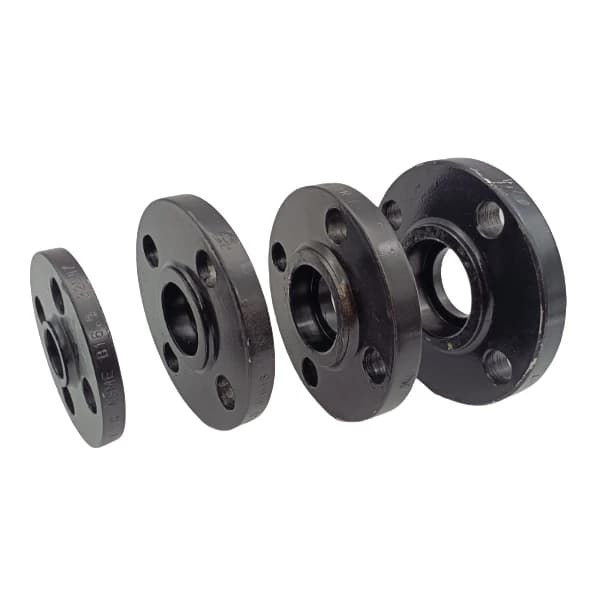
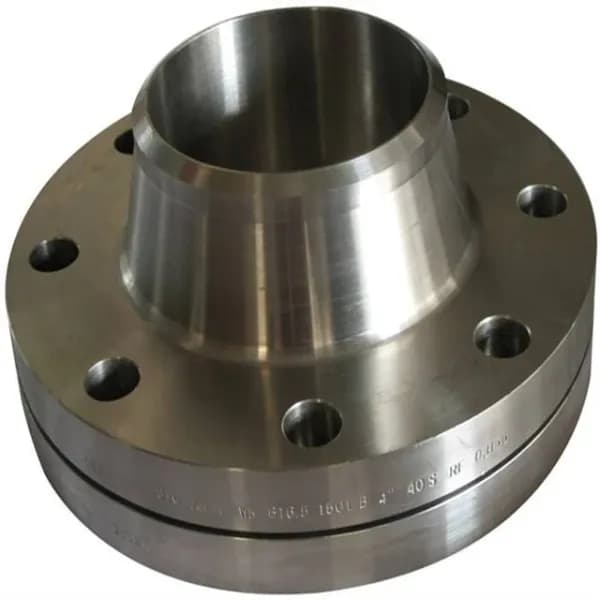
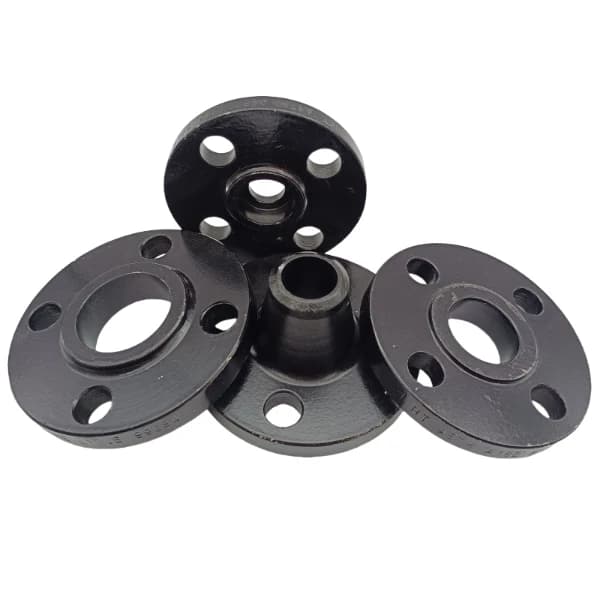
Standard types in A694 F60 include weld neck, slip-on, socket weld, threaded, lap joint, blind, long weld neck and reducing flanges. Facings are raised face (RF), flat face (FF) and ring type joint (RTJ), with male-and-female and tongue-and-groove available on request. Size ranges such as "1/2 - 72 inch" quoted on some supplier pages should be read with care: B16.5 stops at NPS 24, B16.47 at NPS 60, and 72 inch belongs to neither.
How Pressure Ratings Apply to A694 F60
A pressure class by itself is a dimensional designation, not a pressure rating for a specific material. The allowable working pressure of a B16.5 flange comes from the rating table for its material group at the design temperature. ASTM A694 grades are not listed material specifications in the ASME B16.5 material groups, so F60 flanges are supplied as an unlisted material whose rating basis is fixed by the project specification or the governing piping code (ASME B31.3 for process plants, B31.4 for liquid transmission, B31.8 for gas transmission).
This is not a footnote detail - it is visible in the market. The 285 psig figure quoted for Class 150 at 100 °F is the A105 material group 1.1 anchor row. It does not apply to F60. When F60 flanges are quoted, ask the supplier to state which allowable-stress basis the rating was taken from, and have the basis written into the project documentation. Class 150 - 2500 remains correct as the dimensional designation for ordering.
Material Characteristics, Testing and Sour Service
The forging and heat-treatment sequence is what gives F60 its strength reserve over plain carbon steel: forged wrought structure, then normalized, normalized-plus-tempered or quenched-and-tempered condition with tempering at 540 °C minimum. Typical testing on the certificate includes tensile and yield, Charpy impact per A694, hardness and dimensional checks, with nondestructive examination added as the order requires. Documentation is normally an EN 10204 type 3.1 manufacturer's certificate; type 3.2 with third-party inspection is arranged on request as an order item.
For sour (H2S) environments, carbon steel is not inherently "sulfur resistant". Sour-service use is handled by invoking NACE MR0175 / ISO 15156 as a supplemental requirement, which imposes chemistry, hardness and heat-treatment conditions on top of ASTM A694 and should be shown on the certificate. Protective coatings - FBE, liquid epoxy, galvanizing or rust-preventive oil - are part of the specification for corrosive service and are confirmed at order stage, since the alloy itself does not provide corrosion resistance.
Applications
A694 F60 flanges serve high-pressure transmission and gathering systems: liquid and gas transmission pipelines designed to ASME B31.4 and B31.8, wellhead and Christmas-tree manifold equipment, pump and valve connections on high-yield line pipe, and process piping per B31.3 where the project specification calls for strength matched to the pipe grade. The natural comparison points are A105 carbon steel flanges for standard plant service and A350 LF2 flanges where low-temperature toughness governs; both sit in the same carbon steel flange family.
Ordering Information
To price and produce F60 flanges correctly, include on the inquiry: grade (ASTM A694 F60), flange type and facing, NPS and pressure class (and B16.47 series for NPS 26 and larger), bore or schedule, heat-treatment condition, impact-test temperature and energy if the project specifies them, any NACE MR0175 / ISO 15156 sour-service requirement with the applicable environmental domain, coating, MTC type (EN 10204 3.1 or 3.2), quantity and destination. Dimensional and pressure-class questions can be settled against the threaded and standard B16.5 types across the carbon steel range before the order is fixed.
Common Questions about ASTM A694 F60 Flanges
Is ASTM A694 F60 a stainless or duplex grade?
No. ASTM A694 F60 is a high-yield carbon steel forging grade; the 60 stands for the 60 ksi (415 MPa) minimum yield strength. It is unrelated to stainless F-designations such as A182 F316 or F51, and supplier lists that show "A182 F60 duplex" are conflating two different standards.
What pressure rating does a Class 150 F60 flange have?
The class fixes dimensions; the working pressure comes from the rating table of the flange's material group at design temperature. F60 is an unlisted material in B16.5, so the rating basis is set by the project specification - typically by matching the line-pipe grade - The 285 psig figure at 100 °F is the A105 group 1.1 row and does not apply to F60.
When should I choose A694 F60 instead of A105?
A105 has a 250 MPa (36 ksi) minimum yield and suits standard plant piping. Choose F60 when the pipeline design requires strength matched to high-yield line pipe such as API 5L X60, so the flange is not the weak link.
Can F60 flanges be cut from plate?
No. ASTM A694 requires hot forging - plate-cut or bar-machined parts do not meet the specification - followed by heat treatment with tempering at 540 °C minimum.
Is A694 F60 suitable for sour service?
Only with NACE MR0175 / ISO 15156 invoked as a supplemental requirement, with its chemistry, hardness and heat-treatment conditions shown on the certificate. State the sour-service domain on the inquiry so the correct practice is selected.