
Solid stainless, galvanized carbon steel, and barrier-coated carbon steel protect a flange in different ways. Stainless protection comes from the alloy throughout the flange. Galvanizing adds a sacrificial zinc layer to carbon steel. An organic coating isolates carbon steel from the environment while the film remains intact. Select among them by fluid, external exposure, temperature, joint details, damage risk, inspection, and maintenance plan—not by a generic cost multiplier.
Three Corrosion Strategies, Three Order Lines
| Option | Protection mechanism | Order questions |
|---|---|---|
| Solid stainless flange | Corrosion-resistant alloy through the component | ASTM A182 grade, flange standard, type, class, facing, service chemistry, and material certificate |
| Galvanized carbon steel flange | Zinc coating gives barrier and sacrificial protection | Base forging grade, galvanizing specification, coated areas, threads, facing, dimensions after coating, and repair method |
| Barrier-coated carbon steel flange | Paint, epoxy, or another specified film separates steel from the environment | Coating system, surface preparation, dry-film acceptance, holiday inspection where applicable, cutback, repair, and field handling |
These choices do not change the flange dimension standard. Type, NPS, class, facing, bore, bolting, gasket, and material remain separate fields. The ASME B16.5 stainless steel flange family and an ASTM A105 carbon steel flange may share a dimension series while requiring different material and corrosion-control decisions.
When Solid Stainless Is the Better Baseline
Use solid stainless when the process fluid, cleaning regime, contamination limit, or external environment requires a corrosion-resistant alloy rather than a maintained film. The order still needs a grade. An ASTM A182 F304 flange is not the same material as F316L or duplex F51, and “stainless” does not prove chloride resistance for every service.
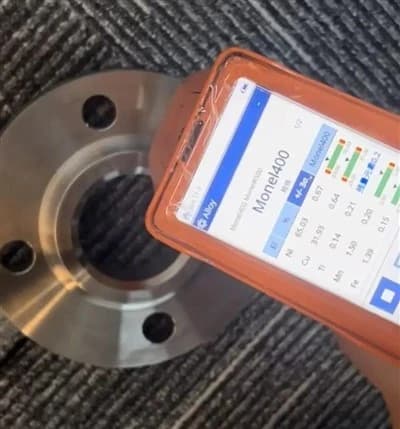
Stainless can still corrode. Crevices under gaskets, deposits, chloride concentration, elevated temperature, and galvanic contact can change performance. Material selection belongs to the service review. A polished photograph cannot identify the grade or confirm passivation.
What Galvanizing Changes
Hot-dip galvanizing is a zinc coating on a carbon steel flange; it does not turn the base material into stainless steel. The purchase order should name the base forging or plate route and the applicable galvanizing specification. It should also state which surfaces are coated, masked, machined after coating, or repaired after assembly.
Flange faces, ring grooves, bores, and threads need explicit treatment. Coating buildup can affect fit, gasket seating, bolt engagement, and final dimensions. The inspector should verify the finished component rather than assume that a pre-coating dimension remains acceptable. If field cutting or welding damages zinc, the project repair procedure controls restoration.
What “Coated Flange” Must Specify
“Epoxy coated” is not a complete coating system. A specification should identify surface preparation, primer, intermediate and finish layers where used, target dry-film thickness, cure condition, inspection method, allowable holidays, edge treatment, field-joint treatment, and repair material. The AMPP standards program separates surface preparation, coating application, inspection, and corrosion-control practices because each step affects performance.
Also separate external coating from internal lining. A weather coating on the flange outside does not qualify the bore for process-fluid contact. Conversely, a lining selected for the bore may not withstand ultraviolet exposure, handling, or bolting damage on the exterior.
Compare Damage and Maintenance, Not Only Purchase Price
| Decision factor | Solid stainless | Galvanized carbon steel | Barrier-coated carbon steel |
|---|---|---|---|
| Local scratch | Exposes the same alloy, but can initiate contamination or crevice concerns | Zinc near the scratch can provide limited sacrificial protection | Exposes steel and normally needs a compatible repair |
| Field modification | Control contamination, heat tint, and restoration | Control damaged zinc and repair the affected area | Restore surface preparation and the specified coating system |
| Inspection focus | Grade, surface condition, and service-specific corrosion risks | Coverage, adhesion, dimensions, threads, and repair areas | Surface preparation, film continuity, thickness, cure, holidays, and repairs |
| Maintenance model | Monitor alloy condition and joint crevices | Monitor zinc consumption and damaged areas | Inspect and repair film damage before underfilm corrosion spreads |
Control the Whole Flanged Joint
The flange is only one component. Bolting, gasket, mating flange, pipe, insulation, supports, drainage, and cathodic protection can create additional corrosion paths. Dissimilar metals may require an engineered isolation kit, but isolation changes electrical continuity and must be coordinated with grounding and cathodic-protection design. Do not add insulating washers as a catalog accessory without checking the system.
The comparison with uncoated carbon steel is covered in stainless versus carbon steel flanges. This page adds the corrosion-control layer: zinc and barrier coatings can extend carbon steel service only when their application, inspection, handling, and repair are specified.
Questions Buyers Ask
Is galvanizing the same as solid stainless protection? No. Galvanizing is a zinc coating, while stainless protection comes from the alloy itself.
When can an applied coating be used? Coatings can protect carbon steel in suitable environments, provided surface preparation and damage repair are controlled.
What to Confirm with Your Inquiry
- Fluid and external environment, design temperature, exposure, insulation, and maintenance access.
- Base material specification and grade, flange type, NPS, class, facing, and bore.
- Stainless grade or complete galvanizing or coating-system specification.
- Treatment of gasket faces, ring grooves, bores, threads, bolt holes, edges, and field weld areas.
- Inspection records, repair procedure, packing protection, and responsibility for field touch-up.



