
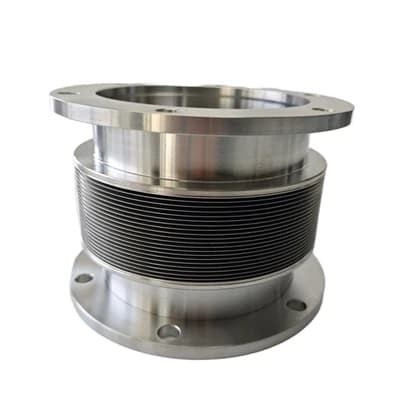
Forged flanges are the usual route for ASME B16.5 pressure joints. Cast flanges and plate-cut flanges are different products: a casting can carry porosity that a forging does not, and a flange cut from plate has the grain of the plate, not a grain that follows the hub. ASME B16.5 permits more than one manufacturing method only when the material specification and the mechanical requirements are met. If the line is specified as forged, a cast or plate-cut flange is not an equivalent offer.
What the Manufacturing Route Changes
Forging heats a billet and forms it, so the grain is worked along the flange shape. That is the route behind ASTM A182 stainless and alloy forgings. Casting pours metal into a mould. It can make shapes that are awkward to forge, and it can leave shrinkage or porosity that nondestructive testing has to find. Cutting from plate machines a ring out of rolled plate. Above NPS 24, where B16.5 stops, plate is often the practical way to make a large ring. The plate's rolling direction is not the same as a forged hub.
| Check | Forged | Cast | Plate-cut |
|---|---|---|---|
| Grain | Worked along the contour | No directional grain | The plate rolling direction |
| Internal soundness | The forging route | Porosity is a known risk | Depends on the plate |
| Where it is specified | ASME B16.5 pressure joints | Only if the code allows it | Large rings, if the spec allows |
| What to ask for | Forging specification and heat | NDT the specification names | Plate standard and cutting method |
Forged Flanges
A forged flange starts as a billet that is hot worked to the flange shape, then machined. The result is the product type most owner specifications want on pressure piping, because the worked grain follows the hub and the bore. ASTM A182 is a forging specification: an F304 or F316 flange offered to A182 is a forging, not a casting with the same chemistry. See the forged stainless steel flange page for that product. Forging temperature and press capacity are mill choices. They are not a guarantee you can read off a datasheet, and the mechanical results belong on the material test report.
Cast Flanges
Casting spreads a mould cost over many pieces, which is why it appears on complex shapes and on large runs. The grain is not directional, and porosity, shrinkage and inclusions are the defects the foundry and the inspector are looking for. Some owner specifications bar cast flanges from hazardous service for that reason. Do not describe a cast flange as equivalent to a forging because the chemistry looks similar. If a cast flange is offered, ask which specification allows it and which nondestructive tests the order includes.
Plate-Cut Flanges
A plate-cut flange is profiled from rolled plate and then machined. It is the common way to make a diameter that standard forging does not cover. Strength follows the plate, in the plane of the plate, and thickness is limited by the plate you start from. That is acceptable for structural and other non-critical duty when the specification says so. It is not a substitute for a forged hub on a high-pressure joint. Carbon steel plate flanges are listed on the carbon steel plate flange page.
What the Standard Actually Allows
ASME B16.5 does not make forging, casting and plate cutting equal. It allows a flange whose material specification and required properties are met. Some specifications, ASTM A182 among them, are forging specifications and cannot be met by a casting or a plate ring. Impact tests, traceability and the material test report apply to whichever route the order names. The carbon steel flange category collects the carbon steel types. Confirm the manufacturing method on the enquiry rather than assuming every listing is forged.
What to Confirm on the Enquiry
Name the flange standard and edition, the material specification, forged or otherwise, NPS, class, facing and bore. Ask for the manufacturing route in writing and for the tests that route requires. Price depends on quantity, tooling and the test list. A unit price from one route is not evidence that another route costs less.



