
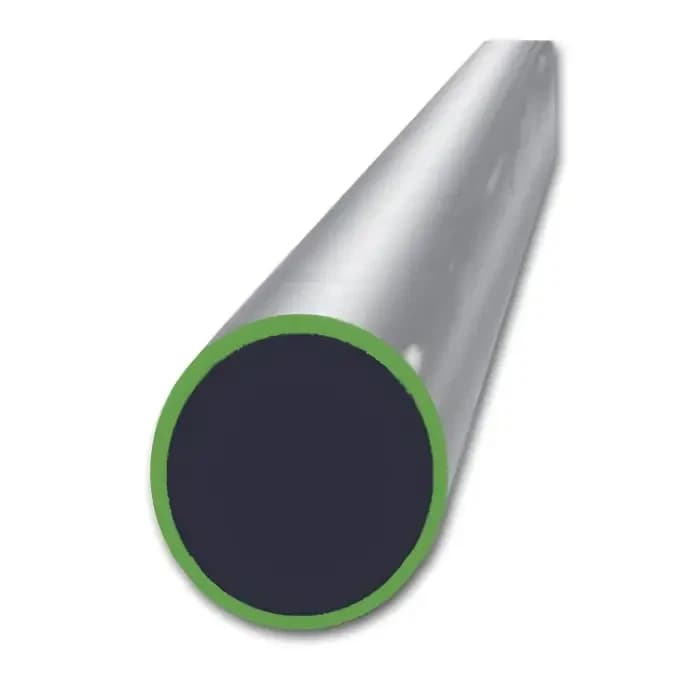
Food-grade stainless pipe is chosen on the product, not on a food-grade label. 304L covers most sanitary duty. 316L is the grade to name when the product is acidic or carries chlorides, or when the cleaning chemicals are aggressive. The bore still has to be finishable and drainable, and the pipe standard is not the same document as a structural pipe standard. Sheet, tube and containers sold as food grade are different product forms and are not covered here.
What Makes Pipe Sanitary
Industrial pipe is specified for pressure. Sanitary pipe is specified so it does not hold product. A crevice, a dead leg or a rough bore is where residue stays and where bacteria can survive a clean. In the United States, food-contact materials are regulated under 21 CFR. 3-A Sanitary Standards cover equipment used in dairy and food processing, and EHEDG publishes hygienic design guidance used in Europe. Naming one of those does not certify a pipe. Certification applies to the item and the edition that was actually assessed.
304L or 316L
304L (EN 1.4307) is the general sanitary grade: dairy, beer and wine, edible oils and many processed foods. The low carbon limit is why the L grade is specified on a welded line, so the heat-affected zone is less prone to sensitization. 316L (EN 1.4404) adds molybdenum, which is the reason it is specified for citrus and tomato products, salt brines and stronger cleaners. Carbon steel is a poor food-contact choice because rust and a rough surface are both contamination routes. Dimensions for 316L process pipe are on the 316L stainless steel pipe page. That page is ASTM A312 process pipe, not a sanitary-finish guarantee.
| Service | Grade to specify | Why |
|---|---|---|
| Milk, cream, yogurt | 304L | Low acidity; confirm the cleaner separately |
| Beer and wine | 304L | Moderate acidity and routine CIP |
| Citrus juice, tomato, pickles | 316L | Acids are why the molybdenum grade is named |
| Salt brine, soy sauce | 316L | Chloride pitting, not a general upgrade |
| Edible oils and fats | 304L | The bore finish matters more than the grade |
Surface Finish and CIP
Buyers usually call for a mechanically polished bore of Ra 0.8 micrometres (32 microinches) or smoother, and electropolishing to Ra 0.4 micrometres (16 microinches) where the product or the auditor requires it. Those are purchasing limits, not a claim that bacteria cannot attach. Electropolishing also strips free iron from the surface. After polishing, passivation with nitric or citric acid is a separate step and should be named if you need it. A CIP circuit still fails if the line has a dead leg or does not drain. Slope and support are design items, not pipe-mill items. Steam sterilization adds a temperature cycle the supports have to allow for.
Dimensions and Standards to Name
Sanitary tube is not Schedule 40 pipe. ASTM A270 is the US specification for seamless and welded austenitic stainless sanitary tubing. DIN 11850 and ISO 2037 are the European and international counterparts, and they do not share one outside-diameter table. Specify the standard, the outside diameter and the wall. Do not convert a size across those standards. GB/T stainless pipe can be used for food contact only when the order also states the finish and the documents required. The stainless steel pipe category is the industrial pipe range in matching diameters.
Joints and Documents
A clamp ferrule with a gasket gives a flush joint that can be opened. A threaded joint and a socket weld both leave a crevice and are the wrong default inside a product line. A permanent joint is an orbital butt weld, back-purged, then finished to the same bore requirement as the tube. Ask for the heat analysis against the named standard, the Ra reading with its method, and a mill test certificate with the heat number. A 3-A or EHEDG mark belongs to the equipment that was assessed. It does not travel with every length of tube.
What to Send with the Enquiry
State the product and the cleaner, 304L or 316L, the governing standard, outside diameter, wall, length, mechanical polish or electropolish with the Ra limit, passivation if required, and the documents. Polish and electropolish are order options. They are not a stock promise, and neither is a third-party hygienic certification.



