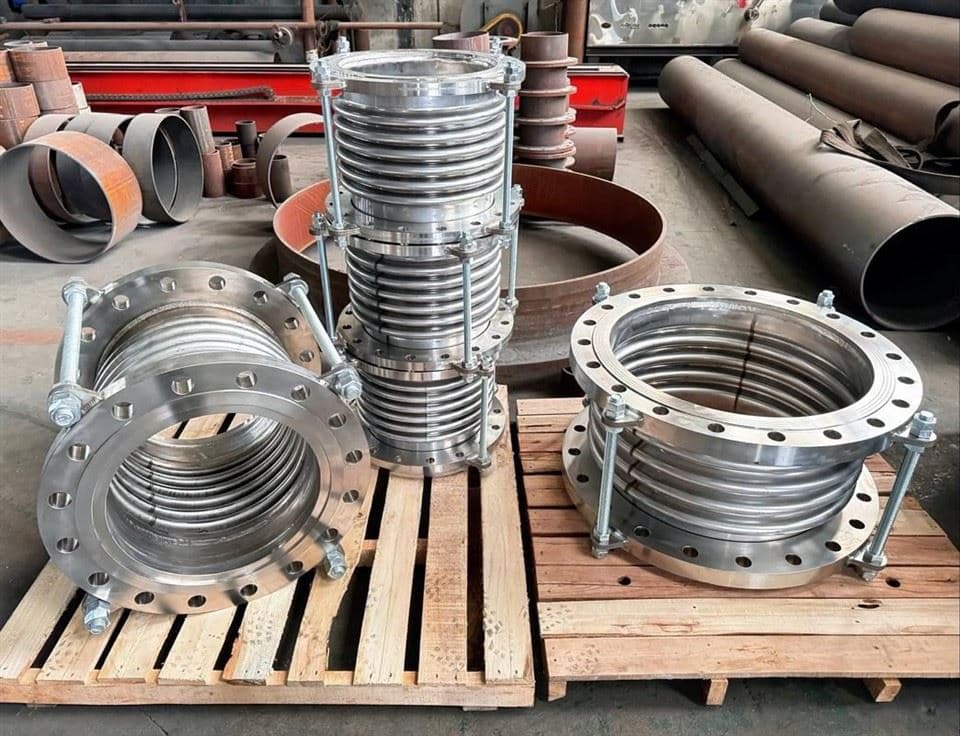
Seven major flange types serve different piping system requirements across oil and gas, chemical, power, and water treatment industries. Each flange type offers distinct advantages in installation, cost, and performance. Selection depends on operating pressure, temperature, pipe size, and maintenance needs. This guide provides a comprehensive comparison of every flange type to help you make informed piping system design decisions.
Overview of Flange Types
The flange type determines how the flange connects to the pipe, how it distributes mechanical stress, and how it performs under various operating conditions. Some flange types are welded to the pipe, others thread on, and others use a loose-ring design. The right choice depends on your specific application requirements, including pressure class, temperature, media corrosiveness, and how often the joint needs to be disassembled.
| Flange Type | Connection Method | Typical Size Range | Common Classes | Relative Cost |
|---|---|---|---|---|
| Weld Neck | Butt-weld | NPS 1/2 - 24 | 150 - 2500 | High |
| Slip-On | Fillet weld (2x) | NPS 1/2 - 24 | 150 - 600 | Medium |
| Blind | Bolted (no pipe) | NPS 1/2 - 24 | 150 - 2500 | Medium |
| Socket Weld | Fillet weld (1x) | NPS 1/2 - 2 | 150 - 2500 | Medium |
| Threaded | NPT threads | NPS 1/2 - 4 | 150 - 300 | Low |
| Lap Joint | Butt-weld (stub end) | NPS 1/2 - 24 | 150 - 600 | Medium |
| Reducing | Butt-weld or fillet | NPS 1 - 24 | 150 - 600 | High |
| Orifice | Butt-weld | NPS 1 - 24 | 300 - 2500 | High |
Weld Neck Flange
The weld neck flange features a long tapered hub that provides smooth stress distribution from the pipe into the flange body. It connects to the pipe via a full-penetration butt weld, which allows radiographic inspection and delivers joint strength equal to the pipe itself. Weld neck flanges are available in all pressure classes from 150 to 2500 and are the preferred choice for high-pressure, high-temperature, and severe cyclic service conditions. However, they require skilled welding and nondestructive testing, making them more expensive to install than simpler flange types.
Slip-On Flange
The slip-on flange slides over the pipe outer diameter and is welded in place with two fillet welds: one inside the bore and one on the outside face. It is easier to align and less expensive than a weld neck flange, making it popular for low-pressure applications. Slip-on flanges are typically limited to Class 150 through 600 and are commonly found in low-pressure water, air, and utility services. The lack of a tapered hub means less stress concentration than a weld neck, but also reduced fatigue life under cyclic loading conditions.
Blind Flange
A blind flange is a solid disc with no center bore, used to seal pipe ends, valve openings, and pressure vessel nozzles. Because it has no bore, a blind flange can withstand the highest pressure ratings of any flange type. Blind flanges are essential for pressure testing assembled piping sections, providing future tie-in points for plant expansion, and isolating decommissioned equipment. They are available in all sizes from NPS 1/2 to 24 and in all facing types including raised face, flat face, and ring joint.
Socket Weld Flange
The socket weld flange has a counterbore socket that accepts the pipe with a single fillet weld on the outer side. An internal shoulder prevents the pipe from passing through, and a small expansion gap (approximately 1/16 inch) at the bottom of the socket accommodates thermal expansion. Socket weld flanges are used for small-bore piping from NPS 1/2 to 2 and are suitable for high-pressure applications where space is limited. They are ideal for chemical injection lines, instrument connections, and hydraulic systems.
Threaded Flange
The threaded flange has an internally threaded bore that screws onto externally threaded pipe using standard NPT or BSP tapered pipe threads. No welding is required, making threaded flanges ideal for hazardous environments where hot work is prohibited. They are limited to lower pressure classes (typically Class 150 and 300) and smaller sizes. Threaded flanges offer quick installation and removal for maintenance but have lower joint strength than welded connections and may leak over time due to thermal cycling.
Lap Joint Flange
The lap joint flange consists of two separate components: a loose ring that slides over the pipe and a separately fabricated stub end that is welded to the pipe. The ring remains free to rotate, which eliminates bolt-hole alignment problems during assembly. Lap joint flanges are ideal for applications requiring frequent disassembly and inspection, such as cooling water and utility services. They also provide cost savings when using expensive pipe materials because the ring can be made from a lower-cost material than the stub end.
Reducing Flange
The reducing flange has two different bore diameters within a single flange body, allowing it to connect pipes of different sizes without a separate reducer fitting. The eccentric design keeps the top of both bores aligned to prevent air or vapor accumulation. Reducing flanges are commonly used at pump suction and discharge nozzles, equipment connections, and line size changes where space is limited. They save space and reduce the number of potential leak points compared to a flange-plus-reducer combination.
Orifice Flange
The orifice flange is a specialized flange designed for differential pressure flow measurement. It contains radial pressure tap holes on both sides of the flange and jacking screws for easy orifice plate removal. Orifice flanges are governed by ASME B16.36 rather than B16.5 and are available in Class 300 through 2500. They require straight pipe runs upstream and downstream for accurate flow measurement and are commonly used in custody transfer metering and process control applications.
How to Choose the Right Flange Type
Start by evaluating your operating pressure and temperature to determine the required pressure class. Then consider the pipe attachment method: welded connections provide the highest integrity, threaded connections avoid hot work, and loose-ring designs facilitate frequent disassembly. Factor in maintenance frequency and the need for nondestructive inspection. Finally, review life-cycle cost rather than just initial purchase price, as some flange types that cost more upfront may deliver lower total cost over the system life through reduced maintenance and longer service life.
Need Help Selecting the Right Flange Type?
Contact our engineering team for expert flange selection assistance with your next project.