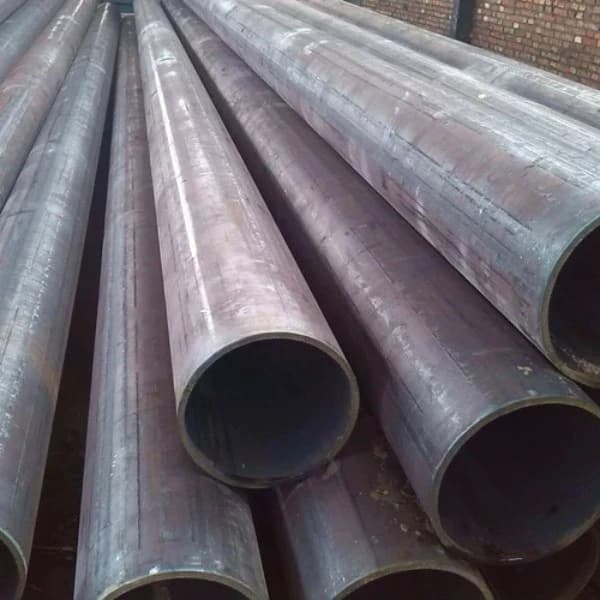
Steel Pipe Oil and Gas Casing are core specialized pipes used in the exploration and development of oil and natural gas. They are primarily used to be lowered into the wellbore, playing a crucial role in supporting the well wall and preventing wellbore collapse. They also isolate fluids from different geological formations, preventing inter-formation leakage and ensuring the safe and stable operation of drilling and oil and gas extraction.
These steel pipes must meet the stringent requirements of oil and gas extraction scenarios, possessing characteristics such as high strength, high corrosion resistance, and high sealing performance. Their specifications (such as outer diameter, wall thickness, and steel grade) must be precisely selected based on factors such as drilling depth, formation pressure, and media characteristics. Common steel grades include J55, K55, N80, L80, and P110, with different steel grades corresponding to different mechanical properties and applicable environments.
- Surface Casing: The casing strings installed above the surface support the wellhead equipment. They protect the drill hole from contamination by shallow water and gas formations, and they bear the load of the subsequent casing strings.
- Types of Casing: Casing types include short-thread and coupled, as well as long-thread and coupled. This category also includes production casing, which is run through the oil-bearing zone. Its primary functions are to protect the wellbore, isolate different drilling mud layers, and provide a conduit to guide oil and natural gas from the reservoir to the surface.
- Technical / Intermediate Casing: This type of casing is used to isolate pressure from different underground formations. It ensures drilling fluid can circulate normally while also protecting the production casing. It also allows for the installation of safety equipment, such as blowout preventers and leak-proof devices, on the well.
Oil casing possesses high collapse resistance, providing excellent protection when used in oil and gas wells of varying depths.
Oil tubing plays a vital role in adopting advanced technologies and enhancing production and efficiency within the oil industry. It directly determines the production capacity and output quality of oil and gas wells.
If oil tubing fails, the resulting losses can be substantial. Therefore, its safety, reliability, and service life are critical factors for successful oil production.
Carbon steel (API 5CT J55, K55 for shallow wells); Alloy steel (N80, L80 for medium depth); High-strength alloy (P110, Q125 for deep/high-pressure wells)
Chemical Composition
J55/K55: C ≤0.30%, Mn 0.9-1.6%; N80: C ≤0.35%, Cr 0.5-1.0%; P110: C ≤0.40%, Mo 0.15-0.30% (alloying elements enhance strength and H₂S resistance)
Mechanical Properties
Tensile Strength: J55 ≥517 MPa; N80 ≥552 MPa; P110 ≥758 MPa
Yield Strength: J55 379-517 MPa; N80 552-689 MPa; P110 758-965 MPa
Elongation: ≥15% (all grades, ensures ductility under stress)
Pressure & Corrosion Resistance
J55/K55: For low-pressure, non-sour environments; N80/L80: Resists moderate H₂S (sour service); P110/Q125: High-pressure (up to 100 MPa) and sour gas (H₂S) resistance (via sulfide stress cracking control)
Temperature Range
Service: -20°C to 150°C (varies by grade); high-strength alloys (P110) stable in downhole temps up to 150°C; specialized grades for extreme heat (e.g., geothermal wells)
Form & Dimensions
Type: Seamless (critical, high pressure); welded (ERW, for non-critical shallow wells)
Outer Diameter: 114.3mm-508mm (4½"-20" common); Wall Thickness: 6mm-25mm
Length: 6m-13m (R1/R2/R3, per API 5CT)
Standards Compliance
API 5CT (casing/tubing for oil/gas wells); ISO 11960 (equivalent to API 5CT); ASTM A335 (alloy steel casing); NACE MR0175 (sour service H₂S resistance)
Fabrication
Seamless: Hot-rolled/extruded (no welds, high integrity); welded: ERW (cost-effective for shallow wells)
Threaded: API BTC, STC, LTC (seal via thread compound; premium connections for high pressure)
Key Applications
Oil/Gas Wells: Cemented in wellbores to support formation, prevent collapse, and isolate fluids (oil, gas, water)
Shale Gas: Horizontal wells (high-strength P110 for fracturing pressure)
Geothermal: High-temp wells (alloy grades resistant to hot brines)
Key Advantages
Graded strength matches well depth/pressure (shallow to ultra-deep); Threaded connections ensure fluid tightness; Sour service grades prevent sulfide stress cracking; Seamless design for critical reliability
Oil and gas casing pipes are engineered to withstand extreme downhole conditions, providing structural integrity and fluid isolation-critical for safe and efficient oil/gas extraction.
Frequently Asked Questions
Q: What is the minimum order quantity (MOQ) for custom products?
A: The MOQ for custom products depends on specifications, but generally starts from 1 pieces. For special cases, we can discuss further.
Q: Can you provide a detailed product catalog?
A: Sure, we'll send you a digital catalog with specifications, prices, and photos via email. Just let us know your specific needs.
Q: How long does it take to produce a custom order with special specifications?
A: It usually takes 25-30 days, depending on the complexity of the design. We'll confirm the exact lead time after evaluating your requirements.