
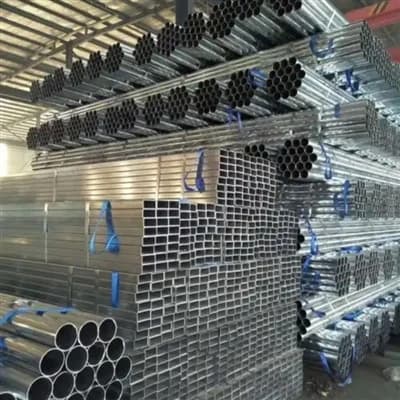
A minimum order quantity is set by the production route, not by a sales rule. A mill has to schedule a heat, a rolling or forming campaign, tooling, and the inspection that goes with the order. Those steps have a floor, and that floor is the MOQ. It is confirmed per order, because it changes with grade, size, wall and route.
What sets the floor
Four items decide whether an enquiry is economic to run. None of them is a universal published number, and a tonnage quoted by one mill does not transfer to another.
| Item | What it does to the minimum | What it does not give you |
|---|---|---|
| Melt and heat size | Steelmaking runs in heats; a grade outside the current campaign needs its own melt | A tonnage copied from another mill |
| Rolling or forming campaign | Seamless and welded routes change size in different ways | One MOQ that covers every size |
| Tooling and setup | Sizing, straightening and end preparation are set per size and wall | A setup that costs nothing below a threshold |
| Inspection and documentation | Testing, certification and any third-party witness are per-order costs | Testing included at no charge |
Sizes, lengths and routes change the answer
State the size the way the mill prices it. NPS 4 Schedule 40 pipe is 114.3 mm outside diameter with a 6.02 mm wall, and NPS 6 Schedule 40 is 168.3 mm with a 7.11 mm wall. A single random length of 4-7 m is not the same production item as a 6 m fixed length, and a fixed length usually carries a cutting premium. Ask for both if the project can accept either.
Seamless and welded routes do not share a floor. Seamless pipe is tied to the billet and the rolling campaign, while welded pipe is tied to coil width and the weld line. A spiral-welded or longitudinal-submerged-arc line has its own campaign logic again.
Related product pages are seamless carbon steel pipe, API 5L Grade B seamless pipe and spiral welded pipe to ASTM A252, A139 and API 5L. Use the product page for the identity. The MOQ is still an order field, not a property of the grade.
Stock and made-to-order are different offers
A stock item is already made, so the minimum can be one length or one bundle. A made-to-order item has to be scheduled, so it carries the campaign floor and a longer lead time. The distinction is per supplier and per size.
- Ask which lines on your list are stock and which are made to order.
- Ask for the MOQ per line item, not one number for the whole order.
- Ask whether a mixed order can share one campaign across sizes.
- Ask what the premium is for a below-floor quantity, and what it covers.
What to Confirm with Your Inquiry
- Standard and edition, grade, and seamless or welded route.
- NPS or outside diameter, schedule or wall, and length with its tolerance.
- Quantity per line item, and whether a mixed order is acceptable.
- Whether the item is stock or made to order, and the MOQ for each line.
- End finish, coating, inspection, certificate type and trade term.
Very small quantities are usually bought from a distributor or from remnant stock rather than from a mill campaign. Confirm the certificate and the traceability in that case, because a remnant length has to be identified to its heat before it can go on a coded line.
The wall article explains how to identify the supplied wall before it is used in a joint design: how to read a pipe wall-thickness schedule.



