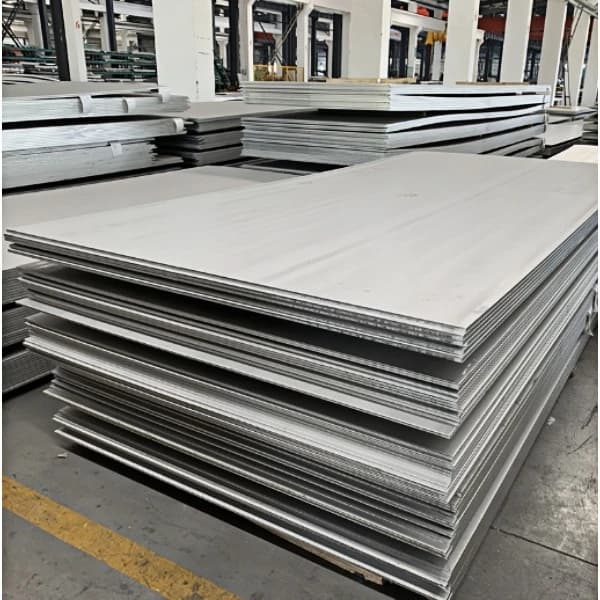
Product Description
Q235 carbon steel plate is a Chinese standard carbon structural steel supplied to GB/T 700. In the GB designation, "Q" denotes yield strength and "235" the nominal yield value of 235 MPa for the thinnest thickness band. It is a plain low-carbon, non-alloy steel supplied in four quality grades — Q235A, Q235B, Q235C and Q235D — which differ in phosphorus and sulfur limits and in the Charpy impact test temperature they must meet.
Carbon maximum is 0.22% for Q235A, 0.20% for Q235B and 0.17% for Q235C and Q235D. Q235 plate combines good ductility, formability and weldability with a lower material cost than low-alloy grades such as Q345. It is widely specified for building and industrial steel structures, bridges and transmission towers, shipbuilding secondary structures, machinery frames and general fabrication. It is not a corrosion-resistant material: unprotected Q235 rusts in normal atmospheric service, so surface protection is specified wherever the exposure requires it.
An important point for buyers: the specified minimum yield strength of Q235 decreases as plate thickness increases, from 235 MPa in the thinnest band to 185 MPa above 150 mm. Designs and enquiries should therefore be based on the actual ordered thickness, not on the grade number alone.
Specifications
Grade, dimensions and supply details — final values are confirmed for each order:
| Item | Reference |
|---|---|
| Material | Carbon structural steel, GB/T 700 grade Q235 |
| Quality grades | Q235A, Q235B, Q235C, Q235D |
| Applicable standard | GB/T 700 (confirm the edition required by the purchase order) |
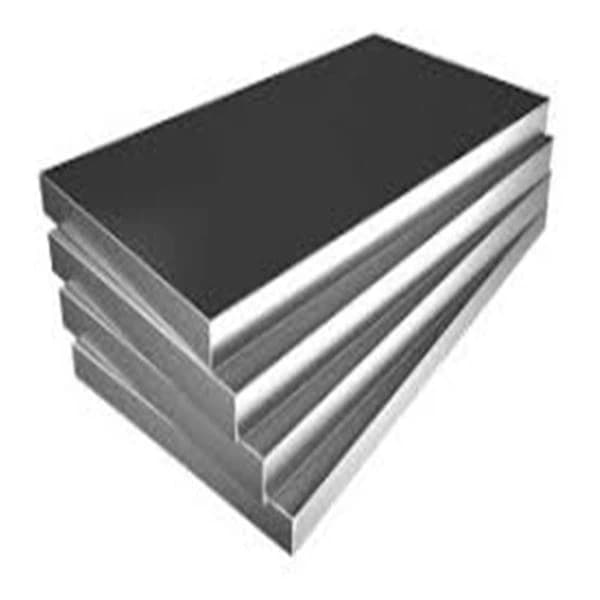
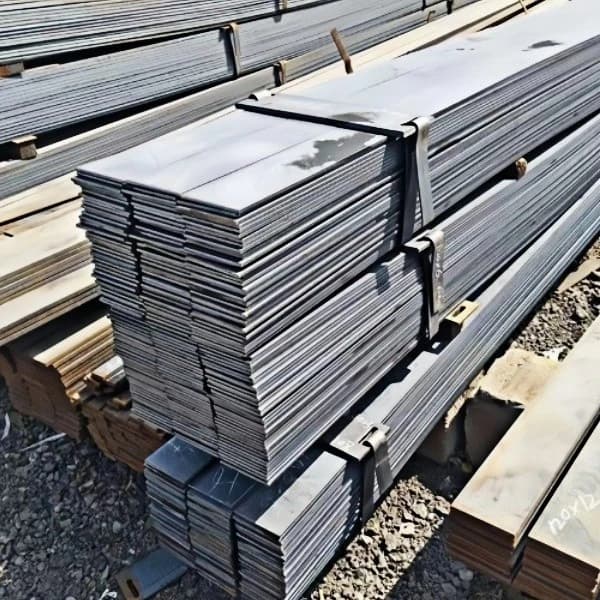
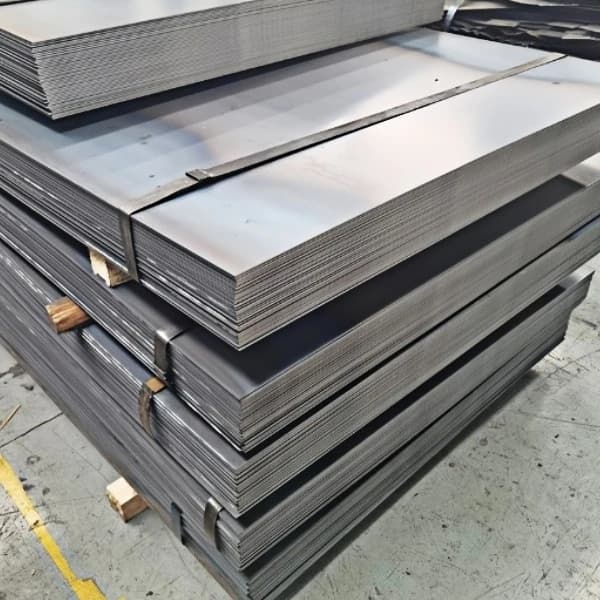
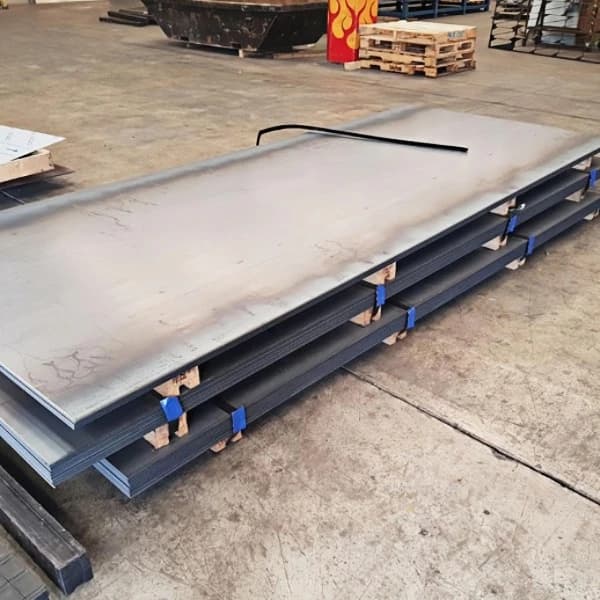
| Product form | Carbon steel plate. Sheet, coil and long products are separate product forms and are quoted separately. |
| Thickness | 0.45-15 mm |
| Width | 50-1500 mm |
| Length | Cut to the length specified by the customer |
| Delivery condition | Hot rolled / as rolled (reference); other conditions subject to confirmation |
| Surface | Black (as rolled), pickled, oiled, painted or galvanized — subject to confirmation |
| Processing | Cutting, bending, drilling and welding — availability subject to confirmation |
| Certification | Mill test certificate (for example EN 10204 3.1 / 3.2) and third-party inspection on request |
Chemical composition — reference limits per GB/T 700 (% by weight, maximum values). Confirm the applicable edition at order stage:
| Element | Q235A | Q235B | Q235C | Q235D |
|---|---|---|---|---|
| Carbon (C) | 0.22 max | 0.20 max | 0.17 max | 0.17 max |
| Silicon (Si) | 0.35 max | 0.35 max | 0.35 max | 0.35 max |
| Manganese (Mn) | 1.40 max | 1.40 max | 1.40 max | 1.40 max |
| Phosphorus (P) | 0.045 max | 0.045 max | 0.040 max | 0.035 max |
| Sulfur (S) | 0.050 max | 0.045 max | 0.040 max | 0.035 max |
Mechanical properties — reference values per GB/T 700, to be confirmed against the applicable edition and the certified mill test report:
| Property | Reference value |
|---|---|
| Yield strength, minimum, by thickness | 235 MPa for ≤16 mm; 225 MPa for >16–40 mm; 215 MPa for >40–100 mm; 195 MPa for >100–150 mm; 185 MPa for >150 mm |
| Tensile strength | 370–500 MPa reference range (375–460 MPa appears in older data sheets) |
| Elongation after fracture, minimum | 26% for ≤40 mm; 25% for >40–60 mm; 24% for >60–100 mm; 22% for >100–150 mm; 21% for >150 mm |
| Impact test, Charpy V-notch (longitudinal) | Q235A: not required; Q235B: 27 J minimum at +20 °C; Q235C: 27 J minimum at 0 °C; Q235D: 27 J minimum at -20 °C |
| Density | Approximately 7.85 g/cm³ (reference value) |
Commonly cited approximate equivalents — these are commercial comparisons, not one-to-one substitutions:
| Standard / country | Commonly cited grade |
|---|---|
| GB/T 700 (China) | Q235; Q235B is the grade most often compared with foreign grades |
| ASTM (USA) | A36, A283C |
| EN 10025-2 (Europe) | S235JR |
| JIS G3101 (Japan) | SS400, SM400A |
| DIN (Germany) | St37-2 |
| ISO / AFNOR | Fe360B / E235B; E24-2 |
Yield limits, tensile range, impact requirements and deoxidation practice differ between these standards. A substitution has to be checked against the specification the project is designed to, not assumed from the grade name.
Material Characteristics
Q235 is a plain low-carbon steel with no deliberate alloying additions for strengthening, so it is not hardened by heat treatment in the way alloy or martensitic grades are. Its properties come from composition control and the as-rolled condition, and cold working raises strength through strain hardening. The low carbon level keeps the heat-affected zone ductile and makes the grade straightforward to weld with standard carbon-steel procedures; preheating is generally not needed for common thicknesses, but thick sections, heavily restrained joints and low ambient temperatures should be assessed against the applicable welding procedure.
The grade has good plasticity and cold-bending performance, which supports bending, forming and rolling into structural sections and fabricated parts. Machinability is acceptable in the as-rolled condition, although the soft, ductile structure can give a poorer surface finish than free-cutting or higher-carbon steels.
Corrosion resistance is the main limitation. Q235 is unalloyed carbon steel and will rust without protection, so galvanizing, painting, blasting and priming or other coatings are specified according to the exposure, and the coating type and thickness should be stated with the enquiry. Where a higher yield strength is required without increasing section size, low-alloy grades such as Q345 are normally considered instead; that is a different material and is quoted separately.
Applications
Q235 carbon steel plate is specified for general structural and fabrication work rather than for pressure-containing or highly corrosive service. Typical uses include:
- Building and industrial steel structures: beams, columns, braces, base plates and gussets
- Bridges, transmission towers and crane structures
- Shipbuilding and marine secondary structures, subject to the classification requirements of the project
- Industrial boilers, reaction towers, storage tanks, silos and warehouse structures
- Machine frames, equipment bases, platforms, walkways, stairways and guards
- General fabrication, agricultural equipment and transport equipment components
For pressure vessel, low-temperature or sour-service duty, the applicable design code and any additional testing requirements must be stated with the enquiry so that grade suitability can be confirmed before quotation.
Ordering Information
To receive an accurate quotation, please specify: the quality grade (Q235A, Q235B, Q235C or Q235D — this choice sets the impact test temperature and the phosphorus and sulfur limits), the applicable standard and edition (GB/T 700), plate thickness, width and length with tolerances, quantity, delivery condition, surface treatment, any cutting or processing required, and the inspection documents needed (for example EN 10204 3.1 or 3.2, or third-party inspection). Because the minimum yield strength falls as thickness increases, always state the thickness the design is based on.
If the project specifies ASTM A36, EN S235JR or JIS SS400 instead of a GB grade, send that specification in full; these are approximate commercial equivalents and the substitution should be confirmed rather than assumed. Compare this item with the Carbon Steel Plate range before fixing size, grade and quantity.