Product Description
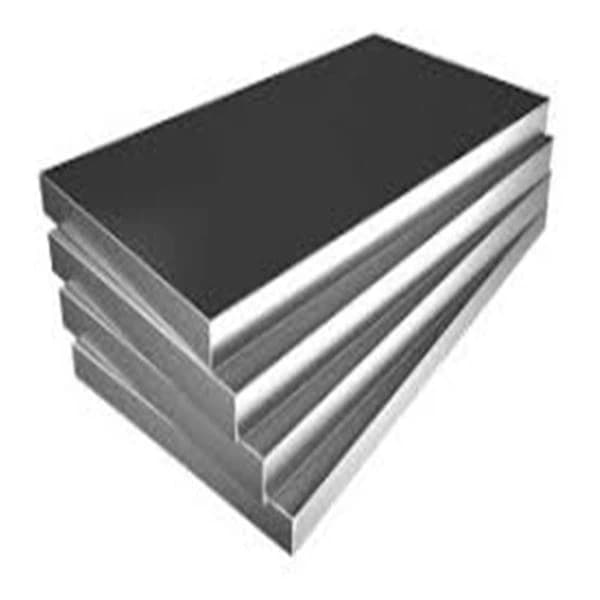
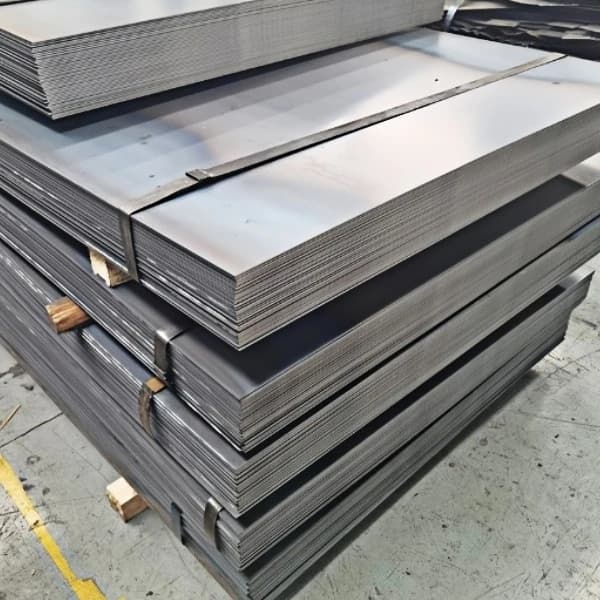
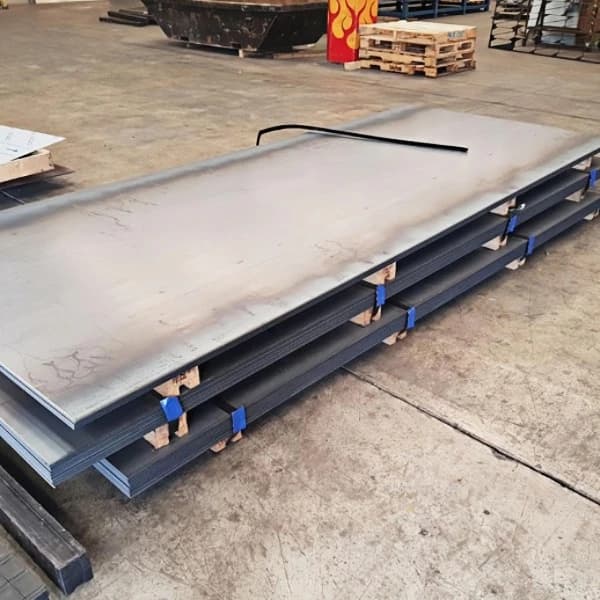
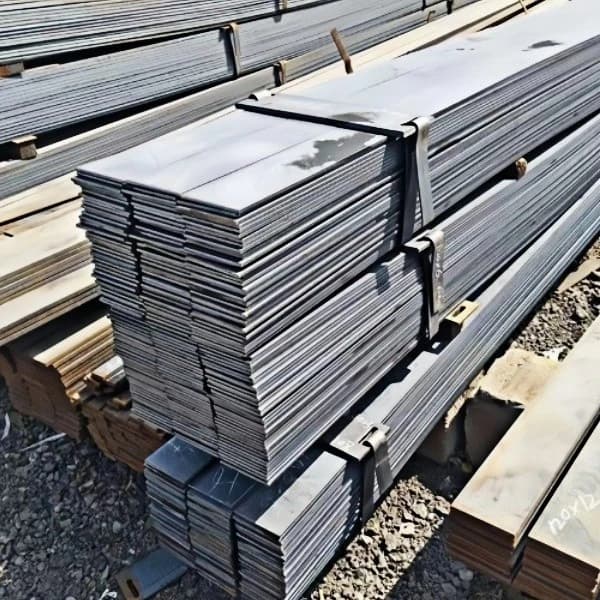
Low carbon steel plate is hot-rolled carbon steel plate with a low carbon content, with carbon of 0.04–0.30%. In the trade it is also called mild steel plate. Carbon is the element that hardens steel, so keeping it low leaves a softer, more ductile plate that cuts, bends, rolls and welds predictably with standard shop equipment — which is why this group is the default material for structural and general fabrication work.
Plate is the thicker flat product, and sheet, coil and strip are formed and specified differently, so keep the product form explicit when you enquire. Low carbon steel plate is supplied to the grade and standard named in your drawing or purchase specification rather than being one single international grade. Low-carbon grades in common use include ASTM A36, A283 and A516, EN 10025-2 S235JR and S275JR, GB/T 700 Q235 and JIS G3101 SS400. These designations are not interchangeable: each standard sets its own carbon and manganese limits, its own yield and tensile requirements and its own impact test conditions, so the specification your project is designed to governs the order.
Two practical points for buyers. First, low carbon steel is not corrosion resistant; it rusts when unprotected, so the coating system belongs in the enquiry. Second, low-alloy plates such as Q345 or S355 are a different material family with higher strength and are quoted as a separate product, not as an upgrade of the same plate.
Specifications
Grade, dimensions and supply details — final values are confirmed for each order:
| Item | Reference |
|---|---|
| Material | Low carbon (mild) steel plate; plain non-alloy carbon steel with carbon in the low-carbon range. The exact carbon and manganese limits follow the standard of the ordered grade. |
| Grade / standard | Supplied to the grade and standard stated in the purchase order; confirm the standard and its edition at order stage. See the grade table below for the low-carbon grades in common use. |
| Product form | Hot-rolled plate. Sheet, coil, strip and long products are separate product forms and are quoted separately. |
| Thickness | 0.45-100 mm. Sizes outside this range are made to the ordered dimensions. |
| Width | Standard widths 1000 mm and 1219 mm; other widths up to 1500 mm. Sizes outside this range are made to the ordered dimensions. |
| Length | Standard lengths 3 m and 6 m; other lengths up to 12 m. Sizes outside this range are made to the ordered dimensions. |
| Delivery condition | As-rolled (hot rolled). Normalized or other conditions only where the ordered grade or specification requires it. |
| Surface | As-rolled mill finish; blast-cleaned and primed, pickled and oiled, painted or galvanized on request — subject to confirmation |
| Edge | Mill edge or trimmed edge, to be agreed at order |
| Processing | Flame, plasma or laser cutting, beveling and profiling on request — subject to confirmation |
| Certification | Mill test certificate (for example EN 10204 3.1); EN 10204 3.2 or third-party inspection where the purchase order specifies it |
Mechanical properties — reference values for low-carbon structural plate. They vary with grade and thickness; the ordered grade and the certified mill test report govern:
| Property | Reference value |
|---|---|
| Carbon content | 0.04–0.30%. The ordered grade's standard sets the binding limit. |
| Tensile strength | 400–550 MPa, depending on grade and thickness |
| Yield strength | 250–450 MPa, depending on grade and thickness |
| Elongation after fracture | 25%, indicating good ductility |
| Density | 7.85 g/cm³ |
| Weldability | Good with common arc welding processes; preheat is usually not required at normal thicknesses |
| Corrosion resistance | Low — unalloyed carbon steel rusts when unprotected |
Carbon content by category, which is the basis for the low carbon / medium carbon / high carbon split:
| Category | Carbon content, reference range | Weldability and formability | Strength and hardness |
|---|---|---|---|
| Low carbon steel (mild steel) | 0.04–0.30% | Best of the three groups; widely weldable and easily formed | Lowest of the three groups |
| Medium carbon steel | 0.25–0.60% | Reduced; preheat and post-weld control may be required | Higher than low carbon steel |
| High carbon steel | 0.55–1.50% | Limited; welding is difficult and is usually avoided | Highest strength and wear resistance |
The boundaries between the three groups differ slightly between references; treat these figures as orientation ranges, because the full specification of the ordered grade — not carbon content alone — sets the properties that apply.
Low carbon steel plate grades in common use and where they are typically applied. Each grade is supplied to its own standard; this table is for orientation and is not a grade equivalence chart:
| Standard | Grade | Typical area of use |
|---|---|---|
| ASTM | A36 | General structural plate: building frames, base plates, bridge and support steelwork |
| ASTM | A283 Gr. C | Storage tanks, bins and general fabrication at low to moderate strength |
| ASTM | A516 Gr. 70 | Boilers, pressure vessels and other pressure-retaining equipment |
| EN 10025-2 | S235JR | Structural steelwork in Europe and in projects written to EN standards |
| EN 10025-2 | S275JR | Structural and machinery work where a higher yield strength is required |
| GB/T 700 | Q235 (A / B / C / D) | General Chinese-standard structural and fabrication work |
| JIS G3101 | SS400 | Japanese-standard general structural plate, bars and sections |
Material Characteristics
Low carbon steel plate is a plain carbon steel: carbon and manganese are the elements that matter, and no alloying additions are made specifically to raise strength or corrosion resistance. Its properties therefore come from composition control and the as-rolled condition rather than from heat treatment. Low carbon steel cannot be through-hardened by quenching and tempering; surface hardness can be raised by carburizing where a wear-resistant skin is required, but the core stays soft. Cold working raises strength by strain hardening, which is often sufficient for lightly loaded formed parts.
Ductility and weldability are the two reasons this group is specified so widely. The low carbon level keeps the heat-affected zone ductile, which makes the plate tolerant of the fit-up, tacking and rework that general fabrication involves, and it allows common arc processes to be used without preheat at normal thicknesses. That does not remove the need for a procedure: thick sections, highly restrained joints, low ambient temperatures and high-hydrogen consumables should be assessed against the qualified welding procedure, and plate should be clean and dry before welding.
Forming behaviour is good. The plate bends, rolls and cuts predictably, and it can be flame, plasma or laser cut and then machined, although the soft, ductile structure tends to give a poorer machined surface finish than free-cutting or higher-carbon steels. Corrosion resistance is the principal limitation: unalloyed carbon steel rusts in normal atmospheric service, and the risk rises with moisture, chlorides and chemical exposure, so blast-and-prime, painting, galvanizing or another coating system is part of the specification rather than an optional extra. Where corrosion resistance or a higher strength-to-weight ratio drives the design, a stainless, low-alloy or weathering steel is the appropriate comparison and is quoted as a separate material.
Applications
Low carbon steel plate is chosen for structural, fabrication and general engineering work where ductility, weldability and material cost matter more than strength or corrosion resistance. Typical uses include:
- Building and industrial structures: base plates, gussets, stiffeners, connection plates, columns and bracing
- Bridges, transmission towers, cranes and other heavy structural steelwork
- Storage tanks, bins, hoppers, silos and ducting for atmospheric service
- Equipment foundations, sole plates, platforms, walkways, ladders, stair stringers and guards
- Machine beds, frames, fixtures, jigs, transport skids and general OEM fabrication
- Marine and repair work in coated zones where a robust paint system is applied
For pressure-retaining, low-temperature or sour-service duty, the applicable design code, the required impact testing and any additional examination must be stated with the enquiry so that grade suitability can be confirmed before quotation. Low carbon steel plate is not supplied as a corrosion-resistant material.
Ordering Information
To receive an accurate quotation, please state the grade and standard exactly as written on your drawing or specification, the edition of that standard, plate thickness, width and length with the required tolerances, quantity, delivery condition, surface treatment, any cutting, beveling or profiling required, and the inspection documents needed — for example a mill test certificate to EN 10204 3.1 or 3.2, or third-party inspection. Add the service environment and the intended coating system so that surface protection and any additional testing can be confirmed with the offer.
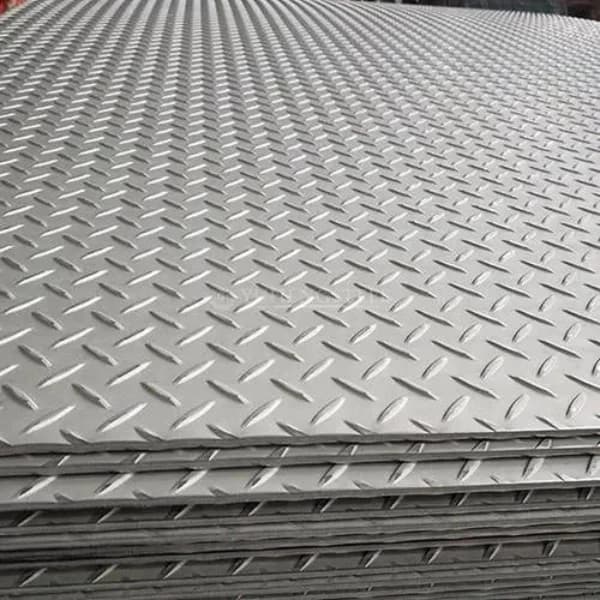
The most common enquiry problem is a grade that exists in more than one standard — for example an A36 designation on a project drawn to EN or GB requirements. Send the full specification in that case, because grades from different standards are not interchangeable and the substitution has to be reviewed against the design code rather than assumed from the grade name. For grade-specific data, compare this item with the ASTM A36 carbon steel plate, ASTM A516 carbon steel plate and Q235 carbon steel plate pages, with carbon steel tread plate where a raised anti-slip pattern is needed, or with the carbon steel plate range overview.