Product Description
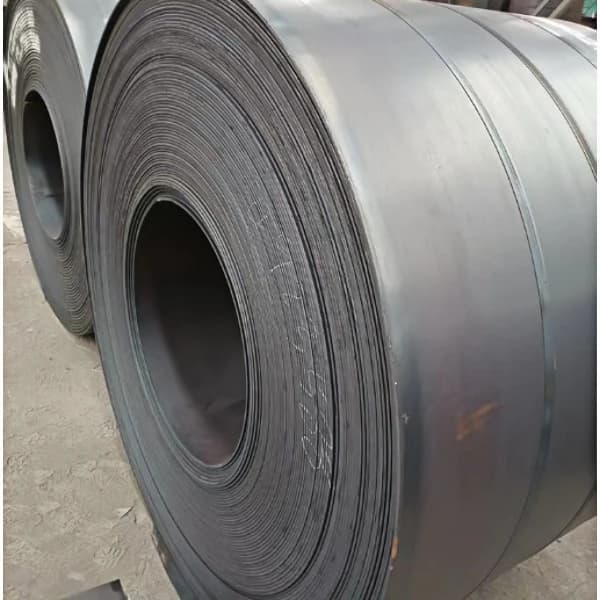
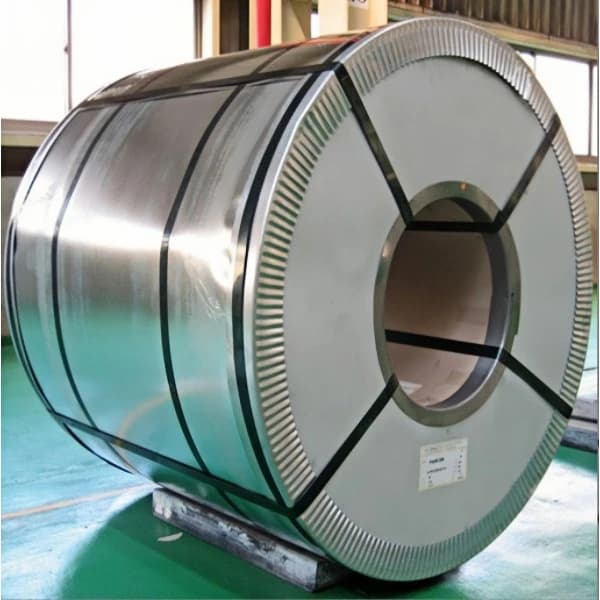
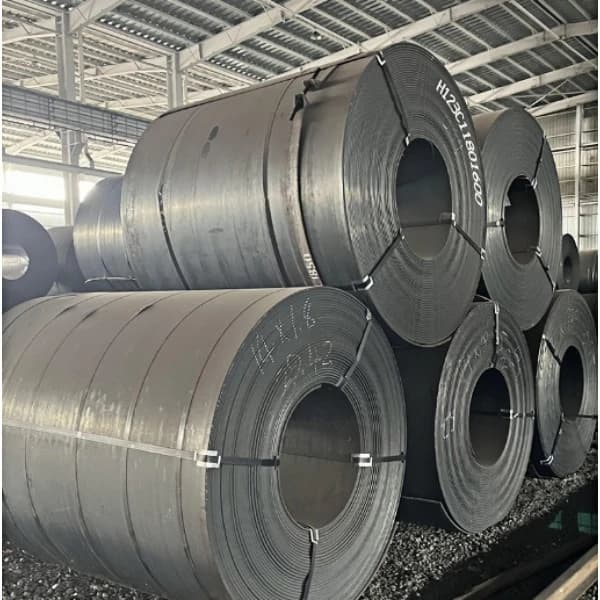
Mild steel coil is low-carbon steel supplied in wound, continuous form. "Mild steel" describes the material rather than one single grade: carbon is held in the low-carbon range, the steel is unalloyed, and the result is a soft, ductile material that bends, rolls, presses and welds with standard shop equipment. The same material is sold in the trade as low carbon steel coil or MS coil, and it is the default raw material behind a large share of general fabrication, roll-formed sections, enclosures, appliances and light structural parts.
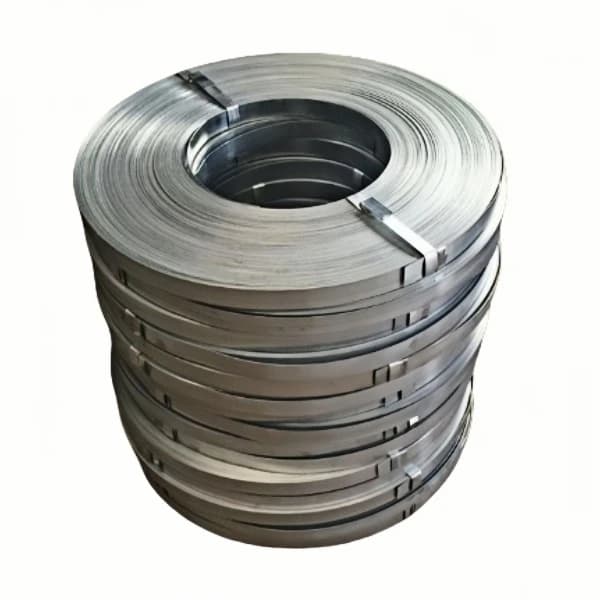
Coil is the form buyers choose when they need continuous length for roll forming, slitting, pressing, tube and pipe making, or feeding automated lines. This page covers mild steel coil as a supply group; hot rolled and cold rolled are two different supply routes with different surface, gauge band, tolerances and price position, and each route has its own page below. Slit strip, cut-to-length sheet and discrete plate are separate product forms and are quoted separately.
Two practical points before the grade is fixed. First, mild steel coil is not one international grade. S235JR, A36, SS400, Q235 and the other designations come from different standards, and each standard sets its own carbon and manganese limits, its own yield and tensile requirements and its own tolerance classes. They are not interchangeable, so the standard named on the drawing or purchase specification governs the order; send the full designation, and the edition where the project is registered to one.
Second, low carbon steel is not corrosion resistant. Unprotected mild steel coil rusts in normal atmospheric service, and the finish - oiling, pickling and oiling, painting, galvanising or another coating system - belongs on the enquiry rather than being assumed. Where corrosion resistance or a higher strength-to-weight ratio drives the design, a coated, weathering or stainless product is the right comparison and is quoted as a separate item.
Specifications
Supply specification - grade and dimensions are confirmed against each order:
| Item | Reference |
|---|---|
| Product form | Mild (low carbon) steel coil. Hot rolled and cold rolled are separate supply routes; slit strip and cut-to-length are separate options. Coil, strip, sheet and plate are different product forms. |
| Grades | S235JR, S275JR and S355JR to EN 10025-2; A36 to ASTM A36/A36M and commercial qualities to ASTM A1011/A1011M; SS400 to JIS G3101; Q235 to GB/T 700 and Q355 to GB/T 1591; SPHC to JIS G3131, SPHT to JIS G3132 and SPCC to JIS G3141; DC01 and DC03 to EN 10130. The former DIN designations St37-2 and St52-3 are near-equivalents of S235JR and S355JR, not direct substitutes. |
| Standards | EN 10025-2; ASTM A36/A36M and ASTM A1011/A1011M; JIS G3101, JIS G3131, JIS G3132 and JIS G3141; GB/T 700 and GB/T 1591; EN 10130. Confirm the edition at order stage; grades from different standards are not interchangeable. |
| Route and condition | Hot rolled with an as-rolled mill finish, or cold rolled and annealed (annealed and skin-passed where a forming finish is required), unless cold rolled full hard is specified. Cold rolled coil is made from hot rolled, pickled coil. |
| Thickness | Hot rolled 1.5 mm to 12 mm and cold rolled 0.3 mm to 3.0 mm, reference ranges. The exact gauge is confirmed for the ordered grade, width and route. |
| Width | 600 mm to 1500 mm as rolled; narrower widths from 30 mm by slitting; wider widths to be confirmed for the ordered route and thickness. |
| Length and coil build | Supplied in coil. Coil weight and coil inner and outer diameter to be confirmed at quotation; cut-to-length on request. |
| Surface | As-rolled mill finish on the hot rolled route; pickled and oiled (HRPO) where scale has to be removed; annealed cold rolled finish on the cold rolled route. Galvanised and pre-painted coil are separate product ranges and are quoted separately. |
| Edge | Mill edge or slit edge, to be agreed at order |
| Tolerance | Thickness and width tolerances to be agreed at order - commonly the tolerance classes of EN 10051 for hot rolled or EN 10131 for cold rolled product, or the class named in the ASTM or JIS standard quoted. |
| Certification | Mill test certificate to EN 10204 3.1; EN 10204 3.2 or third-party inspection where the purchase order specifies it |
| Third-party inspection | Available on request - inspector, test scope and witness points agreed on the order |
Minimum yield strength of the grades in common use, quoted as reference values to show how the designations differ. Yield strength falls as thickness increases, and the certified mill test report for the ordered gauge governs:
| Grade | Standard | Minimum yield strength, reference |
|---|---|---|
| S235JR | EN 10025-2 | 235 MPa at thickness up to 16 mm, decreasing as thickness increases |
| S275JR | EN 10025-2 | 275 MPa at thickness up to 16 mm, decreasing as thickness increases |
| S355JR | EN 10025-2 | 355 MPa at thickness up to 16 mm, decreasing as thickness increases |
| A36 | ASTM A36/A36M | 250 MPa at thickness up to 203 mm; 220 MPa above 203 mm |
| SS400 | JIS G3101 | 245 MPa at thickness up to 16 mm |
| Q235 | GB/T 700 | 235 MPa up to 16 mm, reducing with thickness to about 185 MPa at 150-200 mm |
| Q355 | GB/T 1591 | 355 MPa at thickness up to 16 mm, decreasing as thickness increases |
Chemical composition is the other half of the specification and is not the same across these designations. Mild steel coil is plain, unalloyed low-carbon steel: carbon is held in the low-carbon range, manganese is the main solid-solution strengthener, and phosphorus and sulphur are restricted as detrimental impurities. The binding maximum for each element comes from the standard of the ordered grade - the EN 10025-2 carbon cap for a JR grade is not the ASTM or GB requirement - and the product analysis is reported on the mill test certificate.
Hot Rolled and Cold Rolled Coil
The same low-carbon steel behaves differently depending on the rolling route, and the route decides gauge band, surface, tolerances and price position. Choosing between them is the first decision on most coil enquiries:
| Point | Hot rolled coil (HRC) | Cold rolled coil (CRC) |
|---|---|---|
| How it is made | Reduced above the recrystallisation temperature (roughly 900 °C and above), then coiled | Hot rolled, pickled coil is reduced again at ambient temperature, which work-hardens it; annealing restores ductility |
| Typical gauge band | 1.5 mm to 12 mm reference range | 0.3 mm to 3.0 mm reference range; cold rolled full hard is thinner still |
| Surface | As-rolled with mill scale unless pickled and oiled; rougher, and scale has to be removed before painting | Smoother, cleaner and more uniform - the usual choice where appearance or a paint finish matters |
| Condition supplied | As-rolled, or pickled and oiled (HRPO) | Annealed, annealed and skin-passed, or full hard (unannealed, higher strength and hardness) |
| Strength and ductility | Lower strength, higher ductility and lower internal stress | Work hardening raises strength; annealing trades strength back for formability |
| Typical use | Structural and general fabrication, frames and equipment, tube stock, welded assemblies | Appliances, enclosures, panelling, furniture, hardware parts, and as the base for coated coil |
Because the two routes overlap in roughly the 1.5-3.0 mm band, state the route as well as the gauge: "mild steel coil, 2 mm" is not a complete specification.
Material Characteristics
Mild steel coil is plain carbon steel. Its properties come from composition control and the condition it leaves the mill in, not from heat treatment: low-carbon unalloyed steel cannot be through-hardened by quenching and tempering, and strength is raised either by the rolling route or by cold working, which strain-hardens the coil as it is reduced or formed. That is also why cold rolled full hard coil is strong but stiff, and why annealed cold rolled coil is the grade of flat product most forming lines ask for.
Ductility and weldability are the reasons this group is specified so widely. The low carbon level keeps the heat-affected zone ductile, so common arc and resistance welding processes are used without preheat at normal thicknesses, and the coil tolerates the fit-up, tacking and rework that general fabrication involves. That does not remove the need for a procedure: thick sections, highly restrained joints, low ambient temperatures and high-hydrogen consumables should be assessed against the qualified welding procedure, and the coil should be clean, dry and free of scale or oil before welding or coating. As-rolled mill scale in particular has to be removed - by pickling, blasting or mechanical means - before a paint system is applied.
Forming is straightforward and the coil format suits continuous processes: roll forming, slitting, blanking, pressing, bending and roll-bending all run well on annealed and as-rolled low-carbon material. Forming forces, springback and the minimum bend radius depend on thickness, width, yield strength and condition, so full-hard and heavy gauge coil need larger radii and more power than annealed light gauge, and slit edge quality should be stated where the edge is a visible or functional face. Machining is possible but the soft, ductile structure gives a poorer surface finish than free-cutting or higher-carbon steel.
Corrosion resistance is the principal limitation. Unalloyed carbon steel rusts in normal atmospheric service, and the risk rises with moisture, chlorides and chemical exposure, so a coating system is part of the specification rather than an optional extra. Mild steel coil is also not a pressure-retaining material as such: if the application is a boiler, pressure vessel, low-temperature or sour service, the ordered grade has to be a pressure or low-temperature grade and the applicable design code, impact test requirements and additional examination belong on the enquiry.
Applications
Mild steel coil is chosen where ductility, weldability and material cost matter more than strength or corrosion resistance. Typical uses include:
- Structural and general fabrication - roll-formed sections, purlins, posts, trusses, brackets, base plates, frames and skids.
- Tube, pipe and hollow section production - coil to tube mills, where hot rolled coil in a tube grade is the normal feedstock.
- Appliance and HVAC manufacture - casings, panels, ducting, water heaters, refrigeration and air-conditioning parts, most often from annealed cold rolled coil.
- Furniture, racking, shelving and enclosures - storage systems, electrical cabinets, locker and partition panels.
- Automotive and transport equipment - chassis and body components, trailer bodies, truck beds, and general OEM metal parts.
- General metal products - pressed, drawn, stamped and roll-formed parts, hardware and consumer goods, and the base material for galvanised or pre-painted coil.
Suitability in each case depends on the grade, the route, the gauge and the service environment, so the duty should be stated on the enquiry. Mild steel coil is not supplied as a corrosion-resistant material and is not a substitute for a pressure, low-temperature or weathering grade.
Ordering Information
Mild steel coil is quoted against the order, so the enquiry should carry the following:
- Grade and standard as written on the drawing or specification, including the edition where the project is registered to one; the UNS or national designation where it helps identify the grade.
- Rolling route and supply condition - hot rolled as-rolled, pickled and oiled, cold rolled annealed, annealed and skin-passed, or full hard.
- Thickness with tolerance, width with tolerance, and edge condition (mill edge or slit edge).
- Coil build: coil weight, inner and outer diameter, maximum lift, or the cut lengths if you want cut-to-length sheet.
- Quantity, delivery schedule, packing and destination.
- Surface treatment or coating system, and whether the coil is to be processed on your line in a way that sets a surface requirement.
- Inspection and documentation: mill test certificate to EN 10204 3.1, or EN 10204 3.2 with third-party or buyer-nominated inspection - state the tests, witness points and certificate type required.
- Service conditions - indoor or outdoor, humidity, chlorides, chemical exposure, forming severity and any welding procedure requirement.
The most common enquiry problem is a grade that exists in more than one standard, for example an A36 or Q235 designation on a project drawn to EN requirements. Send the full specification in that case, because grades from different standards are not interchangeable and a substitution has to be reviewed against the design code rather than assumed from the grade name.
For route-specific data compare this item with the hot rolled carbon steel coil and cold rolled carbon steel coil pages; for grade-specific data see S355JR carbon steel coil and KA70 carbon steel coil. Other coil materials, such as the duplex steel coil range, are covered separately, and the range overview is on the carbon steel coil page.