Product Description
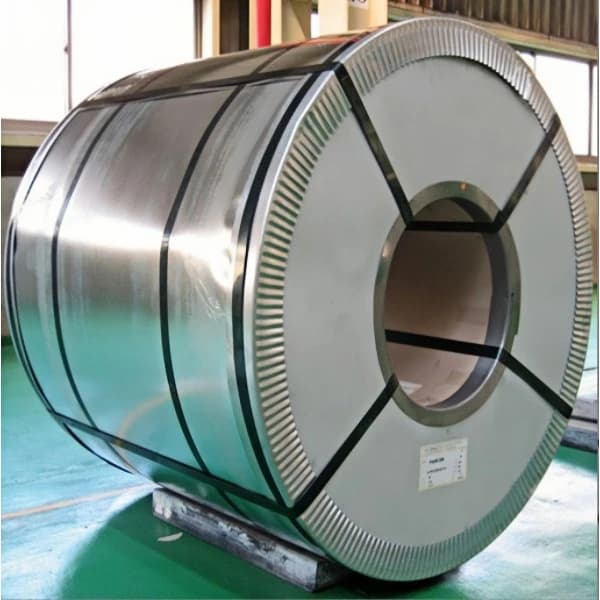
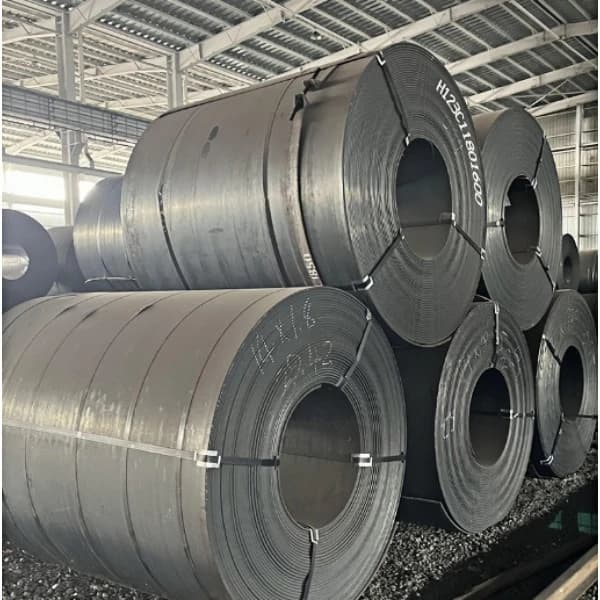
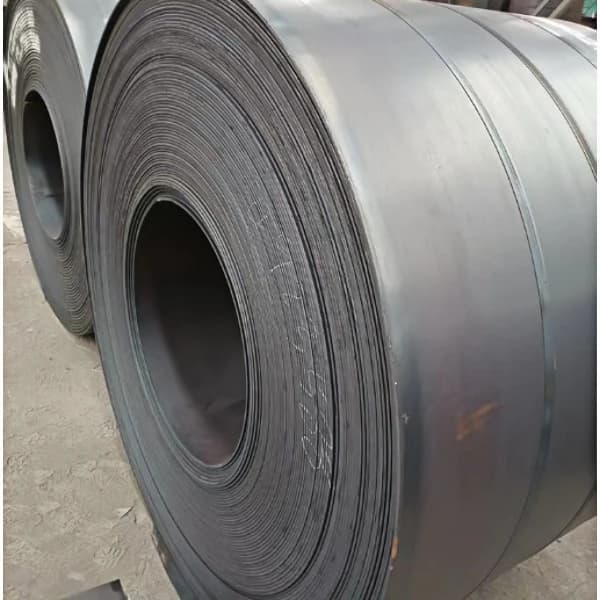
Hot rolled carbon steel coil (HRC) is carbon steel rolled above its recrystallisation temperature and coiled while still hot, so it leaves the mill as a continuous length of flat product rather than as a discrete sheet. The route gives the coil its as-rolled surface with a mill scale oxide layer, a wide gauge band, low internal stress and the ductility and weldability that suit structural, tubular and general fabrication work. Hot rolled coil is also the feedstock behind most of the flat steel supply chain: it is used directly for roll-formed sections, tube and pipe stock, drums and pressed parts, and it is the input coil from which pickled, cold rolled, galvanised and pre-painted products are made.
"Carbon steel coil" is a family of grades, not one material. S235JR, S275JR, S355JR, A36, A572 Grade 50, SS400, Q235 and Q355 come from different standards, and each standard sets its own carbon and manganese limits, its own yield and tensile requirements and its own tolerance classes. They are not interchangeable, so the standard named on the drawing or purchase specification governs the order, edition included where the project is registered to one. The hot rolled route also has a boundary: a gauge below 1.5 mm is not quoted on this hot rolled range and is covered on the cold rolled coil page; a tight thickness tolerance, or a face that will be painted or left visible, also points to cold rolled coil, which is covered on a separate page.
One decision precedes the grade on most enquiries: the supply condition. Hot rolled coil is delivered either black, as-rolled with the mill scale still on the surface, or pickled and oiled (HRPO), with the scale chemically removed and a protective oil film applied; the two are not interchangeable where the coil will be welded, heavily formed, laser cut or coated. Low carbon steel is also not corrosion resistant, so the pickling, oiling, painting or galvanising system belongs on the enquiry rather than being assumed from the material name.
Specifications
Supply specification - grade, route and dimensions are confirmed against each order:
| Item | Reference |
|---|---|
| Product form | Hot rolled carbon steel coil (HRC), supplied in coil. Slit strip, cut-to-length sheet and discrete plate are different product forms and are quoted separately. |
| Grades | S235JR, S275JR and S355JR to EN 10025-2; A36 to ASTM A36/A36M and commercial, structural and HSLA qualities to ASTM A1011/A1011M and ASTM A572/A572M; SS400 to JIS G3101; Q235 to GB/T 700 and Q355 to GB/T 1591; SPHC to JIS G3131 and SPHT to JIS G3132. The former DIN designations St37-2 and St52-3 are near-equivalents of S235JR and S355JR, not direct substitutes. Cold rolled grades such as SPCC, DC01 and DC03 belong to the cold rolled route. |
| Standards | EN 10025-2; ASTM A36/A36M, ASTM A1011/A1011M, ASTM A572/A572M and ASTM A635/A635M; JIS G3101, JIS G3131 and JIS G3132; GB/T 700 and GB/T 1591. ASTM A569 is withdrawn and is not offered as a current option. Confirm the edition at order stage; grades from different standards are not interchangeable. |
| Route and condition | Rolled above the recrystallisation temperature and coiled hot. Supplied either as-rolled (black, mill scale retained) or pickled and oiled (HRPO). |
| Supply quality class | Commercial steel (CS), drawing steel (DS), structural steel (SS) and high-strength low-alloy (HSLAS / HSLAS-F) classes to ASTM A1011/A1011M; state the class as well as the grade on the enquiry. Commercial, structural and drawing-quality coil is also traded as CQ, SQ and DQ. |
| Thickness | 1.5 mm to 12 mm. The exact gauge is confirmed for the ordered grade, width and quality class. |
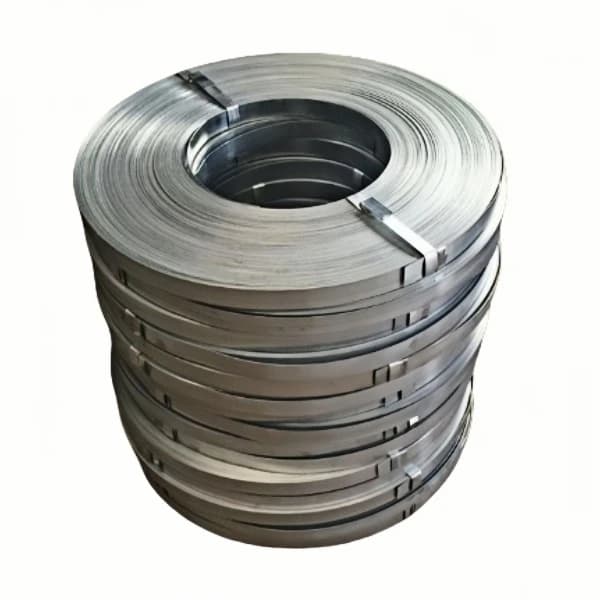
| Width | 600 mm to 1,500 mm as rolled; narrower widths down to 30 mm by slitting. Widths above 1,500 mm are not supplied. |
| Length and coil build | Supplied in coil. Coil weight and coil inner and outer diameter are confirmed at quotation; cut-to-length on request. |
| Surface | As-rolled black finish with mill scale, or pickled and oiled (HRPO). Mill scale has to be removed before welding, painting or coating. Galvanised and pre-painted coil are separate product ranges. |
| Edge | Mill edge or slit edge, to be agreed at order |
| Tolerance | EN material to the tolerance classes of EN 10051; ASTM or JIS material to the tolerance class named in the standard quoted. The tolerance class is stated on the order. |
| Certification | Mill test certificate to EN 10204 3.1; EN 10204 3.2 or third-party inspection where the purchase order specifies it |
| Third-party inspection | Available on request - inspector, test scope and witness points agreed on the order |
| Service limits | A structural and general-engineering material. Not supplied for pressure-retaining, low-temperature or sour duty; those services need a grade and design code selected for that service. |
| Chemical composition | Plain, unalloyed carbon steel. The binding maximum for each element is the one in the standard of the ordered grade, and the product analysis is reported on the mill test certificate. |
Hot Rolled Coil Grades and Minimum Yield Strength
Yield strength is usually the first grade selection figure on a coil order, and it is the figure most often compared across standards that do not compare directly. Each standard sets its own minimum at its own reference thickness. The values below are reference minimums for designations commonly supplied in hot rolled carbon steel coil; yield strength falls as thickness increases, and the certified mill test report for the ordered gauge governs:
| Grade | Standard | Minimum yield strength, reference |
|---|---|---|
| S235JR | EN 10025-2 | 235 MPa at thickness up to 16 mm, decreasing as thickness increases |
| S275JR | EN 10025-2 | 275 MPa at thickness up to 16 mm, decreasing as thickness increases |
| S355JR | EN 10025-2 | 355 MPa at thickness up to 16 mm, decreasing as thickness increases |
| A36 | ASTM A36/A36M | 250 MPa at thickness up to 203 mm; 220 MPa above 203 mm |
| A572 Grade 50 | ASTM A572/A572M | 345 MPa reference minimum for Grade 50; the standard also defines Grades 42, 55, 60 and 65 with their own thickness limits. EN S355JR is a near-equivalent, not a direct substitute. |
| SS400 | JIS G3101 | 245 MPa at thickness up to 16 mm |
| Q235 | GB/T 700 | 235 MPa up to 16 mm, reducing with thickness to about 185 MPa at 150-200 mm |
| Q355 | GB/T 1591 | 355 MPa at thickness up to 16 mm, decreasing as thickness increases |
| SPHC, SPHD, SPHE and SPHT | JIS G3131 and JIS G3132 | Commercial, drawing and tube qualities are ordered by forming class with a tensile strength range rather than a single yield minimum; confirm the class and the certified values for the ordered coil. |
Chemical composition is the other half of the specification, and it is not the same from one standard to the next. Hot rolled carbon steel coil is plain, unalloyed steel. The binding maximum for each element is the one in the standard of the ordered grade rather than a generic carbon steel range, and the product analysis is reported on the mill test certificate. Where a medium-carbon through-hardening material such as 1045 is required, that requirement belongs to a different product group and is quoted separately, not offered as another carbon steel coil grade.
Hot Rolled Compared with Cold Rolled Coil
The rolling route decides surface, gauge band, tolerances and price position, and it is the first decision on most coil enquiries. Both products start from the same low-carbon steel and both are supplied in coil, so the difference is process rather than material - which is why the route has to be stated and not inferred from the material name:
| Point | Hot rolled coil (HRC) | Cold rolled coil (CRC) |
|---|---|---|
| How it is made | Reduced above the recrystallisation temperature (900 °C and above), descaled and coiled hot | Hot rolled, pickled coil is reduced again at ambient temperature, which work-hardens it; annealing restores ductility |
| Gauge band | 1.5 mm to 12 mm | 0.3 mm to 3.0 mm |
| Surface | As-rolled with mill scale unless pickled and oiled; scaly and rougher | Smoother, cleaner and more uniform - the usual choice where appearance or a paint finish matters |
| Condition supplied | As-rolled black, or pickled and oiled (HRPO) | Annealed, annealed and skin-passed, or full hard |
| Dimensional accuracy | Looser thickness and width tolerances, with some coil set and edge irregularity | Tighter thickness tolerance and better flatness and shape |
| Strength and ductility | Lower strength, higher ductility and low internal stress | Work hardening raises strength; annealing trades strength back for formability |
| Typical use | Structural and general fabrication, roll-formed sections, tube stock, drums and welded assemblies | Appliances, enclosures, panelling, furniture, hardware parts, and the base material for coated coil |
Between 1.5 mm and 3.0 mm both the hot rolled and the cold rolled route can be supplied, so the choice is settled by surface, tolerance and cost rather than by gauge alone. State the route as well as the thickness on the enquiry: "carbon steel coil, 2 mm" is not a complete specification.
Material Characteristics
Hot rolled coil is made by reheating a slab above the recrystallisation temperature, breaking the cast structure down in a roughing mill, finishing the strip to thickness, cooling it under controlled water sprays on the run-out table and coiling it. Two consequences follow for the buyer. Descaling during rolling removes most of the furnace scale, but the strip oxidises again as it cools, so the as-rolled surface carries a mill scale layer; and because the coil is finished hot and cools freely, thickness and width tolerances are looser than cold rolled product, and some coil set, cross-bow and edge irregularity are normal. Where the scale has to go, the coil is pickled and oiled instead: pickling removes the oxide and leaves a clean, lightly oiled surface that paints, coats, laser cuts and forms more predictably than black coil, and it is the standard starting condition for cold rolling.
Forming and welding are the strengths of the route. Low-carbon hot rolled steel bends, roll-forms, slits, blanks and presses well, and its low carbon level keeps the heat-affected zone ductile, so common arc and resistance welding processes are used on normal thicknesses without preheat. That does not remove the need for a procedure: heavy gauge, highly restrained joints, low ambient temperature and high-hydrogen consumables still have to be assessed against a qualified welding procedure, and the joint faces have to be clean, dry and free of scale or oil. Forming forces, springback and minimum bend radius depend on thickness, width, strength and quality class, so heavy gauge and structural-quality coil need larger radii and more power than a drawing-quality coil of the same thickness. Machining is possible, but the soft, ductile structure gives a poorer finish than a free-cutting or medium-carbon steel.
Strength and hardness come from the analysis and the supply quality class rather than from heat treatment, because plain low-carbon steel is not a through-hardening material. Corrosion resistance is the principal limitation: unalloyed carbon steel rusts in normal atmospheric service, the risk rises with moisture, chlorides and chemical exposure, and a coating system is therefore part of the specification rather than an optional extra. Hot rolled coil is also not a pressure or low-temperature material as such - if the duty is a boiler, pressure vessel, low-temperature or sour service, the ordered grade has to be selected for it and the design code, impact test requirements and additional examination belong on the enquiry.
Applications
Hot rolled carbon steel coil is specified where ductility, weldability and material cost matter more than surface finish or corrosion resistance. Typical uses include:
- Structural and general fabrication - roll-formed sections, purlins, posts, trusses, brackets, base plates, frames, skids and supports.
- Tube, pipe and hollow sections - coil-to-tube mills, where tube quality such as SPHT has to be ordered and is not assumed from the structural grades on this page.
- Steel drums, barrels and containers - body and end stock in commercial and drawing qualities.
- Automotive and transport equipment - chassis and body components, trailer bodies, truck beds, wheel and rim blanks, and general OEM metal parts.
- Agricultural and construction equipment - implements, buckets, booms, guards and frames in structural and HSLA qualities.
- Storage, handling and general metal products - racking, shelving, cabinets, guardrails, fencing, gates, and pressed or stamped parts.
- Feedstock for further processing - pickling, cold rolling, galvanising and pre-painting lines, where hot rolled coil is the input material.
Suitability in each case depends on the grade, the quality class, the supply condition and the service environment, so the duty should be stated on the enquiry. Hot rolled carbon steel coil is not supplied as a corrosion-resistant material, and it is not a substitute for a pressure, low-temperature or weathering grade.
Ordering Information
Hot rolled carbon steel coil is quoted against the order, so the enquiry should carry the following:
- Grade and standard exactly as written on the drawing or purchase specification, including the edition where the project is registered to one, and the UNS or national designation where it helps identify the grade.
- Rolling route and supply condition - hot rolled black as-rolled, or pickled and oiled (HRPO).
- Supply quality class - commercial, drawing, structural or HSLAS - where the application depends on it.
- Thickness with tolerance, width with tolerance, and edge condition (mill edge or slit edge).
- Coil build: coil weight, inner and outer diameter, maximum lift, or the cut lengths if you want cut-to-length sheet.
- Quantity, delivery schedule, packing and destination.
- Surface requirement or coating system, and whether the coil will be processed on your line in a way that sets a surface or flatness requirement.
- Inspection and documentation: mill test certificate to EN 10204 3.1, or EN 10204 3.2 with third-party or buyer-nominated inspection - state the tests, witness points and certificate type required.
- Service conditions - indoor or outdoor, humidity, chlorides, chemical exposure, forming severity, and any welding procedure requirement.
The most common enquiry problem is a grade that exists in more than one standard, for example an A36 or Q235 designation used on a project drawn to EN requirements. Send the full specification in that case, because grades from different standards are not interchangeable and a substitution has to be reviewed against the design code rather than assumed from the grade name.
For route-specific data compare this item with the cold rolled carbon steel coil page; for grade-specific data see S355JR carbon steel coil and KA70 carbon steel coil. The wider supply group, including cold rolled and coated options, is described on the mild steel coil page, other coil materials such as the duplex steel coil range are covered separately, and the range overview is on the carbon steel coil page.