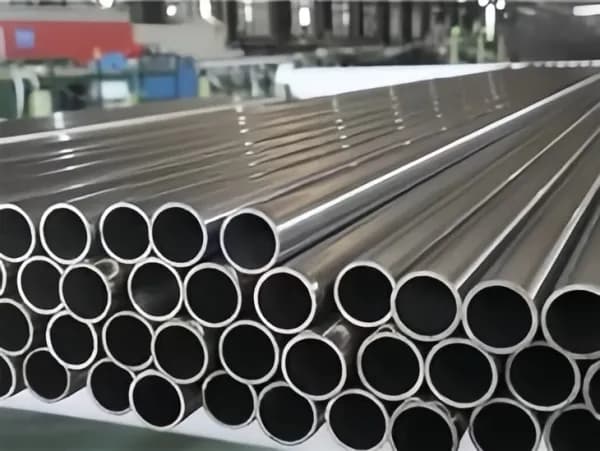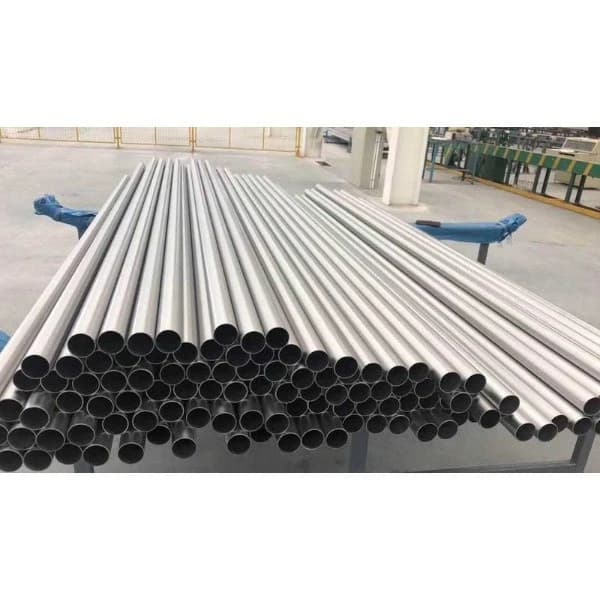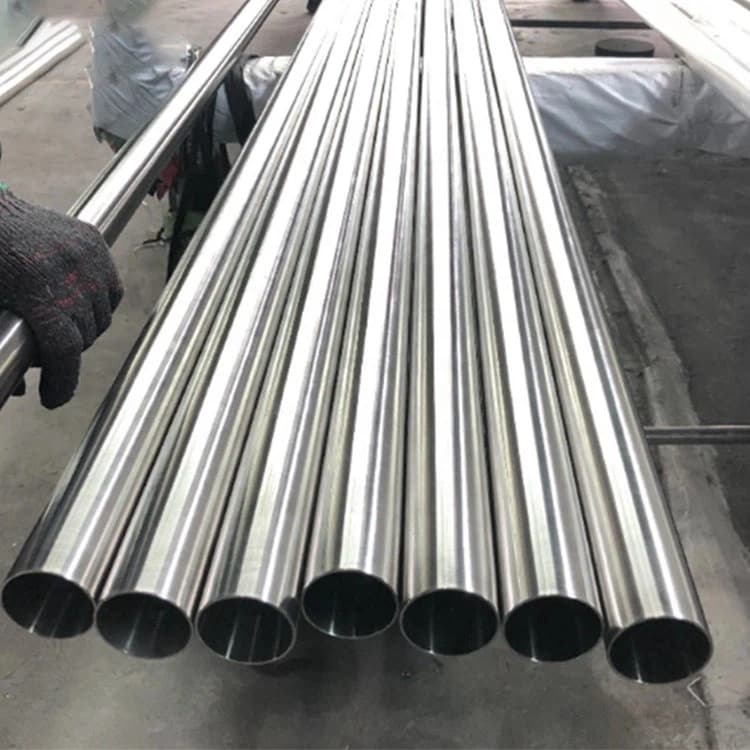
ASTM A335 is a specification for seamless ferritic alloy-steel pipe for high-temperature service. A grade such as P11 or P22 is not "alloy pipe" in general. The grade, the product form, and the delivery condition all have to be named. This page does not list chemical limits or strength values. Those belong to the current edition of ASTM A335, or to the mill certificate for the heat being offered.
Pipe, tube, and plate are different forms
The P grades in ASTM A335 are pipe. Similar chromium-molybdenum alloys also appear as tubes, forgings, fittings, and plate under other specifications. A tube grade is not an A335 pipe grade, and a flange forging is not a pipe. Ordering "P22 material" without the product form leaves the standard, dimensions, and tests undefined.
A335 pipe is seamless. Welded pipe made from plate or coil can use other specifications and is not renamed A335 because the chemistry looks similar. Heat treatment is part of the order. Normalized and tempered, annealed, and as-welded conditions are not the same product.
How the common A335 grades differ
P5, P9, P11, and P22 are older chromium-molybdenum grades used in refinery and power piping. P11 and P22 are the grades most often named for intermediate high-temperature service. P91 and P92 are later 9% chromium grades used where the design needs higher creep strength than P22. They are not upgrades that can be swapped in without a design check. Welding, preheat, and post-weld heat treatment change with the grade.
Published A335 tables list P11 and P22 at a 415 MPa minimum tensile strength and a 205 MPa minimum yield strength, and P91 at 585 MPa tensile and 415 MPa yield. Those are specification minima for the stated heat-treatment condition. Read them from the edition named on the order, not from a summary table.
Public descriptions of these grades often quote a maximum service temperature or a creep comparison. Those figures depend on the design code, stress, time, and thickness. They are not properties of the ASTM title. Ask the project for the design temperature and the code, then read the allowable stress from that code's current edition.
| Question | What to read | What this page does not set |
|---|---|---|
| Which standard? | ASTM A335, plus the edition on the order | A claim that one edition is current |
| Which grade? | P5, P9, P11, P22, P91, P92, or the grade named | A temperature at which the grade is "good" |
| Which form? | Seamless pipe, with NPS and schedule or wall | Tube, plate, or a welded substitute |
| Which condition? | The heat treatment required by the specification and the purchaser | A shop heat-treatment recipe |
What the mill certificate can prove
A mill test certificate can report the heat, the stated grade, the chemistry and mechanical results that were tested, the heat treatment recorded, and the dimensions supplied. It does not prove that a different size, a welded pipe, or a fitting from another lot meets A335. Hydrostatic or nondestructive testing applies only when the specification or the purchaser requires it, and only to the items tested.
Equivalent EN, JIS, or GB designations are a cross-reference project, not an identity. Confirm the comparison in the current standards before writing an equivalent grade on a purchase order.
What to send with the inquiry
State ASTM A335 and the grade, NPS and schedule or outside diameter and wall, length, end finish, heat treatment, and any impact, hardness, or additional testing. Say whether the design code is ASME and which edition the project uses. Quantity is an order field, not a stock promise.
The published product page for this family on this site is ASTM A335 P11 seamless Cr-Mo alloy steel pipe. P5, P22, P91, and P92 are separate grade requests. Do not read the P11 page as an offer of those grades.
- Keep pipe and tube designations apart.
- Do not copy a temperature limit from a catalog into a design.
- Ask for the current A335 edition and the certificate before accepting chemistry or strength numbers.