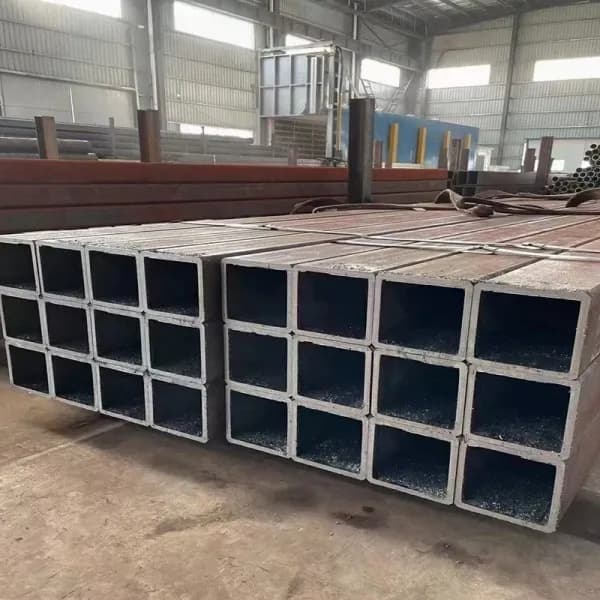
Product Description
This item is a cold-formed square hollow section. Hot-rolled steel strip is uncoiled, roll-formed into a square section at room temperature, and closed with an electric resistance weld. The "hot-rolled" in the product name describes the base steel and its surface, which is black and still carries mill scale. It does not describe how the tube is formed. Buyers use this square section for frames, columns, equipment bases, shelving, and trailer or implement structures, where a closed square carries load on both axes and gives a flat face to weld along.
Two different ASTM standards cover square structural tube and they are not interchangeable. ASTM A500/A500M is the cold-formed standard, and welded A500 tube is made from flat-rolled steel by the electric resistance welding process, which is the route used for this product. ASTM A501/A501M is the hot-formed standard: the tube is reheated over the entire cross section and formed while hot, so the corner, the residual stress, and the mechanical properties are not the same. This page covers the cold-formed route. A501 is a different production route, quoted separately when a drawing requires it, and never substituted silently for A500.
Specification Range
Read this table as the order checklist. "Default" is what the mill supplies without further comment. Anything else has to be named on the order, together with the edition of the standard.
| Item | How to specify | Status |
|---|---|---|
| Forming route | Cold-formed square tube: hot-rolled strip roll-formed and electric resistance welded | This product. The hot-rolled label names the base steel, not a hot-forming step. |
| Default standard and grade | GB/T 6728 structural cold-formed hollow sections to GB/T 6725 general requirements; steel grade Q235B or Q355B (formerly Q345B) | Standard mill supply. The stored record held only a bare standard list with no designation, so it is not published here as a conformance claim. |
| ASTM A500 route | ASTM A500/A500M, Grade B or Grade C, with the edition stated | Quoted when the order names it. Same cold-forming route, but properties and tolerances then follow the A500 tables, not the GB tables. |
| ASTM A501 | Hot-formed tubing, reheated and hot formed over the full cross section | Not this product route. Quoted separately, and only when the drawing calls for it. |
| Outside size and wall | Both outside faces and the wall, for example 200 x 200 x 12 mm | Regular square size is 20 x 20 mm to 200 x 200 mm. State both outside faces and the wall. Any other size is made to the ordered dimensions. |
| Length | Mill length or a fixed cut, for example 12,000 mm | Per order. |
| Surface | Black with mill scale, pickled and oiled, painted, or hot-dip galvanized | Black is the untreated condition. Any coating is a separate order line. |
How the Two Forming Routes Differ
A cold-formed square tube is shaped from strip at ambient temperature and then welded. The cold work raises yield strength and holds the outside size and the wall to close tolerances, and the outside corner radius stays small. A hot-formed (A501) tube is welded or seamless first, then reheated over the whole cross section and formed while hot; that removes the cold work, lowers residual stress, and leaves the larger, softer corner and the coarser surface of a hot worked product. The two can share an outside size and still not substitute for one another, because the standard, the grade, the corner, and the delivery condition all differ.
When only a photo or a mill tag is available, four points separate the routes. A cold-formed tube shows straight longitudinal roll lines along the flat faces and a small outside corner radius. A hot-formed tube shows an even hot worked oxide surface with no roll lines and a wider corner. Cold-formed tolerances are tighter. And the mill certificate names the standard, so A500 and A501 can be told apart on the document even when the section looks alike. If a drawing or a contract names A501, treat it as a different enquiry rather than an A500 order.
Material and Surface
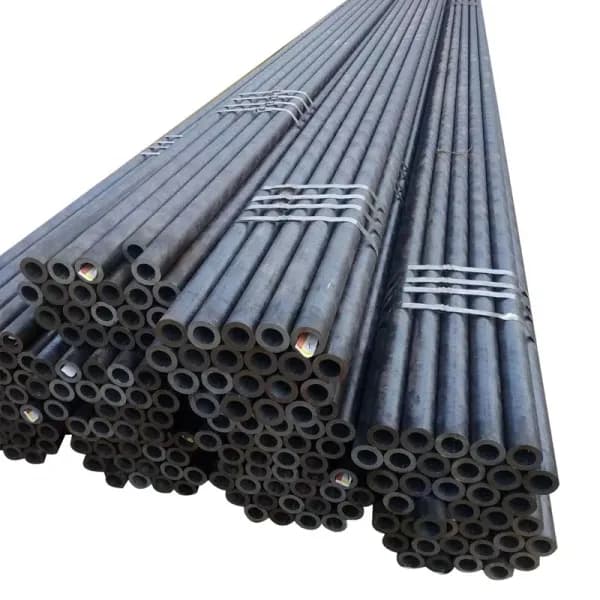
The tube is supplied black, with the mill scale from hot rolling still on the surface. The scale is a dark oxide, not a coating. It protects the steel in dry storage and it comes off during fabrication. Bending, flattening, expanding, and swaging flake it, and paint or powder coating will not hold on scale that is still attached, so those jobs need the scale removed first, by pickling, blasting, or an equivalent clean. Pickled and oiled square tube is the same hot-rolled steel after the scale has been taken off and a light oil applied, so it can enter a paint line without an acid bath at the coater. The oil is a temporary rust preventive, not a corrosion system.
Bare carbon steel is not corrosion resistant. Once the scale is broken the surface will rust, so an outdoor or wet service needs a coating written into the specification. Hot-dip galvanizing, paint, and powder coating are available as order options. No coating mass, salt-spray result, or service life is stated here, because none of those is a fixed property of the tube alone. Weld procedure, impact requirements, and corner-radius limits belong on the order as well, not in a general description of the section.
Applications
Structural frames, building columns, equipment skids, conveyor supports, racking, and trailer or implement frames are the usual work for cold-formed square tube. The closed square gives a clean outside face and a predictable weld path along a flat side, and the size is easy to cut and join on site. It is a poor choice where the drawing calls for a round pressure pipe, a boiler tube, a spiral duct, or a solid bar. Those are different products under different standards.
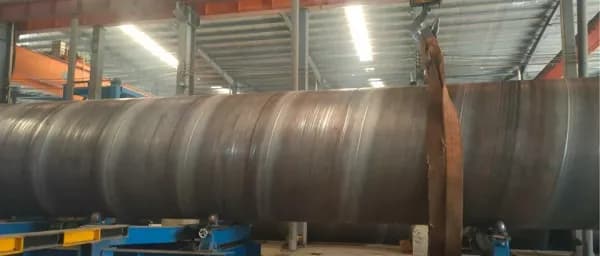
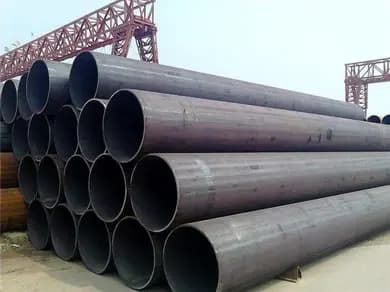
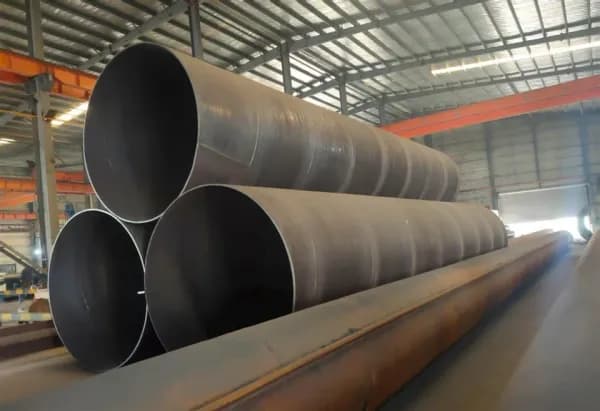
This category also lists round carbon steel pipe, including carbon steel line pipe and spiral steel pipe. Those pages are for round welded pipe and not for square tube, and the section on the drawing decides between them. The parent range is carbon steel pipe.
Ordering Information
Send the outside size, the wall, the length, and the quantity. Name the standard and the grade: GB/T 6728 with Q235B or Q355B, or ASTM A500/A500M with Grade B or Grade C and the edition. Then add the surface, black, pickled and oiled, painted, or hot-dip galvanized, plus the end condition, any corner-radius limit, and the test report the project needs. That list is enough to quote from. Stock, lead time, and coating life are not stated on this page, because they change with the size and the finish.
Common Questions about Hot-Rolled Square Tubing
Is this square tube hot formed or cold formed?
Cold formed. The tube is roll-formed from hot-rolled steel strip at room temperature and closed with an electric resistance weld. "Hot-rolled" describes the base steel and its black, scaled surface. It does not mean the tube was formed hot.
Should I order to ASTM A500 or to ASTM A501?
ASTM A500 for this product. A500 is the standard for cold-formed welded and seamless carbon steel structural tubing, which is the route used here. A501 covers hot-formed tubing, where the full cross section is reheated and hot formed, so it is a different product route. If a drawing names A501, treat it as a separate enquiry.
Which grade can I order?
On the GB route, Q235B or Q355B, the grade that replaced Q345B in GB/T 1591-2018. On the ASTM route, A500 Grade B or Grade C, with the edition named on the order. A strength figure taken from one grade is not the rating of every size on this page.
Why is the surface dark and scaly?
The base steel is hot rolled and not pickled, so the mill scale is still on the tube. Scale flakes when the tube is bent, flattened, or swaged, and it has to come off before painting, powder coating, or galvanizing. Ask for pickled and oiled material when the next step is a coating line.
What do I need to send for a quotation?
Outside size x wall x length and the quantity; the standard and grade, either GB/T 6728 with Q235B or Q355B, or ASTM A500/A500M Grade B or Grade C with the edition; the surface condition; and any test report the project requires.