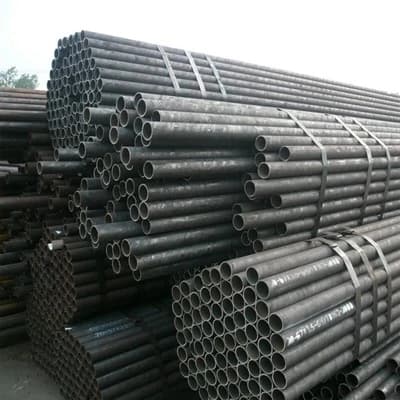
Product Description
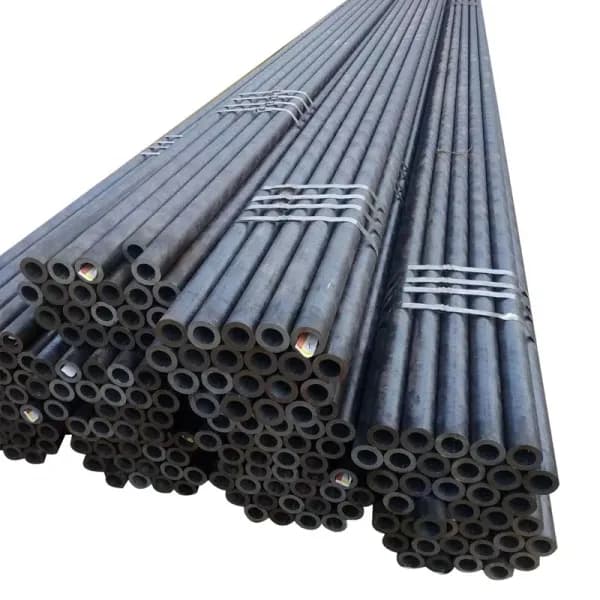
Carbon steel hydraulic tubing is used for rigid, fixed fluid-power lines that connect pumps, valves, actuators, cylinders and other hydraulic components. The tubing route, dimensions and condition must be matched to the governing equipment specification and the system design rather than selected from a generic pipe range.
Common product routes include seamless cold-drawn tubing and electric-resistance-welded tubing that is subsequently cold worked and heat treated for forming performance. SAE J524 and SAE J525 are widely used route-specific references, but the purchaser should state the exact standard and revision required. The presence of a standard number does not by itself establish a pressure rating for every size.
Specifications
Outside diameter runs from 6 mm to 630 mm and wall thickness from 1 mm to 100 mm. The wall depends on the outside diameter, so the two ends of those ranges are not one tube. State the outside diameter and the wall together.
| Item | Order requirement |
|---|---|
| Product form | Straight carbon steel tubing for fixed hydraulic or fluid-power lines |
| Manufacturing route | Seamless cold-drawn or welded/cold-drawn route, as specified |
| Reference standards | SAE J524 for a common seamless route; SAE J525 for a common welded route; confirm the required revision |
| Dimensions | Outside diameter 6 mm to 630 mm; wall thickness 1 mm to 100 mm, matched to that outside diameter; plus tolerance and cut length |
| Condition | State annealed or normalized condition and forming requirements |
| Surface | State internal cleanliness, external finish and corrosion protection |
| Ends | State cut/deburr requirements and whether ends must be protected or capped |
| Testing | Specify dimensional, surface and pressure/leak-integrity tests required by the ordered standard |
| Documentation | State inspection certificate, test report and traceability requirements |
Material Characteristics
Hydraulic tubing is selected for controlled dimensions, consistent wall, a clean flow path and the ability to bend or flare without unacceptable cracking. Reference product pages for hydraulic tubing consistently emphasize smooth internal surfaces, uniform wall thickness and forming performance. These are procurement criteria, not proof that an unspecified tube is suitable for a particular circuit.
Carbon steel is strong and economical for many indoor or controlled industrial environments, but it is not inherently corrosion resistant. Fluid compatibility, external moisture, chemical exposure and storage conditions must be reviewed. A coating or plated finish should be specified only when it is compatible with the hydraulic fluid, fittings and cleanliness requirements.
Pressure and System Selection
Maximum allowable pressure is a design result, not a universal material property. It depends on outside diameter, minimum wall, material strength at temperature, manufacturing route, tolerance, connection method, corrosion allowance, fatigue duty and the governing code or equipment specification. Working and surge pressure must both be supplied for review.
Rigid tubing is generally preferred for fixed runs, while a purpose-designed hydraulic hose may be needed where movement, vibration isolation or complex routing requires flexibility. Do not use general rubber hose, plumbing tube or galvanized pipe as an automatic substitute for hydraulic tubing.
Applications
Typical applications include fixed fluid lines on hydraulic cylinders and actuators, industrial automation, machine tools, agricultural equipment, construction machinery and other stationary or mobile fluid-power assemblies. Suitability remains subject to pressure, temperature, fluid compatibility, routing, vibration and corrosion conditions.
This page is intentionally limited to hydraulic fluid-line tubing. Boiler tube, heat-exchanger tube, structural tube and oil-and-gas line pipe have different standards and design bases; compare them only when the project specification calls for those distinct products. Related published pages include carbon steel boiler tubes and carbon steel line pipe.
Ordering Information
For a quotation, provide the required standard and revision, seamless or welded route, outside diameter, wall thickness, cut length, quantity, material condition, surface/finish, bend or flare requirements, hydraulic fluid, maximum working and surge pressure, design temperature, connection method, end protection, testing, inspection documents and delivery requirements.
Frequently Asked Questions
Should I specify seamless or welded hydraulic tubing?
Use the manufacturing route required by the design code or equipment specification. SAE J524 is commonly associated with seamless, cold-drawn, annealed low-carbon tubing, while SAE J525 covers welded low-carbon hydraulic tubing. Substitution requires engineering approval.
Does every outside diameter come in every wall thickness?
No. The supply covers outside diameters from 6 mm to 630 mm and walls from 1 mm to 100 mm, and the wall depends on the outside diameter. State both, with the pressure, temperature, fluid, routing and connection, so the size can be checked against the selected standard.
Does the tube have a universal pressure rating?
No. Pressure capability must be calculated or taken from an approved design table for the exact size, minimum wall, material condition, route, temperature and connection system.
When should another material be considered?
Consider a compatible corrosion-resistant material or an engineered protective system when the line is exposed to moisture, marine conditions or chemicals that carbon steel cannot tolerate.
What details are required for a quotation?
Send the standard, route, OD, wall, length, quantity, condition, finish, forming requirements, fluid, pressure, temperature, connection method, testing and documentation requirements.