Product Description
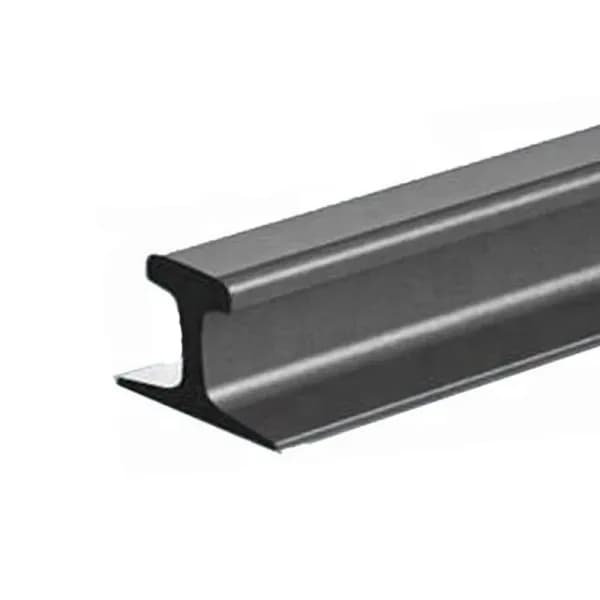
Heavy and light steel rail is a hot-rolled steel section that guides flanged wheels and carries wheel load into the sleepers and track bed. Order it by rail section, nominal weight, steel grade, and cut length. A light section and a heavy section are not two finishes of the same bar.
Use a light section for temporary haulage, mine, forest, factory, and construction track. Use a heavy tee-rail section for main line, industrial, and export railway track when the ordered section is at least 60 lb/yd (29.8 kg/m). A crane runway needs its own section. Do not substitute a railway tee rail for a crane rail, or the reverse, unless the drawing names that section.
Heavy Rail, Light Rail, and Crane Rail
Weight per metre is the usual commercial split, not a measure of axle load by itself. In Chinese and many export catalogues, light rail is the group at or below 30 kg/m, and heavy rail is the group above 30 kg/m. That split is a buying label. It is not the scope sentence of ASTM A1.
ASTM A1/A1M covers carbon steel tee rails of nominal weight 60 lb/yd (29.8 kg/m) and over for railway track, including export and industrial applications. The current store listing reviewed on 30 September 2026 is A1-00(2026), active, last updated 23 February 2026. Rails may be furnished as-rolled, head-hardened, or fully heat treated only when the order says so. Supplementary requirements apply only when the purchaser writes them into the order. The full chemical and hardness tables are in that standard, so they are not reprinted here as guaranteed values.
Sections lighter than that A1 threshold are still real rail. They are ordered by their own section name and standard, commonly for temporary or light industrial track. Crane rail is a different profile: a lower height, a wider head, and a thicker web, made to support a slow, heavy crane wheel rather than a railway vehicle. ASTM A759 covers special-design carbon steel crane rails from 104 lb/yd (51.6 kg/m) through 175 lb/yd (86.8 kg/m) for crane runway use. Its own text says that a standard tee-rail section, when that is what the runway actually requires, is ordered to ASTM A1 instead.
| Group | What it is | Typical duty | What to name on the order |
|---|---|---|---|
| Light rail | Hot-rolled tee rail at or below 30 kg/m in common export lists | Temporary haulage and light industrial track | Section such as 15 kg, 22 kg, or 30 kg, plus the stated standard and length |
| Heavy rail | Heavier tee rail. ASTM A1 starts at 60 lb/yd (29.8 kg/m) and over | Railway main line, industrial, mining, and export track | Section such as 115RE or UIC60, steel grade, heat-treatment class, and length |
| Crane rail | Special runway profile, not a railway tee rail. ASTM A759 spans 104–175 lb/yd | Overhead, gantry, and floor-mounted crane runways | Crane-rail designation such as a DIN 536 A-type section, not a railway section of similar weight |
Material and Section
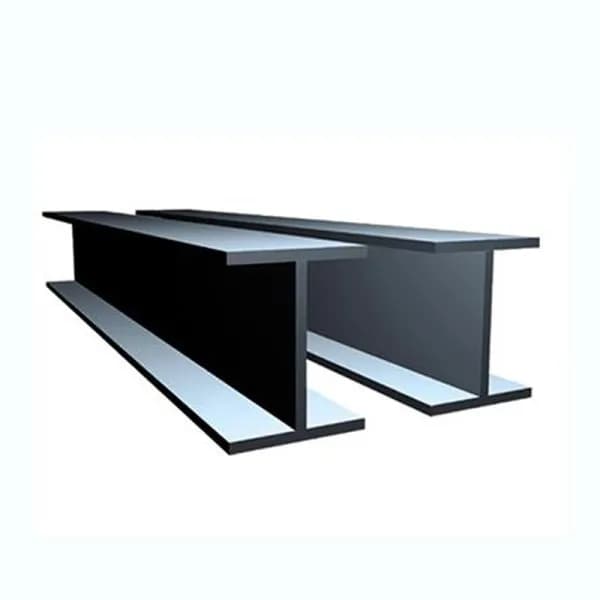
Railway rail is produced as a rolled section with a head, web, and foot. The head takes wheel contact. The web and foot spread the load into the fastening and sleeper. Profile and steel grade have to be read together: two sections with the same nominal weight can still have different head widths and fishing heights, so they do not share joints, plates, or clips.
Do not treat this bar as plate that is plasma-cut, furnace-formed, and ground into a sliding strip. That route describes a machined slide, not a rail section. Rail straightness, end squareness, and drilling, when required, follow the rail standard and the drawing. A phosphate dip, a fixed sliding-face width, or a conveyor-belt standard does not define this product.
DIN 15232 is not a rail standard. It classifies bulk-material continuous-handling equipment by construction and is outside the scope of a wheel-bearing rail. An order that asks for a sliding track, a belt-conveyor bed, or a linear guide should be quoted as that product, not relabelled as heavy or light rail.
Applications
Light sections are used where the axle load is low and the line may be moved: forest and mine spurs, plant yards, and construction haul roads. Heavy tee-rail sections are used on permanent railway and industrial track once the section, grade, and fastening are matched to the vehicle. Crane-rail sections are used only on crane runways in ports, workshops, and stockyards.
Track gauge, ballast, slab track, and the number of parallel lines are civil design choices. They are not properties of the rail bar. A rail section can be fastened on more than one gauge, and the same section can sit on ballasted track or on a direct-fixation slab. State the gauge and the support only when they change the drilling, the cant, or the fastening.
This page does not cover rail clips, fishplates, pads, sleepers, turnouts, or used rail lifted from another line. Those items change the joint design and the remaining head wear, and they need their own identification.
Ordering Information
A usable enquiry names the section and the standard before it names a length. Add the steel grade or strength class, whether the rail is as-rolled or heat treated, the quantity in pieces or tonnes, the cut length, drilling, end preparation, and any required test documents. If the duty is a crane, say so and send the wheel load and runway section. If the duty is railway track, say whether the section is light or heavy and which standard controls it.
Length is confirmed per order. A published catalogue range is not a stock promise, and a length that suits one section can be impractical for another. Heat treatment, end hardening, and supplementary tests are included only when the purchase order requires them.
Purchasing Questions
Is heavy rail the same product as light rail?
No. Both are hot-rolled tee rail, but they are ordered as different sections. Export lists usually call rail at or below 30 kg/m light rail and rail above 30 kg/m heavy rail. ASTM A1 applies to carbon steel tee rails of 60 lb/yd (29.8 kg/m) and over. Give the section name, not only the words heavy or light.
Can a railway rail be used as a crane rail?
Only when the drawing specifies a tee-rail section for that runway. Crane rail has a different head and web. ASTM A759 covers special crane-rail designs from 104 lb/yd (51.6 kg/m) to 175 lb/yd (86.8 kg/m), and it points buyers back to ASTM A1 when a standard tee rail is actually required. A similar weight does not make the profiles interchangeable.
Why is DIN 15232 not listed for this rail?
DIN 15232 covers the construction of continuous bulk-handling equipment. It does not set the profile, chemistry, or strength of a railway rail or a crane rail. A previous description mixed that equipment class, and a formed sliding face, into this product. Those requirements are not accepted as rail acceptance criteria.
What should the enquiry include?
Send the section, the controlling standard, the steel grade, the heat-treatment class if any, the length, the quantity, drilling or joining requirements, and the service: railway track, temporary haulage, or crane runway. Without the section and standard, a length and a weight class are not enough to quote.
Do you publish chemical limits or a stock length?
No. Chemical composition and hardness belong to the edition of the standard named on the order, and they change with grade and heat treatment. Cut length is confirmed for the section being bought. Stock tonnage, a fixed delivery day, and a free-replacement rule are not part of this product record.