Hot Rolled Steel Channel: What This Page Covers
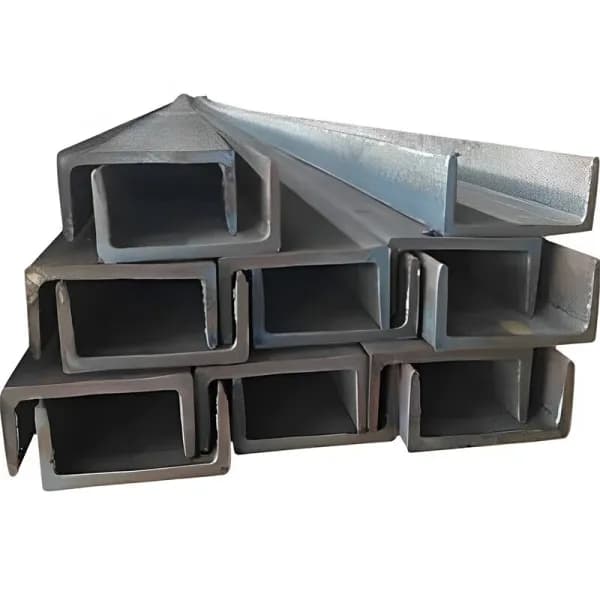
This page covers hot rolled steel channel, the open section also traded as "U channel" or "C channel", rolled with a sloped inner flange face to GB/T 706-2016 and supplied either in mill finish or hot-dip galvanized. The Chinese series is written with a bracket: [10 is a channel 100 mm deep, and [20a, [20b and [20c are three different weights of the same 200 mm depth. The range runs from [5 (50 mm high x 37 mm flange x 4.5 mm web, 5.44 kg/m) up to [40c (400 mm high x 104 mm flange x 14.5 mm web, 71.49 kg/m).
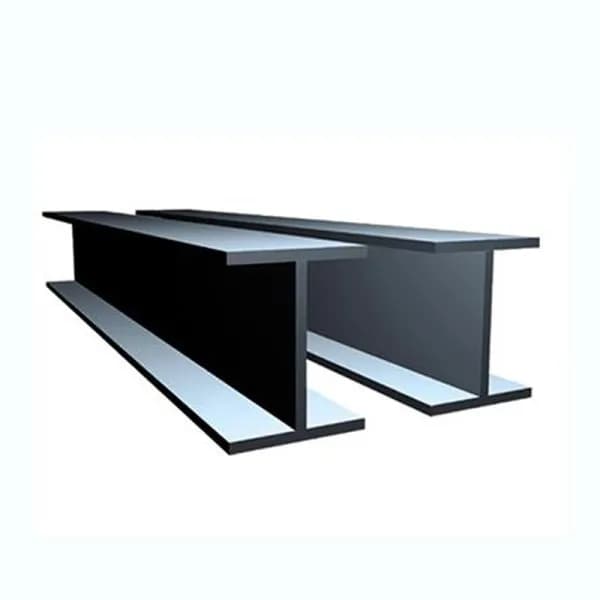
Standard supply is Q235B to GB/T 700-2006 or Q355B / C / D to GB/T 1591-2018, in the as-rolled condition. Q460 and stainless 304 / 316L channels are separate made-to-order families: they are not rolled to the GB/T 706-2016 dimensional table, so they should be quoted separately and not read off the table below. A channel is an open single-web section, efficient in bending about its major axis but weak in torsion, so most projects use it for secondary members such as purlins, girts, bracing, rails, frames and equipment supports, while primary columns and long-span beams normally go to a closed or doubly symmetric section such as H-shaped steel.
Size Range and Theoretical Mass
The table below is the GB/T 706-2016 hot rolled channel series. Dimensions are nominal and the masses are theoretical at a steel density of 7.85 g/cm³; the mass of a delivered lot is checked against the ±5 % mass tolerance of the same standard. Confirm the a / b / c suffix before ordering. The three versions share one height but differ in flange width and web thickness, and therefore in capacity, so they cannot be swapped on a drawing.
| Designation | Height h | Flange b | Web d | Theoretical mass |
|---|---|---|---|---|
| (mm) | (mm) | (mm) | (kg/m) | |
| [5 | 50 | 37 | 4.5 | 5.438 |
| [6.3 | 63 | 40 | 4.8 | 6.634 |
| [6.5 | 65 | 40 | 4.3 | 6.51 |
| [8 | 80 | 43 | 5.0 | 8.045 |
| [10 | 100 | 48 | 5.3 | 10.007 |
| [12 | 120 | 53 | 5.5 | 12.06 |
| [12.6 | 126 | 53 | 5.5 | 12.318 |
| [14a | 140 | 58 | 6.0 | 14.535 |
| [14b | 140 | 60 | 8.0 | 16.733 |
| [16a | 160 | 63 | 6.5 | 17.240 |
| [16b | 160 | 65 | 8.5 | 19.752 |
| [18a | 180 | 68 | 7.0 | 20.174 |
| [18b | 180 | 70 | 9.0 | 23.000 |
| [20a | 200 | 73 | 7.0 | 22.637 |
| [20b | 200 | 75 | 9.0 | 25.777 |
| [22a | 220 | 77 | 7.0 | 24.999 |
| [22b | 220 | 79 | 9.0 | 28.453 |
| [24a | 240 | 78 | 7.0 | 26.90 |
| [24b | 240 | 80 | 9.0 | 30.60 |
| [24c | 240 | 82 | 11.0 | 34.40 |
| [25a | 250 | 78 | 7.0 | 27.410 |
| [25b | 250 | 80 | 9.0 | 31.335 |
| [25c | 250 | 82 | 11.0 | 35.260 |
| [27a | 270 | 82 | 7.5 | 30.80 |
| [27b | 270 | 84 | 9.5 | 35.10 |
| [27c | 270 | 86 | 11.5 | 39.30 |
| [28a | 280 | 82 | 7.5 | 31.427 |
| [28b | 280 | 84 | 9.5 | 35.823 |
| [28c | 280 | 86 | 11.5 | 40.219 |
| [30a | 300 | 85 | 7.5 | 34.50 |
| [30b | 300 | 87 | 9.5 | 39.20 |
| [30c | 300 | 89 | 11.5 | 43.90 |
| [32a | 320 | 88 | 8.0 | 38.083 |
| [32b | 320 | 90 | 10.0 | 43.107 |
| [32c | 320 | 92 | 12.0 | 48.131 |
| [36a | 360 | 96 | 9.0 | 47.814 |
| [36b | 360 | 98 | 11.0 | 53.466 |
| [36c | 360 | 100 | 13.0 | 59.118 |
| [40a | 400 | 100 | 10.5 | 58.928 |
| [40b | 400 | 102 | 12.5 | 65.208 |
| [40c | 400 | 104 | 14.5 | 71.488 |
Some designations carry a single figure (10, 12, 12.6, 16 and so on) and have no a / b / c variants; 6.5 is a light version of 6.3. If the drawing quotes a designation that is not in the table, send the drawing rather than a description: several mill variants of this series exist and the one that matters is the one on the section list.
Channel, UPN and C-Section Are Not Interchangeable
Buyers routinely substitute a Chinese channel, a European UPN and a US C-shape on a drawing that quotes the same nominal depth. They are different sections: flange width, web thickness, unit mass and section properties all differ, and the mass gaps below are not cosmetic because they change the capacity of the member. The table puts the three systems side by side at roughly 100 mm and roughly 200 mm depth.
| System | Designation | Height x flange x web | Unit mass |
|---|---|---|---|
| (mm) | (kg/m) | ||
| GB/T 706-2016 (China) | [10 | 100 x 48 x 5.3 | 10.007 |
| EN 10365 UPN (Europe) | UPN 100 | 100 x 50 x 6.0 | 10.6 |
| ASTM A6 / A6M C-shape (US) | C4 x 5.4 | 102 x 40 x 4.7 | 8.0 |
| GB/T 706-2016 (China) | [20a | 200 x 73 x 7.0 | 22.637 |
| EN 10365 UPN (Europe) | UPN 200 | 200 x 75 x 8.5 | 25.3 |
| ASTM A6 / A6M C-shape (US) | C8 x 11.5 | 203 x 57 x 5.6 | 17.1 |
Each system names a channel on the same principle but writes it differently. China uses a bracket plus height x flange width x web thickness, shortened to [20a. Europe uses UPN plus the depth in millimetres, with UPE for the parallel-flange version and PFC for the British parallel-flange channel. The US writes C plus depth in inches x mass in lb/ft, for example C10 x 15.3. All three are hot rolled with inclined flanges, and EN 10365 sets the UPN taper at 8 % for sections up to 300 mm deep and 5 % above that, but the taper values and flange widths are not identical between the systems, so any substitution should go back through whoever did the structural calculation.
Steel Grades and Mechanical Properties
The values below are the minimum requirements of the material standards for thickness up to 16 mm, which covers the full channel range in practice. They are material properties rather than a rating for a member; the capacity of the installed member still comes from its section properties and the design code the project uses.
| Grade | Material standard | Min. yield ReH | Tensile Rm | Min. elongation A | Impact test | Nearest European grade |
|---|---|---|---|---|---|---|
| (MPa) | (MPa) | |||||
| Q235B | GB/T 700-2006 | 235 | 370-500 | 26 % | +20 °C | S235JR |
| Q355B | GB/T 1591-2018 | 355 | 470-630 | 22 % | +20 °C | S355JR |
| Q355C | GB/T 1591-2018 | 355 | 470-630 | 22 % | 0 °C | S355J0 |
| Q355D | GB/T 1591-2018 | 355 | 470-630 | 22 % | -20 °C | S355J2 |
| Q460 | GB/T 1591-2018 | 460 | 550-720 | 17 % | by grade (C / D / E) | S460 |
Two points that decide orders. First, Q345 is no longer a current grade: GB/T 1591-2018 replaced it with Q355, and the substitution runs in one direction only, so an old Q345 requirement can be supplied with Q355 but a Q355 order must not be dropped into a design calculated for the older grade without re-checking it. Second, the letter suffix is a toughness class and not a strength class: B is impact tested at +20 °C, C at 0 °C and D at -20 °C, so a cold-store or winter-exposed project should not be quoted on Q235B or Q355B alone. Maximum content is C 0.20 %, Si 0.35 %, Mn 1.40 %, P 0.045 %, S 0.045 % for Q235B, and C 0.24 %, Si 0.55 %, Mn 1.60 %, P 0.035 %, S 0.035 % for Q355B, with Nb / V / Ti microalloying permitted by the standard.
Dimensional Tolerances and Delivery Condition
Channels are supplied in the as-rolled condition to the dimensional tolerances of GB/T 706-2016. The table gives the deviation limits for height, flange width and web thickness, together with the straightness and mass limits from the same standard. Because mass is allowed to move ±5 % against the theoretical value, channel is normally priced on theoretical mass and settled on the weighbridge.
| Dimension | Range | Permissible deviation |
|---|---|---|
| Height h | h < 100 mm | ±1.5 mm |
| Height h | 100 ≤ h < 200 mm | ±2.0 mm |
| Height h | 200 ≤ h < 400 mm | ±3.0 mm |
| Flange width b | h < 100 mm | ±1.5 mm |
| Flange width b | 100 ≤ h < 150 mm | ±2.0 mm |
| Flange width b | 150 ≤ h < 200 mm | ±2.5 mm |
| Flange width b | 200 ≤ h < 300 mm | ±3.0 mm |
| Flange width b | 300 ≤ h < 400 mm | ±3.5 mm |
| Web thickness d | h < 100 mm | ±0.4 mm |
| Web thickness d | 100 ≤ h < 200 mm | ±0.5 mm |
| Web thickness d | 200 ≤ h < 300 mm | ±0.7 mm |
| Web thickness d | 300 ≤ h < 400 mm | ±0.8 mm |
| Camber (straightness) | per metre, and total | ≤ 3 mm per m, and ≤ 0.30 % of length |
| Mass | lot of one size | ±5 % against theoretical mass |
Length is a separate agreement. 6 m, 9 m and 12 m are the standard commercial lengths, and cut and multiple lengths are normal; confirm them on the order. Lengths over 12 m are a separate transport arrangement. Channels are supplied bare (mill finish with rolling scale), primed or hot-dip galvanized; shot-blasted supply is a separate instruction and is not assumed.
Surface Finish and Corrosion Protection
Bare channel develops surface rust in ordinary outdoor exposure, because plain carbon steel is not a weathering steel. The coating is therefore part of the specification rather than an accessory. Two routes exist and they should not be quoted against each other: hot-dip galvanizing of the finished channel, specified to ISO 1461, with GB/T 13912-2020 as the Chinese equivalent and ASTM A123 in North America; and continuously galvanized strip in Z-coatings to EN 10346, which belongs to cold-formed U sections made from coated coil. ISO 1461 excludes continuously galvanized products from its scope, and the two coatings differ by an order of magnitude in thickness.
For batch hot-dip galvanizing the requirement is set by the thickness of the steel, and both a minimum average and a minimum local value apply, so a single low reading fails the lot rather than being averaged away.
| Steel thickness | Minimum local coating | Minimum average coating |
|---|---|---|
| over 6 mm | 70 µm (505 g/m²) | 85 µm (610 g/m²) |
| over 3 mm up to 6 mm | 55 µm (395 g/m²) | 70 µm (505 g/m²) |
| 1.5 mm up to 3 mm | 45 µm (325 g/m²) | 55 µm (395 g/m²) |
Galvanizing is carried out after cutting and punching, so the ends and hole walls are coated as well; where the channel is welded, the welding comes first and the heat-affected zone is re-coated or accepted as a repair area. Coating mass is verified gravimetrically to ISO 1460 or GB/T 1839 and coating thickness on site by the magnetic method of ISO 2178. Tell us the exposure class and the standard, not simply "galvanized": the three standards behind that word carry three different acceptance tests.
Where Channel Steel Is Used
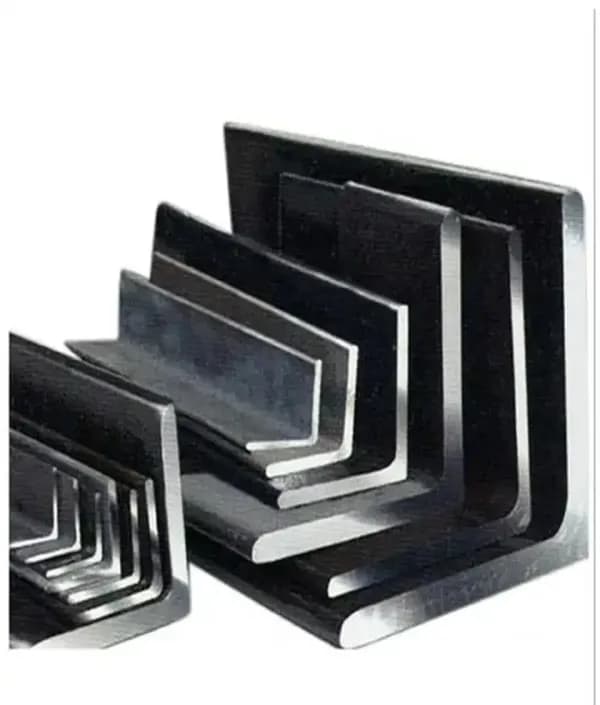
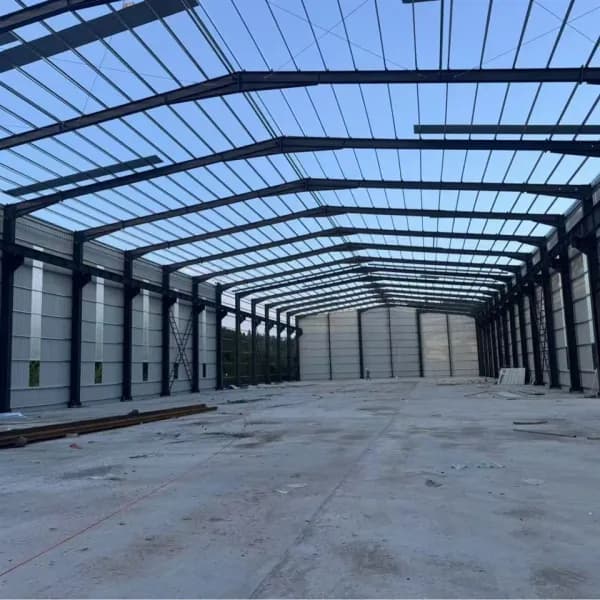
Channel is chosen wherever a flat, bolt-friendly, open section is more useful than a closed tube: roof and wall purlins and girts, bracing and struts, mezzanine and platform framing, equipment and machine bases, conveyor and racking frames, cable tray and pipe supports, trailer and chassis members, and edge trim on fabricated sections. In steel buildings it is normally a secondary member, and in fabricated steel structures it is often the member everything else bolts to, because the open web lets a spanner in. Where a brace carries tension in both directions, angle iron usually works out cheaper per unit of capacity than channel.
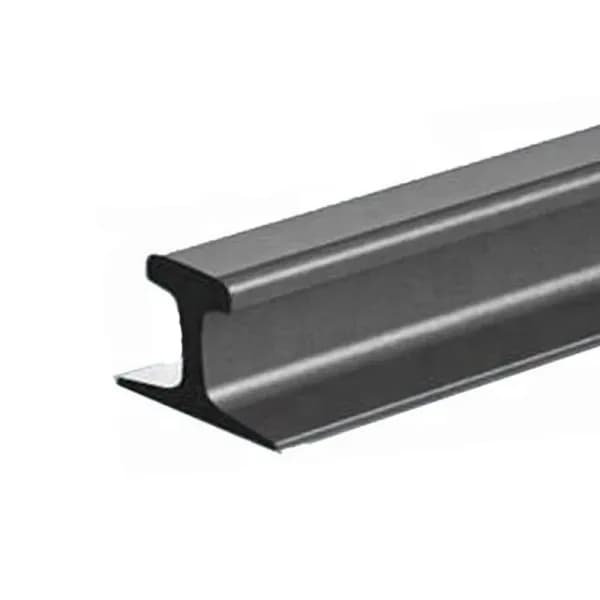
Two limits are worth stating plainly. Channel is not a pressure part and no pipe standard covers it. And bare carbon channel is not corrosion resistant: for coastal, chemical or wet-process environments the coating has to be specified, and for severe service a stainless or aluminium section is a different conversation. The full shaped steel range, including H sections, angles and rails, is listed under our shaped steel category, and this channel sits in the channel steel group.
Fabrication and Connection Notes
Channel is cut with a band saw, abrasive saw or plasma, punched or drilled, and welded with ordinary carbon steel procedures; Q235B and Q355B at these thicknesses need no preheat. The sloped inner face is the detail that catches people out. GB/T 706-2016 covers channels with a slope on the inner face of the flanges, and the European UPN series is defined with an 8 % taper, so a plain washer under a bolt head or nut does not sit flat on the flange. Use a tapered washer, seat the fastener on the web instead, slot the hole, or weld a flat cleat. The same taper makes the flange thinner at the tip than at the root, so a bolt placed near the tip in a calculated connection should be checked at the thickness that is actually there.
Because the web is a flat plate it is the natural place to hang services or bolt a bracket, and the open profile lets you use a standard bolt rather than a blind fixing. If the connection has to be slip-critical, fatigue-loaded or exposed, the taper and the mill scale both need to be dealt with in the surface preparation rather than assumed away.
Ordering Information
To quote a channel order we need the designation or the three dimensions (height x flange width x web thickness), the grade with its toughness class (Q355D rather than "Q355"), the length and whether it is a fixed length or a multiple, the surface (bare, primed, hot-dip galvanized to ISO 1461 or GB/T 13912, or painted), the quantity in pieces or tonnes, and any certificate, marking or third-party inspection requirement. For a structure, the section list or the drawing is faster and more accurate than a description, because it removes the a / b / c ambiguity that causes most re-quotes on this product. Surface condition, end squareness and packing are confirmed on the order acknowledgement, and job-specific tolerances can be agreed in writing where the standard limits above are not tight enough.
Common Questions about Hot Rolled Channel
Is this hot rolled channel or cold formed U channel?
This page is hot rolled channel to GB/T 706-2016, rolled from a billet with inclined flanges; you can see the taper in the section photos. Cold-formed U sections are a different product: they are roll-formed from galvanized or cold-reduced strip, typically 0.8-6 mm thick, with parallel flanges, and they are covered by a different standard family (EN 10162, ASTM A1003, GB/T 6723) with much thinner walls. Asking only for "U channel" will get one or the other depending on the supplier, so state the process and the standard as well as the shape.
Can a GB 20# channel be replaced by a UPN 200 or a C8 x 11.5?
Not directly. All three are about 200 mm deep but they are not the same section: [20a is 200 x 73 x 7.0 mm at 22.64 kg/m, UPN 200 is 200 x 75 x 8.5 mm at 25.3 kg/m, and C8 x 11.5 is 203 x 57 x 5.6 mm at 17.1 kg/m. Flange width, web thickness and mass all differ, so the section modulus differs and the capacity worked out for one is not valid for another. Give us both designations and the drawing, and have the substitution checked by whoever did the structural calculation.
Why do the flanges have a slope, and does it matter?
Hot rolled channels are rolled with tapered flanges: GB/T 706-2016 covers channels with a sloped inner flange face, EN 10365 defines the UPN taper at 8 % up to 300 mm depth and 5 % above it, and the US C-shape taper is steeper at about 16 2/3 %. It matters at the bolt, because a plain washer cannot sit flat on the flange: use a tapered washer, bolt through the web, slot the hole or weld a flat plate. It also means the flange is thinner at its tip than at its root.
What documentation is supplied with the channel?
At minimum an inspection certificate covering chemical composition and mechanical properties for the heat, referenced to GB/T 700-2006 or GB/T 1591-2018 as applicable. Tell us up front if you need EN 10204 3.1 or 3.2 format, a named third-party inspection, heat traceability through the cut pieces, or a galvanizing report to ISO 1461 with the coating mass readings: these are order conditions and are not added after production.
What length and tolerances should I specify?
Specify the fixed length you need rather than a range. Standard commercial lengths are 6 m, 9 m and 12 m, and cut lengths are normal. The dimensional, straightness and mass tolerances then follow GB/T 706-2016 as tabulated above. Lengths over 12 m change the transport arrangement, so confirm packing when you ask for a price.