Product Description
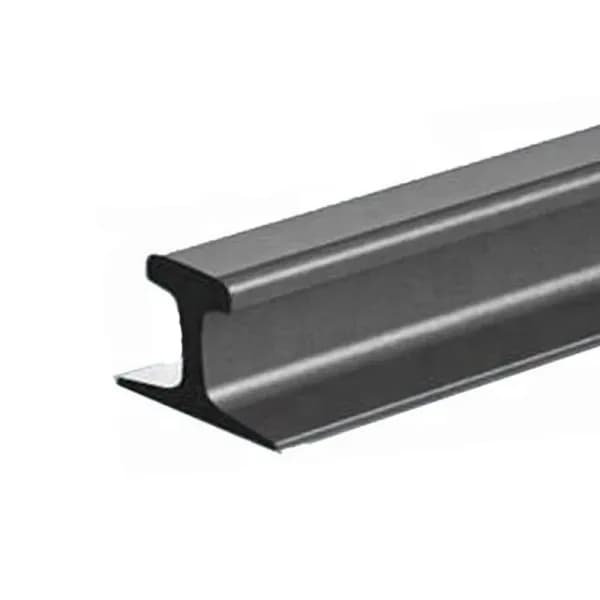
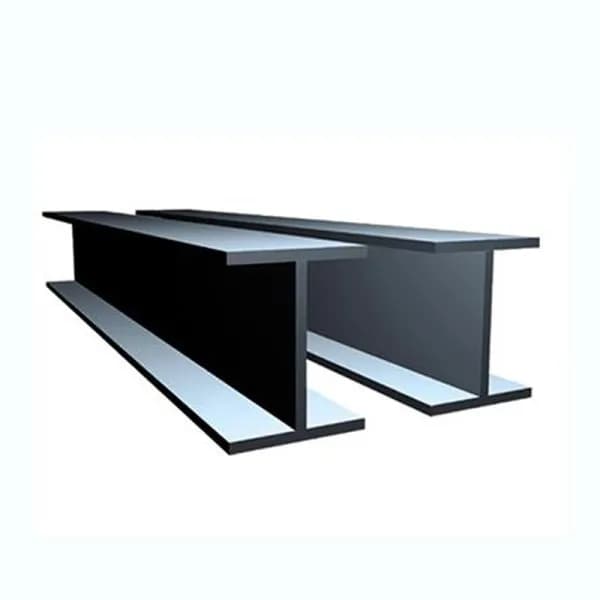
H-shaped steel 250x250 is the hot-rolled wide-flange H-section whose section height and flange width are both 250 mm. In the rolled-section tables it is the 250 x 250 x 9 x 14 mm section: a 9 mm web, 14 mm flanges and a theoretical mass of 71.8 kg/m to GB/T 11263 or 72.4 kg/m to JIS G3192. It is produced to GB/T 11263-2024 (the current Chinese edition, in force since 1 May 2025, which replaced GB/T 11263-2017) and can be supplied and inspected against EN 10034 dimensions and tolerances, JIS G3192 section tables, or the US W-shape system under ASTM A6/A6M.
Both flange faces are parallel and the leg ends are square, so the section works equally well as a column and as a beam, and cleats and end plates sit flat against the flange without the packing wedges a tapered-flange I-beam needs. Because the flange width equals the section height, the 250 x 250 section is one of the standard choices where bending stiffness is needed about both axes - building columns, heavy machinery frames and short-span heavily loaded beams.
Grades are quoted from the structural steel standards: Q235B and Q355B to GB/T 700 and GB/T 1591, S235JR to S355J2 to EN 10025-2, SS400 and SM490 to the JIS G3101 / G3106 system. Grade, length, surface and documentation are confirmed per order - send the section designation, grade and cut lengths with your inquiry.
Section Designations Inside the 250 x 250 Class
A call-out of "250 x 250" does not by itself identify one rolled section. In the GB/T 11263 tables the 250 mm class contains three rolled sections, and only the middle one actually measures 250 x 250 mm:
| Section (H x B x tw x tf) | H x B (mm) | Web tw (mm) | Flange tf (mm) | Corner radius r (mm) | Area (cm2) | Mass (kg/m) |
|---|---|---|---|---|---|---|
| 244 x 252 x 11 x 11 | 244 x 252 | 11 | 11 | 13 | 81.31 | 63.8 |
| 250 x 250 x 9 x 14 | 250 x 250 | 9 | 14 | 13 | 91.43 | 71.8 |
| 250 x 255 x 14 x 14 | 250 x 255 | 14 | 14 | 13 | 103.9 | 81.6 |
The three sections share the same nominal call-out but differ by about 28 % in mass, so a purchase order that says only "H-shaped steel 250x250" cannot be quoted unambiguously. Order by the full designation - H x B x web thickness x flange thickness - and, if your drawing still uses an old HW / HM / HN label, read it against the current section table: the 2024 edition of GB/T 11263 re-coded the series (H for the general series and HK for the extended series, with T for split tees), while the older HW/HM/HN designations remain the common trade usage. The a/b/c suffixes seen in older tables belong to the previous editions.
Two mass figures circulate for the 250 x 250 x 9 x 14 section: 71.8 kg/m in the GB/T 11263 tables and 72.4 kg/m in the JIS G3192 tables. Both are correct - they are theoretical masses, and the difference comes from the corner radius used in the area calculation (13 mm in the GB/T table, 16 mm in the JIS table). Delivered mass is governed by the weight tolerance of the standard named on the order, which is +/- 4 % of the calculated mass under EN 10034, so confirm the applicable standard when converting a length into freight weight.
For the 250 x 250 x 9 x 14 section the nominal geometric properties are: cross-sectional area 91.43 cm2, moment of inertia about the major axis 10 689 cm4, elastic section modulus 855 cm3, radius of gyration 10.81 cm, moment of inertia about the minor axis 3 648 cm4, elastic section modulus 292 cm3 and radius of gyration 6.32 cm. These are nominal values calculated from the nominal dimensions; for design work take the section property table from the current edition of the standard that governs your project.
Standards and Dimensional Tolerances
An H-section order is governed by two families of standards: the section standard, which fixes the rolled dimensions, shape and tolerances, and the material standard, which fixes the chemical and mechanical requirements. The table below maps the standards most often requested for this section:
| Standard | What it governs for this section |
|---|---|
| GB/T 11263-2024 | Hot rolled H and cut T section steel - section dimensions, shape and tolerances; current edition, replaced GB/T 11263-2017 on 1 May 2025 |
| EN 10034 | Tolerances on dimensions and shape of hot rolled structural steel I and H sections |
| EN 10025-2 | Hot rolled products of structural steels - technical delivery conditions for non-alloy structural steels (S235 to S355) |
| JIS G3192 | Dimensions, mass and permissible variations of hot rolled steel sections |
| JIS G3101 / JIS G3106 | Rolled steels for general structure (SS400) / rolled steels for welded structure (SM490) |
| GB/T 700 / GB/T 1591 | Carbon structural steels (Q235) / high strength low alloy structural steels (Q355) |
| ASTM A6/A6M | General requirements for rolled structural steel bars, plates, shapes and sheet piling - the dimensional system behind the US W-shapes |
| ASTM A992/A992M | Structural steel shapes - the standard W-shape grade (50 ksi minimum yield) |
Dimensional acceptance is easiest to state through EN 10034. For this section the applicable bands are:
| Dimension | Band | Tolerance |
|---|---|---|
| Section height h = 250 mm | 180 < h ≤ 400 | +4.0 / -2.0 mm |
| Flange width b = 250 mm | 210 < b ≤ 325 | +4.0 / -4.0 mm |
| Web thickness s = 9 mm | 7 ≤ s < 10 | +/- 1.0 mm |
| Flange thickness t = 14 mm | 10 ≤ t < 20 | +2.5 / -1.5 mm |
| Mass | per piece or per lot | +/- 4.0 % of the calculated mass (density 7.85 kg/dm3) |
| Length | standard mill lengths | -0 / +100 mm (cut lengths per order) |
Notes on reading the table: flange thickness is measured at a distance of b/4 from the flange edge; out-of-squareness of the flange is limited to 2 % of the flange width (maximum 6.5 mm for this size); straightness is limited to 0.15 % of the length for sections in the 180 to 360 mm height band. Where the Chinese or Japanese standard is named instead of EN 10034, ask for the tolerance clause of that named edition - the bands are similar but not identical, and the 2024 edition of GB/T 11263 additionally introduced a web-waviness tolerance.
Material Grades and Mechanical Requirements
The grades below are the ones normally rolled for this section. The 9 mm web and 14 mm flange both fall inside the thinnest thickness band of every standard, so the values quoted are the t ≤ 16 mm requirements:
| Grade | Standard | Minimum yield (t ≤ 16 mm) | Tensile strength | Impact requirement |
|---|---|---|---|---|
| Q235B | GB/T 700 | 235 MPa | 370-500 MPa | 27 J at +20 °C |
| Q355B | GB/T 1591 | 355 MPa | 470-630 MPa | 34 J at +20 °C |
| SS400 | JIS G3101 | 245 MPa | 400-510 MPa | not required |
| SM490 | JIS G3106 | 325 MPa | 490-610 MPa | A: not required; B/C: 27 J at 0 °C |
| S235JR / J0 / J2 | EN 10025-2 | 235 MPa | 360-510 MPa | 27 J at +20 / 0 / -20 °C |
| S275JR / J0 / J2 | EN 10025-2 | 275 MPa | 410-560 MPa | 27 J at +20 / 0 / -20 °C |
| S355JR / J0 / J2 | EN 10025-2 | 355 MPa | 470-630 MPa | 27 J at +20 / 0 / -20 °C |
Two points are worth checking before you fix a grade. First, yield requirements derate as thickness grows in the EN and GB systems, so a 355 MPa figure is a t ≤ 16 mm figure and not a blanket value across all member sizes. Second, the nearest US shape (W10x49: 253.5 mm deep, 254 mm flange, 8.6 mm web, 14.2 mm flanges, 49 lb/ft = 72.9 kg/m) is close to this section in depth and flange thickness, but its web is thinner and the rolled geometry differs, so it is not a drop-in substitute - check the actual shape against the ASTM A6/A6M tables, and specify ASTM A992 (50 ksi / 345 MPa minimum yield with a yield-to-tensile ratio of 0.85 or less) where a US W-shape grade is required.
Hot-Rolled H-Section or Welded H-Beam?
This page is a hot-rolled section: the H shape leaves a universal rolling mill as one piece, with the corner radii and dimensions of the rolled table. A welded (fabricated) H-beam is built up from a web plate and two flange plates, and it can be made in almost any size - which is why fabricated-beam listings quote capability ranges such as "thickness 4.5-36 mm", "flange width 75-400 mm" or "web depth 100-900 mm". Those ranges describe a fabrication capability, not a rolled section.
The earlier version of this page carried the same confusion: a "thickness 3-35 mm" line and a "size made according to customer needs" line sat next to a hot-rolled section designation, and both have been removed. For 250 x 250 x 9 x 14 the thicknesses are fixed at 9 mm (web) and 14 mm (flange); there is no thickness range to quote. If your drawing needs a different combination - for example a 250 mm square section with a 12 mm web - that is either a welded beam or a custom rolled specification, and it has to be quoted as a separate item, not as this section.
Surface Condition and Corrosion Protection
Three surface routes are normal for this section. As-rolled ("black") is the mill surface with rolling scale, used where the beam will be painted or enclosed after fabrication. Shot-blasted and primed prepares the surface for a topcoat system. Hot-dip galvanizing after fabrication is the durable option for external or corrosive service, and it has its own acceptance standard rather than being a generic "zinc coating":
| Steel thickness at galvanizing | Minimum local thickness | Minimum mean thickness | Governing standard |
|---|---|---|---|
| > 6 mm (this section: web 9 mm, flange 14 mm) | 70 μm | 85 μm | EN ISO 1461 / GB/T 13912 |
| > 3 mm to ≤ 6 mm (cut edges and thin attached parts) | 55 μm | 70 μm | EN ISO 1461 / GB/T 13912 |
| ≥ 6.4 mm structural sections (US practice) | - | about 100 μm average (grade 100) | ASTM A123 |
Two scope points matter when you write a specification. EN ISO 1461 and GB/T 13912 apply to articles that are galvanized after fabrication, which is the normal route for structural sections; they do not apply to continuously galvanized sheet, wire or mesh, nor to tube galvanized on automatic lines (the tube route is EN 10240), and fasteners are covered by their own standards. In the North American system the after-fabrication route is ASTM A123, whose minimum average coating for sections of this thickness is higher than the ISO figure, so the two are not interchangeable in a specification. Coating growth also depends on the silicon content of the steel, so state the coating class, the governing standard and the inspection method in the purchase order instead of simply asking for "galvanized".
Typical Applications
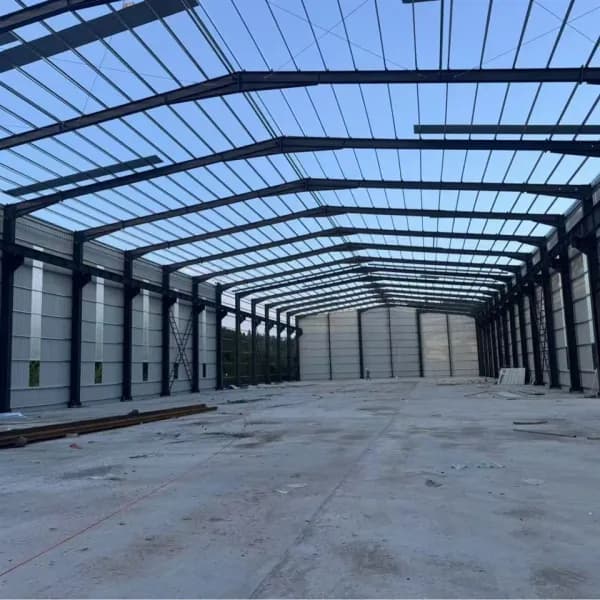
The 250 x 250 wide-flange section is used where a balanced section is needed in both bending directions: columns and core columns in building frames, crane and equipment support frames, industrial plant structures, bridge components, machinery bases, transport equipment frames and foundation piling. In the Chinese section system this size belongs to the wide-flange group, which is why it appears most often as a column rather than as a long-span floor beam.
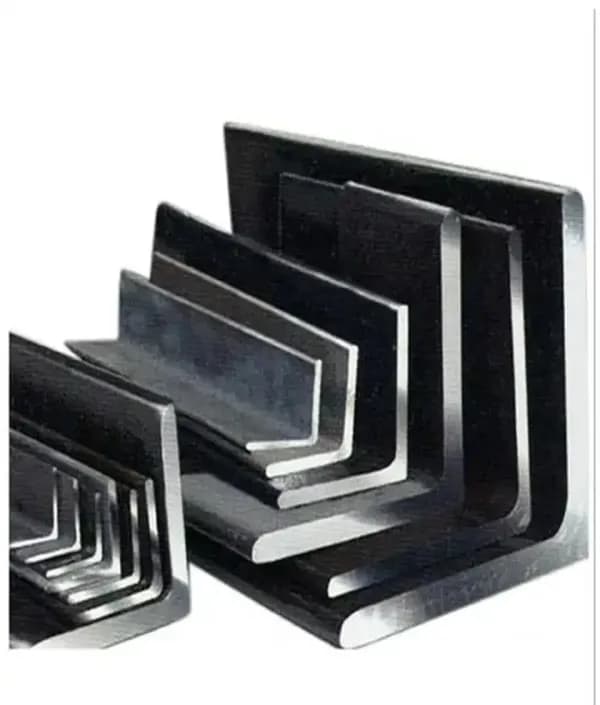
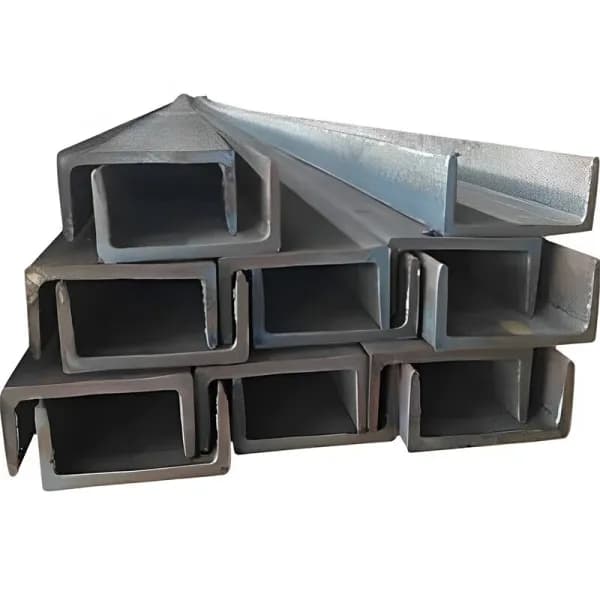
Adjacent products in the same shaped-steel family are covered on their own pages: see the H Shaped Steel category overview, steel angle irons, channel steel and custom steel buildings in Q235B and Q355B steel where a complete fabricated structure rather than a rolled section is required.
Ordering Information
To quote this section accurately, please send:
- Section designation as H x B x web x flange (for example 250 x 250 x 9 x 14 mm) - not just "250x250"
- Grade and material standard: Q235B / Q355B, S235JR to S355J2, SS400 / SM490, or a W-shape grade if a US route is required
- Which edition of the section standard your project calls up (GB/T 11263-2024, EN 10034, JIS G3192)
- Lengths: standard mill lengths with 12 m as the common production length, cut lengths in the 6-12 m range per order
- Surface: as-rolled, shot-blasted and primed, or hot-dip galvanized with the coating standard and class named
- Documentation: EN 10204 type 2.2 or 3.1 mill certificate or the equivalent, and any additional inspection you require
- Quantity, destination port and delivery requirements
Mill documentation and any supplementary inspection (for example ultrasonic or magnetic-particle examination agreed as an order requirement) are confirmed per order. The member design itself is governed by the structural code of your project - for example EN 1993, AISC 360 or GB 50017 - and the section properties above are input data for that check, not a load-carrying statement.
Common Questions about H-Shaped Steel 250 x 250
Which section do I actually get when I order "H-shaped steel 250x250"?
One of three rolled sections, depending on which table your supplier is working from: 244 x 252 x 11 x 11 (63.8 kg/m), 250 x 250 x 9 x 14 (71.8 kg/m) or 250 x 255 x 14 x 14 (81.6 kg/m). This page is the 250 x 250 x 9 x 14 section. Always order by the full designation and confirm it against your drawing, because the three sections differ by about 28 % in mass and the heavier ones will change your tonnage, your connections and your freight cost.
Why do data sheets show 71.8 kg/m and 72.4 kg/m for the same 250 x 250 x 9 x 14 section?
Because the two figures come from different standards' section tables: 71.8 kg/m from GB/T 11263 (13 mm corner radius) and 72.4 kg/m from JIS G3192 (16 mm corner radius). The larger radius adds cross-sectional area, and mass follows area. Both are theoretical values; the delivered mass is accepted within the weight tolerance of the standard on the order, +/- 4 % of the calculated mass under EN 10034.
Is this a hot-rolled section or a welded H-beam - and can you supply other thicknesses such as 3-35 mm?
It is hot-rolled, so the web and flange thicknesses are fixed by the section: 9 mm and 14 mm. A "3-35 mm" or "4.5-36 mm" thickness range belongs to welded, fabricated H-beams, which are built up from plate and can be made to any combination. If you need a non-standard thickness combination, tell us the required web and flange thicknesses and we will quote it as a welded item or as a custom rolled specification rather than as this section.
What corrosion protection should I specify - is a "zinc coating" enough?
Specify the process, not just the word. For hot-dip galvanizing after fabrication the acceptance route is EN ISO 1461 or GB/T 13912, which for steel over 6 mm thick requires a mean coating of at least 85 μm and a local minimum of 70 μm; for US projects ASTM A123 applies with a higher minimum average. Continuously galvanized sheet and automatic-line galvanized tube are governed by different standards, so they are not substitutes here. Coating thickness also depends on the steel's silicon content, so name the coating class, standard and inspection method on the order. A plain as-rolled or blasted-and-primed surface is normal where the member will be painted or enclosed.
Is H-shaped steel the same as an I-beam?
No. An H-section has parallel flange faces of constant thickness and square leg ends, and its flange width can equal the section height; a rolled I-beam has tapered flanges and is rolled to a different table of sizes with different connection practice. They are not interchangeable members, and substitution has to be checked by section properties, not by nominal depth. That is also why the tolerance and material standards are quoted separately for each form.