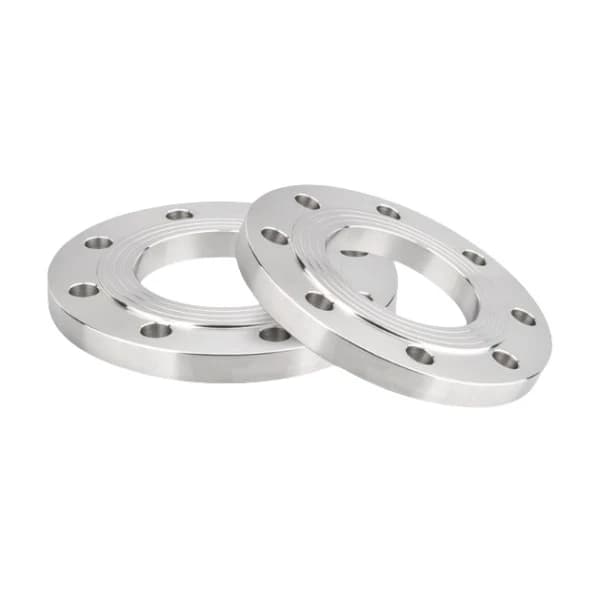
Product Overview
Duplex steel flanges S32760 are super duplex stainless steel flanges in UNS S32760, supplied as forgings to ASTM A182 grade F55 (ASME SA-182 F55) with dimensions to ASME B16.5 and B16.47. The grade combines a ferritic and austenitic duplex structure with 24.0-26.0% chromium plus molybdenum, nitrogen, tungsten and copper, which places its pitting resistance equivalent, PREN, at 40 or above. The specified minimum tensile strength is 750 MPa (109 ksi) with a 0.2% proof strength of 550 MPa (80 ksi) - roughly twice the minimum yield of standard austenitic flange grades such as A182 F304 or F316L.
That combination - high strength and chloride pitting, crevice and stress corrosion resistance in one material - is why S32760 flanges are specified for seawater cooling lines, desalination brine circuits, offshore manifolds and aggressive chemical duties where standard duplex 2205 or austenitic grades reach their limits. Actual performance always depends on the medium, temperature, velocity and design details, so the figures on this page are the specified or producer-published values for the material, not a guarantee for a specific installation.
Material Designation and Equivalents
The table below collects the designation systems you may meet on drawings, enquiries and mill certificates for this grade. Always confirm the UNS number on the certificate rather than relying on a trade name alone.
| Designation system | Value for this grade |
|---|---|
| UNS | S32760 |
| W.Nr. / EN material number | 1.4501 |
| EN designation | X2CrNiMoCuWN25-7-4 |
| ASTM flange / forging standard | ASTM A182 grade F55 (ASME SA-182 F55) |
| Related ASTM forms | A240 plate, A479 / A276 bar, A789 / A790 pipe and tube, A815 fittings, A890 / A995 castings |
| Trade name | Zeron 100 (originator Rolled Alloys) |
Two supplier-side confusions are worth naming. First, material number 1.4410 belongs to the 25Cr grade without tungsten and copper (the S32750 / 2507 family); the correct number for S32760 is 1.4501 - some supplier tables print both against this grade. Second, ASTM A790 is the seamless and welded pipe standard; it does not cover flanges. If a quotation or certificate for flanges cites A790 as the material standard, ask which document actually governs the forging before comparing offers.
Chemical Composition and Mechanical Properties
The composition limits below follow the producer data sheets for UNS S32760 compiled against ASTM A182 grade F55 (weight percent). ASTM A240 is the plate and sheet specification and is not the acceptance basis for these forged flanges. Producer-internal typical ranges are slightly tighter in places; the acceptance basis is the revision of ASTM A182 / ASME SA-182 shown on the mill test report for the forging heat, not a plate table.
| Element | wt% (heat analysis) |
|---|---|
| Carbon (C) | 0.030 max |
| Manganese (Mn) | 1.00 max |
| Silicon (Si) | 1.00 max |
| Phosphorus (P) | 0.030 max |
| Sulfur (S) | 0.010 max |
| Chromium (Cr) | 24.0 - 26.0 |
| Nickel (Ni) | 6.0 - 8.0 |
| Molybdenum (Mo) | 3.0 - 4.0 |
| Copper (Cu) | 0.50 - 1.00 |
| Tungsten (W) | 0.50 - 1.00 |
| Nitrogen (N) | 0.20 - 0.30 |
| Iron (Fe) | balance |
The tensile, proof and elongation figures below are the values commonly specified for solution-annealed ASTM A182 grade F55 forgings and bar (the current edition is ASTM A182/A182M-24). They are not taken from the ASTM A240 plate table. Confirm them against the mill test report for the forging heat before treating any number as the acceptance value for a shipment. Hardness on that report is the forging result; 28 HRC is the NACE MR0175 / ISO 15156 sour-service cap, not an A240 plate listing.
| Property | Value | Basis |
|---|---|---|
| Tensile strength | 750 MPa (109 ksi) min | ASTM A182 grade F55 forging / bar minimum; confirm on the heat MTR. Not an ASTM A240 plate value |
| 0.2% proof strength | 550 MPa (80 ksi) min | ASTM A182 grade F55 forging / bar minimum; confirm on the heat MTR. Not an ASTM A240 plate value |
| Elongation | 25% min | ASTM A182 grade F55 forging / bar minimum; confirm on the heat MTR. Not an ASTM A240 plate value |
| Hardness | 270 HBW max on the forging; 28 HRC max where NACE MR0175 / ISO 15156 sour service is specified | Forging hardness from the heat MTR to ASTM A182 grade F55. The 28 HRC cap is the NACE sour-service limit, not an ASTM A240 plate listing |
| Density | 7.8 g/cm³ | producer reference value |
If a datasheet quotes tensile values well above 750 MPa as the "strength" of the grade, check whether it is quoting a typical range or an EN 10088-3 band instead of the specified ASTM minimum; only the minimum is contractually binding.
Dimensional Standards and Pressure Classes
Flange dimensions and pressure classes for this grade follow the same framework as any forged pipe flange - the material standard does not set dimensions. The scope boundaries below matter when you size an order.
| Standard | Scope for flanges | Notes |
|---|---|---|
| ASME B16.5 | NPS 1/2 - 24 | Class 150, 300, 400, 600, 900, 1500, 2500; Class 2500 stops at NPS 12 |
| ASME B16.47 | NPS 26 - 60 | Series A and Series B are separate dimension sets and do not interchange |
| EN 1092-1 | PN-rated series | state the PN rating and facing (e.g. type B1) at enquiry |
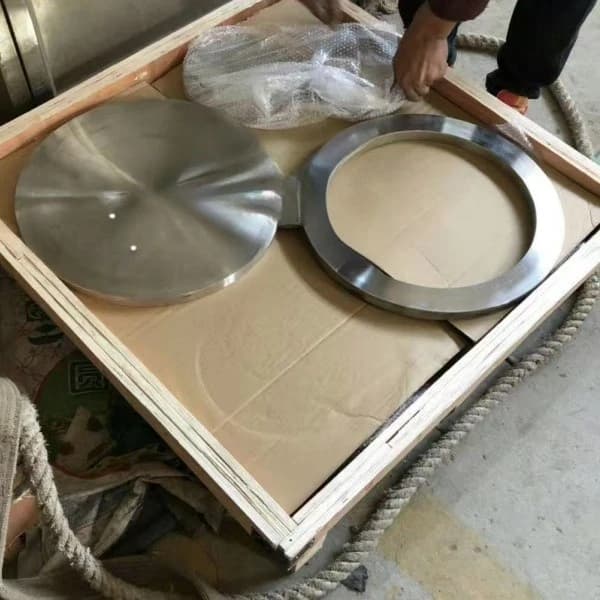
| ASME B16.48 | spectacle blinds, spacers and line blanks | separate line items, not standard flanges |
The Class number is a rating designation, not a pressure in psi. Working pressure for a given Class follows the ASME B16.5 pressure-temperature tables for the applicable material group at the design temperature, so two flanges of the same Class can carry different allowable pressures. State the design temperature with the enquiry so the rating can be checked rather than assumed. Raised face height also changes with Class (1.6 mm on Class 150 and 300, 6.4 mm on Class 400 and above), so flanges of the same size but different Class are not dimensionally interchangeable.
Flange Types and Facings
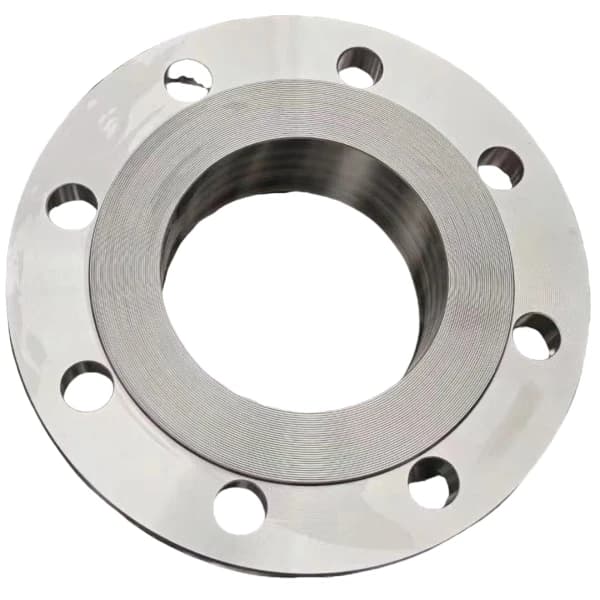
S32760 flanges are produced across the standard forged types; the connection style, not the alloy, decides which type fits your line.
| Type | Connection | Typical use |
|---|---|---|
| Weld neck (WN) | butt weld | main pressure piping, high integrity joints |
| Slip-on (SO / SORF) | fillet weld | lower-stress utility lines |
| Socket weld (SW) | fillet weld, small bore | small diameter lines |
| Threaded (THD) | screwed, NPT / BSPT per order | where welding is impractical |
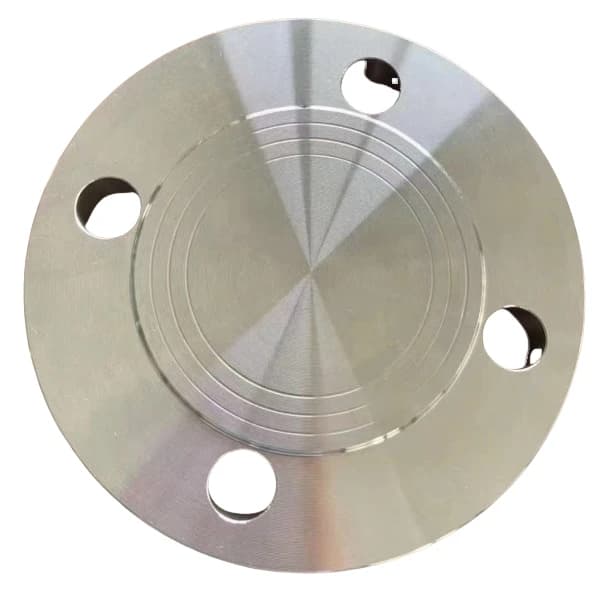
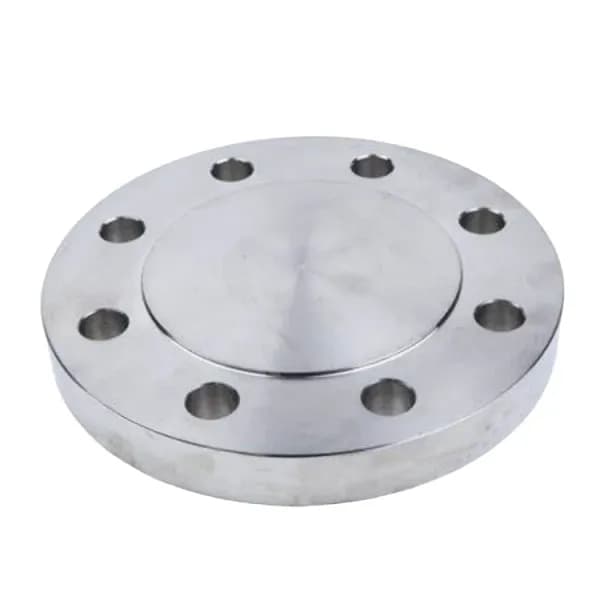
| Blind (BL) | none, closes the end | line ends, test headers, future tie-ins |
| Lap joint (LJ) | with stub end | systems needing frequent dismantling |
| Reducing | welded, size transition | diameter change at a flanged joint |
Facings are raised face (RF), flat face (FF) and ring type joint (RTJ); male-female and tongue-and-groove facings are made to drawing. For seawater service the facing finish and gasket choice matter as much as the alloy - state both when you ask for a quotation.
Corrosion Performance and Service Limits
The corrosion capability of S32760 rests on its alloy balance: chromium 24.0-26.0%, molybdenum 3-4%, tungsten 0.5-1% and nitrogen 0.20-0.30%. The producer data sheets publish PREN = %Cr + 3.3 × %Mo + 16 × %N, giving a value of 40 or above, and a critical pitting temperature above 50 °C for the wrought product. The copper addition improves resistance in non-oxidizing acids such as sulfuric acid, and the dual-phase structure gives chloride stress corrosion cracking resistance that austenitic grades cannot match. The grade is listed in NACE MR0175 / ISO 15156 for sour service, subject to the environment-specific restrictions of that standard, and appears in producer listings for API 6A wellhead equipment and API 5LC coiled tubing applications.
Two service limits deserve attention. First, duplex and super duplex grades lose toughness after extended exposure at elevated temperature through embrittlement mechanisms centred on 475 °C; the originator's guidance is not to use the grade for extended exposure above 315 °C (600 °F). Second, the pressure-temperature rating of a flange falls as temperature rises, so the Class must be checked at the actual design temperature using the applicable ASME B16.5 table, not at ambient conditions.
Welding, Fabrication and Heat Treatment
Flanges are supplied in the solution annealed condition with rapid cooling; the exact thermal cycle should be confirmed on the mill test certificate. Welding is routine for this grade but must follow a qualified procedure: balanced heat input and interpass temperature control, and filler chosen per the qualified WPS - commonly overalloyed nickel-base filler wires of the producer's recommended type (for example Zeron 100X) or matching 25Cr fillers. Corrosion acceptance tests such as ASTM G48 ferric chloride pitting tests, ferrite counts and intergranular checks are performed by agreement and stated on the order. Machined faces and grooves should be protected during handling and transport; state any NDE requirement (for example ultrasonic examination of the forging) at quotation stage so it is planned rather than improvised.
Applications
S32760 flanges are specified where chloride exposure, mechanical load or both exceed what standard duplex and austenitic grades can carry. Typical duties include offshore oil and gas wellhead and manifold piping including sour service lines, subsea tie-ins, seawater cooling and firefighting systems, desalination plants - especially high-salinity brine outfalls - chemical and petrochemical plant handling sulfuric and organic acids, flue gas desulfurization circuits, pulp and paper bleaching lines, marine and shipbuilding piping, and power station cooling water systems. In each case suitability depends on the actual medium, temperature, velocity and design code; the application list reflects where the grade is habitually selected, not a promise for every condition within those industries.
How S32760 Compares with Other Grades
Buyers shortlisting flange materials usually compare S32760 against standard duplex 2205, its super duplex sibling S32750, and austenitic 316L. The table positions the grades; the linked pages carry each grade's own detail.
| Grade | UNS / standard | Position versus S32760 (F55) |
|---|---|---|
| Duplex 2205 | S31803 / A182 F51 | standard 22Cr duplex, lower PREN and lower alloy cost; the economical choice for moderate chloride duty - Duplex 2205 flanges |
| Super duplex 2507 | S32750 / A182 F53 | same 25Cr super duplex family but without tungsten and copper, W.Nr 1.4410; similar pitting class, different crevice and acid behaviour - S32750 flanges |
| Super duplex family | several grades | for the family overview and grade selection logic see super duplex steel flanges |
| 316L austenitic | S31603 / A182 F316L | a 170 MPa (25 ksi) minimum yield for A182 F316L against the 550 MPa minimum and much lower chloride pitting resistance; adequate for mild duty |
| A694 grade F60 | carbon steel pipeline flange | an entirely different material - the "F60" of A694 is a carbon steel line pipe flange grade, not a duplex grade: A694 F60 flange |
| S31803 blind flange | S31803 | for standard-duplex blind flanges in stock form see S31803 blind flange |
None of these grades is a drop-in replacement for another. Equal dimensions do not mean equal performance: verify the corrosion requirement, design temperature and bolting material before substituting.
Ordering Information
To quote S32760 flanges accurately, state the flange type, NPS, pressure class, facing (RF / FF / RTJ), dimension standard (ASME B16.5, B16.47 Series A or B, or EN 1092-1 with PN rating), quantity, and the documentation you require - mill test certificate to EN 10204 3.1 or 3.2, PMI, ferrite count, ASTM G48 corrosion testing or third-party inspection. If the project follows a specification such as NORSOK MDS D57 or a sour-service envelope under NACE MR0175 / ISO 15156, name it at enquiry so the route and testing are planned. Where bolting is needed with the flanges, super duplex stud bolts are available as a companion line - see super duplex stud bolts. Design temperature and medium complete the picture and let the Class rating be verified against the pressure-temperature tables.
Common Questions about Super Duplex S32760 Flanges
Is S32760 the same as S32750 (2507)?
No. Both are 25Cr super duplex grades with PREN at or above 40, but S32760 additionally contains tungsten (0.50-1.00%) and copper (0.50-1.00%), which shift its crevice and acid behaviour, and it carries W.Nr 1.4501 while S32750 carries 1.4410. They are not interchangeable without an engineering review, so check the UNS number on the mill certificate rather than the words "super duplex".
Which material standard should the mill certificate show for these flanges?
For flanges and forgings the governing standard is ASTM A182 grade F55 (ASME SA-182 F55); bar is covered by A479 / A276 and castings by A890 / A995. ASTM A790, which appears on some supplier pages, is the pipe and tube standard and does not govern flanges. If a certificate shows a different standard for flanged material, ask for clarification before accepting the goods.
Are S32760 flanges suitable for sour (H2S) service?
The grade is listed in NACE MR0175 / ISO 15156 for sour service. Where that standard is specified, hardness is capped at 28 HRC and the application is restricted by the environmental limits of that standard (temperature, pH, H2S partial pressure). That 28 HRC figure is a sour-service limit, not the ASTM A240 plate hardness and not a substitute for the forging hardness on the mill test report. Suitability is project-specific: provide the sour service envelope with the enquiry so the restriction set can be checked rather than assumed.
What temperature limits apply to S32760 flanges?
Two different limits apply and neither is a single number. The pressure rating of each Class falls with temperature per the ASME B16.5 pressure-temperature tables for the material group, and the material itself should not be used for extended exposure above 315 °C (600 °F) because of toughness loss associated with 475 °C embrittlement, per the originator's guidance. State the design temperature so both limits can be checked.
Can S32760 flanges replace 316L in an existing line?
Dimensionally yes - both are made to the same ASME B16.5 tables for a given NPS and Class - and mechanically S32760 is stronger, with a 550 MPa minimum yield against 170 MPa (25 ksi) for A182 F316L. Corrosion performance is better in chlorides, but substitution changes the galvanic picture of the line and the bolting specification, and the existing components' pressure ratings were set by the weakest material. Treat it as an engineering decision: confirm the duty and review the mating components before switching.
What information do you need for a quotation?
Flange type, NPS, pressure class, facing, dimension standard, quantity and the required documentation (EN 10204 3.1 or 3.2, PMI, G48 testing, third-party inspection, project specifications). Adding the design temperature and medium lets the Class rating and material restrictions be verified before the offer is issued, which prevents rework later.