Product Description
Super duplex stud bolts made from UNS S32750 (Super Duplex 2507, W.Nr. 1.4410) are high-strength threaded studs for flanged joints in chloride-bearing service: offshore platform piping, subsea equipment, desalination plants and seawater-cooled systems. In the solution-annealed condition, ASTM A1082/A1082M sets minimum mechanical properties of 800 MPa (116 ksi) tensile strength and 550 MPa (80 ksi) yield strength for studs up to 2 in. diameter - the annealed 310S yield on this site is 205 MPa - while the 24-26% chromium, 3-5% molybdenum and 0.24-0.32% nitrogen window on this page computes to a PREN of 37.7 at the minima and 47.6 at the maxima. The minima sit below the PREN 40 line used to define super duplex.
Actual properties depend on diameter, heat-treatment condition and service environment. The values on this page are the solution-annealed minimums this page uses, by diameter. The certificate for a specific heat follows the edition named on the order. Name the material test certificate (typically EN 10204 type 3.1) on the order.
Chemical Composition
The table below lists the ladle analysis limits for UNS S32750 under ASTM A1082/A1082M, with bar stock produced to ASTM A276 or A479. These are standard limits, not the measured composition of a particular heat.
| Element | Limit, % |
|---|---|
| Carbon (C) | 0.030 max |
| Manganese (Mn) | 1.20 max |
| Phosphorus (P) | 0.035 max |
| Sulfur (S) | 0.020 max |
| Silicon (Si) | 0.80 max |
| Chromium (Cr) | 24.0 - 26.0 |
| Nickel (Ni) | 6.0 - 8.0 |
| Molybdenum (Mo) | 3.0 - 5.0 |
| Nitrogen (N) | 0.24 - 0.32 |
| Copper (Cu) | 0.50 max |
Note that some older supplier pages print the manganese limit as 1.0% and the phosphorus limit as 0.03%; the A1082/A1082M limits are 1.20% and 0.035% respectively. Check certificate values against the edition named on your purchase order.
Mechanical Properties
The minimums below are the solution-annealed values this page uses. The band steps down above 2 in. diameter. Cold-worked studs with higher strength levels are a separate order confirmation.
| Property | Up to 2 in. | Over 2 in. |
|---|---|---|
| Tensile strength, min | 800 MPa (116 ksi) | 760 MPa (110 ksi) |
| Yield strength (0.2% offset), min | 550 MPa (80 ksi) | 515 MPa (75 ksi) |
| Elongation in 2 in. or 4D, min | 15% | 15% |
| Hardness, max | 310 HBW | 310 HBW |
Duplex and super duplex steels lose impact toughness through 475 °C embrittlement when held at elevated temperature. Long-term service is normally kept below 250-280 °C. Prolonged exposure in the 300-525 °C band embrittles the ferrite. A higher design temperature is verified against the applicable code. For sour service, NACE MR0175 / ISO 15156 permits the duplex bolting grades with hardness limited to 28 HRC max.
Standards and Dimensional References
Different standards govern different aspects of a stud bolt order; the table maps each aspect to its common reference. If your drawing names another system, state it in the enquiry.
| Aspect | Common reference |
|---|---|
| Bolting material (chemistry and mechanicals) | ASTM A1082/A1082M, with A962/A962M general requirements |
| Bar stock for machining | ASTM A276 or ASTM A479, solution annealed |
| Continuous-thread studs (inch series) | ASME B18.31.2 |
| Stud length for pipe flanges | Set by flange size, pressure class and facing (raised face vs ring type joint) per ASME B16.5 |
| Threads | UNC and 8UN per ASME B1.1; metric coarse per ISO 261; metric studs per DIN 975 / DIN 976 |
| Nuts | Matching heavy hex nuts in the same super duplex chemistry per ASTM A1082/A1082M |
An earlier version of this page listed "ASTM A193 B8S Class 2" and "ISO 898-6" as applicable standards. Neither applies to super duplex studs: ASTM A193 has no duplex grade, and grade B8S is UNS S21800, a nitrogen-strengthened austenitic alloy. The specification that actually covers S32750 bolting for pressure service is ASTM A1082/A1082M.
Corrosion Resistance
The high chromium, molybdenum and nitrogen content of S32750 gives strong resistance to pitting and crevice attack in warm seawater and chloride-bearing brines, and the duplex structure provides markedly better chloride stress-corrosion cracking resistance than annealed austenitic stainless steels. PREN is a calculated screening index, not a measured property: using the common formula PREN = %Cr + 3.3 x %Mo + 16 x %N, the window on this page computes to 37.7 at the minima and 47.6 at the maxima. The minima sit below the PREN 40 line used to define super duplex, so only a heat toward the top of the window reaches it. Comparative phrases such as "immune" or "zero corrosion" should not be read into any of these figures; actual performance depends on media, temperature, chloride concentration, pH and mechanical condition, so review the intended service with the enquiry.
Applications
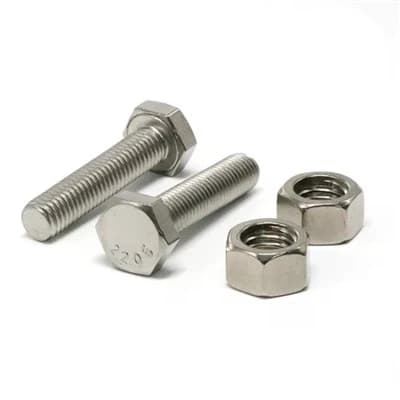
Typical uses are flanged joints on offshore platforms and FPSOs, subsea manifolds and wellhead equipment, desalination high-pressure brine lines, seawater cooling circuits, and chemical and petrochemical units handling chloride-containing streams. A stud bolt set is normally one configuration: two studs (or four half-lengths), nuts and any washers ordered together for one flange pair, so state the flange specification rather than a generic length when that is what your joint design calls for.
Stud Bolts and Threaded Rod Are Not the Same Product
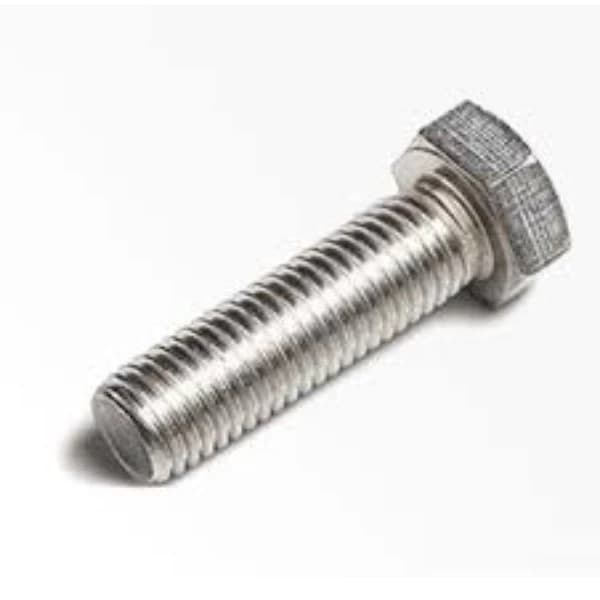
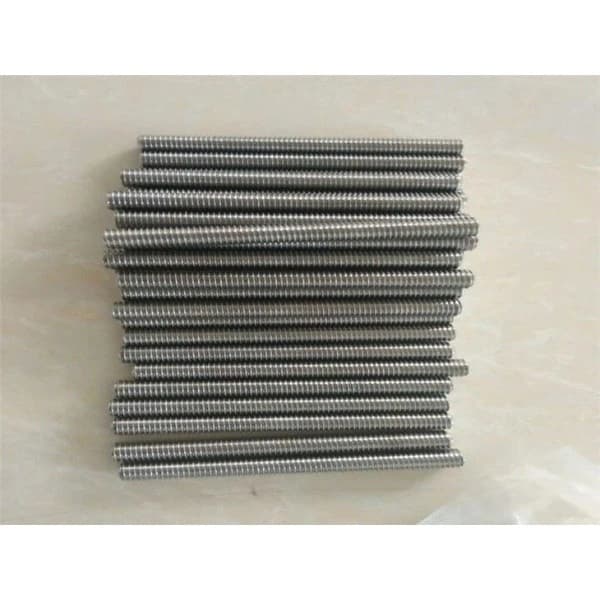
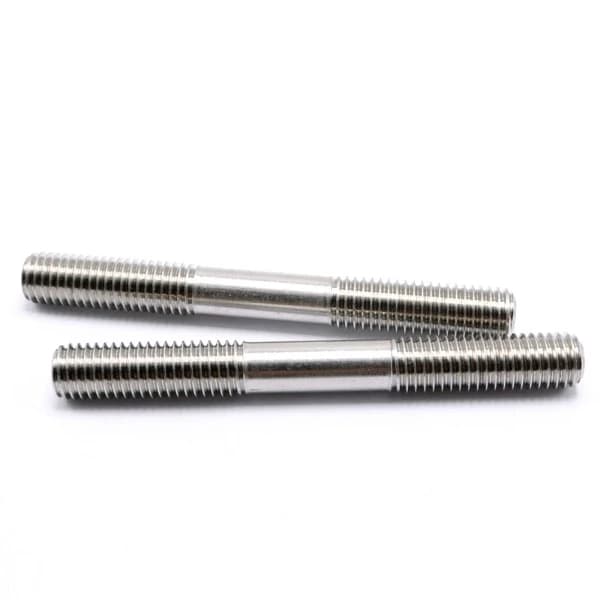
A stud bolt is cut to length for a specific flanged joint and is commonly supplied as a double-end or tap-end stud with nuts; threaded rod is continuously threaded bar sold in stock or cut lengths for general use. If you need continuously threaded super duplex rod, see our S32750 super duplex steel threaded rod; for headed bolts in the same alloy family, see the DIN 933 S32750 super duplex bolts page.
Ordering Information
To receive an accurate quotation, provide: the UNS grade (S32750, or S32760 if that is what your piping specification calls for); the stud type (fully threaded, double-end or tap-end); nominal diameter; thread (UNC, 8UN or metric pitch); and either the stud length or the flange size, pressure class and facing so the ASME B16.5 stud length can be calculated. Add whether matching heavy hex nuts are required, the quantity, the certificate type (typically EN 10204 3.1 with full traceability), any sour-service requirement with its hardness limit, and the preferred surface condition (pickled or passivated).
Is ASTM A193 B8 or B8S the right standard for super duplex stud bolts?
No. ASTM A193 covers austenitic, ferritic and martensitic stainless steels but has no duplex grade, and grade B8S is UNS S21800, a nitrogen-strengthened austenitic alloy. The specification that covers UNS S32750 bolting for pressure service is ASTM A1082/A1082M, applied together with the general requirements of ASTM A962/A962M.
How strong is an S32750 stud bolt?
In the solution-annealed condition, ASTM A1082/A1082M requires a minimum tensile strength of 800 MPa (116 ksi) and a minimum 0.2% yield of 550 MPa (80 ksi) up to 2 in. diameter, with 15% minimum elongation and 310 HBW maximum hardness; above 2 in. the minimums are 760 MPa and 515 MPa. Cold-worked studs can be supplied to higher strength, and sour service is handled with hardness limited to 28 HRC per NACE MR0175 / ISO 15156. Confirm the required condition on the order.
What is the maximum service temperature for super duplex studs?
Duplex and super duplex steels lose impact toughness through 475 degrees C embrittlement when held at elevated temperature, Long-term service is normally kept below 250-280 °C. Prolonged exposure in the 300-525 °C band embrittles the ferrite. A higher design temperature is verified against the applicable code.
What information does a quotation need?
The UNS grade, stud type, nominal diameter, thread (UNC, 8UN or metric), and either the stud length or the flange size, pressure class and facing (raised face or ring type joint); plus whether matching nuts are required, the quantity, the certificate type, and any sour-service requirement.