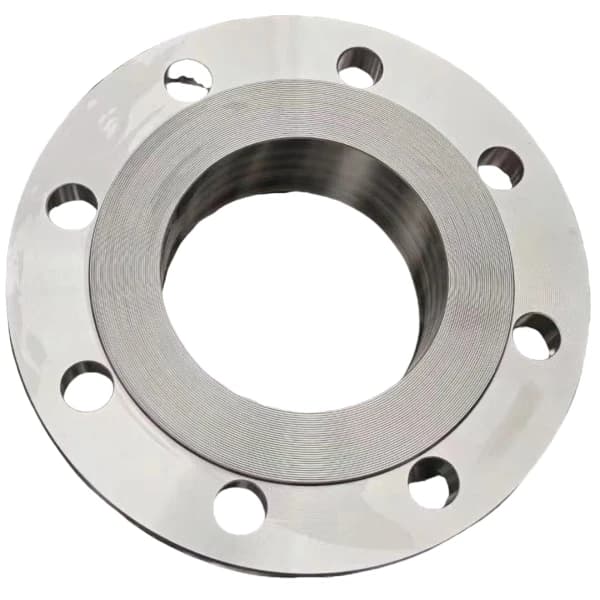
Product Description
Super Duplex S32750 flanges are pipe flanges forged from the 25% chromium super duplex stainless steel better known as grade 2507 (UNS S32750, EN 1.4410, ASTM A182 grade F53). The dual-phase ferritic-austenitic microstructure combines a yield strength roughly twice that of standard austenitic stainless steels with a Pitting Resistance Equivalent Number (PREN) above 40, which places the grade in the territory normally reserved for more expensive nickel-bearing alloys in seawater and chloride-bearing service.
The grade is listed in NACE MR0175 / ISO 15156 for sour service and is supplied against ASTM A182 F53 (flange forgings) and ASTM A479 (bar). Typical applications include offshore and subsea piping, seawater cooling systems, desalination plants and chemical process lines where 22% chromium duplex grades such as 2205 no longer give sufficient pitting reserve. Corrosion performance in a specific medium always depends on temperature, chloride level, pH and design details, so suitability should be confirmed against the actual service conditions.
Chemical Composition and Mechanical Properties
The table below lists the reference heat-analysis ranges for UNS S32750 (A182 F53) compiled from independent producer and supplier datasheets. Values are reference ranges for the grade, not a guarantee for a specific heat; the ladle analysis and the certificate of the ordered lot govern.
| Element | Reference range (weight %) |
|---|---|
| Carbon (C) | 0.030 max |
| Manganese (Mn) | 1.20 max |
| Silicon (Si) | 0.80 max |
| Phosphorus (P) | 0.035 max |
| Sulfur (S) | 0.020 max |
| Chromium (Cr) | 24.0 – 26.0 |
| Nickel (Ni) | 6.0 – 8.0 |
| Molybdenum (Mo) | 3.0 – 5.0 |
| Copper (Cu) | 0.50 max |
| Nitrogen (N) | 0.24 – 0.32 |
| Iron (Fe) | Balance |
The tensile, yield, elongation and hardness figures below are taken from a secondary transcription of an ASTM A182 Table 3, not from the current A182/A182M-26A text. For sections over 2 in [50 mm] thick, that transcription lowers F53 tensile strength to 106 ksi [730 MPa] and yield strength to 75 ksi [515 MPa].
| Property | Secondary A182 table (room temperature) |
|---|---|
| Tensile strength, min | 116 ksi [800 MPa] |
| 0.2% proof strength, min | 550 MPa (80 ksi) |
| Elongation, min | 15% |
| Hardness, max | 310 HBW |
| Density | 7.8 g/cm³ |
| PREN (pitting resistance equivalent) | > 40 |
Material Characteristics
The balanced ferrite-austenite structure gives S32750 a high proof strength, allowing flanged joints and supporting hardware to be designed with less section weight than an austenitic equivalent. The high chromium, molybdenum and nitrogen levels provide strong resistance to pitting and crevice corrosion in seawater and acidic chloride media, together with good resistance to chloride stress corrosion cracking and to erosion and cavitation attack in flowing media.
Like all duplex grades, S32750 loses toughness and is not for service above 315 °C (600 °F). Welding follows qualified duplex procedures with over-alloyed nickel-bearing duplex fillers, and impact or corrosion testing beyond the standard requirement is an ordering matter to be agreed. Do not confuse the grade with S32760 (grade F55, a tungsten-bearing super duplex with a slightly different chemistry) — that grade is covered on its own S32760 flanges page.
Dimensions, Pressure Classes and Flange Types
The material standard (ASTM A182 / ASME SA-182 F53) defines chemistry and mechanical acceptance; it does not define flange dimensions or pressure ratings. Dimensions, drillings and ratings come from the dimensional standard named on the order, and the table below shows the usual scope split.
| Standard | Scope |
|---|---|
| ASTM A182 / ASME SA-182 F53 | Material specification for forged S32750 flanges and fittings |
| ASME B16.5 | NPS 1/2 – 24, Class 150 / 300 / 400 / 600 / 900 / 1500 / 2500 (Class 2500 published only to NPS 12) |
| ASME B16.47 Series A / B | NPS 26 – 60 large-diameter flanges; the two series are not interchangeable |
| EN 1092-1 | PN-rated European flange dimensions (PN system, separate from ASME Class) |
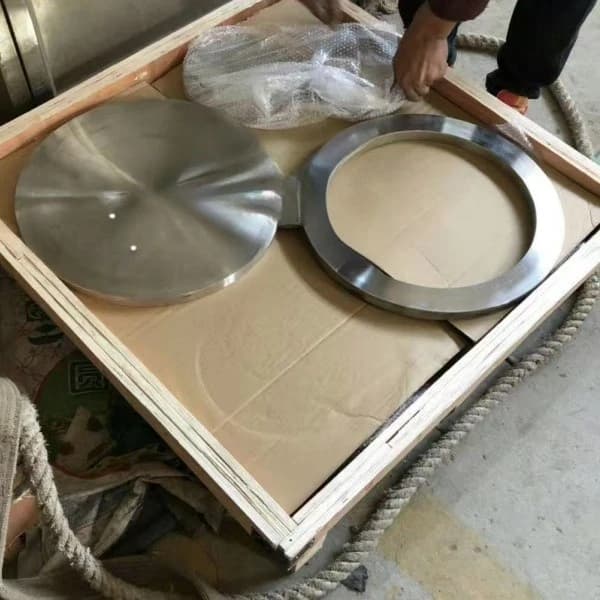
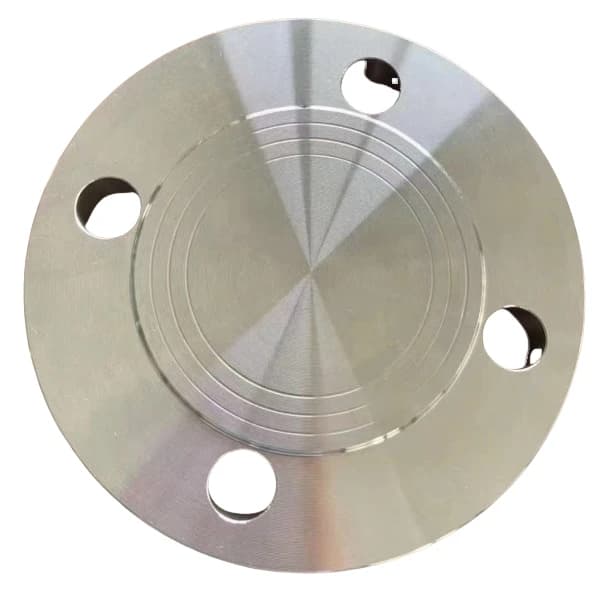
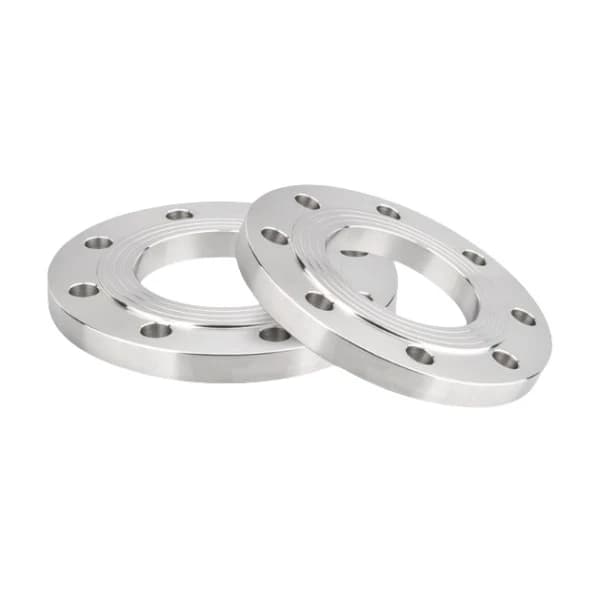
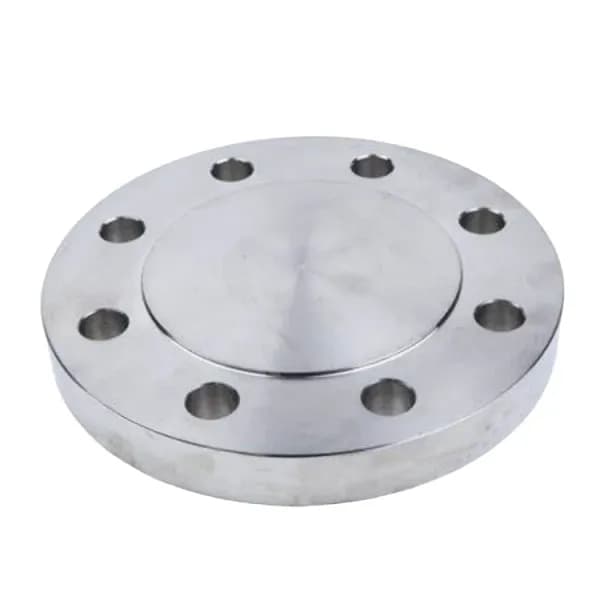
Commonly supplied types include weld neck, slip-on, blind, socket weld, threaded and lap joint flanges, with raised face (RF), ring type joint (RTJ) or flat face (FF) facings. The Class number is a dimensionless rating index, not a pressure: the allowable pressure of a given Class depends on the material group of the grade and the design temperature and is read from the ASME B16.5 pressure-temperature tables. PN-rated EN 1092-1 flanges and ASME Class flanges are separate systems and must not be treated as interchangeable equivalents.
Applications
Typical duty for S32750 flanges includes offshore oil and gas and subsea equipment, wellhead and flowline systems, seawater injection and cooling circuits, desalination and brine handling, chemical and petrochemical process lines carrying chlorides or organic acids, pulp and paper bleach plant equipment, and flanged connections on pumps, valves and heat exchangers in corrosive service. The grade is listed in NACE MR0175 / ISO 15156 for sour environments subject to the applicable material restrictions. Whether S32750 is the right reserve over 2205 duplex for a given circuit depends on chloride concentration, temperature and pH — the Duplex 2205 flanges page covers the standard duplex option.
Ordering Information
To price and produce S32750 flanges correctly, send the flange type and facing, the size and pressure class together with the dimensional standard (for example NPS 6 Class 300 weld neck to ASME B16.5, or DN100 PN16 to EN 1092-1), the bore or pipe schedule for weld neck types, quantity, and the destination port. State any additional requirements with the order: impact or corrosion testing, third-party inspection, marking, packaging and the certification documentation required. Enquiries for grades outside the standard scope (special facings, large diameters above NPS 60, or other super duplex products from the super duplex flanges range) are welcomed for review.
Common Questions about Super Duplex S32750 Flanges
Is S32750 the same as duplex 2205?
No. S32750 (grade 2507) is a 25% chromium super duplex with 3.0–5.0% molybdenum and 0.24–0.32% nitrogen, giving a PREN above 40. Duplex 2205 (UNS S31803 / S32205) is a 22% chromium standard duplex with a PREN in the mid-30s. S32750 offers a clearly higher pitting and crevice corrosion reserve in seawater and acidic chloride media, at a higher alloy cost.
What is the difference between S32750 and S32760?
Both are super duplex stainless steels with similar strength and corrosion performance. S32760 is a tungsten-bearing variant (ASTM A182 grade F55, W.Nr. 1.4501) with a slightly adjusted chemistry aimed at the most aggressive seawater service, while S32750 carries W.Nr. 1.4410. They are separate grades with separate certificates and should not be mixed on one order; this page covers S32750 only.
Does Class 2500 mean 2500 psi?
No. ASME Class numbers such as 150, 300 or 2500 are dimensionless rating indices. The actual allowable pressure for an S32750 flange depends on the material group of the grade and the design temperature and is read from the ASME B16.5 pressure-temperature tables. Also note that in B16.5, Class 2500 is published only up to NPS 12, and flanges above NPS 24 fall under ASME B16.47.
What is the maximum service temperature for S32750 flanges?
S32750 is not for service above 315 °C (600 °F).
What information should a quotation enquiry include?
The flange type and facing; size and pressure class (or DN and PN) with the dimensional standard; bore or schedule for weld neck flanges; quantity; destination; and any testing, marking, packaging and certification requirements. Enquiries stating only the material grade usually need a second round of clarification, so the dimensional standard named on the order is the single most useful detail to include.