Product Description
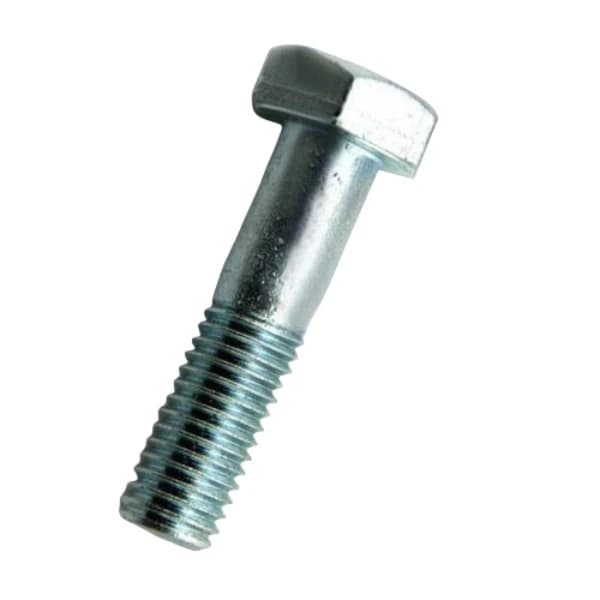
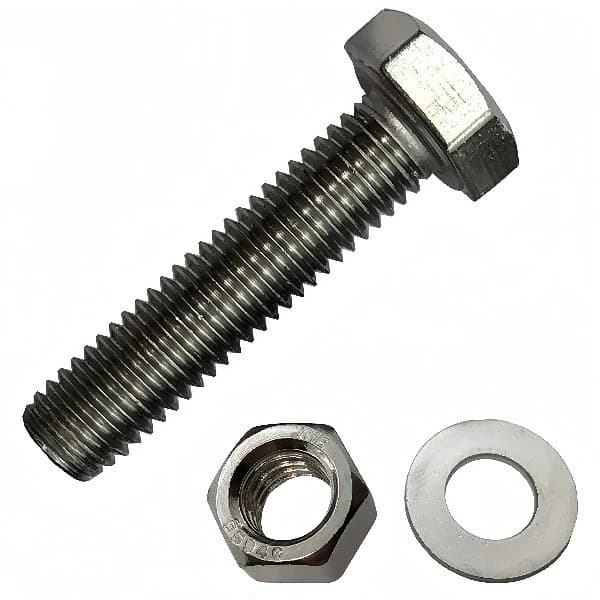
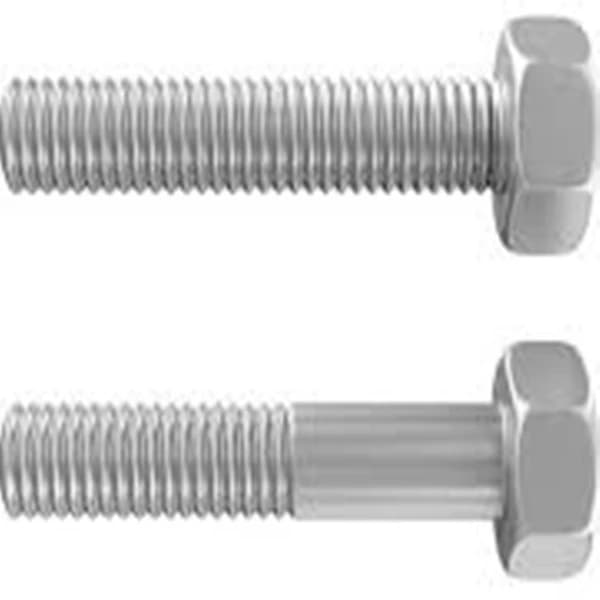
A 310S stainless steel hex bolt is a hex-head fastener made from the heat-resistant 25Cr-20Ni austenitic grade: UNS S31008, EN 1.4845 (X8CrNi25-21), AISI 310S, JIS SUS 310S. The high chromium and nickel content gives the steel its oxidation resistance at furnace temperatures, which is why this bolt is specified for furnace fixtures, boiler hardware, kiln parts and heat-treatment equipment rather than for general assembly. This page is the finished hex head bolt. It is not the heavy hex bolt (stainless steel heavy bolts), not the general 304/A2-70 item (304 stainless steel hex bolt), and not a pressure-vessel A193 stud.
The previous version of this page claimed "600 MPa tensile strength", "3x the service life of 304", a standing stock of 180-300 tons and a replacement guarantee against "ASTM A193 mechanical standards". None of those claims can be tied to a standard covering this grade, and they are withdrawn. The two statements that actually govern a 310S bolt order are the ones below: which standards cover it (fewer than most listings suggest) and what the reference values of the steel are.
Which Standards Actually Cover This Bolt
310S sits in a gap in the fastener standards, and knowing the gap prevents an order from being written against the wrong document. Head and thread dimensions come from the ordinary bolt standards; the steel itself is bought as bar to ASTM A276/A479. What does not exist is a fastener property standard that lists S31008 - the three usual suspects do not carry it:
- ASTM A193/A193M (bolting for pressure vessels, valves and flanges) covers the austenitic grades B8 (304), B8C (347), B8M (316), B8T (321), B8P (305), B8R (S20910), B8S (S21800) and their variants. S31008 is not one of them.
- ASTM F593-24 (stainless bolts, hex cap screws and studs, 0.25-1.50 in) covers seven alloy groups - 304/305/384/304L, 316/316L, 321/347, 430, 410F, 431 and 630. No 310S group exists, and the matching nut specification F594 mirrors those groups.
- ISO 3506-1:2020 assigns property classes such as A2-70 and A4-80, but its austenitic steel groups A1 through A8 top out at the 19-22% chromium 6%Mo grade A8. The 24-26% chromium 310S composition is not listed, so there is no valid "A-something-70" class mark for a 310S bolt.
Put the standard that matches what you need on the order. A supplier size chart is not a substitute for any of them.
| What you need | Standard to put on the order | What it fixes |
|---|---|---|
| Metric hex bolt, thread to the head | ISO 4017, or DIN 933 | Full-thread hex head |
| Metric hex bolt with a plain shank | ISO 4014, or DIN 931 | Partial thread and shank length |
| Inch hex head dimensions | ASME B18.2.1 | Finished hex head. A heavy hex head is a different order. |
| Steel the bolt is made from | ASTM A276/A479 (bar), with A240 as the plate/strip reference | Composition and annealed-bar minimums for UNS S31008 |
| Property requirements of the finished bolt | Stated on the order, shown on the certificate | No ISO 3506 class or ASTM fastener grade covers S31008, so proof load, hardness or tensile requirements must be written into the inquiry |
| Pressure-vessel flange bolting | ASTM A193 B8, B8M, B8T or B8C - only if the order changes grade | Not available in 310S and not the default item on this page |
Reference Data for the Steel
The values below describe the steel in the annealed condition, compiled from ASTM A240 (plate/sheet) and A276 (bar) transcriptions and cross-checked across independent sources. They are reference windows for the stock material. The acceptance basis for a finished bolt is the certificate of the ordered heat plus the property requirements written on the order - not this table.
Chemical composition, weight percent, maxima unless shown as a range. The certificate of the ordered heat is the acceptance:
| Element | 310S (UNS S31008) |
|---|---|
| Carbon, C | 0.08 max |
| Manganese, Mn | 2.00 max |
| Phosphorus, P | 0.045 max |
| Sulfur, S | 0.030 max |
| Silicon, Si | 1.50 max |
| Chromium, Cr | 24.0-26.0 |
| Nickel, Ni | 19.0-22.0 |
Mechanical minimums for annealed bar and plate, the values this page uses. They are not the acceptance values of the finished bolt:
| Property | Annealed bar/plate values this page uses |
|---|---|
| Tensile strength, min | 515 MPa (75 ksi) |
| 0.2% yield strength, min | 205 MPa (30 ksi) |
| Elongation in 50 mm (2 in), min | 40% |
| Reduction of area, A276 hot-finished bar | 50% min |
Two numbers from the old page are corrected here. The "600 MPa" tensile figure was never a standard minimum for S31008 - the annealed minimum is 515 MPa (75 ksi). A hardness limit is deliberately not published: the compilations disagree (217 HB and 201 HB both circulate), and hardness acceptance belongs on the order.
Service Temperature and Atmosphere Limits
310S is chosen for heat, and the service figures need their conditions stated. In clean oxidizing air, continuous service is 1150 °C (2102 °F) and intermittent service - where thermal cycling spalls the oxide scale - is 1035 °C (1895 °F). These are values for the steel in air, not a design rating for a bolted joint: joint temperature, relaxation and load all belong to the design.
Three limits matter in service. First, sulfur-bearing or reducing atmospheres attack the high-nickel grade sharply below those air figures - the old claim that 310S is "resistant to sulfurous gases" is withdrawn, and sulfidation resistance is not a property to order this grade for. Second, long exposure in the 650-870 °C range forms sigma phase, which embrittles the steel at room temperature; the material stays ductile at operating temperature but must be handled carefully between shutdowns. Third, 310S contains no molybdenum, so its chloride pitting resistance is weaker than 316 (fastener group A4): it is a heat grade, not a chloride grade.
310, 310S and 310H Are Three Different Items
All three share the 25Cr-20Ni base, and the carbon line is what separates them. Quoting "310" when the drawing says 310S, or supplying 310S where creep strength was the reason for 310H, is a rejected shipment waiting to happen - name the exact designation on the order.
| Designation | UNS | Carbon | Why it is ordered |
|---|---|---|---|
| 310 | S31000 | 0.25 max | Higher carbon for creep strength where welding is not involved |
| 310S | S31008 | 0.08 max | Low carbon for weldability; this page |
| 310H | S31009 | 0.04-0.10 | Carbon controlled for creep and creep-rupture strength |
Dimensions to Confirm
Thread size, pitch and length are confirmed on each order. The old page carried two length lines that contradicted each other - 12-700 mm (1/2"-27 1/2") in the specification block and 2"-16" in the sales copy - and a head-size range of 1/2"-2 1/2"; none was tied to a standard, so none is republished as a capability. Metric and inch threads are separate series: UNC and UNF describe inch threads and are not pitches for an M-size bolt. For a metric bolt, across-flats and head height come from the ISO or DIN edition named on the order; for an inch bolt, from ASME B18.2.1.
Ordering Information
Send the steel designation (310S / UNS S31008), thread size and pitch, length, full or partial thread, head standard, quantity, and any property requirements you need shown on the certificate. Because no fastener standard assigns a property class to S31008, the proof load, hardness or tensile requirements you state on the inquiry are the ones the certificate has to show. Add the service temperature and atmosphere, any coating or thread lubricant (galling between a stainless nut and a stainless bolt is a known risk), whether a matching nut is required, and the document type needed - a material test certificate is not included unless the order asks for it.
Documentation, testing and delivery requirements are agreed per order; include them with the specified 310S grade, dimensions and service conditions.
Related items in the same fastener group are the 304 stainless steel hex bolt (A2-70), the stainless steel hex head bolts page, and the heavy hex bolts page. The stainless steel fasteners category covers the wider range. A 321 hex bolt exists as a separate titanium-stabilized grade and is not part of this 310S item.
Common Questions about 310S Hex Bolts
Can a 310S hex bolt be supplied to ASTM A193?
No. ASTM A193/A193M covers bolting for pressure vessels, valves, flanges and fittings, and its grade list - B8 (304), B8C (347), B8M (316), B8T (321), B8P (305), B8R (S20910), B8S (S21800) and the nitrogen variants - does not include S31008. The earlier page's promise to replace bolts that failed "ASTM A193 mechanical standards" was written against a specification that does not cover this grade. If your joint is code bolting, the order names an A193 grade such as B8 or B8M, and that is a different product from this page.
Is there a property class like A2-70 for 310S?
No. ISO 3506-1:2020 defines the A2-70 style classes, but its austenitic groups A1-A8 do not list the 24-26% chromium 310S composition, so there is no valid class mark to print on a 310S bolt. ASTM F593-24 is the same story: its seven alloy groups stop at 304/316/321/347 and the martensitic and ferritic grades, with a 0.25-1.50 in diameter range. State the strength requirements you need on the order and have them shown on the certificate instead of a class mark.
Is 310S the same as 310 or 310H?
No. They share the 25Cr-20Ni base but differ in carbon: 310 (S31000) allows up to 0.25%, 310S (S31008) is 0.08% max for weldability, and 310H (S31009) is controlled at 0.04-0.10% for creep strength. A certificate marked S31000 or S31009 is not a 310S bolt.
What temperature can a 310S hex bolt actually serve?
In clean oxidizing air, continuous service is 1150 °C (2102 °F) and intermittent service is 1035 °C (1895 °F) for the steel. Those are not bolt ratings: sulfur-bearing or reducing atmospheres cut the limit sharply, long exposure at 650-870 °C forms sigma phase and embrittles the material at room temperature, and the bolted joint's own relaxation and load belong to the design. Give the atmosphere and operating temperature with the inquiry so the grade choice can be checked against them.
Why were the old strength, life and stock numbers removed?
The 600 MPa tensile figure does not match any standard minimum for S31008 (annealed stock minimums are 515 MPa / 205 MPa / 40%); "3x the service life of 304" had no test behind it; and the 180-300 ton stock, the discount and price-lock terms and the 7-day replacement guarantee were commercial commitments with no evidence. The page now publishes only what a standard or a certificate can support, and everything else is confirmed per order.