Global Position of China's Fastener Industry
Major Production Areas
China is the world's largest fastener producer and exporter, supplying approximately 50-60% of global demand. The industry is concentrated in several specialized manufacturing clusters, each with distinct product strengths. Zhejiang Province (Wenzhou and Ningbo) is the largest fastener production base in China, with thousands of factories producing everything from common bolts and nuts to specialized automotive and aerospace fasteners. Hebei Province (Yongnian District) specializes in standard industrial fasteners at competitive prices, producing high volumes of hex bolts, nuts, washers, and studs for construction and general industrial applications. Guangdong Province (Dongguan and Shenzhen) focuses on precision fasteners, stainless steel products, and custom-designed fasteners for the electronics and automotive industries.
China's fastener industry structure ranges from small family workshops with a few cold forging machines to large publicly listed companies with fully automated production lines, in-house heat treatment, and comprehensive testing laboratories. The diversity of suppliers means that quality levels vary dramatically, and supplier selection is critical for successful procurement.
Technical Parameters to Clarify Before Sourcing Fasteners
Bolt Grades and Materials
Bolt grade determines mechanical properties including tensile strength, yield strength, and hardness. Under the ASTM standard system, common grades include: ASTM A307 Grade A (low-carbon, general purpose), ASTM A325 (structural bolts, heat-treated, medium-carbon), ASTM A490 (structural bolts, alloy steel, higher strength), ASTM A193 Grade B7 (alloy steel, high-temperature, high-pressure service), and ASTM A320 Grade L7 (low-temperature service). Under the ISO/SAE property class system, the grade is indicated by two numbers separated by a dot - the first number indicates 1/100 of nominal tensile strength in MPa, and the second indicates the ratio of yield to tensile strength. Common classes include 4.6, 5.8, 8.8, 10.9, and 12.9.
Material Corrosion Consideration: For corrosive environments or where the fastener material must match the flange or pipe material for galvanic compatibility, stainless steel grades such as A2 (304) and A4 (316) are commonly specified. For high-temperature bolting in pressure vessel and piping applications, chrome-moly alloy steel grades such as B7 and B16 are standard.
Thread Specifications
Thread specifications must be clearly defined to ensure compatibility with mating components. The two primary thread systems are Unified Thread Standard (UNC for coarse, UNF for fine) used primarily in North America, and Metric (ISO coarse and fine) used globally. Key parameters include thread diameter, pitch, thread class (2A for external threads, 2B for internal threads is standard for general applications), thread length, and thread direction (right-hand is standard, left-hand for specialized applications).
Surface Treatment
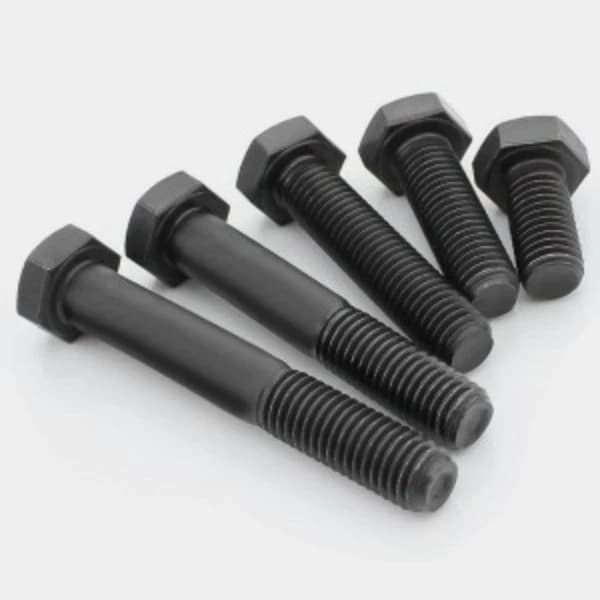
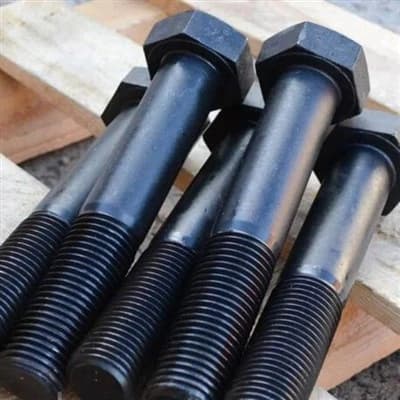
Surface treatment affects corrosion resistance, appearance, and thread fit. Common options include: plain (black) finish with oil coating - the most economical but minimal corrosion protection. Zinc plating (electro-galvanizing) - provides good corrosion resistance for indoor applications, available in clear, yellow, or blue passivation. Hot-dip galvanizing (HDG) - thick zinc coating for maximum corrosion resistance in outdoor and marine environments, but requires thread allowance to accommodate the coating thickness. Dacromet coating - a solvent-based coating that provides excellent corrosion resistance without hydrogen embrittlement risk. Black oxide - a thin black finish for mild corrosion protection with good lubricity. Phosphate coating - porous surface that holds lubricating oil, common for high-strength structural bolts.
Types of Chinese Fastener Suppliers
Cold Forging Factory vs Hot Forging Factory vs Trader
Cold forging is the most common manufacturing method for fasteners up to approximately 1-inch (M24) diameter. Cold forging factories use high-speed forming machines that shape wire rod at room temperature, offering high production rates, good dimensional accuracy, and improved mechanical properties through work hardening. Hot forging is used for larger diameter fasteners (typically above 1-inch) where the material must be heated to achieve the required shape without cracking. Hot forged fasteners require additional heat treatment to develop required mechanical properties. Traders source from multiple factories and can consolidate mixed fastener requirements but add margin and reduce traceability. For critical applications requiring certified materials and testing, dealing directly with a forging factory is recommended.
Fastener Quality Control Key Points
Raw Material (Wire Rod) Quality Control
Raw material quality is the foundation of fastener quality. The wire rod grade must match the required bolt grade - for example, Grade 8.8 bolts require medium-carbon steel or low-alloy steel with appropriate chemical composition. Verify that the supplier's raw material is sourced from reputable steel mills and that incoming inspection includes chemical analysis verification, surface quality inspection, and dimensional checks. Raw material certification should be traceable to the final product MTC.
Heat Treatment Process
Heat treatment is the most critical step in high-strength fastener production. The process involves austenitizing (heating to the transformation temperature), quenching (rapid cooling), and tempering (reheating to a lower temperature to achieve desired properties). Improper heat treatment can result in insufficient hardness, inconsistent properties across the batch, or hydrogen embrittlement susceptibility (particularly for high-strength grades above 10.9). Verify that the factory operates controlled atmosphere furnaces with accurate temperature recording and that heat treatment parameters are documented for each production batch.
Hardness and Tensile Strength Testing
Hardness testing (Rockwell or Vickers) is a quick indicator of proper heat treatment and can identify material inconsistencies. Tensile testing provides definitive verification of mechanical properties - the bolt must achieve the specified minimum tensile strength and yield strength without fracturing at the head-shank junction or threads. Proof load testing verifies that the bolt can withstand the specified load without permanent deformation. All testing should be performed by calibrated equipment and documented in the test report.
Fastener Packaging Considerations
Bulk vs Boxed vs Palletized
Fastener packaging options range from bulk (loose in containers, suitable for large quantities of common fasteners) to boxed (packaged in cartons or boxes by size and grade, suitable for organized inventory management) to palletized (boxes or bags on pallets, shrink-wrapped for container loading). Proper packaging prevents mixing of different grades and sizes, protects against corrosion during transit, and facilitates receiving inspection and warehouse storage. For projects requiring traceability, each package should be labeled with the bolt grade, size, quantity, heat/lot number, and manufacturer.
Rust Prevention Packaging Requirements
Fasteners, particularly carbon steel fasteners, are susceptible to corrosion during ocean transit. Standard rust prevention includes oil coating, VCI paper wrapping or VCI bags, and sealed packaging with desiccant bags. The packaging should provide protection for the expected transit duration plus storage period. For stainless steel fasteners, ensure that the packaging materials are chloride-free and that separate packaging is used to prevent iron contamination from carbon steel products.
Common Fastener Sourcing Issues
Insufficient Hardness
The most common quality issue with Chinese fasteners is insufficient hardness, typically resulting from inadequate heat treatment or use of incorrect material grade. A bolt that does not meet the specified hardness will have lower tensile strength and may fail under design loads. Mitigation: specify hardness testing as part of inspection requirements and verify results against the applicable standard. For Grade 8.8 bolts, expect hardness of 22-32 HRC; for Grade 10.9, expect 32-39 HRC.
Rust Due to Insufficient Galvanized Coating Thickness
Zinc-plated fasteners from low-cost suppliers may have insufficient coating thickness, leading to premature rusting. The ASTM B633 standard specifies coating thickness classes (Fe/Zn 5, 8, 12, etc., where the number indicates minimum coating thickness in microns). For outdoor applications, specify minimum Fe/Zn 12. Verify coating thickness with a magnetic thickness gauge during inspection.
Thread Defects
Thread defects - including incomplete threads, torn threads, out-of-tolerance pitch diameter, and wrong thread angle - cause assembly problems and potential connection failure. Mitigation: require GO/NO-GO thread gauge inspection as part of quality control, with gauges calibrated to the applicable thread standard (UNS or ISO).
ManufacturerPipe's Fastener Supply Advantages
ManufacturerPipe supplies fasteners as part of our comprehensive piping component range, enabling one-stop procurement alongside steel pipe, flanges, and fittings. Our fastener products include property class 8.8, 10.9, and 12.9 high-strength bolts, ASTM A193 B7 and B16 alloy steel studs, ASTM A320 L7 low-temperature studs, and A2/A4 stainless steel fasteners. All products undergo rigorous material testing, hardness verification, and dimensional inspection. We maintain adequate stock of common sizes for quick delivery and can produce custom specifications to meet project requirements. By sourcing fasteners together with flanges and pipe, you reduce supplier management costs, ensure component compatibility, and simplify logistics coordination.
Need Fasteners for Your Piping Project?
Contact us with your fastener requirements. We supply high-strength bolts, studs, nuts, and washers with full material certification.
Our Products