Product Description
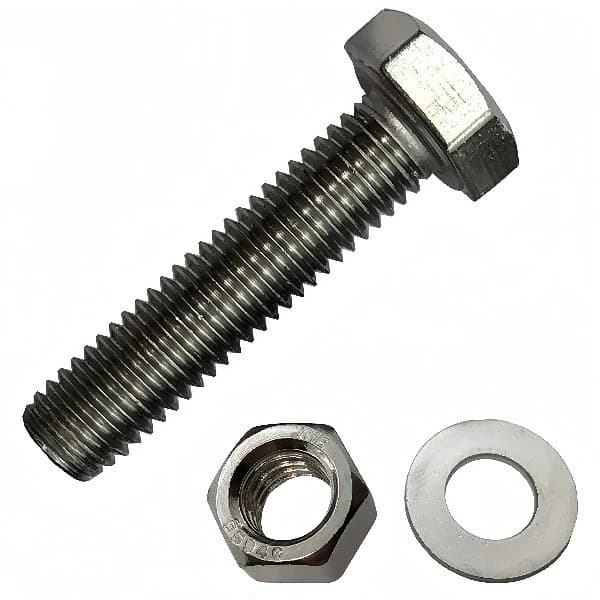
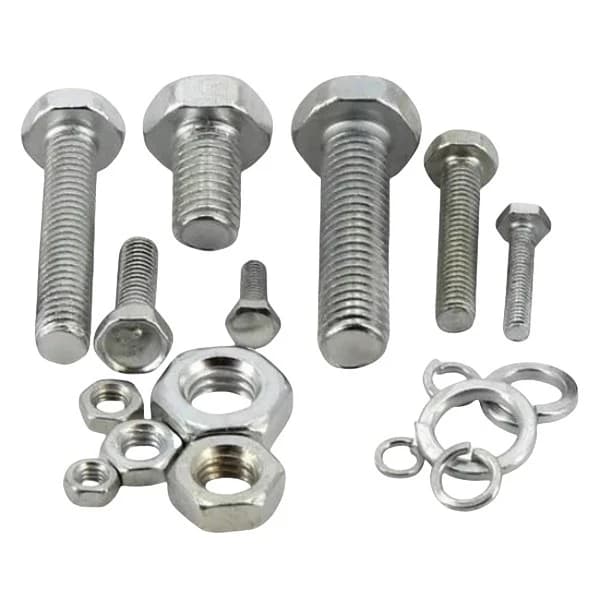
A stainless steel hex head bolt is an externally threaded fastener with a six-sided head, turned by a wrench and usually paired with a nut. This page is the family page for that head style. It is not a single alloy, not a heavy hex structural bolt, and not a pressure-vessel stud.
Name the alloy on the order. 304 (A2) is the general 18-8 choice. 316 (A4) is the molybdenum grade buyers ask for when chlorides are part of the service. 316L is the lower-carbon version of that grade. ASTM F593 group 3 covers 321 and 347 when the order calls for those stabilized alloys. 310S is a separate heat-resisting grade; see the 310S hex bolt page rather than treating it as another 18-8.
For general corrosion service in inch sizes, the bolt standard to name is ASTM F593. F593-24 is the active edition. Its scope covers stainless bolts, hex cap screws, and studs from 0.25 to 1.50 in., inclusive, in the alloys that edition lists. The matching nut standard is ASTM F594. A finished hex head and a heavy hex head are different across-flats sizes; heavy hex is covered on the stainless steel heavy bolts page.
What to Fix Before the Quote
Three choices decide the bolt. Mixing them is how a stainless hex head order comes back as the wrong part.
| Choice | What it controls | Do not write it as |
|---|---|---|
| Alloy group | 304 / 18-8, 316, 316L, or a named F593 alloy | One chemistry for every stainless bolt |
| Property class or condition | ISO 3506 class such as A2-70 or A4-70, or an F593 condition such as CW, SH, or A | A bar tensile number, or a carbon-steel class such as 8.8 |
| Head and thread | Finished hex versus heavy hex; metric full or partial thread; inch UNC or UNF | One head size and one thread series for every diameter |
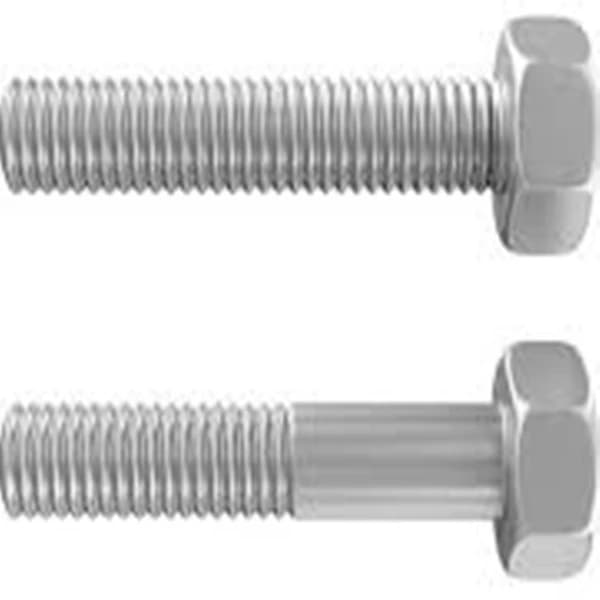
Metric full-thread hex bolts are ordered to ISO 4017 or DIN 933. Metric partial-thread hex bolts are ordered to ISO 4014 or DIN 931. Inch hex head dimensions follow ASME B18.2.1, and the thread series follows ASME B1.1. UNC is coarse, UNF is fine. They are not two names for the same thread.
Standards That Do Not Belong on This Bolt
Specify the finished-fastener standard separately from the raw-material specification and any surface-treatment requirements.
| Standard | What it actually covers | How to order it |
|---|---|---|
| ASTM A193/A193M | Alloy and stainless bolting for high temperature, high pressure, or other special-purpose service. A193/A193M-26 is the active edition. | A separate line, with the grade written out (B8, B8M, and so on). Not the default hex head bolt. |
| ASTM A276 | Stainless bar and shapes. Chemistry and tensile figures from a bar specification are not bolt acceptance values. | Do not cite it as the bolt standard. |
| ISO 898-1 | Carbon and alloy steel fasteners. Property classes such as 8.8 and 12.9 are not stainless classes. | Use ISO 3506 for a stainless property class. |
| ASTM F3125/F3125M | High-strength structural bolts. It replaced A325 and A490. The material is quenched and tempered steel, not stainless. | Not a stainless hex head bolt. |
ASTM A967 passivation, a polished surface, and a thread-locking patch can be added only when the order asks for them. They are not included on every bolt, and this page does not publish a coating thickness, a roughness number, or a salt-spray hour count.
Ordering Information
Send one alloy per line. A quote needs the alloy or F593 group, the property class or condition, metric or inch, the thread (full or partial; UNC or UNF), diameter, length, and quantity. Add the nut standard if the nut is part of the same shipment. Head dimensions, thread fit, and length are confirmed against the edition named on the order. They are not taken from a stock table on this page.
Length on this page is 10–600 mm. Tensile strength is 650–800 MPa. Salt-spray performance is 1,500 hours. Service temperature is −270 °C to 870 °C.
Frequently Asked Questions
Is every stainless hex head bolt 316Ti?
No. 316Ti was named in the old title and was never the product. A stainless hex head bolt is ordered as a named alloy: 304, 316, 316L, or another alloy that the cited bolt standard actually lists. 316Ti is not an alloy group in ASTM F593-24. If a drawing calls for 316Ti, say so on the inquiry and we will confirm which specification covers that alloy before quoting. Do not reuse a 316 or 316L certificate for it.
What is the difference between a hex cap screw and a full-thread hex bolt?
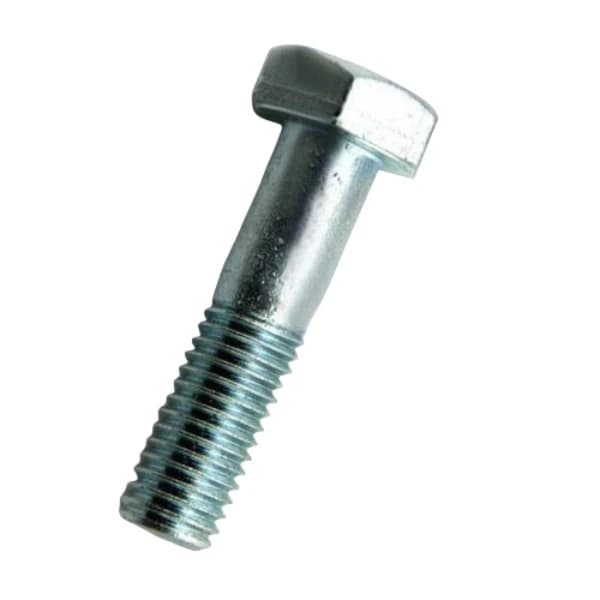
Both can have a finished hex head. A hex cap screw in inch practice is the B18.2.1 head with a thread length that leaves an unthreaded shank on longer sizes. A metric full-thread hex bolt, often still called DIN 933, is threaded for the whole length and is ordered to ISO 4017. A metric partial-thread bolt is ISO 4014 or DIN 931. Write which one the drawing uses. The two are not the same grip length.
Can one purchase order mix 304 and 316?
Not on one line. 304 (A2) and 316 (A4) are different alloy groups, with different property-class marks under ISO 3506 and different groups under ASTM F593. Quote them as separate lines so the certificate matches the bolts in the box. 316L is a further split inside the molybdenum grades. Stabilized 321 and 347 are F593 group 3, not a substitute for 316.
Which information is enough for a price?
Alloy, property class or F593 condition, metric or inch, thread form, diameter, length, and quantity. If the bolt must meet ASTM A193 for a flange or a pressure vessel, that is a different order line and needs the A193 grade. A head style by itself is not a quotation.
What length, strength, and temperature does this page use?
Length on this page is 10–600 mm. Tensile strength is 650–800 MPa. Salt-spray performance is 1,500 hours. Service temperature is −270 °C to 870 °C. F593 and ISO 3506 still publish their own requirements by alloy, diameter, and condition when the order names that edition.