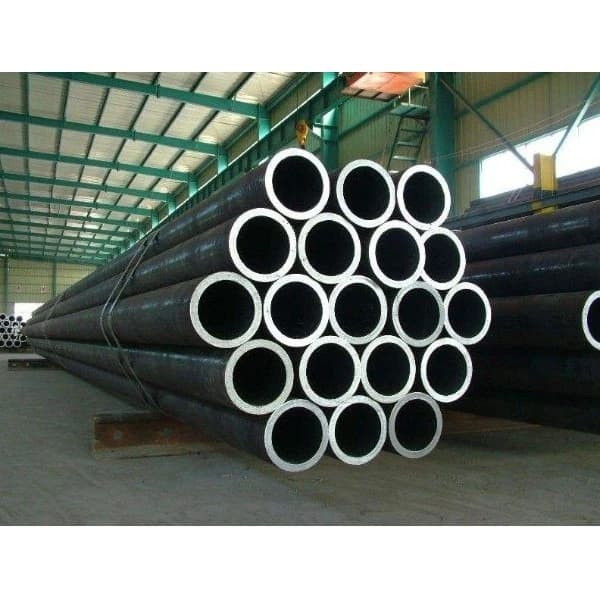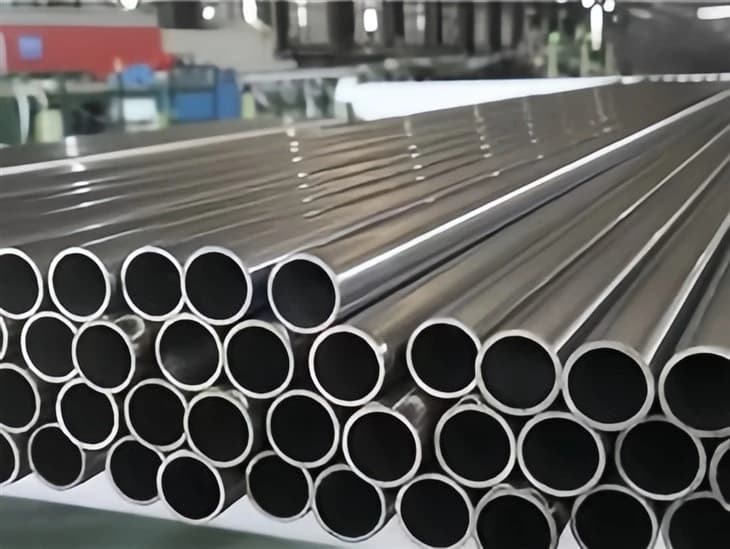
Ingot Smelting: Adopt vacuum induction melting + electroslag remelting (VIM+ESR) process to ensure the purity and uniformity of the ingot.
Hot Working: Carry out multi-pass hot piercing and hot rolling to form the blank pipe, controlling the deformation rate to avoid microstructure defects.
Cold Working: Use cold rolling or cold drawing for multi-pass forming, control the outer diameter tolerance within ±0.1 mm, and improve dimensional accuracy and mechanical strength.
Heat Treatment: Conduct solution treatment at 1120–1170°C followed by rapid cooling, eliminate internal stress, and obtain uniform austenitic structure.
Quality Inspection: Implement ultrasonic flaw detection, eddy current testing, hydrostatic testing, chemical composition analysis and mechanical property testing to ensure zero defects of the finished pipe.
Chemical Industry: Reactors, heat exchangers, pickling equipment, chlor-alkali plant pipelines
Environmental Protection Industry: Flue gas desulfurization (FGD) systems, wastewater treatment equipment
Energy Industry: Oil & gas exploitation pipelines, high-temperature and high-pressure coal chemical pipelines
Marine Industry: Seawater desalination projects, offshore platform corrosion-resistant pipelines
Pharmaceutical & Food Industry: High-purity medium delivery pipelines
Medium Adaptability: Prioritize selection for working conditions containing chloride ions, mixed acid-base media and alternating oxidizing/reducing environments; For single strong reducing media, compare with Hastelloy C276.
Specification Selection: Select SCH series according to pressure rating, with corrosion allowance ≥1.5 mm; Calculate creep strength for high-temperature working conditions.
Quality Certification: Request Mill Test Certificate (MTC) including chemical composition, mechanical properties and non-destructive testing reports.
Welding Matching: Use the same grade welding wire (e.g. ERNiCrMo-10), control heat input during welding, and no post-weld heat treatment is required.
Store in a dry and ventilated warehouse, avoid mixing with carbon steel products to prevent electrochemical corrosion.
Avoid collision during transportation to protect the surface from damage; Remove oil stains and impurities before installation.
Clean the weld seam after welding, and perform pickling and passivation if necessary to improve corrosion resistance.
We are your trusted supplier. If you are a buyer who needs our products or are interested in them, please contact us: